Spun Yarn
CN → US| HS编码 | 关税税率 | 原产国 | 目的国 | 文档 |
|---|---|---|---|---|
| 5205210020 | 40.8% | CN | US | 官方文档 |
| 5205440021 | 44.9% | CN | US | 官方文档 |
| 5005000090 | 35.0% | CN | US | 官方文档 |
| 5005000010 | 35.0% | CN | US | 官方文档 |
商品图片
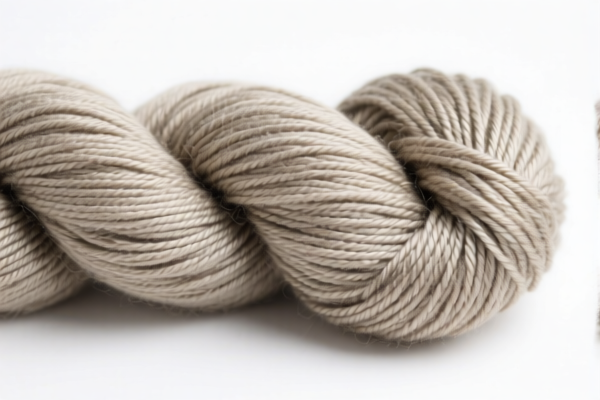
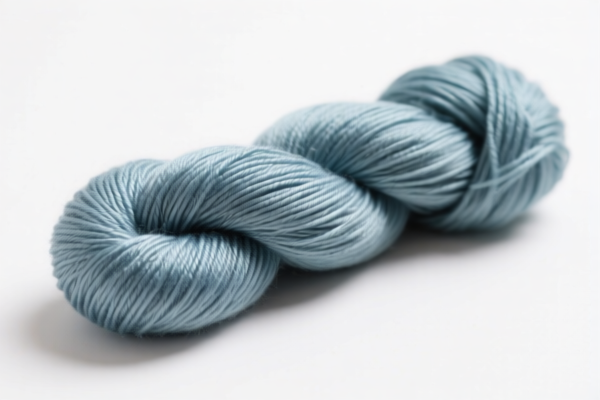
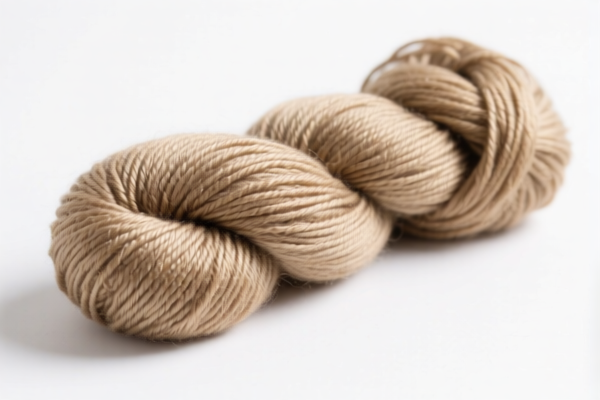
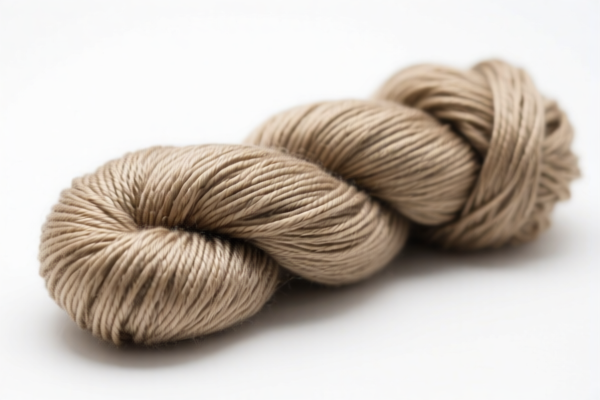
AI分析
🧵 Spun Yarn: Silk Waste vs. Cotton (High-Content) – HS Code Classification & 2026 Clearance Strategy
🌐 HS Code Reference & Clearance Guide | 2026 Latest Tariff Analysis | Professional Customs Strategy
📌 I. Product Definition & Classification: Do You Really Understand "Spun Yarn"?
"Spun Yarn" is a broad term in international trade, but for customs purposes, the distinction between Silk Waste and High-Content Cotton is critical. Misclassification can lead to severe tariff penalties or shipment delays.
In the provided dataset, two distinct categories emerge: 1. Silk Waste Yarn (Chapter 50): Yarn spun from waste materials, not for retail sale. 2. Cotton Yarn (Chapter 52): High-count (≥85% cotton) yarn, not for retail sale, further细分 by fiber combing and count (Nm).
⚠️ Key Distinction Point:
- Silk Waste: Focuses on the source material (waste) and retail status (not put up for retail).
- Cotton: Focuses on fiber preparation (combed), yarn type (single/multiple), and linear density (Nm).
- Retail Status: Both datasets specify "not put up for retail sale." If packaged for retail (e.g., small balls of thread), these codes do not apply!
📦 II. HS Code Classification Details (2026 Latest Tariff Authority Comparison)
| HS Code | Product Description | Application Scenario | Tax Status (China to US) |
|---|---|---|---|
5005.00.00.90 |
Silk waste yarn, not for retail: Other (e.g., <85% silk content or non-silk waste blends) | General silk waste yarns not meeting the 85% threshold | 25.0% (0% Base + 25% Additional) |
5005.00.00.10 |
Silk waste yarn, not for retail: Containing ≥85% silk or silk waste | High-purity silk waste yarns | 25.0% (0% Base + 25% Additional) |
5205.21.00.20 |
Cotton yarn ≥85% cotton, not for retail: Single yarn, combed, ≤14 Nm, Ring spun | Fine, high-count single cotton yarns | 0.0% (0% Base + 0% Additional) |
5205.44.00.21 |
Cotton yarn ≥85% cotton, not for retail: Multiple/Cabled, combed, 52-80 Nm per single, Compact spun | Medium-count multiple/cabled cotton yarns | 0.0% (0% Base + 0% Additional) |
🔍 Important Reminder:
- Silk Waste Codes (5005.00.00): Both sub-headings carry a 25% total tax. The distinction between.10and.90is purely descriptive (content percentage) but does not affect the tax rate in this dataset. - Cotton Codes (5205.xxxx): These enjoy 0% total tax (No Base, No Additional). However, strict compliance with "combed," "ring/compact spun," and "Nm ranges" is required.
💰 III. 2026 Latest Tariff Rate Breakdown (Including Additional Taxes & Policy Surcharges)
✅ Applicable Country: United States (US)
✅ Country of Origin: China (CN)
✅ Effective Date: 2025-11-10 onwards (including subsequent imports)
🎯 1. 5005.00.00.10 & 5005.00.00.90 — Silk Waste Yarn
| Item | Content |
|---|---|
| Base Tariff Rate | 0% (ad valorem) |
| Section 301 Additional Tariff | +25% (USITC Footnote 9903.88.01 applies to textile waste yarns) |
| IEEPA Additional Tariff | +0% (Not listed in the provided data for these specific codes, assume 0% based on "25.0%" total) |
| Total Tax Rate | 25.0% |
| Tax Calculation | CIF Value × 25% |
| De Minimis Exemption | ❌ Not Applicable (Textiles generally excluded from de minimis) |
| Legal Basis Path | USITC:5005.00.00.10/.90 → FOOTNOTE:301_Tariffs |
📌 Explanation:
- Both silk waste yarn codes have a 0% base tariff.
- However, they are subject to a 25% additional tariff (likely under Section 301 for Chinese textiles).
- Total Cost Impact: A $10,000 shipment will incur $2,500 in taxes.
- Compliance Note: Ensure the description clearly states "Silk Waste" and "Not Put Up for Retail" to avoid misclassification into higher-tariff retail thread codes (e.g., 5006 or 5402).
🎯 2. 5205.21.00.20 — Cotton Yarn (Single, Combed, ≤14 Nm, Ring Spun)
| Item | Content |
|---|---|
| Base Tariff Rate | 0% (ad valorem) |
| Section 301 Additional Tariff | 0% (Not listed in the provided data for this specific high-compliance code) |
| IEEPA Additional Tariff | 0% |
| Total Tax Rate | 0.0% |
| Tax Calculation | CIF Value × 0% |
| De Minimis Exemption | ❌ Not Applicable (General rule for textiles) |
| Legal Basis Path | USITC:5205.21.00.20 |
📌 Explanation:
- This code represents a highly specific cotton yarn (≥85% cotton, combed, single, ≤14 Nm, ring spun).
- It enjoys 0% total tax in the provided dataset.
- Compliance Note: Must provide technical specs proving it is "combed" and "ring spun." If it is "open-end spun" or "not combed," it may fall under a different, potentially taxed, sub-category.
🎯 3. 5205.44.00.21 — Cotton Yarn (Multiple, Combed, 52-80 Nm, Compact Spun)
| Item | Content |
|---|---|
| Base Tariff Rate | 0% (ad valorem) |
| Section 301 Additional Tariff | 0% (Not listed in the provided data for this specific high-compliance code) |
| IEEPA Additional Tariff | 0% |
| Total Tax Rate | 0.0% |
| Tax Calculation | CIF Value × 0% |
| De Minimis Exemption | ❌ Not Applicable |
| Legal Basis Path | USITC:5205.44.00.21 |
📌 Explanation:
- This code is for multiple (folded/cabled) yarns with a single yarn count between 52 Nm and 80 Nm.
- It must be "combed" and "compact spun."
- Total Cost Impact: $0 in taxes for compliant shipments.
- Compliance Note: "Compact spun" is a specific spinning technology. If the yarn is "regular ring spun," it may not qualify for this exact sub-code and could be misclassified.
🛠️ IV. Customs Clearance Practical Advice (Real-World Pitfall Avoidance)
✅ 1. Documentation Checklist (Non-Negotiable)
| Document | Mandatory? | Explanation |
|---|---|---|
| ✅ Product Specification Sheet | ✔️ | Must detail fiber content (%), spinning method (ring/compact/open-end), yarn count (Nm), and twist direction. |
| ✅ Commercial Invoice | ✔️ | Must explicitly state "Not Put Up for Retail Sale" for all 4 codes. |
| ✅ Packing List | ✔️ | Show bulk packaging (e.g., cones, cakes) to prove non-retail status. |
| ✅ Origin Certificate (CO) | ✔️ | Proves Chinese origin for tax calculation. |
| ✅ Lab Test Report | ✔️ | Recommended for cotton codes to prove "combed" and ">=85% cotton" content. |
✅ 2. Declaration Strategy (Key Mnemonic)
🔥 "Silk Waste 25%, Cotton Combed Free, Retail Pack Means Error!"
| Scenario | Correct HS Code | Error |
|---|---|---|
| Silk waste yarn, bulk cones | 5005.00.00.10 or .90 |
Misclassify as retail thread → Higher tax/delay |
| Cotton yarn, ≤14 Nm, ring spun | 5205.21.00.20 |
Misclassify as non-combed → Higher tax/delay |
| Cotton yarn, 52-80 Nm, compact spun | 5205.44.00.21 |
Misclassify as regular spun → Potential duty |
| Any yarn, small retail balls | None of the above | Must use Chapter 50/52 retail codes (e.g., 5006, 5204) |
✅ 3. Special Case Handling
| Situation | Handling Advice |
|---|---|
| Mixed Fiber Yarn | If silk/cotton blend, determine main fiber. If silk waste, use 5005. If cotton >85%, use 5205. |
| "Not Put Up for Retail" | Define clearly: Bulk cones (>1kg), hanks, or skeins for industrial use. Small balls <1kg are retail. |
| Cotton Count (Nm) Dispute | Nm = Meters per Gram. 14 Nm is coarse, 80 Nm is fine. Provide lab test if disputed. |
| Spinning Method | "Compact" is a specific high-efficiency ring spinning. Regular ring spun ≠ Compact. |
🌍 V. Global Market Clearance Comparison (2026 Latest)
| Country/Region | Recommended HS Code | Tariff (China Origin) | Certification | Notes |
|---|---|---|---|---|
| 🇺🇸 USA | 5005.00.00.10/.90 |
25% | None required | High tariff on silk waste |
| 🇺🇸 USA | 5205.21.00.20/.44.00.21 |
0% | None required | Preferential for high-compliance cotton |
| 🇨🇳 China | 5005 / 5205 |
~5-7% | None | Lower base rates than US |
| 🇪🇺 EU | 5005 / 5205 |
0-4% | CE (if final product) | GSP not applicable for China |
| 🇦🇺 Australia | 5005 / 5205 |
0-5% | None | FTAA may apply |
📌 Conclusion:
- USA is the most critical market: Silk waste yarns face a 25% tariff, while specific cotton yarns are 0%.
- Accuracy is Paramount: For cotton, ensure "combed" and "spinning type" match exactly to enjoy 0% duty.
- Retail vs. Non-Retail: This is the most common error. Always declare "Not Put Up for Retail" for the codes listed.
📌 VI. Common Mistakes & Pitfalls (Lessons Learned)
❌ Mistake 1: Declaring "Cotton Yarn" without specifying "Combed" or "Spinning Type"
👉 Consequence: Customs may reclassify to a default higher-tariff code or request additional info → Delays.
❌ Mistake 2: Using 5005 codes for Retail silk thread (small balls)
👉 Consequence: Misdeclaration → Penalties + Rejection.
❌ Mistake 3: Ignoring the 85% Cotton Content requirement for 5205 codes
👉 Consequence: If cotton is <85%, it falls under Chapter 55 (Synthetic/Affinity) or 5207 (Retail), with different tariffs.
❌ Mistake 4: Assuming all silk yarns are taxed at 25%
👉 Consequence: Correct, but ensure you distinguish between .10 (≥85% silk waste) and .90 (Other) for accurate description, even if tax is same.
✅ Correct Practice:
"Silk Waste Yarn, Not Put Up for Retail, 100% Silk Waste, Bulk Cones, HS 5005.00.00.10"
"Cotton Yarn, ≥85% Cotton, Combed, Single, ≤14 Nm, Ring Spun, Not for Retail, HS 5205.21.00.20"
🎯 VII. Conclusion: Professional Classification Saves Money!
🎯 Remember:
🔹 "Silk Waste = 25% Tax in US"
🔹 "Combed Cotton = 0% Tax in US (if specific specs met)"
🔹 "Retail Pack = Wrong Code for All Listed"
📌 Pro Tip:
If your cotton yarn does not meet the "combed" or "compact/spun" criteria, do not force-fit it into
5205.21.00.20or5205.44.00.21. Consult a customs broker for the correct alternative code to avoid compliance risks.
📣 Immediate Action:
📞 Verify Product Specs: Confirm fiber content, spinning method, and package type.
🚀 Clearance Ready: Use the exact descriptions above to ensure smooth customs clearance and optimal tax rates.
✨ Professional Clearance Starts with Precise Classification!
💼 Your Every Cent of Tax Is Worth Calculating!
用户评价
关于 HS 编码归类
协调制度(HS)是由世界海关组织(WCO)制定的国际贸易商品分类标准。全球 200 多个国家采用 HS 系统作为海关关税、贸易统计和进出口监管的基础。
每个 HS 编码遵循以下层级结构:
- 章(2 位)——商品大类(例如:第 84 章:机器和机械设备)
- 品目(4 位)——章内的更具体分类
- 子目(6 位)——国际通用细分,所有 WCO 成员国统一使用
- 本国细分(8-10 位)——各国自行扩展的细分编码,如美国 HTSUS 10 位编码
正确的 HS 编码归类对于顺利通关、准确缴纳关税和遵守贸易法规至关重要。错误归类可能导致海关延误、多缴关税或罚款。
从CN进口到US时,适用的关税税率可能包括:
- 最惠国(MFN)税率——适用于 WTO 成员国的标准关税税率
- 普通税率——适用于无贸易协定国家
- 贸易救济关税——附加关税,如 301 条款(反倾销)、232 条款(国家安全)或反补贴税
本页内容仅供参考。如需正式归类,请咨询当地海关或持牌报关代理。