Stained Non Coniferous Wood
CN → US| HS编码 | 关税税率 | 原产国 | 目的国 | 文档 |
|---|---|---|---|---|
| 4421999880 | 38.3% | CN | US | 官方文档 |
| 4421999870 | 38.3% | CN | US | 官方文档 |
| 4407990295 | 35.0% | CN | US | 官方文档 |
| 4407290296 | 35.0% | CN | US | 官方文档 |
| 4409219000 | 35.0% | CN | US | 官方文档 |
| 4409290665 | 38.2% | CN | US | 官方文档 |
商品图片
AI分析
🪵 Stained Non-Coniferous Wood (Sawn/Sliced/Chipped)
🌐 HS Code Reference & Customs Clearance Guide | 2026 Latest Tariff Analysis | Professional Clearance Strategy
📌 I. Product Definition & Classification: What is "Stained Non-Coniferous Wood"?
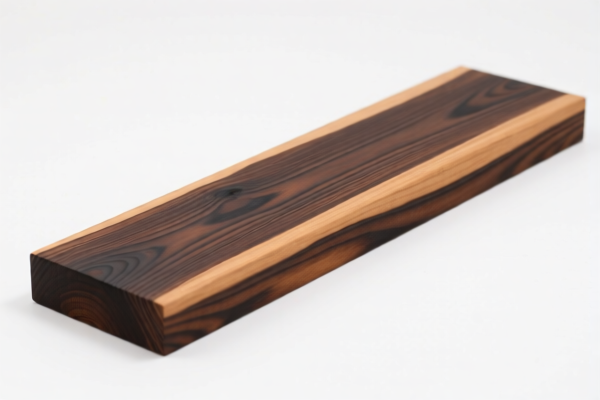
Stained Non-Coniferous Wood refers to processed timber derived from hardwoods (non-coniferous species), which has undergone surface treatment (staining/dyeing) for aesthetic purposes. In international trade, the classification depends heavily on the degree of processing (sawn, sliced, chipped) and thickness.
⚠️ Key Classification Distinction:
- If the wood is merely sawn, chipped, sliced, or peeled with thickness > 6mm, and potentially planed/sanded/end-joined (but not further shaped into specific articles), it falls under Chapter 44, Heading 4407.
- If it is continuously shaped (tongued, grooved, molded, etc.) along edges/ends, it may fall under Heading 4409.
- If it is used for specific articles (like gates, furniture parts not specified elsewhere), it falls under Heading 4421.
- "Staining" is generally considered a surface treatment that does not change the fundamental character of the wood as a semi-finished product, unless it penetrates deeply to alter chemical properties significantly (which is rare for standard decorative stains).
📦 II. HS Code Classification Details (2026 Latest Tariff Authority)
Based on the provided <DATA>, here are the specific HS Codes for Stained Non-Coniferous Wood products:
| HS Code | Product Description | Processing Status | Tax Rate (Total) |
|---|---|---|---|
| 4407.99.02.95 | Wood sawn or chipped lengthwise, sliced or peeled... thickness > 6mm. Other: Other Other nonconiferous. | Basic processing (Sawn/Sliced/Chipped/Peeling) | 25.0% |
| 4409.21.90.00 | Wood continuously shaped (tongued, grooved, etc.) along edges/ends. Nonconiferous: Of Bamboo: Other. | Shaped/Profiled (Bamboo specifically) | 25.0% |
| 4409.29.06.65 | Wood continuously shaped along any end... other nonconiferous. | Shaped/Profiled (Non-Bamboo Nonconiferous) | 28.2% |
| 4421.99.98.80 | Other articles of wood. Other: Other: Other: Other Other. | Finished/Semi-finished Articles (General) | 28.3% |
🔍 Critical Note:
- The<DATA>does not include specific entries for "Stained" wood in Heading 4407 with a different code than plain nonconiferous wood. Therefore, stained nonconiferous wood generally falls under 4407.99.02.95 if it is simply sawn/sliced/chipped (>6mm thick).
- If the wood is bamboo, it is classified separately under 4409.21.90.00.
- If the wood is shaped into profiles (tongue/groove), use 4409 codes.
- If it is made into specific articles (e.g., window frames, doors not specified elsewhere), use 4421.99.98.80.
💰 III. 2026 Latest Tariff Rate Breakdown (Including Surtaxes)
✅ Applicable Country: United States (US)
✅ Origin: China (CN) (Assumed based on typical surtax context)
✅ Effective Date: Ongoing (Post-2025 adjustments)
🎯 1. 4407.99.02.95 – Sawn/Sliced Nonconiferous Wood (Thickness > 6mm)
| Item | Detail |
|---|---|
| Base Tariff | 0.0% (ad valorem) |
| Section 301 Surtax | +25.0% |
| Total Tax Rate | 25.0% |
| Tax Calculation | CIF Value × 25% |
| De Minimis Exemption | ❌ Not Eligible (Deny de minimis for Section 301 goods) |
| Legal Basis | USITC:4407.99.02.95 → Section 301: Footnote 9903.88.01 |
📌 Explanation:
- Nonconiferous wood (hardwood) sawn or sliced is subject to 25% surtax under Section 301.
- Base duty is 0%, but the 25% additional duty is mandatory for Chinese-origin goods.
- Staining does not exempt the product from this surtax.
🎯 2. 4409.21.90.00 – Shaped Bamboo Wood
| Item | Detail |
|---|---|
| Base Tariff | 0.0% |
| Section 301 Surtax | +25.0% |
| Total Tax Rate | 25.0% |
| Tax Calculation | CIF Value × 25% |
| Legal Basis | USITC:4409.21.90.00 → Section 301: Footnote 9903.88.01 |
📌 Note:
- Bamboo is treated separately from other nonconiferous woods in HS 4409.
- Still subject to 25% surtax.
🎯 3. 4409.29.06.65 – Shaped Non-Bamboo Nonconiferous Wood
| Item | Detail |
|---|---|
| Base Tariff | 3.2% |
| Section 301 Surtax | +25.0% |
| Total Tax Rate | 28.2% |
| Tax Calculation | CIF Value × 28.2% |
| Legal Basis | USITC:4409.29.06.65 → Section 301: Footnote 9903.88.01 |
📌 Note:
- Shaped wood (tongued/grooved) has a higher base duty (3.2%) compared to plain sawn wood (0%).
- Total effective rate is 28.2%.
🎯 4. 4421.99.98.80 – Other Wooden Articles (General)
| Item | Detail |
|---|---|
| Base Tariff | 3.3% |
| Section 301 Surtax | +25.0% |
| Total Tax Rate | 28.3% |
| Tax Calculation | CIF Value × 28.3% |
| Legal Basis | USITC:4421.99.98.80 → Section 301: Footnote 9903.88.01 |
📌 Note:
- This code is a "basket" for other wooden articles not specifically listed elsewhere (e.g., window frames, door frames, skirting boards if not classified under 4409).
- Highest total rate in this set: 28.3%.
🛠️ IV. Customs Clearance Practical Advice (Real-World Pitfall Guide)
✅ 1. Documentation Checklist (Non-Negotiable)
| Document | Required? | Description |
|---|---|---|
| ✅ Commercial Invoice | ✔️ | Must clearly state "Stained Nonconiferous Wood" and HS Code. |
| ✅ Packing List | ✔️ | Detail dimensions, thickness, and volume. |
| ✅ Bill of Lading/Air Waybill | ✔️ | Standard shipping document. |
| ✅ Certificate of Origin | ✔️ | Proof of Chinese origin (triggers surtax). |
| ✅ ISF (Importer Security Filing) | ✔️ | For ocean freight, file 24 hours before loading. |
| ✅ Phytosanitary Certificate | ✔️ | CRITICAL: Wood products require phytosanitary certification to prove freedom from pests (e.g., oak wilt, emerald ash borer). |
| ✅ Fumigation Certificate | ✔️ | If wood is not heat-treated or chemically fumigated, customs will reject entry. |
| ✅ Product Specifications | ✔️ | Include thickness, species (if possible), stain type, and dimensions. |
✅ 2. Declaration Tips (Key Mantras)
🔥 "Accurate HS Code, Phytosanitary Cert, No Pests, Smooth Entry!"
| Scenario | Correct Declaration | Incorrect Declaration |
|---|---|---|
| Sawn/Sliced Wood >6mm | 4407.99.02.95 – "Sawn Nonconiferous Wood, Thickness 12mm, Stained" |
Misdeclare as "Wood Furniture" (4421) → Higher duty + inspection |
| Shaped/Tongued Wood | 4409.29.06.65 – "Shaped Nonconiferous Wood Strip" |
Misdeclare as 4407 → Under-declaration of processing |
| Bamboo Wood | 4409.21.90.00 – "Shaped Bamboo Wood" |
Misdeclare as "Other Nonconiferous" → Classification error |
| Pallets/Crates | If used for shipping, declare separately (may have different rules) | Mixing with product wood → Confusion in value allocation |
✅ 3. Special Handling Cases
| Case | Handling Advice |
|---|---|
| Fumigation Required | Wood must be fumigated or heat-treated (ISPM 15 standard) if it is raw or minimally processed. Staining does not replace fumigation. |
| Species Identification | If the wood species is sensitive (e.g., Oak, Walnut, Teak), ensure it is not listed in CITES Appendix I/II. Most common nonconiferous woods are fine, but always verify. |
| Stain Composition | If the stain contains hazardous chemicals (e.g., heavy metals, high VOCs), additional EPA/REACH compliance may be needed for the finished article (if declared as such). |
| Value Allocation | If wood and stain are imported together, ensure the value of the wood is clearly stated for duty calculation. The stain value is usually negligible but must be allocated correctly. |
🌍 V. Global Market Comparison (2026 Latest)
| Country/Region | Recommended HS Code | Tariff Rate (China Origin) | Certification Requirements | Remarks |
|---|---|---|---|---|
| 🇺🇸 USA | 4407.99.02.95 |
25.0% | Phytosanitary + Fumigation | High surtax under Section 301. |
| 🇨🇳 China | 4407.99.02.95 |
5% - 10% | N/A | No surtax. Domestic consumption. |
| 🇪🇺 EU | 4407.99.99 |
0% - 5% | FLEGT / EUTR Compliance | Must prove legal timber origin. |
| 🇬🇧 UK | 4407.99.99 |
0% - 5% | UKCA / Timber Regulation | Post-Brexit rules apply. |
| 🇯🇵 Japan | 4407.99.90 |
0% - 5% | Phytosanitary | Low base duty. |
📌 Conclusion:
- USA has the highest barrier due to the 25% Section 301 surtax.
- EU and UK focus on legal sourcing (FLEGT/EUTR) rather than high tariffs.
- China has moderate tariffs but no surtax.
📌 VI. Common Errors & Pitfalls (Blood Lessons)
❌ Error 1: Forgetting the Phytosanitary Certificate
👉 Consequence: Goods held at customs, fumigated at importer’s expense, or returned/destroyed.
👉 Solution: Obtain a phytosanitary certificate from the exporting country’s agricultural authority.
❌ Error 2: Misclassifying Shaped Wood as Plain Sawed Wood
👉 Consequence: Underpayment of duty (e.g., declaring 4407 instead of 4409).
👉 Penalty: Customs audit, back taxes, fines, and potential seizure.
❌ Error 3: Ignoring CITES Restrictions
👉 Consequence: If the wood species is protected (e.g., certain Rosewoods, Mahoganies), import is illegal without CITES permits.
👉 Solution: Verify species against CITES Appendices before shipment.
❌ Error 4: Not Declaring "Stained" Properly
👉 Consequence: If the stain contains hazardous materials, customs may flag the shipment for chemical compliance issues.
👉 Solution: Provide SDS (Safety Data Sheet) for the stain if required by the finished product’s destination regulations.
✅ Correct Practice:
"Nonconiferous Wood, Sawn, 12mm Thick, Stained with Water-Based Dye, Fumigated per ISPM 15, No CITES Species"
🎯 VII. Conclusion: Professional Declaration, Cost Efficiency!
🎯 Remember the Mantra:
🔹 "Fumigate First, Declare Second, HS Code Third, Surtax Pays!"
🔹 "25% Surtax for US, Phytosanitary for All, Species Check is Key!"
📌 Pro Tip:
If your stained wood is not from China (e.g., from Brazil, Vietnam, or Europe), you avoid the 25% Section 301 surtax.
- Brazilian Hardwood: Base duty 0%, No Surtax → 0% Total (but high base duty may apply in other markets).
- Vietnamese Bamboo: May have different duty rates under trade agreements.
- EU Timber: 0% base duty, but must comply with EUTR.
📞 Immediate Action:
- Contact your customs broker.
- Provide Phytosanitary Certificate and Fumigation Certificate.
- Apply for Advance Ruling if uncertain about HS Code.
📣 Final Note:
🚀 Clear Customs, Save Costs, Avoid Delays!
📊 Your Tariff Cost: 25% (US) | 0-5% (Other Markets)
✨ Professional Customs Clearance Starts with Accurate Classification!
💼 Every Percent Saved is Pure Profit!
用户评价
关于 HS 编码归类
协调制度(HS)是由世界海关组织(WCO)制定的国际贸易商品分类标准。全球 200 多个国家采用 HS 系统作为海关关税、贸易统计和进出口监管的基础。
每个 HS 编码遵循以下层级结构:
- 章(2 位)——商品大类(例如:第 84 章:机器和机械设备)
- 品目(4 位)——章内的更具体分类
- 子目(6 位)——国际通用细分,所有 WCO 成员国统一使用
- 本国细分(8-10 位)——各国自行扩展的细分编码,如美国 HTSUS 10 位编码
正确的 HS 编码归类对于顺利通关、准确缴纳关税和遵守贸易法规至关重要。错误归类可能导致海关延误、多缴关税或罚款。
从CN进口到US时,适用的关税税率可能包括:
- 最惠国(MFN)税率——适用于 WTO 成员国的标准关税税率
- 普通税率——适用于无贸易协定国家
- 贸易救济关税——附加关税,如 301 条款(反倾销)、232 条款(国家安全)或反补贴税
本页内容仅供参考。如需正式归类,请咨询当地海关或持牌报关代理。