Stainless Steel Wire
CN → US| HS编码 | 关税税率 | 原产国 | 目的国 | 文档 |
|---|---|---|---|---|
| 7223009000 | 35.0% | CN | US | 官方文档 |
| 8307106000 | 38.8% | CN | US | 官方文档 |
| 7312101050 | 85.0% | CN | US | 官方文档 |
| 7312101070 | 85.0% | CN | US | 官方文档 |
| 7223001016 | 35.0% | CN | US | 官方文档 |
| 7223001031 | 35.0% | CN | US | 官方文档 |
商品图片
AI分析
🧵 Stainless Steel Wire (不锈钢钢丝)
🌐 HS Code Reference & Customs Clearance Guide | 2026 Latest Tariff Analysis | Professional Clearance Strategy
📌 I. Product Definition & Classification: What Exactly is "Stainless Steel Wire"?
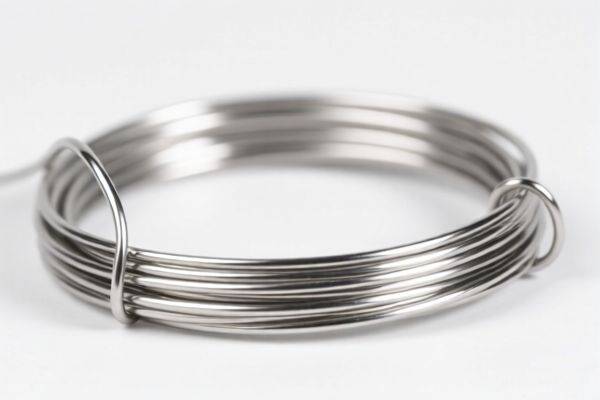
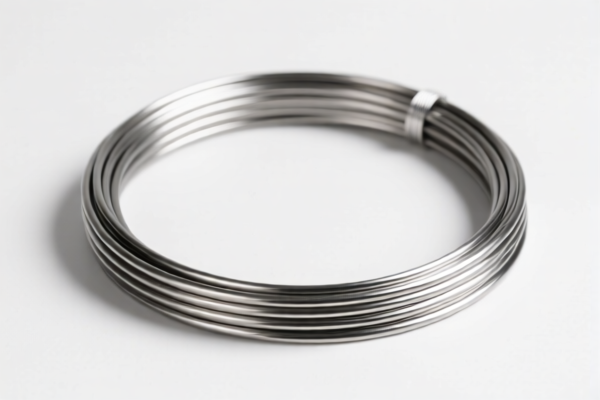
Stainless steel wire is a general term for steel products made from stainless steel alloys, drawn into wire shape. In international trade, the classification depends heavily on physical form (solid wire vs. twisted/stranded) and dimensional characteristics (diameter/thinness).
The key distinction lies in whether the wire is: 1. Solid Single Strand: Classified under Chapter 72 (Iron/Steel). 2. Stranded/Cabled: Classified under Chapter 73 (Articles of Iron/Steel). 3. Fasteners/Fittings: Sometimes misclassified under Chapter 83 (Miscellaneous Articles).
⚠️ Critical Distinction:
- If it is a single, solid strand of stainless steel → Typically HS 7223.
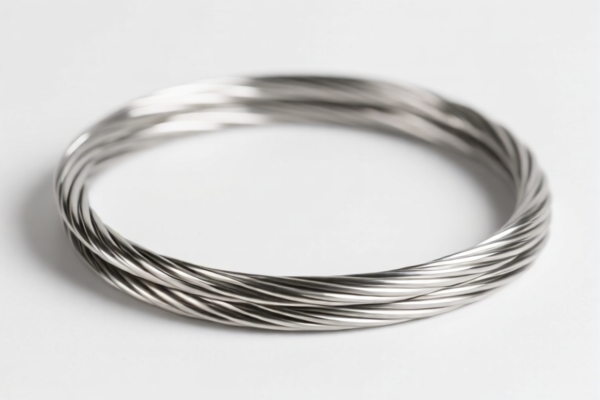
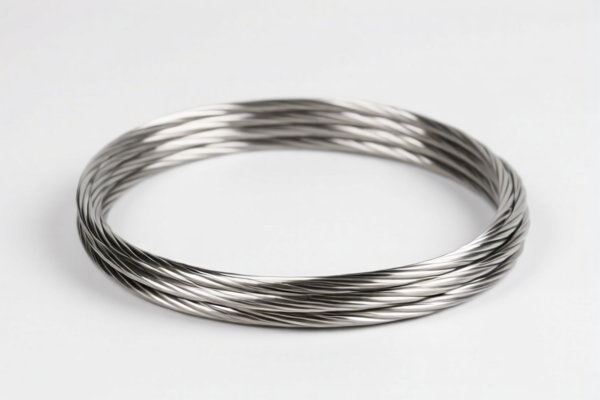
- If it is twisted, stranded, or braided into a rope/cable structure → Typically HS 7312.
- If it is used as a fastener component or specific industrial part not meeting wire standards → May fall under HS 8307.
📦 II. HS Code Classification Details (2026 Latest Tariff Authority Comparison)
| HS Code | Product Description | Classification Logic | Total Tax Rate (US Import from CN) |
|---|---|---|---|
7223.00.90.00 |
Stainless Steel Wire (General) | Material & Form Match: Standard solid stainless steel wire, not specified as fine strand or special alloy. | 35.0% |
8307.10.60.00 |
Stainless Steel Wire (Inferred) | Material & Form Inference: Often misclassified here if considered a "rigid tube/conduit" part or specific fitting wire, though less common for pure wire. | 38.8% |
7312.10.10.50 |
Stainless Steel Wire (Stranded/Cable) | Categorized as Stranded/Cable: If the wire is twisted or stranded into a cable-like structure. | 85.0% |
7312.10.10.70 |
Stainless Steel Wire (Other) | Other Category: Stranded/cable products falling into other specific sub-categories not listed above. | 85.0% |
7223.00.10.16 |
Fine Strand Stainless Steel Wire | Matches Fine Diameter Feature: Specifically defined as "fine strand" wire, implying smaller diameter/high tensile specific grades. | 35.0% |
🔍 Key Insight:
- Chapter 72 (7223) applies to solid single-strand wire. Tax rate is significantly lower (35%).
- Chapter 73 (7312) applies to stranded, twisted, or braided wires (cables/ropes). Tax rate is punitive (85%).
- Chapter 83 (8307) is rare for pure wire and usually applies to rigid fittings; using it may trigger audits if the product is clearly wire.
💰 III. 2026 Latest Tariff Rate Breakdown (Including Surcharges & Policy Add-ons)
✅ Applicable Country: United States (US)
✅ Origin: China (CN)
✅ Effective Date: November 10, 2025 onwards (inclusive of subsequent imports)
🎯 1. 7223.00.90.00 & 7223.00.10.16 —— Solid Stainless Steel Wire / Fine Strand
| Item | Content |
|---|---|
| Base Duty Rate | 0.0% (ad valorem) |
| Section 301 Surcharge | +25.0% |
| Section 122 Tariff | +10.0% |
| Total Tax Rate | 35.0% |
| Tax Calculation | CIF Value × 35% |
| De Minimis Exemption | ❌ Not Applicable (deny_de_minimis) |
| Legal Basis Path | USITC:7223.00.90.00 → Section301:Footnote9903.88.01 → IEEPA:9903.01.25 |
📌 Explanation:
- Solid stainless steel wire enjoys a 0% base duty because it is considered an industrial raw material.
- However, due to US-China trade tensions, Section 301 (25%) and Section 122 (10%) apply, totaling 35%.
- Fine strand wire (7223.00.10.16) shares the same rate as general wire (7223.00.90.00) under current data.
🎯 2. 8307.10.60.00 —— Stainless Steel Wire (Inferred/Fitting Context)
| Item | Content |
|---|---|
| Base Duty Rate | 3.8% |
| Section 301 Surcharge | +25.0% |
| Section 122 Tariff | +10.0% |
| Total Tax Rate | 38.8% |
| Tax Calculation | CIF Value × 38.8% |
| De Minimis Exemption | ❌ Not Applicable |
| Legal Basis Path | USITC:8307.10.60.00 → Section301 → IEEPA |
📌 Note:
- This classification is likely used if the wire is deemed a component of a fitting or rigid tube system rather than a free-standing wire.
- The base duty is higher (3.8%), leading to a slightly higher total tax (38.8%).
🎯 3. 7312.10.10.50 & 7312.10.10.70 —— Stranded/Cabled Stainless Steel Wire
| Item | Content |
|---|---|
| Base Duty Rate | 0.0% |
| Section 301 Surcharge | +25.0% |
| Section 122 Tariff | +10.0% |
| Steel/Aluminum/Copper Surcharge | +50.0% |
| Total Tax Rate | 85.0% |
| Tax Calculation | CIF Value × 85.0% |
| De Minimis Exemption | ❌ Not Applicable |
| Legal Basis Path | USITC:7312.10.10.50/70 → Section301 → IEEPA → Steel/Copper Surcharge:50% |
📌 CRITICAL WARNING:
- Stranded or twisted wires fall under HS 7312.
- In addition to the standard 25% (301) and 10% (122) tariffs, there is an additional 50% surcharge for steel/aluminum/copper products.
- Total Tax Rate: 85%. This is a punitive rate designed to discourage import of structured steel wire products.
- Do NOT misclassify stranded wire as solid wire (7223) to avoid this penalty. Customs will inspect the physical structure.
🛠️ IV. Customs Clearance Practical Advice (Battle-Tested Pitfall Guide)
✅ 1. Documentation Checklist (Non-Negotiable)
| Document | Required | Explanation |
|---|---|---|
| ✅ Product Specifications | ✔️ | Must specify: Material grade (e.g., 304, 316), Diameter, Tensile Strength, Form (Solid vs. Stranded). |
| ✅ Technical Data Sheet | ✔️ | Explicitly state if the wire is "single strand" or "twisted/stranded". |
| ✅ Product Photos | ✔️ | Clear macro shots showing surface texture (smooth for solid, twisted pattern for stranded). |
| ✅ Commercial Invoice | ✔️ | Description must match HS Code logic. Do not use vague terms like "steel wire" if it’s stranded cable. |
| ✅ Packing List | ✔️ | Include weight and dimensions. |
| ✅ Certificate of Origin | ✔️ | Proves Chinese origin, triggering the surcharges. |
✅ 2. Declaration Strategy (Key Mnemonics)
🔥 “Solid is 72 (35%), Stranded is 73 (85%)! Don’t Mix Them Up!”
| Scenario | Correct Declaration | Wrong Action | Consequence |
|---|---|---|---|
| Single solid strand | 7223.00.90.00 or 7223.00.10.16 |
Declaring as 7312 |
Overpaying 50% tax. |
| Twisted/Stranded/Cable | 7312.10.10.50 |
Declaring as 7223 |
Audit, Penalty, Back Taxes, Seizure! |
| Wire used in Fittings | 8307.10.60.00 (if applicable) |
Declaring as pure wire | Potential misclassification; 38.8% vs 35/85%. |
| Fine Strand (Thin) | 7223.00.10.16 |
Declaring as 7223.00.90.00 |
Minor difference, but precision helps. |
📌 Crucial Tip:
- If the wire is twisted into a rope-like structure, it is HS 7312.
- If it is a single, straight strand, it is HS 7223.
- Customs inspectors can easily distinguish these by looking at the product. Lying about the structure is high-risk.
✅ 3. Special Circumstances Handling
| Scenario | Handling Advice |
|---|---|
| OEM Custom Wire | Provide customer specs. Ensure the description matches the physical form exactly. |
| Mixed Shipment | If a shipment contains both solid wire and stranded cables, declare separately with different HS Codes. Do not bundle under one code. |
| Alloy Composition | Ensure the stainless steel grade is clearly stated. Some high-alloy steels may have different base duties, but surcharges usually remain. |
| Pre-Audit Preparation | Have macro-photos ready to prove whether the wire is solid or stranded. |
🌍 V. Global Market Comparison (2026 Latest)
| Country/Region | Recommended HS Code | Tax Rate (China Origin) | Certification | Notes |
|---|---|---|---|---|
| 🇺🇸 USA | 7223.00.90.00 (Solid) |
35% | None | High Risk: Stranded (7312) hits 85%. |
| 🇺🇸 USA | 7312.10.10.50 (Stranded) |
85% | None | Punitive tax on structured steel. |
| 🇪🇺 EU | 7223 / 7312 |
0% - 2.5% | REACH/RoHS | Lower base tariffs, no 301/122 surcharges. |
| 🇨🇳 China | 7223 / 7312 |
0% - 6% | N/A | Import duties vary, but usually low for raw materials. |
| 🇬🇧 UK | 7223 / 7312 |
0% - 2.5% | UKCA | Post-Brexit rules align closely with EU. |
📌 Conclusion:
- The US is the only major market with these punitive 35% and 85% rates for stainless steel wire.
- Misclassification is the biggest risk. A 50% tax difference exists between solid and stranded wire.
- EU/UK/China do not have Section 301/122 surcharges, making them more cost-effective for these products.
📌 VI. Common Mistakes & Pitfall Guide (Blood-Teaching Lessons)
❌ Mistake 1: Declaring stranded cable as solid wire (7223)
👉 Consequence: Customs inspection reveals twisted structure → Penalty, Back Taxes of 50%, and potential fraud charges!
❌ Mistake 2: Using vague description "Stainless Steel Wire" without specifying form
👉 Consequence: Customs may assign the highest duty rate (85%) by default if they suspect stranded structure.
❌ Mistake 3: Not distinguishing between Solid and Fine Strand
👉 Consequence: Minor impact (both 35%), but precision avoids unnecessary queries.
❌ Mistake 4: Ignoring the 50% Steel Surcharge on stranded wire
👉 Consequence: Budgeting errors. If you plan for 35% but face 85%, your profit margin disappears.
✅ Correct Practice:
"Stainless Steel Wire, Type 304, Single Solid Strand, Diameter 2mm, Polished Surface"
OR
"Stainless Steel Stranded Wire, Type 316, Twisted Cable Structure, Diameter 5mm"
🎯 VII. Conclusion: Precision Classification Saves Cost!
🎯 Remember the Mantra:
🔹 “Solid = 7223 (35%), Stranded = 7312 (85%)! Check the twist!”
🔹 “HS Code determines destiny, 50% difference exists, misdeclare and lose everything!”
📌 Pro Tip:
If your stainless steel wire is originating from Vietnam, Mexico, Thailand, or Malaysia, you may avoid US surcharges (Section 301/122).
Consider supply chain diversification or substantial transformation in third countries to reduce costs significantly.
📣 Immediate Action:
📞 Contact a professional customs broker + Provide product photos + Apply for Advance Ruling if volume is high.
🚀 Ensure your stainless steel wire, clears smoothly, avoids penalties, and maximizes profit!
✨ Professional clearance starts with accurate classification!
💼 Every cent of your cost deserves precise calculation!
用户评价
关于 HS 编码归类
协调制度(HS)是由世界海关组织(WCO)制定的国际贸易商品分类标准。全球 200 多个国家采用 HS 系统作为海关关税、贸易统计和进出口监管的基础。
每个 HS 编码遵循以下层级结构:
- 章(2 位)——商品大类(例如:第 84 章:机器和机械设备)
- 品目(4 位)——章内的更具体分类
- 子目(6 位)——国际通用细分,所有 WCO 成员国统一使用
- 本国细分(8-10 位)——各国自行扩展的细分编码,如美国 HTSUS 10 位编码
正确的 HS 编码归类对于顺利通关、准确缴纳关税和遵守贸易法规至关重要。错误归类可能导致海关延误、多缴关税或罚款。
从CN进口到US时,适用的关税税率可能包括:
- 最惠国(MFN)税率——适用于 WTO 成员国的标准关税税率
- 普通税率——适用于无贸易协定国家
- 贸易救济关税——附加关税,如 301 条款(反倾销)、232 条款(国家安全)或反补贴税
本页内容仅供参考。如需正式归类,请咨询当地海关或持牌报关代理。