Stainless Steel Wire
CN → US| HS Code | Tariff Rate | Origin | Destination | Doc |
|---|---|---|---|---|
| 7223009000 | 35.0% | CN | US | Official Doc |
| 8307106000 | 38.8% | CN | US | Official Doc |
| 7312101050 | 85.0% | CN | US | Official Doc |
| 7312101070 | 85.0% | CN | US | Official Doc |
| 7223001016 | 35.0% | CN | US | Official Doc |
| 7223001031 | 35.0% | CN | US | Official Doc |
Product Images
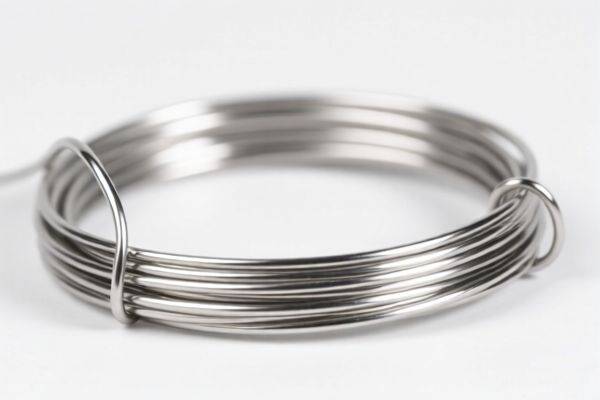
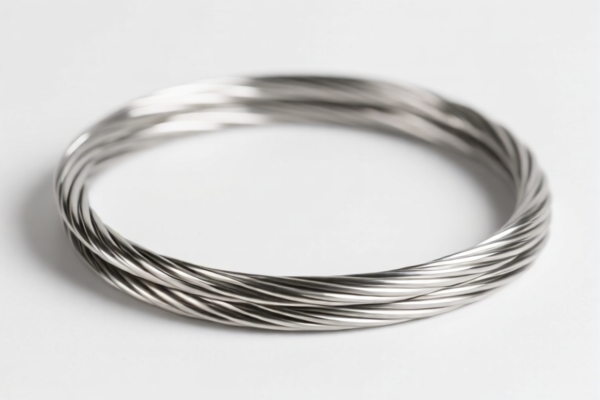
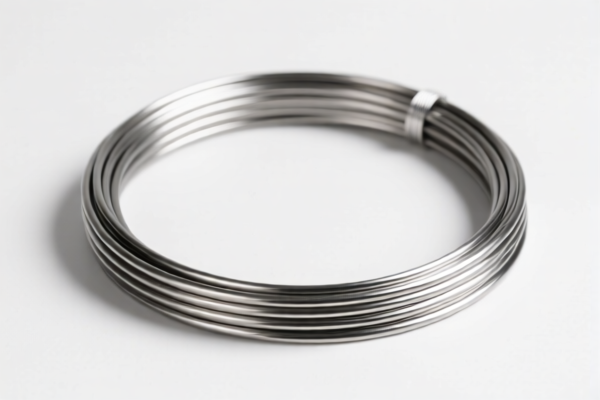
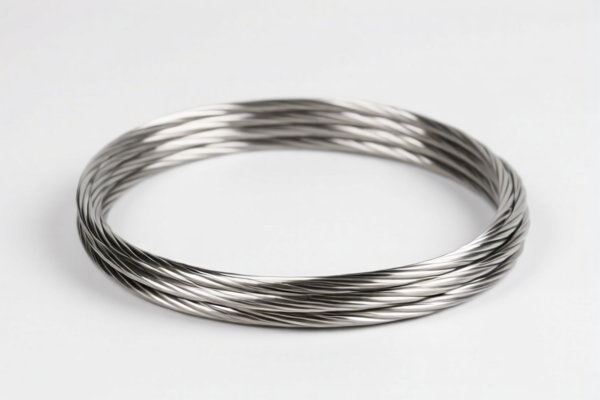
AI Analysis
🧵 Stainless Steel Wire (不锈钢钢丝)
🌐 HS Code Reference & Customs Clearance Guide | 2026 Latest Tariff Analysis | Professional Clearance Strategy
📌 I. Product Definition & Classification: What Exactly is "Stainless Steel Wire"?
Stainless steel wire is a general term for steel products made from stainless steel alloys, drawn into wire shape. In international trade, the classification depends heavily on physical form (solid wire vs. twisted/stranded) and dimensional characteristics (diameter/thinness).
The key distinction lies in whether the wire is: 1. Solid Single Strand: Classified under Chapter 72 (Iron/Steel). 2. Stranded/Cabled: Classified under Chapter 73 (Articles of Iron/Steel). 3. Fasteners/Fittings: Sometimes misclassified under Chapter 83 (Miscellaneous Articles).
⚠️ Critical Distinction:
- If it is a single, solid strand of stainless steel → Typically HS 7223.
- If it is twisted, stranded, or braided into a rope/cable structure → Typically HS 7312.
- If it is used as a fastener component or specific industrial part not meeting wire standards → May fall under HS 8307.
📦 II. HS Code Classification Details (2026 Latest Tariff Authority Comparison)
| HS Code | Product Description | Classification Logic | Total Tax Rate (US Import from CN) |
|---|---|---|---|
7223.00.90.00 |
Stainless Steel Wire (General) | Material & Form Match: Standard solid stainless steel wire, not specified as fine strand or special alloy. | 35.0% |
8307.10.60.00 |
Stainless Steel Wire (Inferred) | Material & Form Inference: Often misclassified here if considered a "rigid tube/conduit" part or specific fitting wire, though less common for pure wire. | 38.8% |
7312.10.10.50 |
Stainless Steel Wire (Stranded/Cable) | Categorized as Stranded/Cable: If the wire is twisted or stranded into a cable-like structure. | 85.0% |
7312.10.10.70 |
Stainless Steel Wire (Other) | Other Category: Stranded/cable products falling into other specific sub-categories not listed above. | 85.0% |
7223.00.10.16 |
Fine Strand Stainless Steel Wire | Matches Fine Diameter Feature: Specifically defined as "fine strand" wire, implying smaller diameter/high tensile specific grades. | 35.0% |
🔍 Key Insight:
- Chapter 72 (7223) applies to solid single-strand wire. Tax rate is significantly lower (35%).
- Chapter 73 (7312) applies to stranded, twisted, or braided wires (cables/ropes). Tax rate is punitive (85%).
- Chapter 83 (8307) is rare for pure wire and usually applies to rigid fittings; using it may trigger audits if the product is clearly wire.
💰 III. 2026 Latest Tariff Rate Breakdown (Including Surcharges & Policy Add-ons)
✅ Applicable Country: United States (US)
✅ Origin: China (CN)
✅ Effective Date: November 10, 2025 onwards (inclusive of subsequent imports)
🎯 1. 7223.00.90.00 & 7223.00.10.16 —— Solid Stainless Steel Wire / Fine Strand
| Item | Content |
|---|---|
| Base Duty Rate | 0.0% (ad valorem) |
| Section 301 Surcharge | +25.0% |
| Section 122 Tariff | +10.0% |
| Total Tax Rate | 35.0% |
| Tax Calculation | CIF Value × 35% |
| De Minimis Exemption | ❌ Not Applicable (deny_de_minimis) |
| Legal Basis Path | USITC:7223.00.90.00 → Section301:Footnote9903.88.01 → IEEPA:9903.01.25 |
📌 Explanation:
- Solid stainless steel wire enjoys a 0% base duty because it is considered an industrial raw material.
- However, due to US-China trade tensions, Section 301 (25%) and Section 122 (10%) apply, totaling 35%.
- Fine strand wire (7223.00.10.16) shares the same rate as general wire (7223.00.90.00) under current data.
🎯 2. 8307.10.60.00 —— Stainless Steel Wire (Inferred/Fitting Context)
| Item | Content |
|---|---|
| Base Duty Rate | 3.8% |
| Section 301 Surcharge | +25.0% |
| Section 122 Tariff | +10.0% |
| Total Tax Rate | 38.8% |
| Tax Calculation | CIF Value × 38.8% |
| De Minimis Exemption | ❌ Not Applicable |
| Legal Basis Path | USITC:8307.10.60.00 → Section301 → IEEPA |
📌 Note:
- This classification is likely used if the wire is deemed a component of a fitting or rigid tube system rather than a free-standing wire.
- The base duty is higher (3.8%), leading to a slightly higher total tax (38.8%).
🎯 3. 7312.10.10.50 & 7312.10.10.70 —— Stranded/Cabled Stainless Steel Wire
| Item | Content |
|---|---|
| Base Duty Rate | 0.0% |
| Section 301 Surcharge | +25.0% |
| Section 122 Tariff | +10.0% |
| Steel/Aluminum/Copper Surcharge | +50.0% |
| Total Tax Rate | 85.0% |
| Tax Calculation | CIF Value × 85.0% |
| De Minimis Exemption | ❌ Not Applicable |
| Legal Basis Path | USITC:7312.10.10.50/70 → Section301 → IEEPA → Steel/Copper Surcharge:50% |
📌 CRITICAL WARNING:
- Stranded or twisted wires fall under HS 7312.
- In addition to the standard 25% (301) and 10% (122) tariffs, there is an additional 50% surcharge for steel/aluminum/copper products.
- Total Tax Rate: 85%. This is a punitive rate designed to discourage import of structured steel wire products.
- Do NOT misclassify stranded wire as solid wire (7223) to avoid this penalty. Customs will inspect the physical structure.
🛠️ IV. Customs Clearance Practical Advice (Battle-Tested Pitfall Guide)
✅ 1. Documentation Checklist (Non-Negotiable)
| Document | Required | Explanation |
|---|---|---|
| ✅ Product Specifications | ✔️ | Must specify: Material grade (e.g., 304, 316), Diameter, Tensile Strength, Form (Solid vs. Stranded). |
| ✅ Technical Data Sheet | ✔️ | Explicitly state if the wire is "single strand" or "twisted/stranded". |
| ✅ Product Photos | ✔️ | Clear macro shots showing surface texture (smooth for solid, twisted pattern for stranded). |
| ✅ Commercial Invoice | ✔️ | Description must match HS Code logic. Do not use vague terms like "steel wire" if it’s stranded cable. |
| ✅ Packing List | ✔️ | Include weight and dimensions. |
| ✅ Certificate of Origin | ✔️ | Proves Chinese origin, triggering the surcharges. |
✅ 2. Declaration Strategy (Key Mnemonics)
🔥 “Solid is 72 (35%), Stranded is 73 (85%)! Don’t Mix Them Up!”
| Scenario | Correct Declaration | Wrong Action | Consequence |
|---|---|---|---|
| Single solid strand | 7223.00.90.00 or 7223.00.10.16 |
Declaring as 7312 |
Overpaying 50% tax. |
| Twisted/Stranded/Cable | 7312.10.10.50 |
Declaring as 7223 |
Audit, Penalty, Back Taxes, Seizure! |
| Wire used in Fittings | 8307.10.60.00 (if applicable) |
Declaring as pure wire | Potential misclassification; 38.8% vs 35/85%. |
| Fine Strand (Thin) | 7223.00.10.16 |
Declaring as 7223.00.90.00 |
Minor difference, but precision helps. |
📌 Crucial Tip:
- If the wire is twisted into a rope-like structure, it is HS 7312.
- If it is a single, straight strand, it is HS 7223.
- Customs inspectors can easily distinguish these by looking at the product. Lying about the structure is high-risk.
✅ 3. Special Circumstances Handling
| Scenario | Handling Advice |
|---|---|
| OEM Custom Wire | Provide customer specs. Ensure the description matches the physical form exactly. |
| Mixed Shipment | If a shipment contains both solid wire and stranded cables, declare separately with different HS Codes. Do not bundle under one code. |
| Alloy Composition | Ensure the stainless steel grade is clearly stated. Some high-alloy steels may have different base duties, but surcharges usually remain. |
| Pre-Audit Preparation | Have macro-photos ready to prove whether the wire is solid or stranded. |
🌍 V. Global Market Comparison (2026 Latest)
| Country/Region | Recommended HS Code | Tax Rate (China Origin) | Certification | Notes |
|---|---|---|---|---|
| 🇺🇸 USA | 7223.00.90.00 (Solid) |
35% | None | High Risk: Stranded (7312) hits 85%. |
| 🇺🇸 USA | 7312.10.10.50 (Stranded) |
85% | None | Punitive tax on structured steel. |
| 🇪🇺 EU | 7223 / 7312 |
0% - 2.5% | REACH/RoHS | Lower base tariffs, no 301/122 surcharges. |
| 🇨🇳 China | 7223 / 7312 |
0% - 6% | N/A | Import duties vary, but usually low for raw materials. |
| 🇬🇧 UK | 7223 / 7312 |
0% - 2.5% | UKCA | Post-Brexit rules align closely with EU. |
📌 Conclusion:
- The US is the only major market with these punitive 35% and 85% rates for stainless steel wire.
- Misclassification is the biggest risk. A 50% tax difference exists between solid and stranded wire.
- EU/UK/China do not have Section 301/122 surcharges, making them more cost-effective for these products.
📌 VI. Common Mistakes & Pitfall Guide (Blood-Teaching Lessons)
❌ Mistake 1: Declaring stranded cable as solid wire (7223)
👉 Consequence: Customs inspection reveals twisted structure → Penalty, Back Taxes of 50%, and potential fraud charges!
❌ Mistake 2: Using vague description "Stainless Steel Wire" without specifying form
👉 Consequence: Customs may assign the highest duty rate (85%) by default if they suspect stranded structure.
❌ Mistake 3: Not distinguishing between Solid and Fine Strand
👉 Consequence: Minor impact (both 35%), but precision avoids unnecessary queries.
❌ Mistake 4: Ignoring the 50% Steel Surcharge on stranded wire
👉 Consequence: Budgeting errors. If you plan for 35% but face 85%, your profit margin disappears.
✅ Correct Practice:
"Stainless Steel Wire, Type 304, Single Solid Strand, Diameter 2mm, Polished Surface"
OR
"Stainless Steel Stranded Wire, Type 316, Twisted Cable Structure, Diameter 5mm"
🎯 VII. Conclusion: Precision Classification Saves Cost!
🎯 Remember the Mantra:
🔹 “Solid = 7223 (35%), Stranded = 7312 (85%)! Check the twist!”
🔹 “HS Code determines destiny, 50% difference exists, misdeclare and lose everything!”
📌 Pro Tip:
If your stainless steel wire is originating from Vietnam, Mexico, Thailand, or Malaysia, you may avoid US surcharges (Section 301/122).
Consider supply chain diversification or substantial transformation in third countries to reduce costs significantly.
📣 Immediate Action:
📞 Contact a professional customs broker + Provide product photos + Apply for Advance Ruling if volume is high.
🚀 Ensure your stainless steel wire, clears smoothly, avoids penalties, and maximizes profit!
✨ Professional clearance starts with accurate classification!
💼 Every cent of your cost deserves precise calculation!
Customer Reviews
About HS Code Classification
The Harmonized System (HS) is an internationally standardized nomenclature developed by the World Customs Organization (WCO) to classify traded products. Over 200 countries use the HS system as the basis for customs tariffs, trade statistics, and import/export regulations.
Each HS code follows a hierarchical structure:
- Chapter (2 digits) — Broad category of goods (e.g., Chapter 84: Machinery and Mechanical Appliances)
- Heading (4 digits) — More specific grouping within the chapter
- Subheading (6 digits) — Internationally standardized breakdown, used by all WCO member countries
- National subdivisions (8-10 digits) — Country-specific extensions for further classification, such as US HTSUS 10-digit codes
Correct HS code classification is essential for smooth customs clearance, accurate duty payment, and compliance with trade regulations. Misclassification can lead to customs delays, overpayment of duties, or penalties.
When importing from CN to US, the applicable tariff rates may include:
- Most-Favored-Nation (MFN) rate — The standard duty rate applied to WTO members
- General rate — Applied to countries without trade agreements
- Trade remedy duties — Additional tariffs such as Section 301 (anti-dumping), Section 232 (national security), or countervailing duties
The information provided on this page is for reference purposes only. For official classification, please consult with your local customs authority or a licensed customs broker.