Steel Flat Rolled Products
CN → US| HS编码 | 关税税率 | 原产国 | 目的国 | 文档 |
|---|---|---|---|---|
| 7208260060 | 35.0% | CN | US | 官方文档 |
| 7208270060 | 35.0% | CN | US | 官方文档 |
商品图片
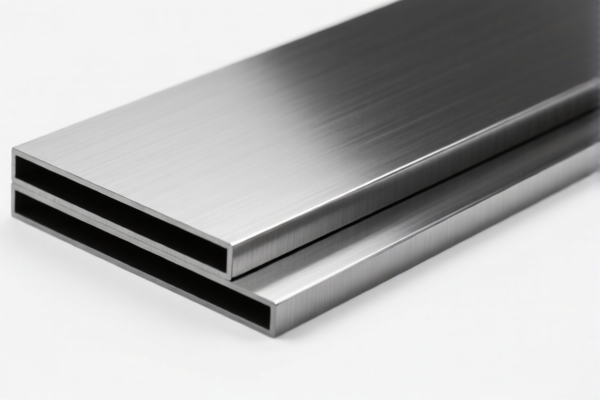
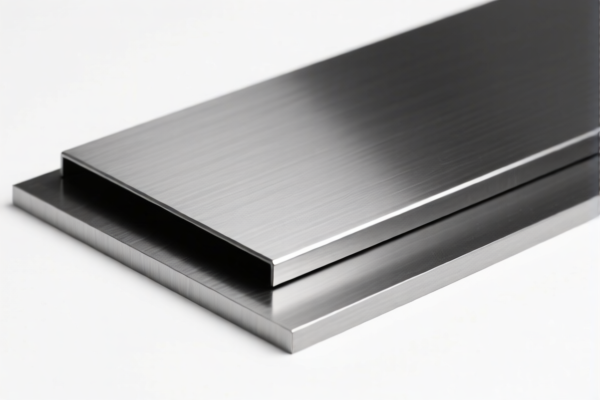
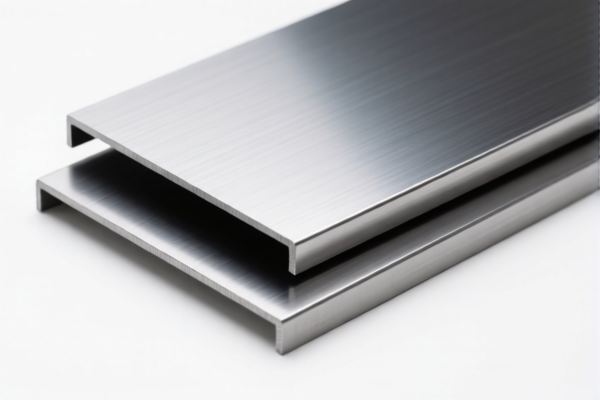
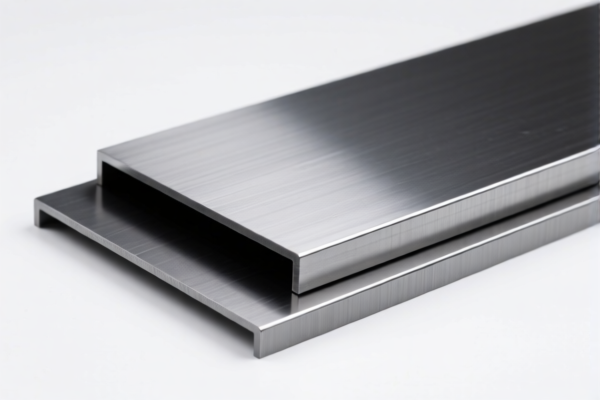
AI分析
🏭 Steel Flat Rolled Products (Hot-Rolled, Non-Alloy Steel)
🌐 HS Code Reference & Customs Clearance Guide | 2026 Latest Tariff Analysis | Professional Strategy
📌 I. Product Definition & Classification: Are You Dealing with Coils or Plates?
Flat-rolled products of iron or nonalloy steel are the backbone of the construction, automotive, and manufacturing industries. In international trade, precise classification depends heavily on two factors: Form (Coils vs. Plates/Sheets) and Dimensions (Width & Thickness).
Based on the provided dataset, we are focusing specifically on: * Material: Iron or Non-alloy Steel * Process: Hot-rolled, not clad, plated, or coated * Form: In Coils (This is critical! Plates/Sheets have different HS codes) * Width: ≥ 600 mm * Work Condition: Not further worked than hot-rolled or pickled
⚠️ Key Distinction Point:
- If the product is in coils and width ≥ 600mm → Look at 7208.xx.xx.60
- If the product is not in coils (plates/sheets) → Different HS code (not covered in this specific data set)
- If the steel is alloyed (e.g., stainless, chrome-plated) → Different HS code (not covered here)
📦 II. HS Code Classification Details (2026 Latest Tariff Authority Comparison)
| HS Code | Product Description | Key Criteria | Thickness Range |
|---|---|---|---|
7208.26.00.60 |
Flat-rolled products, iron/nonalloy steel, width ≥ 600mm, hot-rolled, in coils, not further worked than HR/pickled | Of a thickness of 3 mm or more but less than 4.75 mm | 3.0 mm ≤ T < 4.75 mm |
7208.27.00.60 |
Flat-rolled products, iron/nonalloy steel, width ≥ 600mm, hot-rolled, in coils, not further worked than HR/pickled | Of a thickness of less than 3 mm | T < 3.0 mm |
🔍 Critical Reminder:
- Both codes apply only to "In Coils" products. If your steel comes in sheets/plates, these codes are incorrect.
- Pickling is allowed: The description specifies "not further worked than hot-rolled, pickled." This means removing the oxide scale after hot rolling is permitted under these codes.
- No Coatings: If you have galvanised, chrome-plated, or tin-plated steel, these codes do not apply.
💰 III. 2026 Latest Tariff Rate Breakdown (Detailed Tax Clauses)
✅ Applicable Country: United States (US)
✅ Origin: China (CN) (Implied by the 25% additional tariff common in US-China trade context for these HS codes)
✅ Effective Time: Current (Subject to USITC and IEEPA regulations)
🎯 1. 7208.26.00.60 — Thick Coils (3mm to <4.75mm)
| Item | Detail |
|---|---|
| Base Tariff Rate | 0.0% (Most Favored Nation / General rate) |
| Additional Tariff (Section 301) | +25.0% |
| Total Tax Rate | 25.0% |
| Tax Calculation | CIF Value × 25.0% |
| De Minimis Exemption? | ❌ NO (Steel products are typically excluded from de minimis thresholds) |
| Legal Basis Path | USITC: 7208.26.00.60 → Section 301: Footnote 9903.01.25 (Steel) |
📌 Explanation:
- The Base Tariff is 0%, meaning standard MFN countries pay nothing for this basic steel form.
- However, due to Section 301 tariffs on Chinese goods, an additional 25% is levied.
- Total Effective Rate: 25%. This is a significant cost driver for mid-thickness steel coils.
🎯 2. 7208.27.00.60 — Thin Coils (< 3mm)
| Item | Detail |
|---|---|
| Base Tariff Rate | 0.0% (Most Favored Nation / General rate) |
| Additional Tariff (Section 301) | +25.0% |
| Total Tax Rate | 25.0% |
| Tax Calculation | CIF Value × 25.0% |
| De Minimis Exemption? | ❌ NO (Steel products are typically excluded from de minimis thresholds) |
| Legal Basis Path | USITC: 7208.27.00.60 → Section 301: Footnote 9903.01.25 (Steel) |
📌 Explanation:
- Despite being thinner, the tariff structure remains identical to the thicker coils in this dataset.
- Total Effective Rate: 25%.
- Note: Some thinner steel products might fall under different subheadings (e.g., 7209 or 7210) if they are further worked (cold-rolled, coated), but since this data specifies "hot-rolled, pickled," it stays at 25%.
🛠️ IV. Customs Clearance Practical Advice (Real-World Pitfall Guide)
✅ 1. Documentation Checklist (Non-Negotiable)
| Document | Must Provide? | Explanation |
|---|---|---|
| ✅ Product Specification Sheet | ✔️ | Must clearly state: "Hot-Rolled, Non-Alloy Steel, Pickled, In Coils." |
| ✅ Commercial Invoice | ✔️ | Must specify Width (≥600mm) and Thickness precisely. |
| ✅ Packing List | ✔️ | Must confirm product is shipped in coils, not cut into plates/sheets. |
| ✅ Mill Test Certificate (MTC) | ✔️ | To prove "Non-Alloy" status and chemical composition. |
| ✅ Country of Origin Certificate | ✔️ | Essential for verifying USITC Section 301 applicability. |
✅ 2. Declaration Tips (Key Mantras)
🔥 “Width Over 600, Thickness Dictates Code, Coils Not Sheets, Pickled is OK!”
| Scenario | Correct Declaration | Wrong Approach |
|---|---|---|
| Steel Coils, 4.0mm thick | 7208.26.00.60 |
Misclassifying as 7208.27... → Underpayment penalty |
| Steel Coils, 2.5mm thick | 7208.27.00.60 |
Misclassifying as 7208.26... → Overpayment/Discrepancy |
| Steel Sheets (Not Coils) | NOT 7208.2x | Using these codes → Customs Rejection/Seizure |
| Cold-Rolled Steel | NOT 7208.2x | These codes are for Hot-Rolled only → Misclassification |
✅ 3. Special Handling for Thickness Verification
| Situation | Handling Advice |
|---|---|
| Borderline Thickness (e.g., 2.98mm vs 3.02mm) | Ensure precise measurement documentation. A difference of 0.02mm changes the HS code from 7208.27 to 7208.26. While the tax rate is the same in this dataset, incorrect classification leads to customs delays. |
| Pickling Status | If the steel is not pickled and has heavy oxide scale, it is still eligible, but ensure the description says "Hot-Rolled, Not Pickled" if applicable. The dataset allows "Not further worked than hot-rolled, pickled," implying pickling is the upper limit of processing. |
| Coil vs. Cut Length | If the steel is cut into lengths > width, it may be considered "Sheets." These codes are strictly for Coils. If shipped as "Cut Lengths" but essentially flat, customs may argue it’s not "In Coils." |
🌍 V. Global Market Customs Comparison (2026 Latest)
| Country/Region | Recommended HS Code | Tariff (China Origin) | Certification | Notes |
|---|---|---|---|---|
| 🇺🇸 USA | 7208.26.00.60 / 7208.27.00.60 |
25.0% (Total) | No special cert needed for steel, but MTC required | High tariff due to Section 301. |
| 🇨🇳 China | 7208.26 / 7208.27 |
~5-10% (Import) | None | Imports are cheaper than US exports. |
| 🇪🇺 EU | 7208.26 / 7208.27 |
~14.4% + AD | None | Anti-dumping duties may apply; check specific cases. |
| 🇯🇵 Japan | 7208.26 / 7208.27 |
~0-3.2% | None | Generally low tariffs; strong trade agreement. |
📌 Conclusion:
- The USA imposes the highest effective tariff (25%) on these specific steel coils due to trade policies.
- For exporters to the US, cost inclusion of the 25% tariff is mandatory in pricing strategies.
📌 VI. Common Mistakes & Pitfall Guide (Lessons Learned)
❌ Mistake 1: Declaring "Steel Plates" under 7208.2x codes
👉 Consequence: These codes are for Coils. Plates fall under 7208.3x to 7208.5x. Customs will reject or reclassify, causing delays.
❌ Mistake 2: Ignoring the "Non-Alloy" requirement
👉 Consequence: If the steel contains significant alloying elements (e.g., Stainless Steel), it belongs to Chapter 72 Section 2 or 3. Misclassification leads to severe penalties.
❌ Mistake 3: Assuming "Pickled" means "Coated"
👉 Consequence: Pickling is a surface cleaning process. Coating (galvanizing, painting) makes it a different product. If coated, these codes are invalid.
✅ Correct Practice:
"Hot-Rolled Non-Alloy Steel Coils, Width 1250mm, Thickness 4.5mm, Pickled, Not Clad/Plated/Coated, Model: HR-Steel-Coil-4.5"
🎯 VII. Conclusion: Precision in Steel Classification Saves Money!
🎯 Remember the Mantra:
🔹 "Width Over 600, In Coils is Key.
🔹 3mm to 4.75mm? Use .26.
🔹 Less Than 3mm? Use .27.
🔹 Both Pay 25% in the US.
🔹 No Plates, No Alloys, No Coatings!"
📌 Pro Tip:
If you are importing into the US, consider HS Code Pre-Ruling from CBP if your product is on the borderline of thickness or work conditions. This provides legal certainty against the 25% additional tariff dispute.
📣 Immediate Action:
📞 Verify your Mill Test Certificate for "Non-Alloy" status.
📐 Measure Width and Thickness accurately.
📄 Ensure shipping documents clearly state "IN COILS."
🚀 Clear Customs Smoothly, Avoid 25% Surprise Fees!
✨ Professional Customs Clearance Starts with Accurate Classification!
💼 Your Steel Shipment’s Profit Margin Depends on This 25% Detail!
用户评价
关于 HS 编码归类
协调制度(HS)是由世界海关组织(WCO)制定的国际贸易商品分类标准。全球 200 多个国家采用 HS 系统作为海关关税、贸易统计和进出口监管的基础。
每个 HS 编码遵循以下层级结构:
- 章(2 位)——商品大类(例如:第 84 章:机器和机械设备)
- 品目(4 位)——章内的更具体分类
- 子目(6 位)——国际通用细分,所有 WCO 成员国统一使用
- 本国细分(8-10 位)——各国自行扩展的细分编码,如美国 HTSUS 10 位编码
正确的 HS 编码归类对于顺利通关、准确缴纳关税和遵守贸易法规至关重要。错误归类可能导致海关延误、多缴关税或罚款。
从CN进口到US时,适用的关税税率可能包括:
- 最惠国(MFN)税率——适用于 WTO 成员国的标准关税税率
- 普通税率——适用于无贸易协定国家
- 贸易救济关税——附加关税,如 301 条款(反倾销)、232 条款(国家安全)或反补贴税
本页内容仅供参考。如需正式归类,请咨询当地海关或持牌报关代理。