Steel Flat Rolled Products
CN → US| HS Code | Tariff Rate | Origin | Destination | Doc |
|---|---|---|---|---|
| 7208260060 | 35.0% | CN | US | Official Doc |
| 7208270060 | 35.0% | CN | US | Official Doc |
Product Images
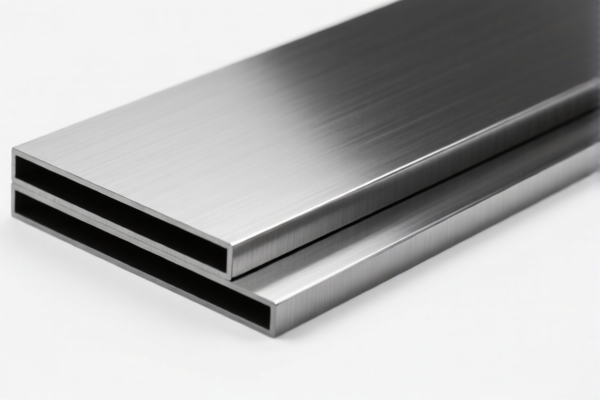
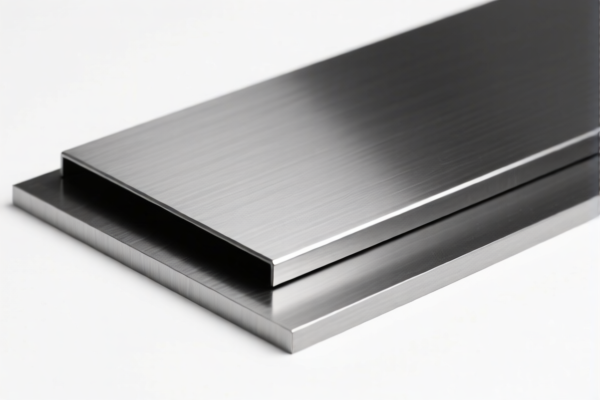
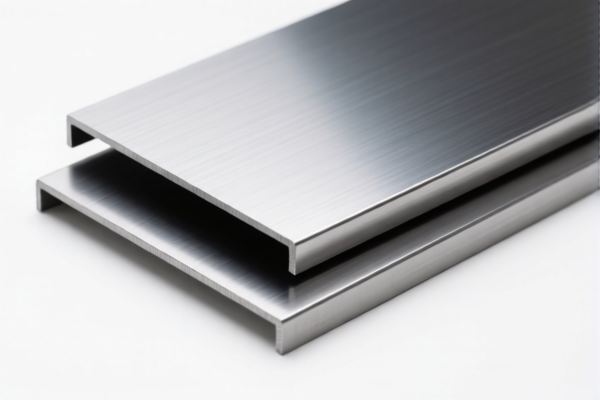
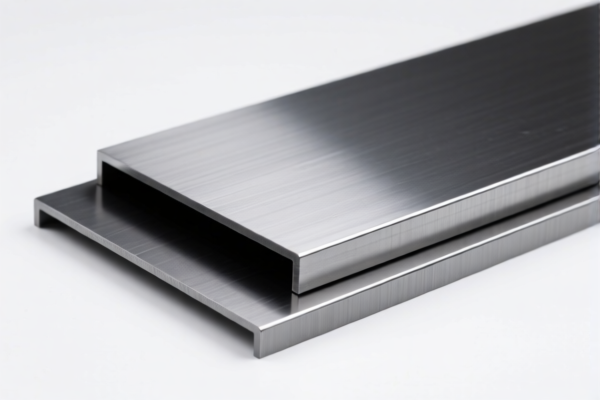
AI Analysis
🏭 Steel Flat Rolled Products (Hot-Rolled, Non-Alloy Steel)
🌐 HS Code Reference & Customs Clearance Guide | 2026 Latest Tariff Analysis | Professional Strategy
📌 I. Product Definition & Classification: Are You Dealing with Coils or Plates?
Flat-rolled products of iron or nonalloy steel are the backbone of the construction, automotive, and manufacturing industries. In international trade, precise classification depends heavily on two factors: Form (Coils vs. Plates/Sheets) and Dimensions (Width & Thickness).
Based on the provided dataset, we are focusing specifically on: * Material: Iron or Non-alloy Steel * Process: Hot-rolled, not clad, plated, or coated * Form: In Coils (This is critical! Plates/Sheets have different HS codes) * Width: ≥ 600 mm * Work Condition: Not further worked than hot-rolled or pickled
⚠️ Key Distinction Point:
- If the product is in coils and width ≥ 600mm → Look at 7208.xx.xx.60
- If the product is not in coils (plates/sheets) → Different HS code (not covered in this specific data set)
- If the steel is alloyed (e.g., stainless, chrome-plated) → Different HS code (not covered here)
📦 II. HS Code Classification Details (2026 Latest Tariff Authority Comparison)
| HS Code | Product Description | Key Criteria | Thickness Range |
|---|---|---|---|
7208.26.00.60 |
Flat-rolled products, iron/nonalloy steel, width ≥ 600mm, hot-rolled, in coils, not further worked than HR/pickled | Of a thickness of 3 mm or more but less than 4.75 mm | 3.0 mm ≤ T < 4.75 mm |
7208.27.00.60 |
Flat-rolled products, iron/nonalloy steel, width ≥ 600mm, hot-rolled, in coils, not further worked than HR/pickled | Of a thickness of less than 3 mm | T < 3.0 mm |
🔍 Critical Reminder:
- Both codes apply only to "In Coils" products. If your steel comes in sheets/plates, these codes are incorrect.
- Pickling is allowed: The description specifies "not further worked than hot-rolled, pickled." This means removing the oxide scale after hot rolling is permitted under these codes.
- No Coatings: If you have galvanised, chrome-plated, or tin-plated steel, these codes do not apply.
💰 III. 2026 Latest Tariff Rate Breakdown (Detailed Tax Clauses)
✅ Applicable Country: United States (US)
✅ Origin: China (CN) (Implied by the 25% additional tariff common in US-China trade context for these HS codes)
✅ Effective Time: Current (Subject to USITC and IEEPA regulations)
🎯 1. 7208.26.00.60 — Thick Coils (3mm to <4.75mm)
| Item | Detail |
|---|---|
| Base Tariff Rate | 0.0% (Most Favored Nation / General rate) |
| Additional Tariff (Section 301) | +25.0% |
| Total Tax Rate | 25.0% |
| Tax Calculation | CIF Value × 25.0% |
| De Minimis Exemption? | ❌ NO (Steel products are typically excluded from de minimis thresholds) |
| Legal Basis Path | USITC: 7208.26.00.60 → Section 301: Footnote 9903.01.25 (Steel) |
📌 Explanation:
- The Base Tariff is 0%, meaning standard MFN countries pay nothing for this basic steel form.
- However, due to Section 301 tariffs on Chinese goods, an additional 25% is levied.
- Total Effective Rate: 25%. This is a significant cost driver for mid-thickness steel coils.
🎯 2. 7208.27.00.60 — Thin Coils (< 3mm)
| Item | Detail |
|---|---|
| Base Tariff Rate | 0.0% (Most Favored Nation / General rate) |
| Additional Tariff (Section 301) | +25.0% |
| Total Tax Rate | 25.0% |
| Tax Calculation | CIF Value × 25.0% |
| De Minimis Exemption? | ❌ NO (Steel products are typically excluded from de minimis thresholds) |
| Legal Basis Path | USITC: 7208.27.00.60 → Section 301: Footnote 9903.01.25 (Steel) |
📌 Explanation:
- Despite being thinner, the tariff structure remains identical to the thicker coils in this dataset.
- Total Effective Rate: 25%.
- Note: Some thinner steel products might fall under different subheadings (e.g., 7209 or 7210) if they are further worked (cold-rolled, coated), but since this data specifies "hot-rolled, pickled," it stays at 25%.
🛠️ IV. Customs Clearance Practical Advice (Real-World Pitfall Guide)
✅ 1. Documentation Checklist (Non-Negotiable)
| Document | Must Provide? | Explanation |
|---|---|---|
| ✅ Product Specification Sheet | ✔️ | Must clearly state: "Hot-Rolled, Non-Alloy Steel, Pickled, In Coils." |
| ✅ Commercial Invoice | ✔️ | Must specify Width (≥600mm) and Thickness precisely. |
| ✅ Packing List | ✔️ | Must confirm product is shipped in coils, not cut into plates/sheets. |
| ✅ Mill Test Certificate (MTC) | ✔️ | To prove "Non-Alloy" status and chemical composition. |
| ✅ Country of Origin Certificate | ✔️ | Essential for verifying USITC Section 301 applicability. |
✅ 2. Declaration Tips (Key Mantras)
🔥 “Width Over 600, Thickness Dictates Code, Coils Not Sheets, Pickled is OK!”
| Scenario | Correct Declaration | Wrong Approach |
|---|---|---|
| Steel Coils, 4.0mm thick | 7208.26.00.60 |
Misclassifying as 7208.27... → Underpayment penalty |
| Steel Coils, 2.5mm thick | 7208.27.00.60 |
Misclassifying as 7208.26... → Overpayment/Discrepancy |
| Steel Sheets (Not Coils) | NOT 7208.2x | Using these codes → Customs Rejection/Seizure |
| Cold-Rolled Steel | NOT 7208.2x | These codes are for Hot-Rolled only → Misclassification |
✅ 3. Special Handling for Thickness Verification
| Situation | Handling Advice |
|---|---|
| Borderline Thickness (e.g., 2.98mm vs 3.02mm) | Ensure precise measurement documentation. A difference of 0.02mm changes the HS code from 7208.27 to 7208.26. While the tax rate is the same in this dataset, incorrect classification leads to customs delays. |
| Pickling Status | If the steel is not pickled and has heavy oxide scale, it is still eligible, but ensure the description says "Hot-Rolled, Not Pickled" if applicable. The dataset allows "Not further worked than hot-rolled, pickled," implying pickling is the upper limit of processing. |
| Coil vs. Cut Length | If the steel is cut into lengths > width, it may be considered "Sheets." These codes are strictly for Coils. If shipped as "Cut Lengths" but essentially flat, customs may argue it’s not "In Coils." |
🌍 V. Global Market Customs Comparison (2026 Latest)
| Country/Region | Recommended HS Code | Tariff (China Origin) | Certification | Notes |
|---|---|---|---|---|
| 🇺🇸 USA | 7208.26.00.60 / 7208.27.00.60 |
25.0% (Total) | No special cert needed for steel, but MTC required | High tariff due to Section 301. |
| 🇨🇳 China | 7208.26 / 7208.27 |
~5-10% (Import) | None | Imports are cheaper than US exports. |
| 🇪🇺 EU | 7208.26 / 7208.27 |
~14.4% + AD | None | Anti-dumping duties may apply; check specific cases. |
| 🇯🇵 Japan | 7208.26 / 7208.27 |
~0-3.2% | None | Generally low tariffs; strong trade agreement. |
📌 Conclusion:
- The USA imposes the highest effective tariff (25%) on these specific steel coils due to trade policies.
- For exporters to the US, cost inclusion of the 25% tariff is mandatory in pricing strategies.
📌 VI. Common Mistakes & Pitfall Guide (Lessons Learned)
❌ Mistake 1: Declaring "Steel Plates" under 7208.2x codes
👉 Consequence: These codes are for Coils. Plates fall under 7208.3x to 7208.5x. Customs will reject or reclassify, causing delays.
❌ Mistake 2: Ignoring the "Non-Alloy" requirement
👉 Consequence: If the steel contains significant alloying elements (e.g., Stainless Steel), it belongs to Chapter 72 Section 2 or 3. Misclassification leads to severe penalties.
❌ Mistake 3: Assuming "Pickled" means "Coated"
👉 Consequence: Pickling is a surface cleaning process. Coating (galvanizing, painting) makes it a different product. If coated, these codes are invalid.
✅ Correct Practice:
"Hot-Rolled Non-Alloy Steel Coils, Width 1250mm, Thickness 4.5mm, Pickled, Not Clad/Plated/Coated, Model: HR-Steel-Coil-4.5"
🎯 VII. Conclusion: Precision in Steel Classification Saves Money!
🎯 Remember the Mantra:
🔹 "Width Over 600, In Coils is Key.
🔹 3mm to 4.75mm? Use .26.
🔹 Less Than 3mm? Use .27.
🔹 Both Pay 25% in the US.
🔹 No Plates, No Alloys, No Coatings!"
📌 Pro Tip:
If you are importing into the US, consider HS Code Pre-Ruling from CBP if your product is on the borderline of thickness or work conditions. This provides legal certainty against the 25% additional tariff dispute.
📣 Immediate Action:
📞 Verify your Mill Test Certificate for "Non-Alloy" status.
📐 Measure Width and Thickness accurately.
📄 Ensure shipping documents clearly state "IN COILS."
🚀 Clear Customs Smoothly, Avoid 25% Surprise Fees!
✨ Professional Customs Clearance Starts with Accurate Classification!
💼 Your Steel Shipment’s Profit Margin Depends on This 25% Detail!
Customer Reviews
About HS Code Classification
The Harmonized System (HS) is an internationally standardized nomenclature developed by the World Customs Organization (WCO) to classify traded products. Over 200 countries use the HS system as the basis for customs tariffs, trade statistics, and import/export regulations.
Each HS code follows a hierarchical structure:
- Chapter (2 digits) — Broad category of goods (e.g., Chapter 84: Machinery and Mechanical Appliances)
- Heading (4 digits) — More specific grouping within the chapter
- Subheading (6 digits) — Internationally standardized breakdown, used by all WCO member countries
- National subdivisions (8-10 digits) — Country-specific extensions for further classification, such as US HTSUS 10-digit codes
Correct HS code classification is essential for smooth customs clearance, accurate duty payment, and compliance with trade regulations. Misclassification can lead to customs delays, overpayment of duties, or penalties.
When importing from CN to US, the applicable tariff rates may include:
- Most-Favored-Nation (MFN) rate — The standard duty rate applied to WTO members
- General rate — Applied to countries without trade agreements
- Trade remedy duties — Additional tariffs such as Section 301 (anti-dumping), Section 232 (national security), or countervailing duties
The information provided on this page is for reference purposes only. For official classification, please consult with your local customs authority or a licensed customs broker.