Steel Pet Gate
CN → US| HS编码 | 关税税率 | 原产国 | 目的国 | 文档 |
|---|---|---|---|---|
| 9403200017 | 85.0% | CN | US | 官方文档 |
| 9403200086 | 85.0% | CN | US | 官方文档 |
| 7326908688 | 87.9% | CN | US | 官方文档 |
| 8302416045 | 88.9% | CN | US | 官方文档 |
| 8301406060 | 23.2% | CN | US | 官方文档 |
商品图片
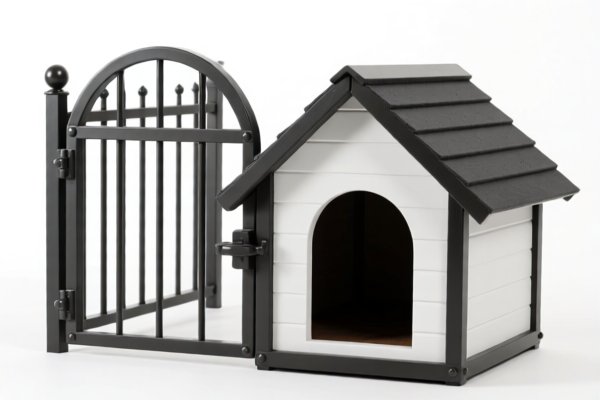
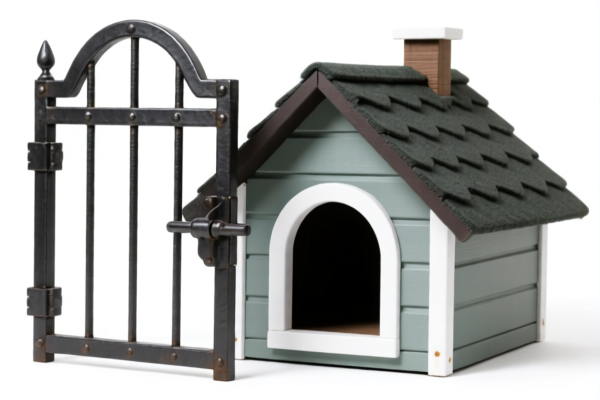
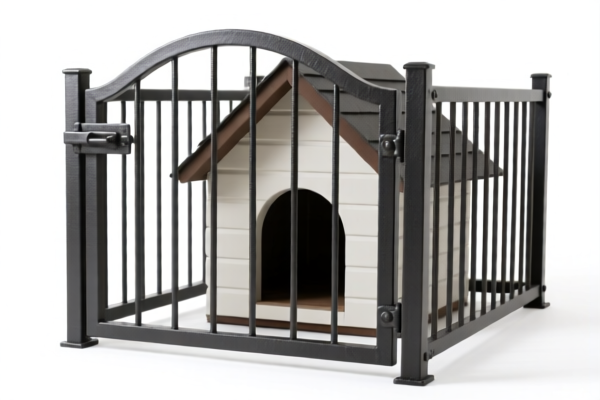
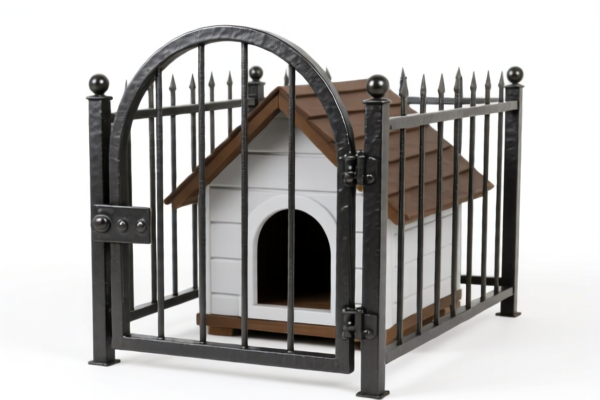
AI分析
🐾 Steel Pet Gate (Pet Enclosure/Door)
🌐 HS Code Reference & Customs Clearance Guide | 2026 Latest Tariff Analysis | Professional Clearance Strategy
📌 Part 1: Product Definition & Classification: Do You Really Understand the "Steel Pet Gate"?
A Steel Pet Gate is typically a security device made of metal (usually steel) used to restrict the movement of pets within a home or commercial space. It can function as a standalone barrier (fence/pen) or as an accessory attached to an existing door frame.
In international trade, the classification depends heavily on its primary function and structural form: 1. As Furniture (Enclosure/Pen): If it stands independently or acts as a permanent fixture for pet containment, it is often classified under "Metal Furniture." 2. As an Accessory: If it is a simple attachment kit for an existing human door, it may be classified under "Fittings/Accessories." 3. As a General Metal Article: If it doesn't fit standard furniture definitions or has a complex structure not covered elsewhere, it falls under general steel制品.
⚠️ Key Distinction Points:
- If it is a standalone barrier (like a gate or pen) →归类 to Metal Furniture (9403) or Steel Articles (7326).
- If it is a lock/mechanism component (e.g., specifically a locking pet door insert) →归类 to Locks (8301).
- If it is a door fitting (hinges, handles, frames) →归类 to Fittings (8302).
📦 Part 2: HS Code Classification Details (2026 Latest Tariff Authority Comparison)
| HS Code | Product Description | Application Scenario | Classification Logic |
|---|---|---|---|
9403.20.00.17 |
Steel Pet Gate, Material: Steel, Form: Door, Purpose: Restriction Fence, Classified as Metal Furniture | Standalone pet pens, heavy-duty steel barriers | ✅ Furniture (Metal) |
9403.20.00.86 |
Steel Pet Gate, Material: Steel, Form: Door/Device, Classified as Other Metal Furniture Components | Partial furniture items, non-standard metal enclosures | ✅ Furniture Components |
7326.90.86.88 |
Steel Pet Gate, Material: Steel, Form: Article, Classified as Other Articles of Iron or Steel | General steel制品, simple bars, non-furniture specific structures | ✅ General Steel Article |
8302.41.60.45 |
Steel Pet Gate, Material: Steel, Purpose: Building Door Accessory, Classified as Door Fittings | Attached gates, door-mounted restrictors, frames/hinges | ✅ Door Accessories/Fittings |
8301.40.60.60 |
Stainless Steel Pet Gate, Material: Stainless Steel, Purpose: Lock Application, Classified as Other Locks | Pet gates with integrated locking mechanisms, latch systems | ✅ Locks (Special Case) |
🔍 Key Reminder:
- Furniture vs. Fitting: If the gate is a standalone unit (even if it looks like a door), US Customs often leans toward 9403 (Metal Furniture) because it serves as a "fixture" for the home environment.
- Material Matters: Standard carbon steel gates fall under 9403 or 7326. Stainless steel units with specific locking functions might be argued as locks (8301), but this is rare and risky.
- "Pet Gate" is not a specific HS heading: You must describe it by its function (Furniture/Fitting) and material (Steel).
💰 Part 3: 2026 Latest Tariff Rate Details (Including Surtaxes & Policy Add-ons)
✅ Applicable Country: USA (US)
✅ Origin: China (CN)
✅ Effective Date: Ongoing (Includes Section 301 & 122 measures)
🎯 1. 9403.20.00.17 & 9403.20.00.86 —— Metal Furniture Category
| Item | Content |
|---|---|
| Base Rate | 0.0% (Ad Valorem) |
| Section 301 Surcharge | +25.0% (USITC Footnote 9903.88.01) |
| Section 122 Surcharge | +10.0% (Specific to Steel/Aluminum/Copper products under certain conditions) |
| Section 232 (Steel/Aluminum/Copper) Surcharge | +50.0% (For steel products subject to Section 232) |
| Total Effective Tax Rate | 85.0% |
| Tax Calculation | CIF Value × 85.0% |
| De Minimis Exemption | ❌ Not Eligible (Deny De Minimis) |
| Legal Basis Path | USITC:9403.20.00.17 → Section 301: 25% → Section 122: 10% → Section 232: 50% |
📌 Explanation:
- This is the most common classification for standalone steel pet gates.
- The 50% Section 232 tariff applies because it is a steel product.
- The 25% Section 301 tariff applies to all Chinese goods.
- The 10% Section 122 tariff may apply if deemed a "steel article" under specific trade acts.
- Total Burden: 85% is extremely high. Profit margins will be severely impacted unless priced accordingly.
🎯 2. 7326.90.86.88 —— Other Articles of Iron or Steel
| Item | Content |
|---|---|
| Base Rate | 2.9% (Ad Valorem) |
| Section 301 Surcharge | +25.0% |
| Section 122 Surcharge | +10.0% |
| Section 232 (Steel) Surcharge | +50.0% |
| Total Effective Tax Rate | 87.9% |
| Tax Calculation | CIF Value × 87.9% |
| De Minimis Exemption | ❌ Not Eligible |
| Legal Basis Path | USITC:7326.90.86.88 → Section 301: 25% → Section 122: 10% → Section 232: 50% |
📌 Note:
- Slightly higher total rate (87.9%) than furniture classification.
- Often used if the gate is deemed "not furniture" (e.g., simple wire mesh without structural furniture characteristics).
- Still carries the full weight of Section 232 (50%) and Section 301 (25%).
🎯 3. 8302.41.60.45 —— Door Fittings/Accessories
| Item | Content |
|---|---|
| Base Rate | 3.9% (Ad Valorem) |
| Section 301 Surcharge | +25.0% |
| Section 122 Surcharge | +10.0% |
| Section 232 (Steel) Surcharge | +50.0% |
| Total Effective Tax Rate | 88.9% |
| Tax Calculation | CIF Value × 88.9% |
| De Minimis Exemption | ❌ Not Eligible |
| Legal Basis Path | USITC:8302.41.60.45 → Section 301: 25% → Section 122: 10% → Section 232: 50% |
📌 Note:
- This classification assumes the pet gate is an accessory to a human door (e.g., a sliding pet door frame).
- Highest base rate (3.9%) among the options.
- High Risk: Customs may reject this if the item is a standalone gate.
🎯 4. 8301.40.60.60 —— Other Locks (Stainless Steel Specific)
| Item | Content |
|---|---|
| Base Rate | 5.7% (Ad Valorem) |
| Section 301 Surcharge | +7.5% (Reduced Section 301 rate for some lock categories? Note: Data shows 7.5%) |
| Section 122 Surcharge | +10.0% |
| Section 232 (Steel) Surcharge | 0.0% (Likely excluded or not applicable for this specific subheading in this dataset) |
| Total Effective Tax Rate | 23.2% |
| Tax Calculation | CIF Value × 23.2% |
| De Minimis Exemption | ❌ Not Eligible |
| Legal Basis Path | USITC:8301.40.60.60 → Section 301: 7.5% → Section 122: 10% |
📌 Critical Alert:
- This is the LOWEST tax rate (23.2%) in the dataset.
- Why so low? It excludes the 50% Section 232 tariff and has a lower Section 301 rate.
- RISK: This only applies if the product is Strictly a Lock (e.g., a stainless steel locking mechanism) and not a "gate."
- Strategy: If your product is a locking pet door insert (not a full fence), argue for this classification. Do not use this for a full steel gate, or face penalties for misclassification.
🛠️ Part 4: Customs Clearance Practical Advice (Real-World Pitfall Avoidance)
✅ 1. Documentation Checklist (Non-Negotiable)
| Document | Must Provide | Notes |
|---|---|---|
| ✅ Product Specification Sheet | ✔️ | Dimensions, material (Carbon Steel vs. Stainless Steel), weight, load capacity. |
| ✅ Technical Diagrams | ✔️ | Show if it is a standalone unit (Furniture) or an attachment (Fitting). |
| ✅ Clear Product Photos | ✔️ | Include front, back, locking mechanism, and any brand/model labels. |
| ✅ Commercial Invoice | ✔️ | Description must be precise: e.g., "Stainless Steel Pet Locking Mechanism" vs. "Steel Pet Enclosure Fence." |
| ✅ Certificate of Origin (CO) | ✔️ | Essential for proving origin to apply correct tariffs. |
| ✅ Packing List | ✔️ | Detail contents to avoid "accessory split" issues. |
✅ 2. Classification Strategy & Keywords
🔥 "Describe by Function, Not Just Name!"
| Scenario | Recommended HS Code | Key Description for Customs | Expected Rate |
|---|---|---|---|
| Standalone Pet Fence/Pen | 9403.20.00.17 |
"Steel Metal Furniture Pet Enclosure" | 85.0% |
| Simple Steel Bars/Article | 7326.90.86.88 |
"Steel Article for Pet Containment" | 87.9% |
| Door-Mounted Pet Door Frame | 8302.41.60.45 |
"Steel Door Fitting for Pets" | 88.9% |
| Stainless Steel Locking Mechanism | 8301.40.60.60 |
"Stainless Steel Lock for Pet Door" | 23.2% (Best Case) |
⚠️ Warning:
- Never just say "Pet Gate." It is too vague.
- If it is a full gate, using8301.40.60.60(Locks) will likely be rejected because a gate is not a lock.
- If it is a locking insert, using9403.20.00.17(Furniture) is overly broad and may incur higher base rates or scrutiny.
✅ 3. Special Handling Tips
| Situation | Recommendation |
|---|---|
| Mixed Materials | If the gate has plastic components, ensure the steel content dominates. If plastic is >50%, it may fall under Chapter 39 (Plastics), but steel pet gates are usually >90% steel. |
| OEM/Custom Designs | Provide design drawings to prove if it is "furniture" (stable, standalone) or "fitting" (mounts to door). |
| Stainless Steel Claim | Only claim 8301.40.60.60 if the primary function is locking/security and the material is stainless steel. Even then, risk of reclassification to 9403 exists. |
| Section 232 Exclusions | Check if your specific steel product type is excluded from Section 232 (50% tariff). Most standard structural steel items are NOT excluded. |
🌍 Part 5: Global Market Comparison (2026 Outlook)
| Region | Recommended HS Code | Est. Total Tax (China Origin) | Notes |
|---|---|---|---|
| 🇺🇸 USA | 9403.20.00.17 |
85.0% | High burden due to Section 232 + 301. |
| 🇺🇸 USA (Lock Claim) | 8301.40.60.60 |
23.2% | Only for stainless steel locking inserts. High audit risk. |
| 🇨🇳 China (Import) | 7326.90.89.90 |
~5-10% | Lower import duties, but focus on domestic sales. |
| 🇪🇺 EU | 7326.90.98 |
~4-6% | No Section 232/301. Standard EU duties apply. |
| 🇬🇧 UK | 7326.90.98 |
~4-6% | Post-Brexit tariffs similar to EU for this category. |
📌 Conclusion:
- USA is the most challenging market due to cumulative tariffs (232 + 301 + 122).
- Cost Optimization: If possible, design the product as a locking mechanism (if feasible) to attempt8301classification, but only if legally accurate.
- Alternative: Consider sourcing from non-China countries (e.g., Vietnam, India) to avoid Section 301 and potentially Section 232 duties, reducing total tax to ~0-10%.
📌 Part 6: Common Errors & Pitfalls (Blood & Tears Lessons)
❌ Error 1: Calling a standalone fence a "Door Fitting" (8302)
👉 Consequence: Customs rejects it, reclassifies as Furniture (9403), delays shipment, and charges higher base rate.
❌ Error 2: Calling a steel gate a "Lock" (8301) to get 23.2% tax
👉 Consequence: High-risk audit. If found to be a gate, you will pay back taxes + penalties + interest. The 25%+50% difference is significant, but the fraud risk is higher.
❌ Error 3: Ignoring Section 232 (50% Steel Tariff)
👉 Consequence: Unexpected 50% tariff added to the bill. Must ensure HTSUS code confirms steel product status.
❌ Error 4: Vague Description "Pet Gate"
👉 Consequence: Customs uses "Best Available Information" to classify, often picking the highest duty code.
✅ Correct Approach:
"Steel Metal Pet Enclosure, Standalone, Model XYZ, 100% Carbon Steel, For Indoor Use."
→ Classify as 9403.20.00.17 (Predictable 85% tax).
OR
"Stainless Steel Locking Latch for Pet Door, Model ABC."
→ Classify as 8301.40.60.60 (23.2% tax, with proof it is a lock).
🎯 Part 7: Conclusion: Professional Declaration, Cost Control
🎯 Key Takeaway:
🔹 "Steel Gate = Furniture = 85% Tax (USA)"
🔹 "Lock Only = 23% Tax (USA)" (But only if it IS a lock!)
🔹 "Misclassification = Penalties + Delays"
📌 Pro Tip:
If your business volume is high, apply for a Customs Ruling (Pre-Ruling) with US CBP. Submit technical specs and ask for a binding classification. This provides legal certainty for the 85% vs. 23% decision.
📣 Immediate Action:
📞 Consult a Customs Broker before shipping.
📄 Prepare Technical Datasheets proving material and function.
🚀 Evaluate Supply Chain: Can you source from a non-China origin to avoid 301/232 tariffs?
✨ Clear Customs, Maximize Profit!
💼 Precision in HS Code is your best defense against high tariffs.
用户评价
关于 HS 编码归类
协调制度(HS)是由世界海关组织(WCO)制定的国际贸易商品分类标准。全球 200 多个国家采用 HS 系统作为海关关税、贸易统计和进出口监管的基础。
每个 HS 编码遵循以下层级结构:
- 章(2 位)——商品大类(例如:第 84 章:机器和机械设备)
- 品目(4 位)——章内的更具体分类
- 子目(6 位)——国际通用细分,所有 WCO 成员国统一使用
- 本国细分(8-10 位)——各国自行扩展的细分编码,如美国 HTSUS 10 位编码
正确的 HS 编码归类对于顺利通关、准确缴纳关税和遵守贸易法规至关重要。错误归类可能导致海关延误、多缴关税或罚款。
从CN进口到US时,适用的关税税率可能包括:
- 最惠国(MFN)税率——适用于 WTO 成员国的标准关税税率
- 普通税率——适用于无贸易协定国家
- 贸易救济关税——附加关税,如 301 条款(反倾销)、232 条款(国家安全)或反补贴税
本页内容仅供参考。如需正式归类,请咨询当地海关或持牌报关代理。