Stirring Rod
CN → US| HS编码 | 关税税率 | 原产国 | 目的国 | 文档 |
|---|---|---|---|---|
| 8509400015 | 14.2% | CN | US | 官方文档 |
| 8509400025 | 14.2% | CN | US | 官方文档 |
| 8438800000 | 35.0% | CN | US | 官方文档 |
| 8438909090 | 37.8% | CN | US | 官方文档 |
| 8479820040 | 35.0% | CN | US | 官方文档 |
商品图片
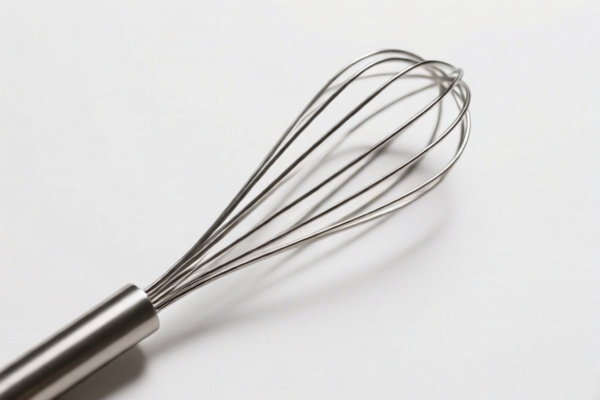
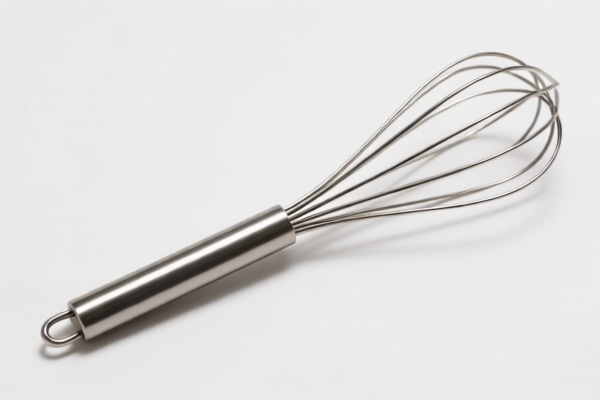
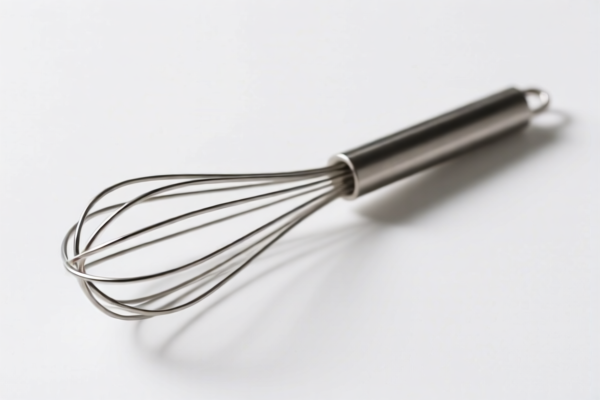
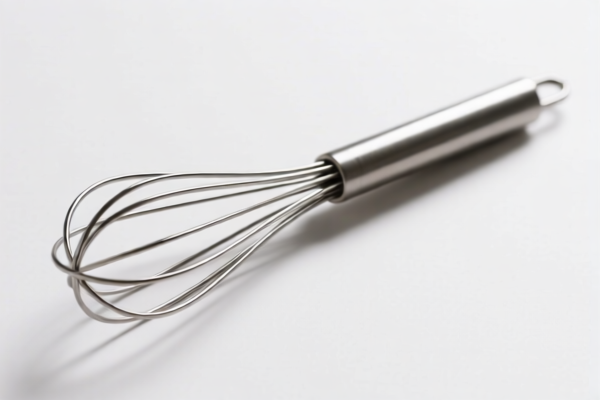
AI分析
🥣 Stirring Rods & Mixers: HS Code Classification & Customs Clearance Guide
🌐 HS Code Reference & Customs Clearance Guide | 2026 Latest Tariff Analysis | Professional Clearance Strategy
📌 Part 1: Product Definition & Classification: Are You Confusing "Manual Rods" with "Electric Mixers"?
In international trade, the term "Stirring Rod" is ambiguous. It can refer to two completely different products with drastically different tariff implications:
- Manual Stirring Rods (Laboratory/Industrial): Simple rods made of glass, plastic, or metal used for manual mixing. Note: The provided DATA does not contain a specific HS code for simple manual stirring rods. If you are importing simple manual rods, they typically fall under Chapter 39 (Plastics), 70 (Glass), or 84/85 parts if attached to machines.
- Electric/Commercial Mixers (Household/Industrial): Motorized appliances for food preparation. The following analysis focuses on the Electric/Commercial Mixers as per the provided
<DATA>context, which lists HS codes for motorized and mechanical mixing equipment.
⚠️ Critical Distinction Point:
- If it has a motor and is for household use → Look at 8509.40
- If it is a mechanical food processing machine (industrial/large scale) → Look at 8438.80 or 8479.82
- If it is a spare part for such machines → Look at 8438.90
📦 Part 2: HS Code Classification Matrix (Based on Provided DATA)
| HS Code | Product Description (Summary) | Key Characteristics | Applicable Scenario |
|---|---|---|---|
8509.40.00.15 |
Household Electric Blender/Mixer | Motorized, for home use | Household blenders, hand mixers (electric) |
8509.40.00.25 |
Food Blender | Motorized, no material conflict | Commercial-grade but categorized under household appliance chapter due to structure |
8438.80.00.00 |
Mechanical Food/Bev Preparation | Non-household, industrial machinery | Large-scale food processing plants, commercial kitchen equipment |
8438.90.90.90 |
Parts of Food/Bev Machinery | Spare parts, components | Blades, shafts, housings for machines classified under 8438 |
8479.82.00.40 |
Mixing/Kneading Machine | Industrial mechanical mixer | General industrial mixing, baking, non-food specific mixing |
🔍 Key Reminder:
- "Household" vs. "Industrial": The critical divider is often whether the device is designed for personal/home kitchen use (8509) or industrial/commercial food production lines (8438/8479).
- "Blender" vs. "Mixer": In HS nomenclature, "Blender" (liquid puree) often falls under 8509 for household units. Heavy-duty "Mixers" (dough, industrial slurry) often fall under 8479 or 8438.
💰 Part 3: 2026 Tariff Rate Breakdown (Including Surtaxes & Policy Surcharges)
✅ Applicable Country: United States (US)
✅ Origin: China (CN)
✅ Effective Time: Based on current trade policies (Section 301 & IEEPA)
🎯 1. 8509.40.00.15 & 8509.40.00.25 – Household/Commercial Electric Blenders
These codes represent motorized appliances. Due to recent trade policies, they carry a moderate but significant tariff burden.
| Item | Detail |
|---|---|
| Base Duty Rate | 4.2% (ad valorem) |
| Surtax (Section 301) | 0.0% (Note: Some electric appliances may have different section 301 rates, but DATA specifies 0.0% for these specific subheads) |
| IEEPA Surcharge (Section 122) | 10.0% (Targeted at Chinese-origin goods) |
| Total Tariff Rate | 14.2% |
| Calculation Basis | CIF Value × 14.2% |
| De Minimis Eligibility | ❌ No (Generally, Section 301/IEEPA goods are excluded from $800 de minimis exemptions if flagged) |
| Legal Path | 8509.40.00 → USITC Base + IEEPA:9903.01.24 (10%) |
📌 Explanation:
- Why only 14.2%? These are classified as "Household Appliances" under Chapter 85. While many Chinese goods face 25% Section 301 tariffs, some sub-categories of electric home appliances have been exempted from the additional 25% Surtax, leaving only the Base Duty (4.2%) and the IEEPA 10% surcharge.
- Check Carefully: Ensure the product is genuinely a "blender/mixer" and not a "food processor" which might fall under 8438 and attract higher duties.
🎯 2. 8438.80.00.00 – Mechanical Food/Bev Preparation Machinery
This code is for industrial or commercial-scale machinery for preparing food or beverages. It is NOT a household appliance.
| Item | Detail |
|---|---|
| Base Duty Rate | 0.0% (Often duty-free for industrial machinery) |
| Surtax (Section 301) | 25.0% (High tariff on Chinese industrial equipment) |
| IEEPA Surcharge (Section 122) | 10.0% |
| Total Tariff Rate | 35.0% |
| Calculation Basis | CIF Value × 35.0% |
| De Minimis Eligibility | ❌ No |
| Legal Path | 8438.80.00 → USITC:9903.88.01 (25%) + IEEPA:9903.01.24 (10%) |
📌 Warning:
- 35% is a heavy tax burden. If you are importing a large-scale commercial blender for a restaurant chain, do not try to classify it as a household blender (8509) unless it truly fits the "household" definition. Misclassification can lead to penalties.
- Zero Base Rate? Even though the base is 0%, the 35% total is still very high. Compare this with8509(14.2%) if the machine is borderline.
🎯 3. 8438.90.90.90 – Parts of Food/Bev Machinery
For spare parts or components used in the machinery described above.
| Item | Detail |
|---|---|
| Base Duty Rate | 2.8% |
| Surtax (Section 301) | 25.0% |
| IEEPA Surcharge (Section 122) | 10.0% |
| Total Tariff Rate | 37.8% |
| Calculation Basis | CIF Value × 37.8% |
| De Minimis Eligibility | ❌ No |
| Legal Path | 8438.90.90 → USITC:9903.88.01 (25%) + IEEPA:9903.01.24 (10%) |
📌 Note:
- Parts are often taxed at the same rate as the parent machine.
- Ensure the parts are specifically designed for the 8438 machinery. Generic parts may fall under different chapters.
🎯 4. 8479.82.00.40 – General Industrial Mixing/Kneading Machinery
For industrial mixers that do not fall under specific food/beverage machinery (e.g., chemical, cosmetic, or general industrial mixers).
| Item | Detail |
|---|---|
| Base Duty Rate | 0.0% |
| Surtax (Section 301) | 25.0% |
| IEEPA Surcharge (Section 122) | 10.0% |
| Total Tariff Rate | 35.0% |
| Calculation Basis | CIF Value × 35.0% |
| De Minimis Eligibility | ❌ No |
| Legal Path | 8479.82.00 → USITC:9903.88.01 (25%) + IEEPA:9903.01.24 (10%) |
📌 Distinction:
- If the mixer is for food, use 8438 or 8509.
- If the mixer is for non-food (e.g., paint, chemicals, concrete), use 8479.
- Both 8438 and 8479 carry the high 35% tariff.
🛠️ Part 4: Customs Clearance Practical Advice (Avoiding Pitfalls)
✅ 1. Essential Documentation Checklist
| Document | Required? | Details |
|---|---|---|
| ✅ Product Specification Sheet | ✔️ | Must clearly state: Motor Power, Capacity, Usage (Household vs. Industrial), Voltage. |
| ✅ Photos (Interior & Exterior) | ✔️ | Show the motor, blades, and control panel. Crucial for distinguishing 8509 (Household) from 8438/8479 (Industrial). |
| ✅ Commercial Invoice | ✔️ | Must describe the item accurately: "Electric Household Blender, Model XYZ, 500W" vs "Industrial Food Mixer, 10HP". |
| ✅ Certificate of Origin | ✔️ | Essential for determining applicability of IEEPA 10% surcharge for China-origin goods. |
| ✅ FCC Declaration (if applicable) | ✔️ | For electric devices (8509), FCC compliance is mandatory for US entry. |
✅ 2. Classification Strategy (Golden Rules)
| Scenario | Correct HS Code | Reason |
|---|---|---|
| Home Kitchen Blender | 8509.40.00.15 or .25 |
Household appliance, motorized, food mixing. |
| Restaurant/Hotel Large Blender | Check Capacity | If under certain power/capacity, might still be 8509. If large-scale, likely 8438.80.00.00. |
| Industrial Dough Mixer | 8479.82.00.40 or 8438.80.00.00 |
Industrial scale, non-household. |
| Spare Blade for Blender | 8438.90.90.90 (if industrial) or 8509 parts (if household) |
Parts follow the parent machine's classification. |
🔥 "Golden Rule":
"Household = 8509 (14.2%); Industrial/Commercial = 8438/8479 (35%)."
Misclassifying an industrial machine as household to save 20%+ in duties is a high-risk violation.
✅ 3. Special Considerations
- Section 122 Tariff (10%): This applies to all Chinese-origin goods in these categories under current data. Ensure your supplier provides a valid Certificate of Origin confirming Chinese origin. If sourced from Vietnam or other countries, this 10% may be waived.
- Section 301 (25%): Applies to industrial machinery (8438/8479). Exempt for household blenders (8509) in this specific data set.
- FCC Compliance: Electric mixers (8509) require FCC registration. Non-compliance leads to seizure.
🌍 Part 5: Global Market Comparison (2026)
| Market | Recommended HS Code | Est. Tariff (China Origin) | Key Certification |
|---|---|---|---|
| 🇺🇸 USA | 8509.40.00.15 |
14.2% | FCC, UL |
| 🇺🇸 USA | 8438.80.00.00 |
35.0% | N/A (Industrial) |
| 🇪🇺 EU | 8509.40 (Approx.) |
~4-7% (Base) + VAT | CE, RoHS |
| 🇨🇳 China | 8509.40 |
4-14% (Import Duty) | CCC |
📌 Insight:
- The USA is the most complex market due to the layered tariffs (Base + Section 301 + IEEPA).
- EU and China generally have lower ad valorem duties but require strict safety certifications (CE/CCC).
📌 Part 6: Common Mistakes & How to Avoid Them
❌ Mistake 1: Calling a commercial blender a "Stirring Rod" or "Hand Mixer" to avoid duty.
👉 Result: CBP may reclassify it as an industrial machine or impose penalties for misdeclaration.
❌ Mistake 2: Ignoring the IEEPA 10% surcharge.
👉 Result: Underpayment of duties. The 10% is mandatory for Chinese-origin goods in these categories.
❌ Mistake 3: Mixing household and industrial parts in one shipment.
👉 Result: Complex clearance. Each part must be separately classified.
✅ Correct Practice:
"Electric Kitchen Blender, 1.5L Capacity, 600W, Household Use, Model ABC, FCC Certified"
Use precise language that aligns with the HS Code Summary.
🎯 Part 7: Conclusion
🎯 Key Takeaway:
- Household Blenders (8509): 14.2% Total Duty. Lower risk, lower cost.
- Industrial Mixers (8438/8479): 35.0% Total Duty. High cost, strict classification.
- Parts (8438.90): 37.8% Total Duty. Highest rate.
📌 Action Plan:
1. Verify Product Type: Is it truly for household use?
2. Check Origin: Is it from China? If yes, budget for IEEPA 10%.
3. Prepare Docs: Include specs, photos, and FCC (if electric).
4. Consult a Broker: For borderline cases (e.g., large commercial blenders), seek a Pre-Ruling from CBP to avoid 35% surprises.
✨ Professional Clearance Starts with Accurate Classification!
💼 Don’t let a wrong HS Code cost you 20%+ in unexpected duties.
📞 Contact a licensed customs broker today for a Pre-Ruling on your specific mixing equipment!
用户评价
关于 HS 编码归类
协调制度(HS)是由世界海关组织(WCO)制定的国际贸易商品分类标准。全球 200 多个国家采用 HS 系统作为海关关税、贸易统计和进出口监管的基础。
每个 HS 编码遵循以下层级结构:
- 章(2 位)——商品大类(例如:第 84 章:机器和机械设备)
- 品目(4 位)——章内的更具体分类
- 子目(6 位)——国际通用细分,所有 WCO 成员国统一使用
- 本国细分(8-10 位)——各国自行扩展的细分编码,如美国 HTSUS 10 位编码
正确的 HS 编码归类对于顺利通关、准确缴纳关税和遵守贸易法规至关重要。错误归类可能导致海关延误、多缴关税或罚款。
从CN进口到US时,适用的关税税率可能包括:
- 最惠国(MFN)税率——适用于 WTO 成员国的标准关税税率
- 普通税率——适用于无贸易协定国家
- 贸易救济关税——附加关税,如 301 条款(反倾销)、232 条款(国家安全)或反补贴税
本页内容仅供参考。如需正式归类,请咨询当地海关或持牌报关代理。