Stirring Rod
CN → US| HS Code | Tariff Rate | Origin | Destination | Doc |
|---|---|---|---|---|
| 8509400015 | 14.2% | CN | US | Official Doc |
| 8509400025 | 14.2% | CN | US | Official Doc |
| 8438800000 | 35.0% | CN | US | Official Doc |
| 8438909090 | 37.8% | CN | US | Official Doc |
| 8479820040 | 35.0% | CN | US | Official Doc |
Product Images
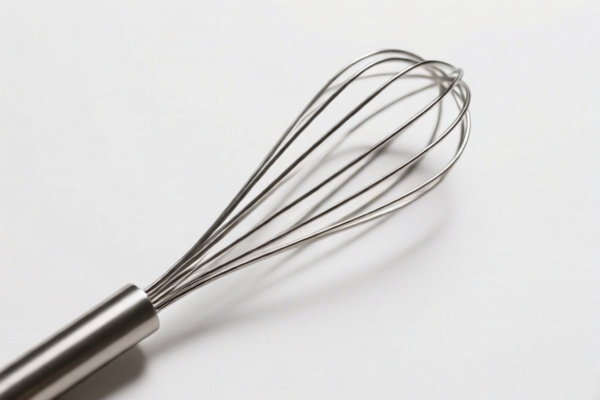
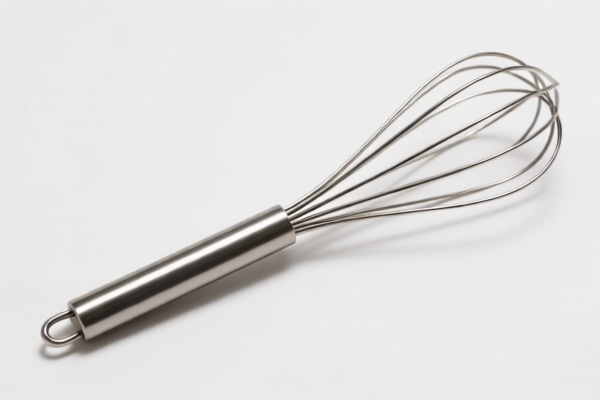
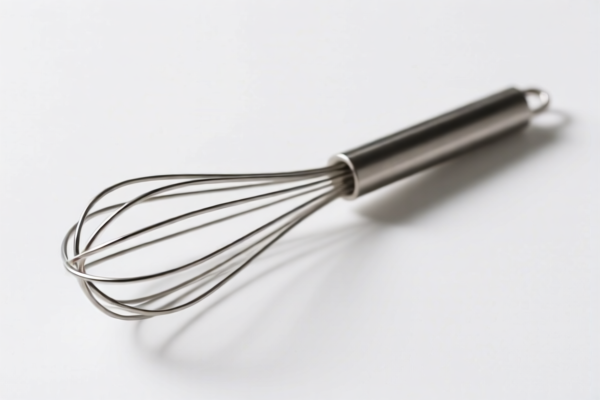
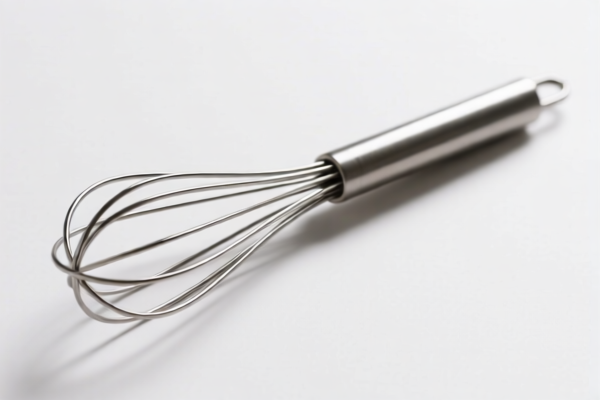
AI Analysis
🥣 Stirring Rods & Mixers: HS Code Classification & Customs Clearance Guide
🌐 HS Code Reference & Customs Clearance Guide | 2026 Latest Tariff Analysis | Professional Clearance Strategy
📌 Part 1: Product Definition & Classification: Are You Confusing "Manual Rods" with "Electric Mixers"?
In international trade, the term "Stirring Rod" is ambiguous. It can refer to two completely different products with drastically different tariff implications:
- Manual Stirring Rods (Laboratory/Industrial): Simple rods made of glass, plastic, or metal used for manual mixing. Note: The provided DATA does not contain a specific HS code for simple manual stirring rods. If you are importing simple manual rods, they typically fall under Chapter 39 (Plastics), 70 (Glass), or 84/85 parts if attached to machines.
- Electric/Commercial Mixers (Household/Industrial): Motorized appliances for food preparation. The following analysis focuses on the Electric/Commercial Mixers as per the provided
<DATA>context, which lists HS codes for motorized and mechanical mixing equipment.
⚠️ Critical Distinction Point:
- If it has a motor and is for household use → Look at 8509.40
- If it is a mechanical food processing machine (industrial/large scale) → Look at 8438.80 or 8479.82
- If it is a spare part for such machines → Look at 8438.90
📦 Part 2: HS Code Classification Matrix (Based on Provided DATA)
| HS Code | Product Description (Summary) | Key Characteristics | Applicable Scenario |
|---|---|---|---|
8509.40.00.15 |
Household Electric Blender/Mixer | Motorized, for home use | Household blenders, hand mixers (electric) |
8509.40.00.25 |
Food Blender | Motorized, no material conflict | Commercial-grade but categorized under household appliance chapter due to structure |
8438.80.00.00 |
Mechanical Food/Bev Preparation | Non-household, industrial machinery | Large-scale food processing plants, commercial kitchen equipment |
8438.90.90.90 |
Parts of Food/Bev Machinery | Spare parts, components | Blades, shafts, housings for machines classified under 8438 |
8479.82.00.40 |
Mixing/Kneading Machine | Industrial mechanical mixer | General industrial mixing, baking, non-food specific mixing |
🔍 Key Reminder:
- "Household" vs. "Industrial": The critical divider is often whether the device is designed for personal/home kitchen use (8509) or industrial/commercial food production lines (8438/8479).
- "Blender" vs. "Mixer": In HS nomenclature, "Blender" (liquid puree) often falls under 8509 for household units. Heavy-duty "Mixers" (dough, industrial slurry) often fall under 8479 or 8438.
💰 Part 3: 2026 Tariff Rate Breakdown (Including Surtaxes & Policy Surcharges)
✅ Applicable Country: United States (US)
✅ Origin: China (CN)
✅ Effective Time: Based on current trade policies (Section 301 & IEEPA)
🎯 1. 8509.40.00.15 & 8509.40.00.25 – Household/Commercial Electric Blenders
These codes represent motorized appliances. Due to recent trade policies, they carry a moderate but significant tariff burden.
| Item | Detail |
|---|---|
| Base Duty Rate | 4.2% (ad valorem) |
| Surtax (Section 301) | 0.0% (Note: Some electric appliances may have different section 301 rates, but DATA specifies 0.0% for these specific subheads) |
| IEEPA Surcharge (Section 122) | 10.0% (Targeted at Chinese-origin goods) |
| Total Tariff Rate | 14.2% |
| Calculation Basis | CIF Value × 14.2% |
| De Minimis Eligibility | ❌ No (Generally, Section 301/IEEPA goods are excluded from $800 de minimis exemptions if flagged) |
| Legal Path | 8509.40.00 → USITC Base + IEEPA:9903.01.24 (10%) |
📌 Explanation:
- Why only 14.2%? These are classified as "Household Appliances" under Chapter 85. While many Chinese goods face 25% Section 301 tariffs, some sub-categories of electric home appliances have been exempted from the additional 25% Surtax, leaving only the Base Duty (4.2%) and the IEEPA 10% surcharge.
- Check Carefully: Ensure the product is genuinely a "blender/mixer" and not a "food processor" which might fall under 8438 and attract higher duties.
🎯 2. 8438.80.00.00 – Mechanical Food/Bev Preparation Machinery
This code is for industrial or commercial-scale machinery for preparing food or beverages. It is NOT a household appliance.
| Item | Detail |
|---|---|
| Base Duty Rate | 0.0% (Often duty-free for industrial machinery) |
| Surtax (Section 301) | 25.0% (High tariff on Chinese industrial equipment) |
| IEEPA Surcharge (Section 122) | 10.0% |
| Total Tariff Rate | 35.0% |
| Calculation Basis | CIF Value × 35.0% |
| De Minimis Eligibility | ❌ No |
| Legal Path | 8438.80.00 → USITC:9903.88.01 (25%) + IEEPA:9903.01.24 (10%) |
📌 Warning:
- 35% is a heavy tax burden. If you are importing a large-scale commercial blender for a restaurant chain, do not try to classify it as a household blender (8509) unless it truly fits the "household" definition. Misclassification can lead to penalties.
- Zero Base Rate? Even though the base is 0%, the 35% total is still very high. Compare this with8509(14.2%) if the machine is borderline.
🎯 3. 8438.90.90.90 – Parts of Food/Bev Machinery
For spare parts or components used in the machinery described above.
| Item | Detail |
|---|---|
| Base Duty Rate | 2.8% |
| Surtax (Section 301) | 25.0% |
| IEEPA Surcharge (Section 122) | 10.0% |
| Total Tariff Rate | 37.8% |
| Calculation Basis | CIF Value × 37.8% |
| De Minimis Eligibility | ❌ No |
| Legal Path | 8438.90.90 → USITC:9903.88.01 (25%) + IEEPA:9903.01.24 (10%) |
📌 Note:
- Parts are often taxed at the same rate as the parent machine.
- Ensure the parts are specifically designed for the 8438 machinery. Generic parts may fall under different chapters.
🎯 4. 8479.82.00.40 – General Industrial Mixing/Kneading Machinery
For industrial mixers that do not fall under specific food/beverage machinery (e.g., chemical, cosmetic, or general industrial mixers).
| Item | Detail |
|---|---|
| Base Duty Rate | 0.0% |
| Surtax (Section 301) | 25.0% |
| IEEPA Surcharge (Section 122) | 10.0% |
| Total Tariff Rate | 35.0% |
| Calculation Basis | CIF Value × 35.0% |
| De Minimis Eligibility | ❌ No |
| Legal Path | 8479.82.00 → USITC:9903.88.01 (25%) + IEEPA:9903.01.24 (10%) |
📌 Distinction:
- If the mixer is for food, use 8438 or 8509.
- If the mixer is for non-food (e.g., paint, chemicals, concrete), use 8479.
- Both 8438 and 8479 carry the high 35% tariff.
🛠️ Part 4: Customs Clearance Practical Advice (Avoiding Pitfalls)
✅ 1. Essential Documentation Checklist
| Document | Required? | Details |
|---|---|---|
| ✅ Product Specification Sheet | ✔️ | Must clearly state: Motor Power, Capacity, Usage (Household vs. Industrial), Voltage. |
| ✅ Photos (Interior & Exterior) | ✔️ | Show the motor, blades, and control panel. Crucial for distinguishing 8509 (Household) from 8438/8479 (Industrial). |
| ✅ Commercial Invoice | ✔️ | Must describe the item accurately: "Electric Household Blender, Model XYZ, 500W" vs "Industrial Food Mixer, 10HP". |
| ✅ Certificate of Origin | ✔️ | Essential for determining applicability of IEEPA 10% surcharge for China-origin goods. |
| ✅ FCC Declaration (if applicable) | ✔️ | For electric devices (8509), FCC compliance is mandatory for US entry. |
✅ 2. Classification Strategy (Golden Rules)
| Scenario | Correct HS Code | Reason |
|---|---|---|
| Home Kitchen Blender | 8509.40.00.15 or .25 |
Household appliance, motorized, food mixing. |
| Restaurant/Hotel Large Blender | Check Capacity | If under certain power/capacity, might still be 8509. If large-scale, likely 8438.80.00.00. |
| Industrial Dough Mixer | 8479.82.00.40 or 8438.80.00.00 |
Industrial scale, non-household. |
| Spare Blade for Blender | 8438.90.90.90 (if industrial) or 8509 parts (if household) |
Parts follow the parent machine's classification. |
🔥 "Golden Rule":
"Household = 8509 (14.2%); Industrial/Commercial = 8438/8479 (35%)."
Misclassifying an industrial machine as household to save 20%+ in duties is a high-risk violation.
✅ 3. Special Considerations
- Section 122 Tariff (10%): This applies to all Chinese-origin goods in these categories under current data. Ensure your supplier provides a valid Certificate of Origin confirming Chinese origin. If sourced from Vietnam or other countries, this 10% may be waived.
- Section 301 (25%): Applies to industrial machinery (8438/8479). Exempt for household blenders (8509) in this specific data set.
- FCC Compliance: Electric mixers (8509) require FCC registration. Non-compliance leads to seizure.
🌍 Part 5: Global Market Comparison (2026)
| Market | Recommended HS Code | Est. Tariff (China Origin) | Key Certification |
|---|---|---|---|
| 🇺🇸 USA | 8509.40.00.15 |
14.2% | FCC, UL |
| 🇺🇸 USA | 8438.80.00.00 |
35.0% | N/A (Industrial) |
| 🇪🇺 EU | 8509.40 (Approx.) |
~4-7% (Base) + VAT | CE, RoHS |
| 🇨🇳 China | 8509.40 |
4-14% (Import Duty) | CCC |
📌 Insight:
- The USA is the most complex market due to the layered tariffs (Base + Section 301 + IEEPA).
- EU and China generally have lower ad valorem duties but require strict safety certifications (CE/CCC).
📌 Part 6: Common Mistakes & How to Avoid Them
❌ Mistake 1: Calling a commercial blender a "Stirring Rod" or "Hand Mixer" to avoid duty.
👉 Result: CBP may reclassify it as an industrial machine or impose penalties for misdeclaration.
❌ Mistake 2: Ignoring the IEEPA 10% surcharge.
👉 Result: Underpayment of duties. The 10% is mandatory for Chinese-origin goods in these categories.
❌ Mistake 3: Mixing household and industrial parts in one shipment.
👉 Result: Complex clearance. Each part must be separately classified.
✅ Correct Practice:
"Electric Kitchen Blender, 1.5L Capacity, 600W, Household Use, Model ABC, FCC Certified"
Use precise language that aligns with the HS Code Summary.
🎯 Part 7: Conclusion
🎯 Key Takeaway:
- Household Blenders (8509): 14.2% Total Duty. Lower risk, lower cost.
- Industrial Mixers (8438/8479): 35.0% Total Duty. High cost, strict classification.
- Parts (8438.90): 37.8% Total Duty. Highest rate.
📌 Action Plan:
1. Verify Product Type: Is it truly for household use?
2. Check Origin: Is it from China? If yes, budget for IEEPA 10%.
3. Prepare Docs: Include specs, photos, and FCC (if electric).
4. Consult a Broker: For borderline cases (e.g., large commercial blenders), seek a Pre-Ruling from CBP to avoid 35% surprises.
✨ Professional Clearance Starts with Accurate Classification!
💼 Don’t let a wrong HS Code cost you 20%+ in unexpected duties.
📞 Contact a licensed customs broker today for a Pre-Ruling on your specific mixing equipment!
Customer Reviews
About HS Code Classification
The Harmonized System (HS) is an internationally standardized nomenclature developed by the World Customs Organization (WCO) to classify traded products. Over 200 countries use the HS system as the basis for customs tariffs, trade statistics, and import/export regulations.
Each HS code follows a hierarchical structure:
- Chapter (2 digits) — Broad category of goods (e.g., Chapter 84: Machinery and Mechanical Appliances)
- Heading (4 digits) — More specific grouping within the chapter
- Subheading (6 digits) — Internationally standardized breakdown, used by all WCO member countries
- National subdivisions (8-10 digits) — Country-specific extensions for further classification, such as US HTSUS 10-digit codes
Correct HS code classification is essential for smooth customs clearance, accurate duty payment, and compliance with trade regulations. Misclassification can lead to customs delays, overpayment of duties, or penalties.
When importing from CN to US, the applicable tariff rates may include:
- Most-Favored-Nation (MFN) rate — The standard duty rate applied to WTO members
- General rate — Applied to countries without trade agreements
- Trade remedy duties — Additional tariffs such as Section 301 (anti-dumping), Section 232 (national security), or countervailing duties
The information provided on this page is for reference purposes only. For official classification, please consult with your local customs authority or a licensed customs broker.