Storage File Bag
CN → US| HS编码 | 关税税率 | 原产国 | 目的国 | 文档 |
|---|---|---|---|---|
| 3926908700 | 40.3% | CN | US | 官方文档 |
| 4820300040 | 35.0% | CN | US | 官方文档 |
| 3926909989 | 22.8% | CN | US | 官方文档 |
| 4202329300 | 52.6% | CN | US | 官方文档 |
| 4820900000 | 35.0% | CN | US | 官方文档 |
商品图片
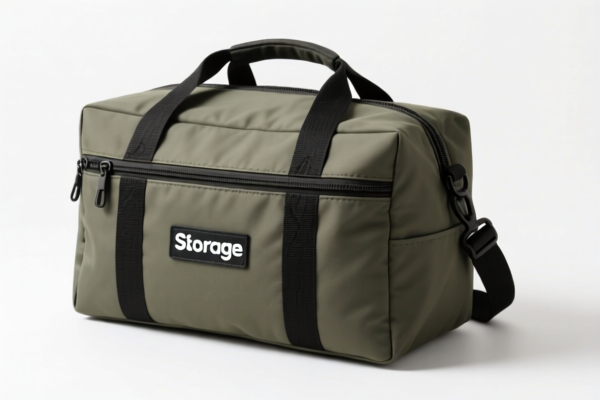
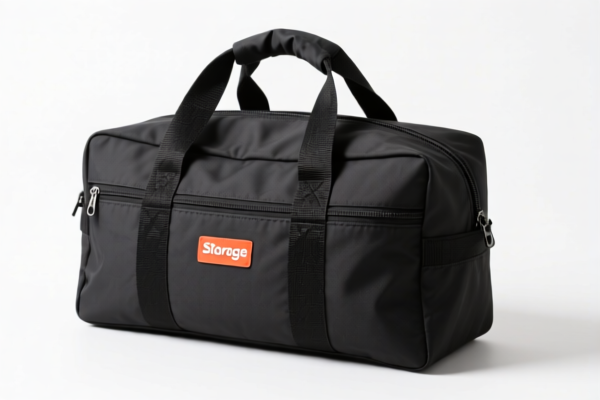
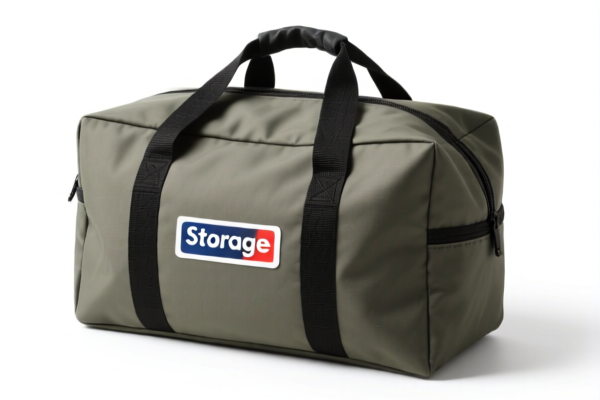
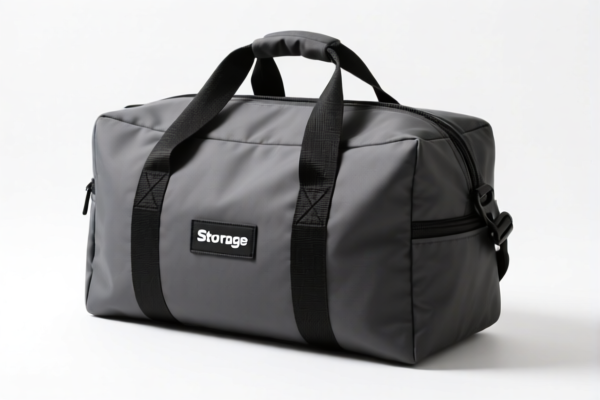
AI分析
💼 Storage File Bag: The Ultimate Guide to US Customs Classification & Tariff Strategy
🌐 HS Code Reference & Customs Clearance Guide | 2026 Latest Tariff Analysis | Professional-Level Compliance Strategy
📌 I. Product Definition & Classification: Do You Really Understand "Storage File Bags"?
A Storage File Bag is a versatile office or stationery item used for organizing, storing, and transporting documents. In international trade, its classification depends heavily on two key factors:
1. Material Composition (Plastic vs. Paper/Cardboard vs. Textile)
2. Structural Design (Flat folder, pouch, or container-like bag).
⚠️ Critical Distinction:
- If it is flat, flexible, and paper-based, it may fall under Chapter 48 (Paper products).
- If it is plastic, non-specific, it often falls under Chapter 39 (Plastics).
- If it is constructed like a bag with handles/straps or has a container-like shape, it may fall under Chapter 42 (Travel goods/Containers).
- Misclassification leads to massive tariff differences (from 22.8% to 52.6%)!
📦 II. HS Code Classification Details (2026 Latest Tariff Authority Comparison)
| HS Code | Product Description | Material | Total Duty Rate | Key Logic |
|---|---|---|---|---|
| 3926.90.87.00 | Plastic File Folders / Pouches | PVC/PP/PE (Plastic) | 40.3% | Flat, plastic, office supply use. High additional tariffs apply. |
| 4820.30.00.40 | Paper File Folders / Covers | Paper/Cardboard | 35.0% | Paper-based, standard filing function. No basic duty, but high additional tariffs. |
| 3926.90.99.89 | Other Plastic Articles (Not Specified) | PVC/PP/PE (Plastic) | 22.8% | Plastic but not specifically listed as "folders." Lowest duty rate! |
| 4202.32.93.00 | Plastic-Surfaced Bags/Containers | Plastic sheet exterior | 52.6% | Classified as "bags/containers." Highest duty rate. Includes handles/straps logic. |
| 4820.90.00.00 | Other Paper Stationery | Paper/Cardboard | 35.0% | Paper-based, general stationery category. Similar to 4820.30. |
| 4202.32.99.00 | Textile/Plastic Bags (Not Specified) | Textile or Plastic sheet | 52.6% | Bag-like structure. High duty due to "container" classification. |
🔍 Key Insight:
- Plastic vs. Paper: Plastic folders (Ch. 39) and Paper folders (Ch. 48) have different base duties but similar additional tariffs.
- Bag vs. Flat Folder: If the file bag has a "bag" structure (e.g., zippered pouch, handled tote), it shifts to Chapter 42, where tariffs spike to 52.6%.
- Best Rate: 3926.90.99.89 (22.8%) is the most favorable if the product is purely a plastic storage item not explicitly listed as a "folder."
💰 III. 2026 Latest Tariff Rate Breakdown (Including Additional Taxes & Policy Surcharges)
✅ Applicable Country: United States (US)
✅ Country of Origin: China (CN)
✅ Effective Date: From November 10, 2025 onwards (including subsequent imports)
🎯 1. 3926.90.87.00 – Plastic File Folders
| Item | Detail |
|---|---|
| Basic Duty | 5.3% (ad valorem) |
| Section 301 Additional Duty | +25.0% |
| Section 122 IEEPA Additional Duty | +10.0% (China-specific) |
| Total Effective Rate | 40.3% |
| Tax Calculation | CIF Value × 40.3% |
| De Minimis Eligibility | ❌ Not Eligible (deny_de_minimis) |
| Legal Basis Path | USITC:3926.90.87.00 → Section 301: 25% → IEEPA:10% |
📌 Explanation:
- This code captures standard plastic file folders/pouches.
- 40.3% total duty is significant. However, it is lower than Chapter 42 options.
🎯 2. 4820.30.00.40 / 4820.90.00.00 – Paper File Folders
| Item | Detail |
|---|---|
| Basic Duty | 0.0% |
| Section 301 Additional Duty | +25.0% |
| Section 122 IEEPA Additional Duty | +10.0% |
| Total Effective Rate | 35.0% |
| Tax Calculation | CIF Value × 35.0% |
| De Minimis Eligibility | ❌ Not Eligible (deny_de_minimis) |
| Legal Basis Path | USITC:4820.30.00.40 → Section 301: 25% → IEEPA:10% |
📌 Explanation:
- Paper-based file bags enjoy 0% basic duty, but the 35% total is still high due to trade war tariffs.
- Saves 5.3% compared to plastic folders (3926.90.87.00).
🎯 3. 3926.90.99.89 – Other Plastic Articles (Best Rate!)
| Item | Detail |
|---|---|
| Basic Duty | 5.3% |
| Section 301 Additional Duty | +7.5% |
| Section 122 IEEPA Additional Duty | +10.0% |
| Total Effective Rate | 22.8% |
| Tax Calculation | CIF Value × 22.8% |
| De Minimis Eligibility | ❌ Not Eligible (deny_de_minimis) |
| Legal Basis Path | USITC:3926.90.99.89 → Section 301: 7.5% → IEEPA:10% |
📌 Explanation:
- This is a "catch-all" for plastic items not specifically named as "folders."
- Crucial: If your product is a simple plastic storage sleeve/pouch without complex folder mechanisms, this code offers the lowest total duty (22.8%).
- Risk: Must ensure the product description does not explicitly claim "file folder" if customs considers that a specific classification.
🎯 4. 4202.32.93.00 / 4202.32.99.00 – Bag-Type File Containers
| Item | Detail |
|---|---|
| Basic Duty | 17.6% |
| Section 301 Additional Duty | +25.0% |
| Section 122 IEEPA Additional Duty | +10.0% |
| Total Effective Rate | 52.6% |
| Tax Calculation | CIF Value × 52.6% |
| De Minimis Eligibility | ❌ Not Eligible (deny_de_minimis) |
| Legal Basis Path | USITC:4202.32.93.00 → Section 301: 25% → IEEPA:10% |
📌 Explanation:
- AVOID THIS CATEGORY IF POSSIBLE.
- If the file bag is shaped like a "bag" (e.g., with zippers, handles, or structured sides), customs may classify it as a "travel good" or "container" under Chapter 42.
- 52.6% is the highest rate in this list. It adds a 17.6% base duty on top of the surcharges.
🛠️ IV. Customs Clearance Practical Advice (Battle-Tested Pitfall Avoidance)
✅ 1. Preparation Checklist (Non-Negotiable)
| Document | Required | Notes |
|---|---|---|
| ✅ Product Photos | ✔️ | Clear images showing material texture, closure type (zipper/clasp), and structure. |
| ✅ Material Declaration | ✔️ | Explicitly state "100% PVC," "PP," or "Kraft Paper." |
| ✅ Function Description | ✔️ | Specify if it's a "flat folder," "storage sleeve," or "file tote." |
| ✅ Commercial Invoice | ✔️ | Use precise HS code descriptions. Avoid vague terms like "office accessories." |
| ✅ Structure Diagram | ✔️ | If claiming Chapter 39 (lower duty) vs. Chapter 42 (higher duty), show it lacks bag-like handles/straps. |
✅ 2. Declaration Tips (Key Mnemonic)
🔥 "Material First, Structure Second, Avoid 'Bag' Labeling!"
| Scenario | Correct Declaration | Wrong Practice |
|---|---|---|
| Flat Plastic Sleeve | 3926.90.99.89 (22.8%) |
Declaring as 4202.32.93.00 (52.6%) |
| Paper File Folder | 4820.30.00.40 (35.0%) |
Using plastic code → Audit risk |
| Zippered Plastic Pouch | 3926.90.99.89 (22.8%) |
Calling it a "Bag" → 52.6% |
| Textile File Holder | 4202.32.99.00 (52.6%) |
Hard to avoid high duty if textile |
📌 Critical Warning:
- Do NOT use the word "Bag" in the product name if you aim for Chapter 39 or 48. Use "Folder," "Sleeve," "Cover," or "Pouch."
- If the product has handles or shoulder straps, it will almost certainly be classified under Chapter 42 (52.6%).
✅ 3. Special Case Handling
| Situation | Recommendation |
|---|---|
| OEM Custom Print | Provide design files. Ensure no "branding" that confuses classification. |
| Mixed Materials | If 50% plastic + 50% paper, customs may apply the "essential character" rule. Usually, the outermost material dictates. |
| Small Business Import | Even with low value, De Minimis (Section 321) is DENIED for China-origin goods under Section 301/122. Prepare for full duty payment. |
| Pre-Ruling Request | For large volumes, request an Advance Ruling from CBP to lock in 3926.90.99.89 if eligible. |
🌍 V. Global Market Comparison (2026 Update)
| Market | Recommended HS Code | Effective Duty (China Origin) | Key Certifications |
|---|---|---|---|
| 🇺🇸 USA | 3926.90.99.89 |
22.8% (Lowest) | FCC (if electronic), RoHS |
| 🇪🇺 EU | 4820.30.00 |
~6.5% (Low) | REACH, FSC (if paper) |
| 🇨🇳 China | 4820.30.00 |
~5-10% | N/A |
| 🇬🇧 UK | 3926.90.99 |
~6.5% | N/A |
📌 Conclusion:
- The US market is uniquely punitive due to Section 301 and IEEPA tariffs.
- China-to-US file bags face 22.8% to 52.6% tariffs.
- EU/UK tariffs are significantly lower, making them easier markets for high-volume stationery exports.
📌 VI. Common Mistakes & Pitfalls (Lessons Learned)
❌ Mistake 1: Calling a simple plastic sleeve a "Bag"
👉 Result: Duty jumps from 22.8% to 52.6%!
✅ Fix: Use "Folder," "Sleeve," or "Cover."
❌ Mistake 2: Declaring Plastic as Paper to avoid plastic tariffs
👉 Result: Customs inspection reveals plastic → Seizure + Penalty.
✅ Fix: Accurate material declaration.
❌ Mistake 3: Ignoring Section 122 (10%)
👉 Result: Underpayment of taxes → Back duties + Interest.
✅ Fix: Always include 10% IEEPA surcharge in cost calculations.
❌ Mistake 4: Assuming De Minimis applies for small packages
👉 Result: Package held at border, duties owed anyway.
✅ Fix: Budget for full duty even for low-value shipments.
🎯 VII. Conclusion: Smart Classification = Profit Protection
🎯 Remember the Mantra:
🔹 "Plastic Sleeve = 22.8% (Best)! Paper Folder = 35.0% (Good). Bag Structure = 52.6% (Avoid!)"
🔹 "HS Code Determines Your Margin. A 30% difference changes everything."
📌 Pro Tip:
If you are importing large volumes, consider pre-classification rulings for 3926.90.99.89 to ensure you benefit from the lowest possible duty (22.8%). Always provide clear photos and material specs to avoid misclassification into Chapter 42.
📣 Take Action Now:
📞 Engage a licensed customs broker + Provide high-res product images + Apply for Advance Ruling
🚀 Maximize your profit margin by minimizing your tariff burden!
✨ Professional Clearance Starts with Precise Classification!
💼 Your every penny counts in global trade!
用户评价
关于 HS 编码归类
协调制度(HS)是由世界海关组织(WCO)制定的国际贸易商品分类标准。全球 200 多个国家采用 HS 系统作为海关关税、贸易统计和进出口监管的基础。
每个 HS 编码遵循以下层级结构:
- 章(2 位)——商品大类(例如:第 84 章:机器和机械设备)
- 品目(4 位)——章内的更具体分类
- 子目(6 位)——国际通用细分,所有 WCO 成员国统一使用
- 本国细分(8-10 位)——各国自行扩展的细分编码,如美国 HTSUS 10 位编码
正确的 HS 编码归类对于顺利通关、准确缴纳关税和遵守贸易法规至关重要。错误归类可能导致海关延误、多缴关税或罚款。
从CN进口到US时,适用的关税税率可能包括:
- 最惠国(MFN)税率——适用于 WTO 成员国的标准关税税率
- 普通税率——适用于无贸易协定国家
- 贸易救济关税——附加关税,如 301 条款(反倾销)、232 条款(国家安全)或反补贴税
本页内容仅供参考。如需正式归类,请咨询当地海关或持牌报关代理。