Storage File Bag
CN → US| HS Code | Tariff Rate | Origin | Destination | Doc |
|---|---|---|---|---|
| 3926908700 | 40.3% | CN | US | Official Doc |
| 4820300040 | 35.0% | CN | US | Official Doc |
| 3926909989 | 22.8% | CN | US | Official Doc |
| 4202329300 | 52.6% | CN | US | Official Doc |
| 4820900000 | 35.0% | CN | US | Official Doc |
Product Images
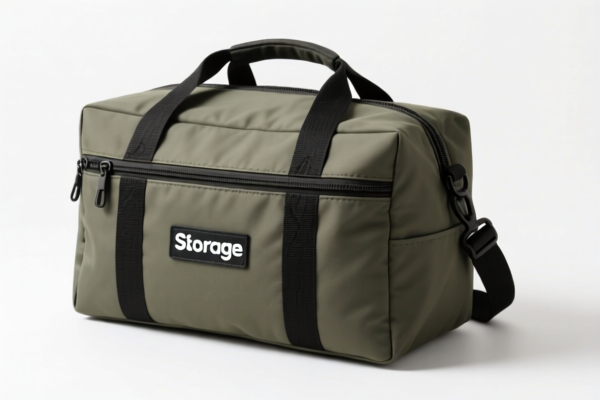
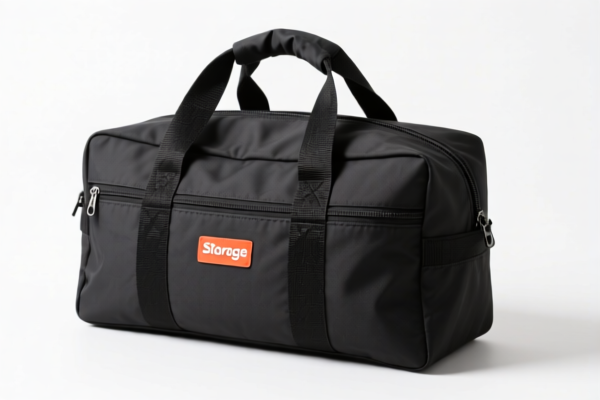
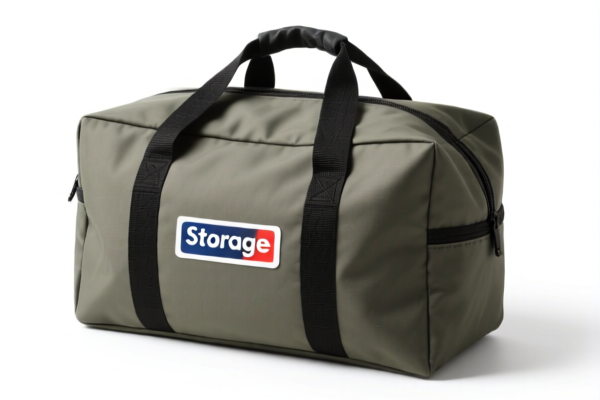
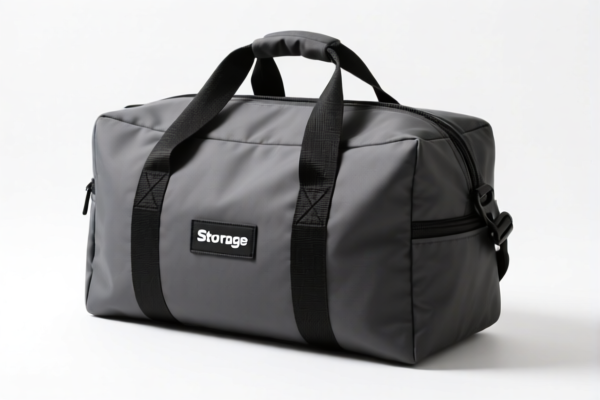
AI Analysis
💼 Storage File Bag: The Ultimate Guide to US Customs Classification & Tariff Strategy
🌐 HS Code Reference & Customs Clearance Guide | 2026 Latest Tariff Analysis | Professional-Level Compliance Strategy
📌 I. Product Definition & Classification: Do You Really Understand "Storage File Bags"?
A Storage File Bag is a versatile office or stationery item used for organizing, storing, and transporting documents. In international trade, its classification depends heavily on two key factors:
1. Material Composition (Plastic vs. Paper/Cardboard vs. Textile)
2. Structural Design (Flat folder, pouch, or container-like bag).
⚠️ Critical Distinction:
- If it is flat, flexible, and paper-based, it may fall under Chapter 48 (Paper products).
- If it is plastic, non-specific, it often falls under Chapter 39 (Plastics).
- If it is constructed like a bag with handles/straps or has a container-like shape, it may fall under Chapter 42 (Travel goods/Containers).
- Misclassification leads to massive tariff differences (from 22.8% to 52.6%)!
📦 II. HS Code Classification Details (2026 Latest Tariff Authority Comparison)
| HS Code | Product Description | Material | Total Duty Rate | Key Logic |
|---|---|---|---|---|
| 3926.90.87.00 | Plastic File Folders / Pouches | PVC/PP/PE (Plastic) | 40.3% | Flat, plastic, office supply use. High additional tariffs apply. |
| 4820.30.00.40 | Paper File Folders / Covers | Paper/Cardboard | 35.0% | Paper-based, standard filing function. No basic duty, but high additional tariffs. |
| 3926.90.99.89 | Other Plastic Articles (Not Specified) | PVC/PP/PE (Plastic) | 22.8% | Plastic but not specifically listed as "folders." Lowest duty rate! |
| 4202.32.93.00 | Plastic-Surfaced Bags/Containers | Plastic sheet exterior | 52.6% | Classified as "bags/containers." Highest duty rate. Includes handles/straps logic. |
| 4820.90.00.00 | Other Paper Stationery | Paper/Cardboard | 35.0% | Paper-based, general stationery category. Similar to 4820.30. |
| 4202.32.99.00 | Textile/Plastic Bags (Not Specified) | Textile or Plastic sheet | 52.6% | Bag-like structure. High duty due to "container" classification. |
🔍 Key Insight:
- Plastic vs. Paper: Plastic folders (Ch. 39) and Paper folders (Ch. 48) have different base duties but similar additional tariffs.
- Bag vs. Flat Folder: If the file bag has a "bag" structure (e.g., zippered pouch, handled tote), it shifts to Chapter 42, where tariffs spike to 52.6%.
- Best Rate: 3926.90.99.89 (22.8%) is the most favorable if the product is purely a plastic storage item not explicitly listed as a "folder."
💰 III. 2026 Latest Tariff Rate Breakdown (Including Additional Taxes & Policy Surcharges)
✅ Applicable Country: United States (US)
✅ Country of Origin: China (CN)
✅ Effective Date: From November 10, 2025 onwards (including subsequent imports)
🎯 1. 3926.90.87.00 – Plastic File Folders
| Item | Detail |
|---|---|
| Basic Duty | 5.3% (ad valorem) |
| Section 301 Additional Duty | +25.0% |
| Section 122 IEEPA Additional Duty | +10.0% (China-specific) |
| Total Effective Rate | 40.3% |
| Tax Calculation | CIF Value × 40.3% |
| De Minimis Eligibility | ❌ Not Eligible (deny_de_minimis) |
| Legal Basis Path | USITC:3926.90.87.00 → Section 301: 25% → IEEPA:10% |
📌 Explanation:
- This code captures standard plastic file folders/pouches.
- 40.3% total duty is significant. However, it is lower than Chapter 42 options.
🎯 2. 4820.30.00.40 / 4820.90.00.00 – Paper File Folders
| Item | Detail |
|---|---|
| Basic Duty | 0.0% |
| Section 301 Additional Duty | +25.0% |
| Section 122 IEEPA Additional Duty | +10.0% |
| Total Effective Rate | 35.0% |
| Tax Calculation | CIF Value × 35.0% |
| De Minimis Eligibility | ❌ Not Eligible (deny_de_minimis) |
| Legal Basis Path | USITC:4820.30.00.40 → Section 301: 25% → IEEPA:10% |
📌 Explanation:
- Paper-based file bags enjoy 0% basic duty, but the 35% total is still high due to trade war tariffs.
- Saves 5.3% compared to plastic folders (3926.90.87.00).
🎯 3. 3926.90.99.89 – Other Plastic Articles (Best Rate!)
| Item | Detail |
|---|---|
| Basic Duty | 5.3% |
| Section 301 Additional Duty | +7.5% |
| Section 122 IEEPA Additional Duty | +10.0% |
| Total Effective Rate | 22.8% |
| Tax Calculation | CIF Value × 22.8% |
| De Minimis Eligibility | ❌ Not Eligible (deny_de_minimis) |
| Legal Basis Path | USITC:3926.90.99.89 → Section 301: 7.5% → IEEPA:10% |
📌 Explanation:
- This is a "catch-all" for plastic items not specifically named as "folders."
- Crucial: If your product is a simple plastic storage sleeve/pouch without complex folder mechanisms, this code offers the lowest total duty (22.8%).
- Risk: Must ensure the product description does not explicitly claim "file folder" if customs considers that a specific classification.
🎯 4. 4202.32.93.00 / 4202.32.99.00 – Bag-Type File Containers
| Item | Detail |
|---|---|
| Basic Duty | 17.6% |
| Section 301 Additional Duty | +25.0% |
| Section 122 IEEPA Additional Duty | +10.0% |
| Total Effective Rate | 52.6% |
| Tax Calculation | CIF Value × 52.6% |
| De Minimis Eligibility | ❌ Not Eligible (deny_de_minimis) |
| Legal Basis Path | USITC:4202.32.93.00 → Section 301: 25% → IEEPA:10% |
📌 Explanation:
- AVOID THIS CATEGORY IF POSSIBLE.
- If the file bag is shaped like a "bag" (e.g., with zippers, handles, or structured sides), customs may classify it as a "travel good" or "container" under Chapter 42.
- 52.6% is the highest rate in this list. It adds a 17.6% base duty on top of the surcharges.
🛠️ IV. Customs Clearance Practical Advice (Battle-Tested Pitfall Avoidance)
✅ 1. Preparation Checklist (Non-Negotiable)
| Document | Required | Notes |
|---|---|---|
| ✅ Product Photos | ✔️ | Clear images showing material texture, closure type (zipper/clasp), and structure. |
| ✅ Material Declaration | ✔️ | Explicitly state "100% PVC," "PP," or "Kraft Paper." |
| ✅ Function Description | ✔️ | Specify if it's a "flat folder," "storage sleeve," or "file tote." |
| ✅ Commercial Invoice | ✔️ | Use precise HS code descriptions. Avoid vague terms like "office accessories." |
| ✅ Structure Diagram | ✔️ | If claiming Chapter 39 (lower duty) vs. Chapter 42 (higher duty), show it lacks bag-like handles/straps. |
✅ 2. Declaration Tips (Key Mnemonic)
🔥 "Material First, Structure Second, Avoid 'Bag' Labeling!"
| Scenario | Correct Declaration | Wrong Practice |
|---|---|---|
| Flat Plastic Sleeve | 3926.90.99.89 (22.8%) |
Declaring as 4202.32.93.00 (52.6%) |
| Paper File Folder | 4820.30.00.40 (35.0%) |
Using plastic code → Audit risk |
| Zippered Plastic Pouch | 3926.90.99.89 (22.8%) |
Calling it a "Bag" → 52.6% |
| Textile File Holder | 4202.32.99.00 (52.6%) |
Hard to avoid high duty if textile |
📌 Critical Warning:
- Do NOT use the word "Bag" in the product name if you aim for Chapter 39 or 48. Use "Folder," "Sleeve," "Cover," or "Pouch."
- If the product has handles or shoulder straps, it will almost certainly be classified under Chapter 42 (52.6%).
✅ 3. Special Case Handling
| Situation | Recommendation |
|---|---|
| OEM Custom Print | Provide design files. Ensure no "branding" that confuses classification. |
| Mixed Materials | If 50% plastic + 50% paper, customs may apply the "essential character" rule. Usually, the outermost material dictates. |
| Small Business Import | Even with low value, De Minimis (Section 321) is DENIED for China-origin goods under Section 301/122. Prepare for full duty payment. |
| Pre-Ruling Request | For large volumes, request an Advance Ruling from CBP to lock in 3926.90.99.89 if eligible. |
🌍 V. Global Market Comparison (2026 Update)
| Market | Recommended HS Code | Effective Duty (China Origin) | Key Certifications |
|---|---|---|---|
| 🇺🇸 USA | 3926.90.99.89 |
22.8% (Lowest) | FCC (if electronic), RoHS |
| 🇪🇺 EU | 4820.30.00 |
~6.5% (Low) | REACH, FSC (if paper) |
| 🇨🇳 China | 4820.30.00 |
~5-10% | N/A |
| 🇬🇧 UK | 3926.90.99 |
~6.5% | N/A |
📌 Conclusion:
- The US market is uniquely punitive due to Section 301 and IEEPA tariffs.
- China-to-US file bags face 22.8% to 52.6% tariffs.
- EU/UK tariffs are significantly lower, making them easier markets for high-volume stationery exports.
📌 VI. Common Mistakes & Pitfalls (Lessons Learned)
❌ Mistake 1: Calling a simple plastic sleeve a "Bag"
👉 Result: Duty jumps from 22.8% to 52.6%!
✅ Fix: Use "Folder," "Sleeve," or "Cover."
❌ Mistake 2: Declaring Plastic as Paper to avoid plastic tariffs
👉 Result: Customs inspection reveals plastic → Seizure + Penalty.
✅ Fix: Accurate material declaration.
❌ Mistake 3: Ignoring Section 122 (10%)
👉 Result: Underpayment of taxes → Back duties + Interest.
✅ Fix: Always include 10% IEEPA surcharge in cost calculations.
❌ Mistake 4: Assuming De Minimis applies for small packages
👉 Result: Package held at border, duties owed anyway.
✅ Fix: Budget for full duty even for low-value shipments.
🎯 VII. Conclusion: Smart Classification = Profit Protection
🎯 Remember the Mantra:
🔹 "Plastic Sleeve = 22.8% (Best)! Paper Folder = 35.0% (Good). Bag Structure = 52.6% (Avoid!)"
🔹 "HS Code Determines Your Margin. A 30% difference changes everything."
📌 Pro Tip:
If you are importing large volumes, consider pre-classification rulings for 3926.90.99.89 to ensure you benefit from the lowest possible duty (22.8%). Always provide clear photos and material specs to avoid misclassification into Chapter 42.
📣 Take Action Now:
📞 Engage a licensed customs broker + Provide high-res product images + Apply for Advance Ruling
🚀 Maximize your profit margin by minimizing your tariff burden!
✨ Professional Clearance Starts with Precise Classification!
💼 Your every penny counts in global trade!
Customer Reviews
About HS Code Classification
The Harmonized System (HS) is an internationally standardized nomenclature developed by the World Customs Organization (WCO) to classify traded products. Over 200 countries use the HS system as the basis for customs tariffs, trade statistics, and import/export regulations.
Each HS code follows a hierarchical structure:
- Chapter (2 digits) — Broad category of goods (e.g., Chapter 84: Machinery and Mechanical Appliances)
- Heading (4 digits) — More specific grouping within the chapter
- Subheading (6 digits) — Internationally standardized breakdown, used by all WCO member countries
- National subdivisions (8-10 digits) — Country-specific extensions for further classification, such as US HTSUS 10-digit codes
Correct HS code classification is essential for smooth customs clearance, accurate duty payment, and compliance with trade regulations. Misclassification can lead to customs delays, overpayment of duties, or penalties.
When importing from CN to US, the applicable tariff rates may include:
- Most-Favored-Nation (MFN) rate — The standard duty rate applied to WTO members
- General rate — Applied to countries without trade agreements
- Trade remedy duties — Additional tariffs such as Section 301 (anti-dumping), Section 232 (national security), or countervailing duties
The information provided on this page is for reference purposes only. For official classification, please consult with your local customs authority or a licensed customs broker.