Storage Stool
CN → US| HS编码 | 关税税率 | 原产国 | 目的国 | 文档 |
|---|---|---|---|---|
| 9403200078 | 85.0% | CN | US | 官方文档 |
| 9403708015 | 35.0% | CN | US | 官方文档 |
商品图片
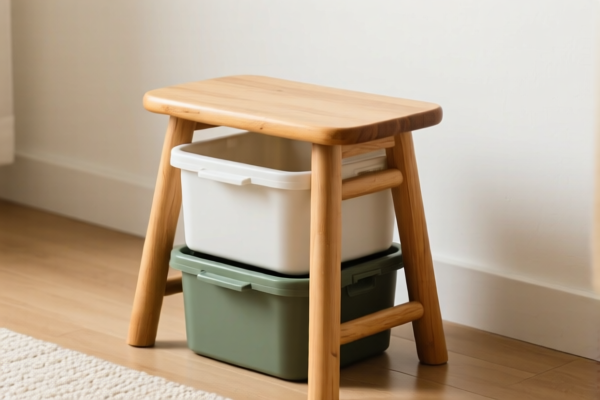
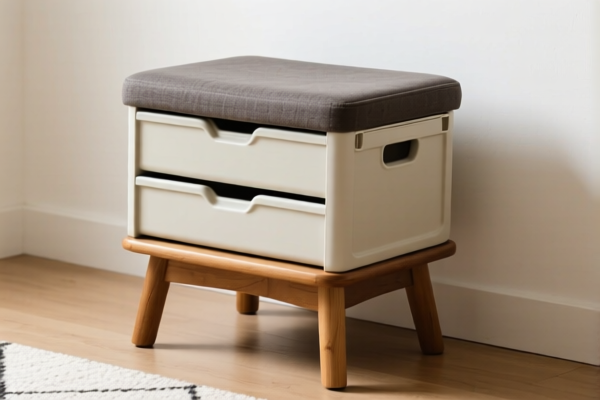
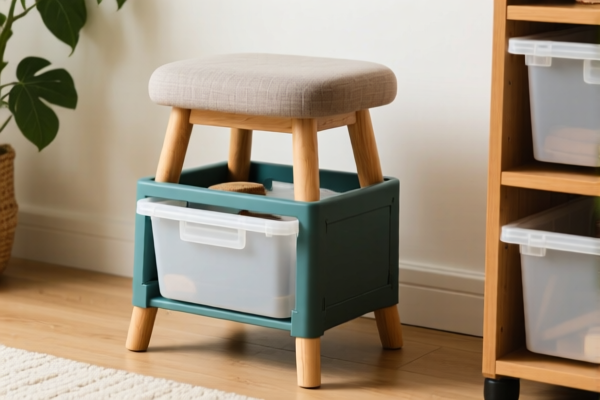
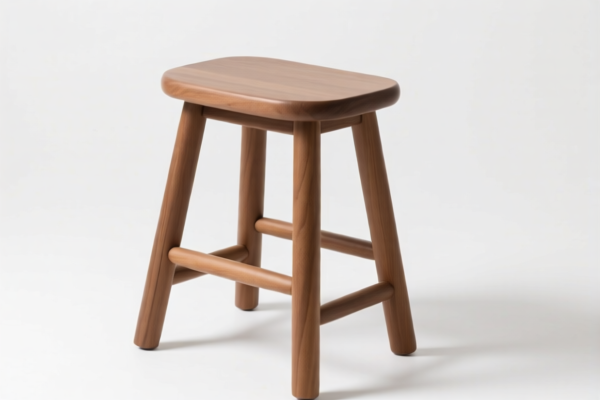
AI分析
🪑 Storage Stool (Furniture with Integrated Storage)
🌐 HS Code Reference & Clearance Guide | 2026 Latest Tariff Analysis | Professional Clearance Strategy
📌 I. Product Definition & Classification: What Exactly Is a "Storage Stool"?
A Storage Stool is a hybrid furniture item that serves a dual purpose: providing seating and offering concealed storage space. In international trade, the classification depends entirely on the primary material of the stool.
Key Distinction: - Metal Storage Stool: Frames, shells, or bodies made primarily of metal (steel, aluminum, copper, etc.). - Plastic Storage Stool: Made primarily of plastic (polypropylene, ABS, etc.).
⚠️ Critical Classification Point:
- If the main structure is Metal →归入 9403.20 (Metal Furniture).
- If the main structure is Plastic → 归入 9403.70 (Plastic Furniture).
- Note: If the stool has a wooden frame but a plastic seat, it is generally classified as Wooden Furniture (9403.40/50), but for this specific data set, we focus on Metal and Plastic variants.
📦 II. HS Code Classification Details (2026 Latest Tariff Authority Comparison)
| HS Code | Product Description | Application Scenario | Primary Material |
|---|---|---|---|
9403.20.00.78 |
Other metal furniture: Storage lockers, racks, display cases, shelves, partitions, and similar fixtures | Metal storage stools, industrial-style metal benches with under-seat storage, locker-style seats | ✅ Metal (Steel/Aluminum/Copper) |
9403.70.80.15 |
Other furniture of plastics: Other other household | Plastic storage ottomans, resin storage stools, household plastic benches with lids | ✅ Plastic |
🔍 Key Reminder:
- Metal Storage Stools are often scrutinized due to the 50% additional tariff on steel/aluminum/copper products.
- Plastic Storage Stools are subject to a standard 25% additional tariff under Section 301.
- Do not confuse "storage stools" with "upholstered furniture" (9403.60) if the frame is metal or plastic but the upholstery is minimal. The structure dictates the code.
💰 III. 2026 Latest Tariff Rate Detail (Including Surtaxes & Policy Add-ons)
✅ Applicable Country: United States (US)
✅ Country of Origin: China (CN)
✅ Effective Date: 2025 onwards (Including subsequent imports)
🎯 1. 9403.20.00.78 —— Metal Storage Stool / Lockers
| Item | Content |
|---|---|
| Base Tariff Rate | 0% (ad valorem) |
| Section 301 Surcharge | 25% |
| Steel/Aluminum/Copper Surtax | 50% (Additional tariff on steel, aluminum, and copper products) |
| Total Tariff Rate | 75% |
| Tax Calculation | CIF Value × 75% |
| De Minimis Exemption | ❌ Not Available (deny_de_minimis) |
| Legal Basis Path | USITC:9403.20.00.78 → FOOTNOTE:Section_301_25% + FOOTNOTE:Steel_Aluminum_Copper_50% |
📌 Explanation:
- This is a high-risk classification for metal products.
- The 50% surtax applies specifically to steel, aluminum, and copper articles.
- Combined with the 25% Section 301 tariff, the total burden is 75%.
- No de minimis exemption applies, meaning even small parcels are subject to this high rate.
🎯 2. 9403.70.80.15 —— Plastic Storage Stool
| Item | Content |
|---|---|
| Base Tariff Rate | 0% |
| Section 301 Surcharge | +25% |
| IEEPA Surtax | N/A (Not listed in specific IEEPA 10% category for plastics in this snippet) |
| Total Tariff Rate | 25% |
| Tax Calculation | CIF Value × 25% |
| De Minimis Exemption | ❌ Not Available (deny_de_minimis) |
| Legal Basis Path | USITC:9403.70.80.15 → FOOTNOTE:Section_301_25% |
📌 Note:
- Plastic furniture is subject to the standard 25% Section 301 tariff.
- Unlike metal products, there is no additional 50% surtax for plastics in this specific context.
- However, 25% is still significant and must be factored into pricing.
🛠️ IV. Customs Clearance Practical Advice (Battle-Proven Pitfall Guide)
✅ 1. Required Documentation Checklist (None Missing)
| Document | Mandatory | Description |
|---|---|---|
| ✅ Product Specification Sheet | ✔️ | Must specify material composition (e.g., "100% Steel Frame," "Polypropylene Shell"). |
| ✅ Material Breakdown | ✔️ | Critical for determining if it falls under the 50% metal surtax. |
| ✅ Product Photos | ✔️ | Clear images showing structure, hinges, and storage mechanism. |
| ✅ Commercial Invoice | ✔️ | Must clearly state "Storage Stool" and material. Avoid vague terms like "Furniture." |
| ✅ Packing List | ✔️ | Show assembly status (Knock-Down vs. Assembled). |
| ✅ Certifications | ✔️ | If applicable: FCC, UL, or specific metal/plastic safety standards. |
✅ 2. Declaration Tips (Key Mantras)
🔥 "Material Defines Code, Metal Triggers 50%, Plastic Hits 25%!"
| Scenario | Correct Declaration | Incorrect Practice |
|---|---|---|
| Metal frame + Plastic seat | 9403.20.00.78 (Metal Furniture) |
Misdeclare as 9403.70 (Plastic) → Penalty for Misclassification |
| Plastic body with metal hinges | 9403.70.80.15 (Plastic Furniture) |
Misdeclare as Metal → Pay 75% instead of 25% |
| Wooden frame + Metal legs | 9403.40/50 (Wooden Furniture) |
Misdeclare as Metal/Plastic → Wrong HS Code |
| Upholstered Metal Stool | 9403.60 (Other Wood or Metal Furniture) |
Misdeclare as 9403.20 (Lockers/Racks) → Possible Dispute |
✅ 3. Special Situations Handling
| Situation | Handling Advice |
|---|---|
| Mixed Materials | If metal is the primary structural component, classify as Metal (9403.20). |
| OEM Custom Designs | Provide design drawings to prove structural integrity and material dominance. |
| Kit vs. Assembled | Tariff rate is the same, but "Knock-Down" (KD) may affect packaging requirements. |
| Upholstery Only | If the stool is primarily fabric/leather with a minimal metal frame, consult if it falls under 9403.60 (Upholstered), which may have different tax implications. |
🌍 V. Global Market Comparison (2026 Latest)
| Country/Region | Recommended HS Code | Tariff (China Origin) | Certification | Notes |
|---|---|---|---|---|
| 🇺🇸 USA | 9403.20.00.78 (Metal) 9403.70.80.15 (Plastic) |
75% (Metal) 25% (Plastic) |
None specific for furniture | Metal stools are extremely costly to import. |
| 🇨🇳 China | 9403.20 / 9403.70 |
5% - 10% | CCC (if applicable) | Low import duties for domestic sales. |
| 🇪🇺 EU | 9403.20 / 9403.70 |
0% - 4% | CE (if applicable) | No Section 301 equivalents. |
| 🇦🇺 Australia | 9403.20 / 9403.70 |
5% | RCM | Moderate duty. |
| 🇯🇵 Japan | 9403.20 / 9403.70 |
0% - 3% | PSE | Low duty. |
📌 Conclusion:
- USA is the most challenging market due to the 75% tariff on metal storage stools.
- Plastic storage stools are more affordable to import to the US but still carry a 25% surtax.
- Consider supply chain diversification (e.g., manufacturing in Vietnam or Mexico) to avoid Section 301 tariffs.
📌 VI. Common Mistakes & Pitfall Guide (Lessons Learned)
❌ Mistake 1: Classifying a Metal Storage Stool as 9403.70 (Plastic) to avoid the 50% surtax.
👉 Consequence: Customs audit finds metal structure → 75% tariff applied + Penalties + Back Taxes.
❌ Mistake 2: Using vague terms like "Stool" or "Seat" in the invoice.
👉 Consequence: Customs may request additional documentation, causing delays and storage fees.
❌ Mistake 3: Ignoring the 50% Steel/Aluminum Surtax.
👉 Consequence: Profit margin wiped out by unexpected 50% additional cost on top of 25%.
❌ Mistake 4: Assuming "De Minimis" applies to small shipments.
👉 Consequence: No exemption for Section 301 or Steel/Aluminum surtaxes → Full tariff due.
✅ Correct Practice:
"Metal Storage Stool, Steel Frame, Polyurethane Upholstery, Model XYZ, Designed for Household Use"
🎯 VII. Conclusion: Precise Classification, Cost Control, Efficient Clearance!
🎯 Remember the Mantra:
🔹 "Metal Stool = 75% (25% + 50%)"
🔹 "Plastic Stool = 25% (Only 301)"
🔹 "Material is King, Classification is Life!"
📌 Pro Tip:
- If you are importing Metal Storage Stools from China to the US, consider restructuring your supply chain to produce in a non-China country to avoid the 75% total tariff.
- For Plastic Storage Stools, the 25% tariff is manageable but should be factored into your pricing strategy.
- Always request a Pre-Ruling from US Customs and Border Protection (CBP) if the material composition is mixed or unclear.
📣 Immediate Action:
📞 Consult a licensed customs broker + Provide material breakdowns + Apply for Pre-Ruling
🚀 Ensure smooth clearance, avoid costly penalties, and maximize profit margins!
✨ Professional Clearance Starts with Accurate Classification!
💼 Every Percentage Point of Tariff Counts!
用户评价
关于 HS 编码归类
协调制度(HS)是由世界海关组织(WCO)制定的国际贸易商品分类标准。全球 200 多个国家采用 HS 系统作为海关关税、贸易统计和进出口监管的基础。
每个 HS 编码遵循以下层级结构:
- 章(2 位)——商品大类(例如:第 84 章:机器和机械设备)
- 品目(4 位)——章内的更具体分类
- 子目(6 位)——国际通用细分,所有 WCO 成员国统一使用
- 本国细分(8-10 位)——各国自行扩展的细分编码,如美国 HTSUS 10 位编码
正确的 HS 编码归类对于顺利通关、准确缴纳关税和遵守贸易法规至关重要。错误归类可能导致海关延误、多缴关税或罚款。
从CN进口到US时,适用的关税税率可能包括:
- 最惠国(MFN)税率——适用于 WTO 成员国的标准关税税率
- 普通税率——适用于无贸易协定国家
- 贸易救济关税——附加关税,如 301 条款(反倾销)、232 条款(国家安全)或反补贴税
本页内容仅供参考。如需正式归类,请咨询当地海关或持牌报关代理。