Storage Stool
CN → US| HS Code | Tariff Rate | Origin | Destination | Doc |
|---|---|---|---|---|
| 9403200078 | 85.0% | CN | US | Official Doc |
| 9403708015 | 35.0% | CN | US | Official Doc |
Product Images
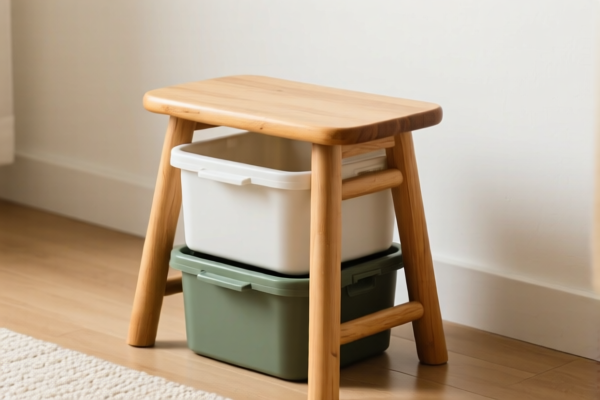
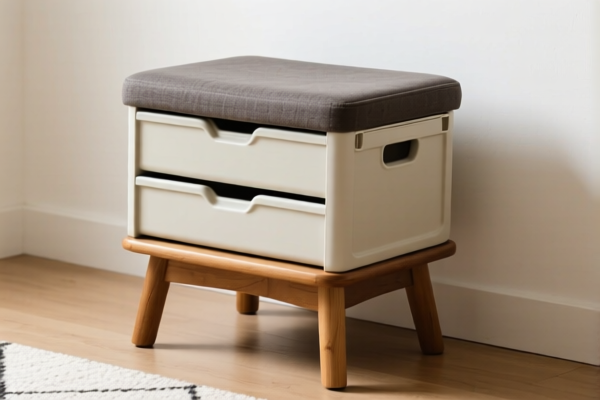
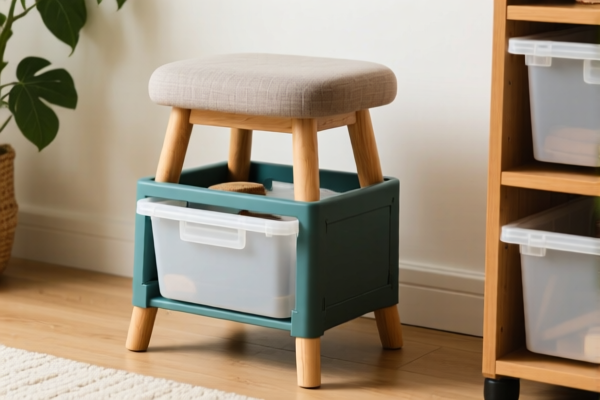
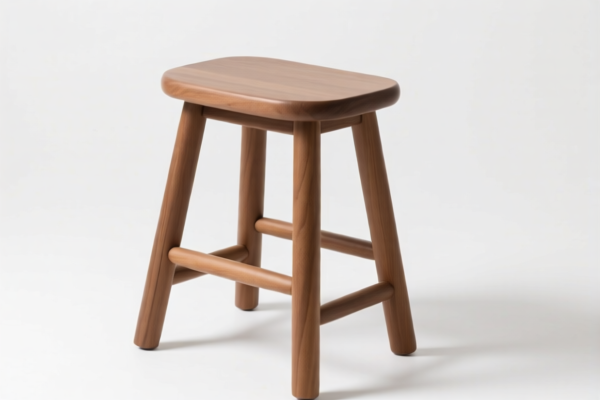
AI Analysis
🪑 Storage Stool (Furniture with Integrated Storage)
🌐 HS Code Reference & Clearance Guide | 2026 Latest Tariff Analysis | Professional Clearance Strategy
📌 I. Product Definition & Classification: What Exactly Is a "Storage Stool"?
A Storage Stool is a hybrid furniture item that serves a dual purpose: providing seating and offering concealed storage space. In international trade, the classification depends entirely on the primary material of the stool.
Key Distinction: - Metal Storage Stool: Frames, shells, or bodies made primarily of metal (steel, aluminum, copper, etc.). - Plastic Storage Stool: Made primarily of plastic (polypropylene, ABS, etc.).
⚠️ Critical Classification Point:
- If the main structure is Metal →归入 9403.20 (Metal Furniture).
- If the main structure is Plastic → 归入 9403.70 (Plastic Furniture).
- Note: If the stool has a wooden frame but a plastic seat, it is generally classified as Wooden Furniture (9403.40/50), but for this specific data set, we focus on Metal and Plastic variants.
📦 II. HS Code Classification Details (2026 Latest Tariff Authority Comparison)
| HS Code | Product Description | Application Scenario | Primary Material |
|---|---|---|---|
9403.20.00.78 |
Other metal furniture: Storage lockers, racks, display cases, shelves, partitions, and similar fixtures | Metal storage stools, industrial-style metal benches with under-seat storage, locker-style seats | ✅ Metal (Steel/Aluminum/Copper) |
9403.70.80.15 |
Other furniture of plastics: Other other household | Plastic storage ottomans, resin storage stools, household plastic benches with lids | ✅ Plastic |
🔍 Key Reminder:
- Metal Storage Stools are often scrutinized due to the 50% additional tariff on steel/aluminum/copper products.
- Plastic Storage Stools are subject to a standard 25% additional tariff under Section 301.
- Do not confuse "storage stools" with "upholstered furniture" (9403.60) if the frame is metal or plastic but the upholstery is minimal. The structure dictates the code.
💰 III. 2026 Latest Tariff Rate Detail (Including Surtaxes & Policy Add-ons)
✅ Applicable Country: United States (US)
✅ Country of Origin: China (CN)
✅ Effective Date: 2025 onwards (Including subsequent imports)
🎯 1. 9403.20.00.78 —— Metal Storage Stool / Lockers
| Item | Content |
|---|---|
| Base Tariff Rate | 0% (ad valorem) |
| Section 301 Surcharge | 25% |
| Steel/Aluminum/Copper Surtax | 50% (Additional tariff on steel, aluminum, and copper products) |
| Total Tariff Rate | 75% |
| Tax Calculation | CIF Value × 75% |
| De Minimis Exemption | ❌ Not Available (deny_de_minimis) |
| Legal Basis Path | USITC:9403.20.00.78 → FOOTNOTE:Section_301_25% + FOOTNOTE:Steel_Aluminum_Copper_50% |
📌 Explanation:
- This is a high-risk classification for metal products.
- The 50% surtax applies specifically to steel, aluminum, and copper articles.
- Combined with the 25% Section 301 tariff, the total burden is 75%.
- No de minimis exemption applies, meaning even small parcels are subject to this high rate.
🎯 2. 9403.70.80.15 —— Plastic Storage Stool
| Item | Content |
|---|---|
| Base Tariff Rate | 0% |
| Section 301 Surcharge | +25% |
| IEEPA Surtax | N/A (Not listed in specific IEEPA 10% category for plastics in this snippet) |
| Total Tariff Rate | 25% |
| Tax Calculation | CIF Value × 25% |
| De Minimis Exemption | ❌ Not Available (deny_de_minimis) |
| Legal Basis Path | USITC:9403.70.80.15 → FOOTNOTE:Section_301_25% |
📌 Note:
- Plastic furniture is subject to the standard 25% Section 301 tariff.
- Unlike metal products, there is no additional 50% surtax for plastics in this specific context.
- However, 25% is still significant and must be factored into pricing.
🛠️ IV. Customs Clearance Practical Advice (Battle-Proven Pitfall Guide)
✅ 1. Required Documentation Checklist (None Missing)
| Document | Mandatory | Description |
|---|---|---|
| ✅ Product Specification Sheet | ✔️ | Must specify material composition (e.g., "100% Steel Frame," "Polypropylene Shell"). |
| ✅ Material Breakdown | ✔️ | Critical for determining if it falls under the 50% metal surtax. |
| ✅ Product Photos | ✔️ | Clear images showing structure, hinges, and storage mechanism. |
| ✅ Commercial Invoice | ✔️ | Must clearly state "Storage Stool" and material. Avoid vague terms like "Furniture." |
| ✅ Packing List | ✔️ | Show assembly status (Knock-Down vs. Assembled). |
| ✅ Certifications | ✔️ | If applicable: FCC, UL, or specific metal/plastic safety standards. |
✅ 2. Declaration Tips (Key Mantras)
🔥 "Material Defines Code, Metal Triggers 50%, Plastic Hits 25%!"
| Scenario | Correct Declaration | Incorrect Practice |
|---|---|---|
| Metal frame + Plastic seat | 9403.20.00.78 (Metal Furniture) |
Misdeclare as 9403.70 (Plastic) → Penalty for Misclassification |
| Plastic body with metal hinges | 9403.70.80.15 (Plastic Furniture) |
Misdeclare as Metal → Pay 75% instead of 25% |
| Wooden frame + Metal legs | 9403.40/50 (Wooden Furniture) |
Misdeclare as Metal/Plastic → Wrong HS Code |
| Upholstered Metal Stool | 9403.60 (Other Wood or Metal Furniture) |
Misdeclare as 9403.20 (Lockers/Racks) → Possible Dispute |
✅ 3. Special Situations Handling
| Situation | Handling Advice |
|---|---|
| Mixed Materials | If metal is the primary structural component, classify as Metal (9403.20). |
| OEM Custom Designs | Provide design drawings to prove structural integrity and material dominance. |
| Kit vs. Assembled | Tariff rate is the same, but "Knock-Down" (KD) may affect packaging requirements. |
| Upholstery Only | If the stool is primarily fabric/leather with a minimal metal frame, consult if it falls under 9403.60 (Upholstered), which may have different tax implications. |
🌍 V. Global Market Comparison (2026 Latest)
| Country/Region | Recommended HS Code | Tariff (China Origin) | Certification | Notes |
|---|---|---|---|---|
| 🇺🇸 USA | 9403.20.00.78 (Metal) 9403.70.80.15 (Plastic) |
75% (Metal) 25% (Plastic) |
None specific for furniture | Metal stools are extremely costly to import. |
| 🇨🇳 China | 9403.20 / 9403.70 |
5% - 10% | CCC (if applicable) | Low import duties for domestic sales. |
| 🇪🇺 EU | 9403.20 / 9403.70 |
0% - 4% | CE (if applicable) | No Section 301 equivalents. |
| 🇦🇺 Australia | 9403.20 / 9403.70 |
5% | RCM | Moderate duty. |
| 🇯🇵 Japan | 9403.20 / 9403.70 |
0% - 3% | PSE | Low duty. |
📌 Conclusion:
- USA is the most challenging market due to the 75% tariff on metal storage stools.
- Plastic storage stools are more affordable to import to the US but still carry a 25% surtax.
- Consider supply chain diversification (e.g., manufacturing in Vietnam or Mexico) to avoid Section 301 tariffs.
📌 VI. Common Mistakes & Pitfall Guide (Lessons Learned)
❌ Mistake 1: Classifying a Metal Storage Stool as 9403.70 (Plastic) to avoid the 50% surtax.
👉 Consequence: Customs audit finds metal structure → 75% tariff applied + Penalties + Back Taxes.
❌ Mistake 2: Using vague terms like "Stool" or "Seat" in the invoice.
👉 Consequence: Customs may request additional documentation, causing delays and storage fees.
❌ Mistake 3: Ignoring the 50% Steel/Aluminum Surtax.
👉 Consequence: Profit margin wiped out by unexpected 50% additional cost on top of 25%.
❌ Mistake 4: Assuming "De Minimis" applies to small shipments.
👉 Consequence: No exemption for Section 301 or Steel/Aluminum surtaxes → Full tariff due.
✅ Correct Practice:
"Metal Storage Stool, Steel Frame, Polyurethane Upholstery, Model XYZ, Designed for Household Use"
🎯 VII. Conclusion: Precise Classification, Cost Control, Efficient Clearance!
🎯 Remember the Mantra:
🔹 "Metal Stool = 75% (25% + 50%)"
🔹 "Plastic Stool = 25% (Only 301)"
🔹 "Material is King, Classification is Life!"
📌 Pro Tip:
- If you are importing Metal Storage Stools from China to the US, consider restructuring your supply chain to produce in a non-China country to avoid the 75% total tariff.
- For Plastic Storage Stools, the 25% tariff is manageable but should be factored into your pricing strategy.
- Always request a Pre-Ruling from US Customs and Border Protection (CBP) if the material composition is mixed or unclear.
📣 Immediate Action:
📞 Consult a licensed customs broker + Provide material breakdowns + Apply for Pre-Ruling
🚀 Ensure smooth clearance, avoid costly penalties, and maximize profit margins!
✨ Professional Clearance Starts with Accurate Classification!
💼 Every Percentage Point of Tariff Counts!
Customer Reviews
About HS Code Classification
The Harmonized System (HS) is an internationally standardized nomenclature developed by the World Customs Organization (WCO) to classify traded products. Over 200 countries use the HS system as the basis for customs tariffs, trade statistics, and import/export regulations.
Each HS code follows a hierarchical structure:
- Chapter (2 digits) — Broad category of goods (e.g., Chapter 84: Machinery and Mechanical Appliances)
- Heading (4 digits) — More specific grouping within the chapter
- Subheading (6 digits) — Internationally standardized breakdown, used by all WCO member countries
- National subdivisions (8-10 digits) — Country-specific extensions for further classification, such as US HTSUS 10-digit codes
Correct HS code classification is essential for smooth customs clearance, accurate duty payment, and compliance with trade regulations. Misclassification can lead to customs delays, overpayment of duties, or penalties.
When importing from CN to US, the applicable tariff rates may include:
- Most-Favored-Nation (MFN) rate — The standard duty rate applied to WTO members
- General rate — Applied to countries without trade agreements
- Trade remedy duties — Additional tariffs such as Section 301 (anti-dumping), Section 232 (national security), or countervailing duties
The information provided on this page is for reference purposes only. For official classification, please consult with your local customs authority or a licensed customs broker.