Straight Rebar
CN → US| HS编码 | 关税税率 | 原产国 | 目的国 | 文档 |
|---|---|---|---|---|
| 7214990060 | 10.0% | CN | US | 官方文档 |
| 7214200000 | 10.0% | CN | US | 官方文档 |
| 7215500016 | 35.0% | CN | US | 官方文档 |
| 7228308010 | 35.0% | CN | US | 官方文档 |
| 7228308015 | 35.0% | CN | US | 官方文档 |
商品图片
AI分析
🏗️ Straight Rebar (Reinforcing Steel Bars)
🌐 HS Code Reference & Customs Clearance Guide | 2026 Latest Tariff Analysis | Professional Strategy
📌 I. Product Definition: What is "Straight Rebar"?
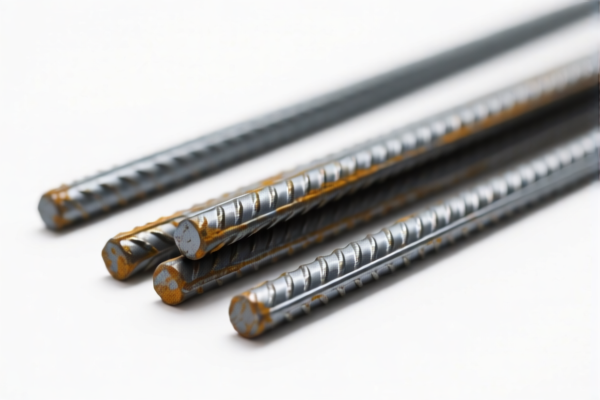
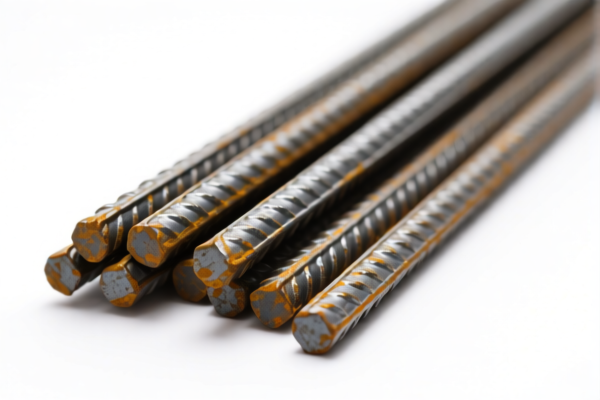
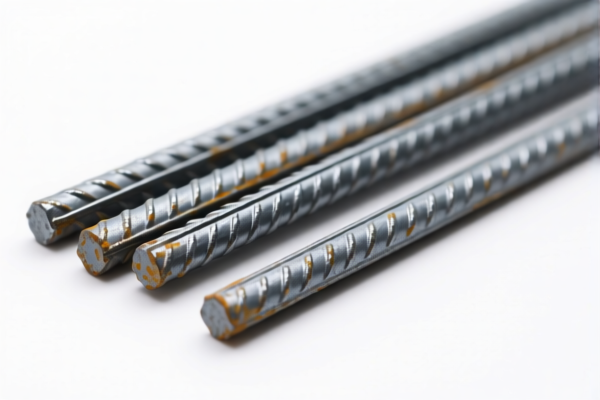
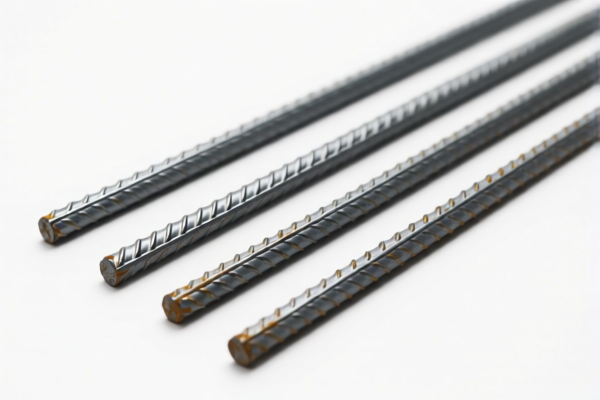
Straight Rebar, or Reinforcing Steel Bar, is a crucial structural material used in concrete construction. In international trade, it is primarily classified based on its material composition (Iron, Non-Alloy Steel, or Alloy Steel) and form (Bars/Rods).
⚠️ Key Classification Distinction:
- Non-Alloy Steel/Iron Bars: Simple chemical composition, general structural use. - Alloy Steel Bars: Contains specific alloying elements (e.g., chromium, nickel), often for high-strength or specialized engineering use. - Form Factor: Must be in straight bars or rods, not coils or wire mesh.
📦 II. HS Code Classification Details (2026 Latest Tariff Authority)
Based on the provided data, here is the breakdown of HS Codes for Straight Rebar:
| HS Code | Product Description | Material/Form Inference | Primary Use |
|---|---|---|---|
7214.99.00.60 |
Straight Rebar, Rod Shape | Iron or Non-Alloy Steel | General Structural |
7214.20.00.00 |
Straight Rebar, Straight/Rod Shape | Iron or Non-Alloy Steel | Concrete Reinforcement |
7215.50.00.16 |
Straight Rebar, Bar/Strip Shape | Iron or Steel | General Structural |
7228.30.80.10 |
Straight Rebar, Bar/Rod Shape | Alloy Steel/Steel | Concrete Reinforcement (High Strength) |
7228.30.80.15 |
Straight Rebar, Bar/Rod Shape | Alloy Steel/Steel | General Structural |
🔍 Key Reminder:
- Non-Alloy Steels (Chapters 7214/7215) generally carry lower additional duties (10%) if they fall under specific non-alloy subheadings.
- Alloy Steels (Chapter 7228) are subject to higher total tariffs (35%) due to stricter 122 Clause and potential 301/Section measures depending on the exact alloy composition.
💰 III. 2026 Latest Tariff Rate Breakdown (Including Surtaxes & Policy Add-ons)
✅ Applicable Country: United States (US)
✅ Origin: China (CN)
✅ Effective Date: Current rates apply (Post-2025 Policy Era)
🎯 1. Non-Alloy Steel Rebar (HS Codes 7214.99.00.60, 7214.20.00.00)
| Item | Content |
|---|---|
| Base Tariff | 0.0% (ad valorem) |
| Section 301 Surcharge | 0.0% |
| Section 122 Tariff | +10.0% |
| Total Tariff Rate | 10.0% |
| Tax Calculation | CIF Value × 10% |
| De Minimis Exemption | ❌ Not Eligible (High-risk commodity) |
| Legal Basis Path | HTSUS:7214.xxxx → Section 122 |
📌 Explanation:
- These codes represent standard non-alloy steel rebars.
- The total tax is driven primarily by the Section 122 Tariff (10%).
- No additional Section 301 surcharge is listed for these specific subheadings in the provided data.
🎯 2. Alloy Steel Rebar (HS Codes 7215.50.00.16, 7228.30.80.10, 7228.30.80.15)
| Item | Content |
|---|---|
| Base Tariff | 0.0% (ad valorem) |
| Section 301 Surcharge | +25.0% |
| Section 122 Tariff | +10.0% |
| Total Tariff Rate | 35.0% |
| Tax Calculation | CIF Value × 35% |
| De Minimis Exemption | ❌ Not Eligible (High-risk commodity) |
| Legal Basis Path | HTSUS:7215/7228 → Section 301 (25%) + Section 122 (10%) |
📌 Explanation:
- These codes represent alloy steel or high-strength steel rebars.
- The total tax is significantly higher due to the Section 301 Surcharge (25%) PLUS the Section 122 Tariff (10%).
- Code7215.50.00.16is listed with 35% tax, indicating it may be treated as an alloy or subject to specific 301 rules despite the 7215 heading (verify alloy content carefully).
- Codes7228.30.80.10&15are clearly alloy steel, triggering the full 35% burden.
🛠️ IV. Customs Clearance Practical Advice (Battle-Tested Guide)
✅ 1. Required Documentation Checklist (All Inevitable)
| Document | Mandatory? | Notes |
|---|---|---|
| ✅ Product Specification Sheet | ✔️ | Must explicitly state Chemical Composition (C, Mn, Si, etc.) to distinguish between Non-Alloy (7214) and Alloy (7228). |
| ✅ Material Test Report (MTC) | ✔️ | Third-party lab report proving tensile strength and alloy content. Critical for avoiding 35% vs 10% misclassification. |
| ✅ Commercial Invoice | ✔️ | Clearly describe as "Straight Reinforcing Steel Bar, ASTM A615 Grade 60, Alloy/Non-Alloy". |
| ✅ Packing List | ✔️ | Weight details (Gross/Net) for CIF calculation. |
| ✅ Bill of Lading | ✔️ | Ensure shipper and consignee details match invoice exactly. |
| ✅ Certificate of Origin | ✔️ | Proof of China origin triggers the 122/301 surcharges. |
✅ 2. Declaration Strategy (Key Mantra)
🔥 “Alloy vs. Non-Alloy Determines Fate; 10% vs. 35% is the Gap!”
| Scenario | Correct Declaration | Wrong Approach |
|---|---|---|
| Standard Concrete Bar | 7214.20.00.00 or 7214.99.00.60 |
Misdeclaring as Alloy (7228) → Unnecessary 35% tax. |
| High-Strength Alloy Bar | 7228.30.80.10 |
Misdeclaring as Non-Alloy → Customs Audit & Penalties for undervaluation. |
| Coiled Wire vs. Straight Bar | Ensure "Straight/Rod" form | Declaring "Wire" (7217) → Different tariff structure. |
| Mixed Container | Separate declarations | Mixing alloy and non-alloy in one line → Customs may flag entire shipment. |
✅ 3. Special Cases & Handling
| Scenario | Handling Advice |
|---|---|
| Chemical Composition Uncertainty | Provide MTC showing exact % of Carbon, Manganese, Chromium, etc. If Cr < 1.2%, it may still be non-alloy; if Cr ≥ 1.2%, it’s likely alloy (7228). |
| ASTM A615 vs. A706 | A615 is standard carbon steel (likely 7214, 10% tax). A706 is low-alloy steel (likely 7228, 35% tax). Declare grade accurately. |
| Rebar Bundling | Ensure packaging doesn’t include non-declarable items (e.g., wood palettes with fumigation issues). |
| US Customs Rulings | If uncertain, apply for a Binding Tariff Information (BTI) or Advance Ruling to lock in the 10% or 35% rate. |
🌍 V. Global Market Comparison (2026 Latest)
| Country/Region | Recommended HS Code | Tariff Rate | Notes |
|---|---|---|---|
| 🇺🇸 USA | 7214.xxxx (Non-Alloy) |
10% | Section 122 applies. |
| 🇺🇸 USA | 7228.xxxx (Alloy) |
35% | Section 301 + 122 applies. |
| 🇪🇺 EU | 7214 / 7228 | Varies (Typically 0-6.7%) | No Section 122/301 equivalent; standard WTO rates apply. |
| 🇨🇳 China | 7214 / 7228 | 0-15% | Import duty varies; anti-dumping duties may apply if exported from China. |
| 🇮🇳 India | 7214 / 7228 | 7.5-10% | Additional Customs Duty (ACD) may apply. |
📌 Conclusion:
- USA is the most complex market for Rebar due to the 122 Clause (10%) and Section 301 (25%) stacking.
- Material Classification is Critical: A small error in declaring "Alloy" vs "Non-Alloy" can result in a 25% tax difference on the entire shipment.
📌 VI. Common Mistakes & Pitfalls (Lessons Learned)
❌ Mistake 1: Declaring Alloy Steel Rebar (7228) as Non-Alloy (7214) to save tax.
👉 Consequence: Customs laboratory testing will prove alloy content → Back taxes + 25% penalty + Possible fraud charges.
❌ Mistake 2: Ignoring the "Straight Bar" form.
👉 Consequence: If rebar is cut into irregular shapes or bent, it may fall under different subheadings, altering duty liability.
❌ Mistake 3: Failing to provide MTC (Material Test Certificate).
👉 Consequence: Customs will assume the highest possible classification (likely Alloy/35%) due to lack of proof.
✅ Correct Practice:
"Reinforcing Steel Bar, Straight, 16mm Diameter, ASTM A615 Grade 60, Non-Alloy Steel, Made in China."
🎯 VII. Conclusion: Precision Saves Millions!
🎯 Remember the Mantra:
🔹 “Alloy = 35%, Non-Alloy = 10%. Prove the Chemistry!”
🔹 “Section 122 is always 10%. Section 301 adds 25% if Alloy.”
📌 Pro Tip:
For high-volume imports, request a pre-classification ruling from US Customs & Border Protection (CBP) with your MTC. This provides legal certainty for the 10% vs 35% rate.
📣 Act Now:
📞 Consult a licensed customs broker.
📄 Prepare your Material Test Report (MTC) before shipping.
🚀 Ensure your HS Code matches the chemical composition, not just the product name.
✨ Professional Clearance Starts with Accurate Classification!
💼 Your margin depends on the decimal point in the HS Code.
用户评价
关于 HS 编码归类
协调制度(HS)是由世界海关组织(WCO)制定的国际贸易商品分类标准。全球 200 多个国家采用 HS 系统作为海关关税、贸易统计和进出口监管的基础。
每个 HS 编码遵循以下层级结构:
- 章(2 位)——商品大类(例如:第 84 章:机器和机械设备)
- 品目(4 位)——章内的更具体分类
- 子目(6 位)——国际通用细分,所有 WCO 成员国统一使用
- 本国细分(8-10 位)——各国自行扩展的细分编码,如美国 HTSUS 10 位编码
正确的 HS 编码归类对于顺利通关、准确缴纳关税和遵守贸易法规至关重要。错误归类可能导致海关延误、多缴关税或罚款。
从CN进口到US时,适用的关税税率可能包括:
- 最惠国(MFN)税率——适用于 WTO 成员国的标准关税税率
- 普通税率——适用于无贸易协定国家
- 贸易救济关税——附加关税,如 301 条款(反倾销)、232 条款(国家安全)或反补贴税
本页内容仅供参考。如需正式归类,请咨询当地海关或持牌报关代理。