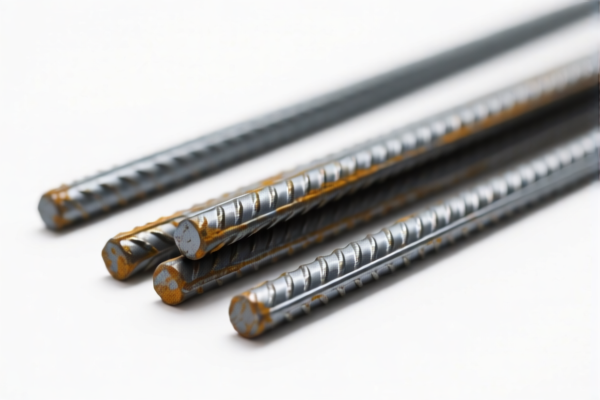
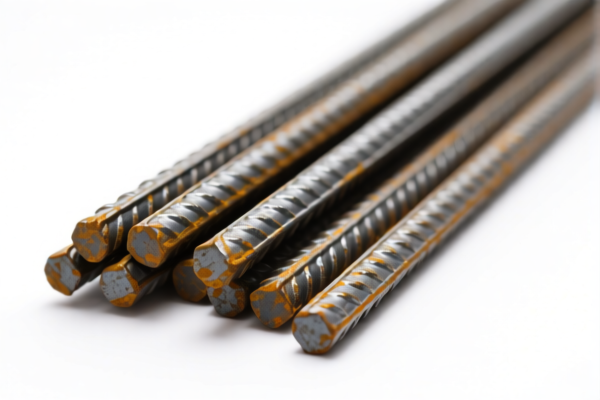
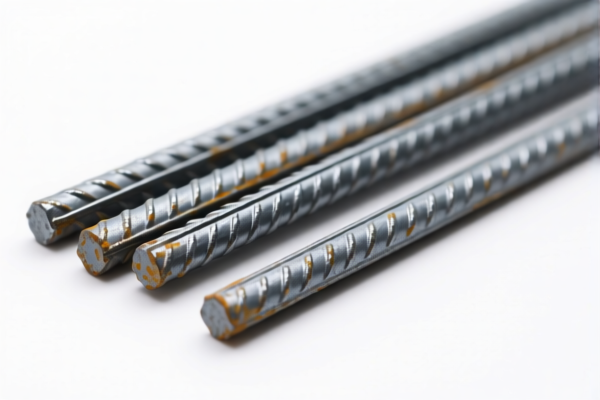
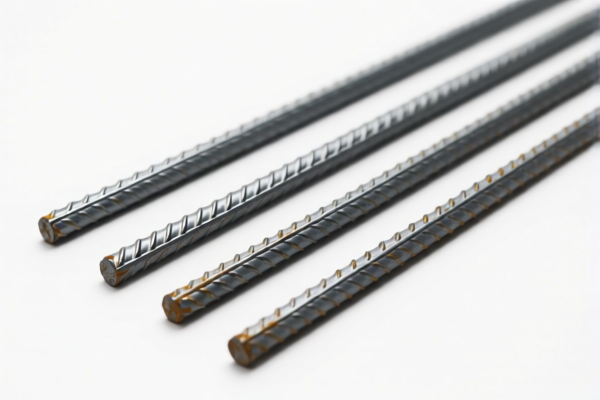
Straight Rebar
CN → US| HS Code | Tariff Rate | Origin | Destination | Doc |
|---|---|---|---|---|
| 7214990060 | 10.0% | CN | US | Official Doc |
| 7214200000 | 10.0% | CN | US | Official Doc |
| 7215500016 | 35.0% | CN | US | Official Doc |
| 7228308010 | 35.0% | CN | US | Official Doc |
| 7228308015 | 35.0% | CN | US | Official Doc |
Product Images
AI Analysis
🏗️ Straight Rebar (Reinforcing Steel Bars)
🌐 HS Code Reference & Customs Clearance Guide | 2026 Latest Tariff Analysis | Professional Strategy
📌 I. Product Definition: What is "Straight Rebar"?
Straight Rebar, or Reinforcing Steel Bar, is a crucial structural material used in concrete construction. In international trade, it is primarily classified based on its material composition (Iron, Non-Alloy Steel, or Alloy Steel) and form (Bars/Rods).
⚠️ Key Classification Distinction:
- Non-Alloy Steel/Iron Bars: Simple chemical composition, general structural use. - Alloy Steel Bars: Contains specific alloying elements (e.g., chromium, nickel), often for high-strength or specialized engineering use. - Form Factor: Must be in straight bars or rods, not coils or wire mesh.
📦 II. HS Code Classification Details (2026 Latest Tariff Authority)
Based on the provided data, here is the breakdown of HS Codes for Straight Rebar:
| HS Code | Product Description | Material/Form Inference | Primary Use |
|---|---|---|---|
7214.99.00.60 |
Straight Rebar, Rod Shape | Iron or Non-Alloy Steel | General Structural |
7214.20.00.00 |
Straight Rebar, Straight/Rod Shape | Iron or Non-Alloy Steel | Concrete Reinforcement |
7215.50.00.16 |
Straight Rebar, Bar/Strip Shape | Iron or Steel | General Structural |
7228.30.80.10 |
Straight Rebar, Bar/Rod Shape | Alloy Steel/Steel | Concrete Reinforcement (High Strength) |
7228.30.80.15 |
Straight Rebar, Bar/Rod Shape | Alloy Steel/Steel | General Structural |
🔍 Key Reminder:
- Non-Alloy Steels (Chapters 7214/7215) generally carry lower additional duties (10%) if they fall under specific non-alloy subheadings.
- Alloy Steels (Chapter 7228) are subject to higher total tariffs (35%) due to stricter 122 Clause and potential 301/Section measures depending on the exact alloy composition.
💰 III. 2026 Latest Tariff Rate Breakdown (Including Surtaxes & Policy Add-ons)
✅ Applicable Country: United States (US)
✅ Origin: China (CN)
✅ Effective Date: Current rates apply (Post-2025 Policy Era)
🎯 1. Non-Alloy Steel Rebar (HS Codes 7214.99.00.60, 7214.20.00.00)
| Item | Content |
|---|---|
| Base Tariff | 0.0% (ad valorem) |
| Section 301 Surcharge | 0.0% |
| Section 122 Tariff | +10.0% |
| Total Tariff Rate | 10.0% |
| Tax Calculation | CIF Value × 10% |
| De Minimis Exemption | ❌ Not Eligible (High-risk commodity) |
| Legal Basis Path | HTSUS:7214.xxxx → Section 122 |
📌 Explanation:
- These codes represent standard non-alloy steel rebars.
- The total tax is driven primarily by the Section 122 Tariff (10%).
- No additional Section 301 surcharge is listed for these specific subheadings in the provided data.
🎯 2. Alloy Steel Rebar (HS Codes 7215.50.00.16, 7228.30.80.10, 7228.30.80.15)
| Item | Content |
|---|---|
| Base Tariff | 0.0% (ad valorem) |
| Section 301 Surcharge | +25.0% |
| Section 122 Tariff | +10.0% |
| Total Tariff Rate | 35.0% |
| Tax Calculation | CIF Value × 35% |
| De Minimis Exemption | ❌ Not Eligible (High-risk commodity) |
| Legal Basis Path | HTSUS:7215/7228 → Section 301 (25%) + Section 122 (10%) |
📌 Explanation:
- These codes represent alloy steel or high-strength steel rebars.
- The total tax is significantly higher due to the Section 301 Surcharge (25%) PLUS the Section 122 Tariff (10%).
- Code7215.50.00.16is listed with 35% tax, indicating it may be treated as an alloy or subject to specific 301 rules despite the 7215 heading (verify alloy content carefully).
- Codes7228.30.80.10&15are clearly alloy steel, triggering the full 35% burden.
🛠️ IV. Customs Clearance Practical Advice (Battle-Tested Guide)
✅ 1. Required Documentation Checklist (All Inevitable)
| Document | Mandatory? | Notes |
|---|---|---|
| ✅ Product Specification Sheet | ✔️ | Must explicitly state Chemical Composition (C, Mn, Si, etc.) to distinguish between Non-Alloy (7214) and Alloy (7228). |
| ✅ Material Test Report (MTC) | ✔️ | Third-party lab report proving tensile strength and alloy content. Critical for avoiding 35% vs 10% misclassification. |
| ✅ Commercial Invoice | ✔️ | Clearly describe as "Straight Reinforcing Steel Bar, ASTM A615 Grade 60, Alloy/Non-Alloy". |
| ✅ Packing List | ✔️ | Weight details (Gross/Net) for CIF calculation. |
| ✅ Bill of Lading | ✔️ | Ensure shipper and consignee details match invoice exactly. |
| ✅ Certificate of Origin | ✔️ | Proof of China origin triggers the 122/301 surcharges. |
✅ 2. Declaration Strategy (Key Mantra)
🔥 “Alloy vs. Non-Alloy Determines Fate; 10% vs. 35% is the Gap!”
| Scenario | Correct Declaration | Wrong Approach |
|---|---|---|
| Standard Concrete Bar | 7214.20.00.00 or 7214.99.00.60 |
Misdeclaring as Alloy (7228) → Unnecessary 35% tax. |
| High-Strength Alloy Bar | 7228.30.80.10 |
Misdeclaring as Non-Alloy → Customs Audit & Penalties for undervaluation. |
| Coiled Wire vs. Straight Bar | Ensure "Straight/Rod" form | Declaring "Wire" (7217) → Different tariff structure. |
| Mixed Container | Separate declarations | Mixing alloy and non-alloy in one line → Customs may flag entire shipment. |
✅ 3. Special Cases & Handling
| Scenario | Handling Advice |
|---|---|
| Chemical Composition Uncertainty | Provide MTC showing exact % of Carbon, Manganese, Chromium, etc. If Cr < 1.2%, it may still be non-alloy; if Cr ≥ 1.2%, it’s likely alloy (7228). |
| ASTM A615 vs. A706 | A615 is standard carbon steel (likely 7214, 10% tax). A706 is low-alloy steel (likely 7228, 35% tax). Declare grade accurately. |
| Rebar Bundling | Ensure packaging doesn’t include non-declarable items (e.g., wood palettes with fumigation issues). |
| US Customs Rulings | If uncertain, apply for a Binding Tariff Information (BTI) or Advance Ruling to lock in the 10% or 35% rate. |
🌍 V. Global Market Comparison (2026 Latest)
| Country/Region | Recommended HS Code | Tariff Rate | Notes |
|---|---|---|---|
| 🇺🇸 USA | 7214.xxxx (Non-Alloy) |
10% | Section 122 applies. |
| 🇺🇸 USA | 7228.xxxx (Alloy) |
35% | Section 301 + 122 applies. |
| 🇪🇺 EU | 7214 / 7228 | Varies (Typically 0-6.7%) | No Section 122/301 equivalent; standard WTO rates apply. |
| 🇨🇳 China | 7214 / 7228 | 0-15% | Import duty varies; anti-dumping duties may apply if exported from China. |
| 🇮🇳 India | 7214 / 7228 | 7.5-10% | Additional Customs Duty (ACD) may apply. |
📌 Conclusion:
- USA is the most complex market for Rebar due to the 122 Clause (10%) and Section 301 (25%) stacking.
- Material Classification is Critical: A small error in declaring "Alloy" vs "Non-Alloy" can result in a 25% tax difference on the entire shipment.
📌 VI. Common Mistakes & Pitfalls (Lessons Learned)
❌ Mistake 1: Declaring Alloy Steel Rebar (7228) as Non-Alloy (7214) to save tax.
👉 Consequence: Customs laboratory testing will prove alloy content → Back taxes + 25% penalty + Possible fraud charges.
❌ Mistake 2: Ignoring the "Straight Bar" form.
👉 Consequence: If rebar is cut into irregular shapes or bent, it may fall under different subheadings, altering duty liability.
❌ Mistake 3: Failing to provide MTC (Material Test Certificate).
👉 Consequence: Customs will assume the highest possible classification (likely Alloy/35%) due to lack of proof.
✅ Correct Practice:
"Reinforcing Steel Bar, Straight, 16mm Diameter, ASTM A615 Grade 60, Non-Alloy Steel, Made in China."
🎯 VII. Conclusion: Precision Saves Millions!
🎯 Remember the Mantra:
🔹 “Alloy = 35%, Non-Alloy = 10%. Prove the Chemistry!”
🔹 “Section 122 is always 10%. Section 301 adds 25% if Alloy.”
📌 Pro Tip:
For high-volume imports, request a pre-classification ruling from US Customs & Border Protection (CBP) with your MTC. This provides legal certainty for the 10% vs 35% rate.
📣 Act Now:
📞 Consult a licensed customs broker.
📄 Prepare your Material Test Report (MTC) before shipping.
🚀 Ensure your HS Code matches the chemical composition, not just the product name.
✨ Professional Clearance Starts with Accurate Classification!
💼 Your margin depends on the decimal point in the HS Code.
Customer Reviews
About HS Code Classification
The Harmonized System (HS) is an internationally standardized nomenclature developed by the World Customs Organization (WCO) to classify traded products. Over 200 countries use the HS system as the basis for customs tariffs, trade statistics, and import/export regulations.
Each HS code follows a hierarchical structure:
- Chapter (2 digits) — Broad category of goods (e.g., Chapter 84: Machinery and Mechanical Appliances)
- Heading (4 digits) — More specific grouping within the chapter
- Subheading (6 digits) — Internationally standardized breakdown, used by all WCO member countries
- National subdivisions (8-10 digits) — Country-specific extensions for further classification, such as US HTSUS 10-digit codes
Correct HS code classification is essential for smooth customs clearance, accurate duty payment, and compliance with trade regulations. Misclassification can lead to customs delays, overpayment of duties, or penalties.
When importing from CN to US, the applicable tariff rates may include:
- Most-Favored-Nation (MFN) rate — The standard duty rate applied to WTO members
- General rate — Applied to countries without trade agreements
- Trade remedy duties — Additional tariffs such as Section 301 (anti-dumping), Section 232 (national security), or countervailing duties
The information provided on this page is for reference purposes only. For official classification, please consult with your local customs authority or a licensed customs broker.