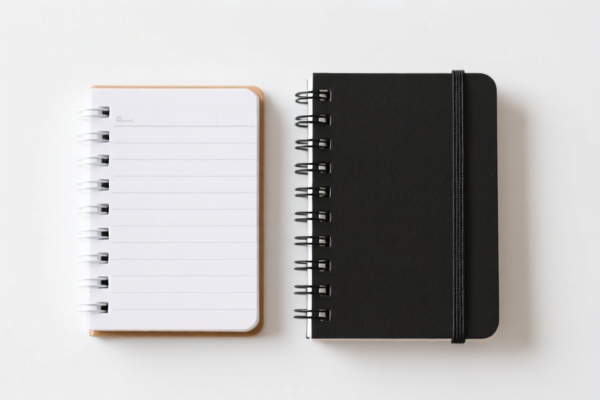
Student Practice Notebook
CN → US| HS编码 | 关税税率 | 原产国 | 目的国 | 文档 |
|---|---|---|---|---|
| 4820200000 | 35.0% | CN | US | 官方文档 |
| 4820102060 | 35.0% | CN | US | 官方文档 |
| 4820104000 | 35.0% | CN | US | 官方文档 |
| 4823908680 | 35.0% | CN | US | 官方文档 |
| 4823906700 | 35.0% | CN | US | 官方文档 |
商品图片



AI分析
📓 Student Practice Notebook (Exercise Books)
🌐 HS Code Reference & Customs Clearance Guide | 2026 Latest Tariff Analysis | Professional Compliance Strategy
📌 I. Product Definition & Classification: Do You Really Understand "Practice Notebooks"?
In international trade, "Student Practice Notebooks" (also known as exercise books, school notebooks, or writing pads) are categorized primarily under Chapter 48 (Paper and Paperboard; Articles of Paper Pulp, of Cardboard, of Paper or Paperboard). The specific HS Code depends on the binding method, structure, and intended use.
⚠️ Key Distinction Point:
- If it is a bound notebook (stitched, glued, or spiral-bound) intended for writing/drawing → Heading 4820.
- If it is a loose sheet or cut-to-size paper product without specific binding structure for sequential writing → Heading 4823.
- Critical Note: Most standard school exercise books fall under 4820, but certain generic paper pads or cut sheets may fall under 4823. Misclassification leads to significant tax discrepancies.
📦 II. HS Code Classification Details (2026 Latest Tariff Authority Reference)
Based on the provided data, here are the precise HS Codes and their corresponding descriptions for Student Practice Notebooks:
| HS Code | Product Description | Application Scenario | Binding/Structure Type |
|---|---|---|---|
4820.20.00.00 |
Student exercise books or practice books, specifically for use as exercise books, made of paper or paperboard | Standard school exercise books, lined paper, used for daily homework | ✅ Bound (Specific "Exercise Book" category) |
4820.10.20.60 |
Student exercise books or student practice books, classified as notebooks, made of paper | General student notebooks, often with covers, multi-page binding | ✅ Bound (General "Notebook" category) |
4820.10.40.00 |
Exercise books, classified as stationery notebooks, made of paper | Generic exercise books, standard stationery store items | ✅ Bound (Notebook type) |
4823.90.86.80 |
Exercise books, classified as other paper products, made of paper | Paper pads, cut sheets, or unbound practice papers | ❌ Unbound / Cut-to-size |
4823.90.67.00 |
Exercise books, classified as paper products cut to specific sizes or shapes | Custom-sized paper pads, cut paper products | ❌ Cut-to-size |
🔍 Important Reminder:
- 4820 codes are for bound notebooks (standard school exercise books).
- 4823 codes are for paper products that are cut or not fully bound as traditional notebooks.
- Do not misdeclare a bound notebook as "cut paper" (4823) to avoid scrutiny, but ensure you do not over-declare loose sheets as "bound" (4820) if they are not. The structure defines the code.
💰 III. 2026 Latest Tariff Rate Details (Including Surtaxes & Policy Add-ons)
✅ Applicable Country: United States (US)
✅ Country of Origin: China (CN)
✅ Effective Date: November 10, 2025 (including subsequent imports)
🎯 1. 4820.20.00.00 – Student Exercise Books (Specific Use)
| Item | Content |
|---|---|
| Base Tariff Rate | 0.0% (ad valorem) |
| USITC Surtax (Section 301) | +25.0% |
| IEEPA Surtax (Section 122) | +10.0% (Specific provision referenced as "122 Clause Tariff") |
| Total Tax Rate | 35.0% |
| Tax Calculation | CIF Value × 35% |
| De Minimis Exemption Eligibility | ❌ Not Eligible (Due to 35% total rate exceeding threshold considerations; Section 301 goods often excluded from 80.01a relief in practice when surtaxes apply) |
| Legal Basis Path | USITC:4820.20.00.00 → FOOTNOTE:301.01 (25%) → IEEPA:122.01 (10%) |
📌 Explanation:
- The 25% Section 301 tariff applies to most paper products from China.
- The 10% "122 Clause Tariff" (likely referring to specific recent enforcement actions or Section 122/701 provisions depending on current trade directives) adds an additional layer.
- Total 35% is a high-cost item. Importers must factor this into pricing strategies.
🎯 2. 4820.10.20.60 & 4820.10.40.00 – General Student Notebooks
| Item | Content |
|---|---|
| Base Tariff Rate | 0.0% |
| USITC Surtax (Section 301) | +25.0% |
| IEEPA Surtax (Section 122) | +10.0% |
| Total Tax Rate | 35.0% |
| Tax Calculation | CIF Value × 35% |
| De Minimis Exemption Eligibility | ❌ Not Eligible |
| Legal Basis Path | USITC:4820.10.x0.00 → FOOTNOTE:301.01 → IEEPA:122.01 |
📌 Note:
- These codes cover general student notebooks.
- Same 35% total rate applies.
- No difference in tax treatment between4820.10.20.60and4820.10.40.00for tariff purposes.
🎯 3. 4823.90.86.80 & 4823.90.67.00 – Cut Paper Products / Other Paper Items
| Item | Content |
|---|---|
| Base Tariff Rate | 0.0% |
| USITC Surtax (Section 301) | +25.0% |
| IEEPA Surtax (Section 122) | +10.0% |
| Total Tax Rate | 35.0% |
| Tax Calculation | CIF Value × 35% |
| De Minimis Exemption Eligibility | ❌ Not Eligible |
| Legal Basis Path | USITC:4823.90.xx.00 → FOOTNOTE:301.01 → IEEPA:122.01 |
📌 Note:
- Even if the product is classified under 4823 (cut paper/products), the same 35% tariff applies because Section 301 and Section 122 surtaxes broadly cover these paper categories from China.
- Do not assume 4823 has lower taxes; it does not.
📌 Summary of Tariff Structure:
- Base Duty: 0%
- Section 301 Duty: 25%
- Section 122 Clause Duty: 10%
- Total Effective Rate: 35%
- Applicable to All Listed HS Codes for Chinese-origin goods.
🛠️ IV. Customs Clearance Practical Advice (Real-World Pitfall Avoidance Guide)
✅ 1. Required Documentation Checklist (Non-Negotiable)
| Document | Required | Explanation |
|---|---|---|
| ✅ Product Specification Sheet | ✔️ | Must specify: Paper weight (GSM), page count, binding type (stitch/glue/spiral), paper type (lined/blanks). |
| ✅ Material Composition | ✔️ | Confirm 100% paper/paperboard. No plastic covers with electronics, etc. |
| ✅ Commercial Invoice | ✔️ | Must clearly state: "Student Practice Notebook" or "Exercise Book," NOT generic "Stationery." |
| ✅ Packing List | ✔️ | Detail quantities per carton, total cartons, gross/net weight. |
| ✅ Country of Origin Certificate | ✔️ | Crucial for proving Chinese origin (and thus applying the 35% rate accurately). |
| ✅ Proof of Material | ✔️ | Supplier declaration of paper content. |
✅ 2. Declaration Techniques (Key Mantra)
🔥 "Bind Matters, Paper Defines, Origin Determines, Rate is 35!"
| Scenario | Correct Declaration | Common Mistake |
|---|---|---|
| Standard School Exercise Book | 4820.20.00.00 or 4820.10.20.60 |
Misdeclare as 4823 (cut paper) → Audit Risk |
| Loose Paper Sheets / Pads | 4823.90.86.80 |
Misdeclare as 4820 (bound) → Misclassification Penalty |
| Notebooks with Non-Paper Items (e.g., plastic ruler attached) | Separate Line Items | Bundle together → Complex Tax Calculation |
| Generic "Stationery" | Specify "Notebook" | Vague description → Customs Delay |
✅ 3. Special Circumstances Handling
| Situation | Handling Advice |
|---|---|
| Notebooks with Plastic Covers | Still classified under 4820 if paper is the essential character. Ensure no electronic components. |
| Notebooks with Glued/Stitched Binding | Clearly describe binding method in specs. Helps distinguish from 4823 (loose/cut). |
| Bulk Import for Retail | Provide retail packaging images. Customs may inspect for labeling compliance. |
| Sample Shipments | Even samples are subject to 35% duty if declared as commercial goods. Use temporary import bonds if possible. |
🌍 V. Global Market Clearance Comparison (2026 Latest)
| Country/Region | Recommended HS Code | Tariff (China Origin) | Certification Requirements | Notes |
|---|---|---|---|---|
| 🇺🇸 USA | 4820.20.00.00 / 4820.10.20.60 |
35% (0% + 25% + 10%) | None specific for paper | High tariff barrier |
| 🇨🇳 China | 4820.20.00.00 |
8% | None | Domestic trade |
| 🇪🇺 EU | 4820.10.00 |
6.5% | CE (if applicable), REACH | No Section 301 equivalent |
| 🇬🇧 UK | 4820.10.00 |
6.5% | None | Post-Brexit tariff applies |
| 🇯🇵 Japan | 4820.10.00 |
0% - 3% | FSC (if eco-friendly claimed) | Low tariff |
📌 Conclusion:
- USA has the highest effective tariff (35%) due to Section 301 and Section 122 measures.
- EU, UK, and Japan offer significantly lower duty rates (0%–8%).
- Strategy: Consider diversifying sourcing to non-China origins (e.g., Vietnam, Thailand) if targeting the US market to avoid the 35% surtax.
📌 VI. Common Errors & Pitfall Guide (Lessons Learned the Hard Way)
❌ Mistake 1: Declaring "Notebooks" as "Cut Paper" (4823) to avoid scrutiny.
👉 Consequence: Customs may reclassify as 4820 if binding is evident, but tax remains 35%. However, it triggers manual review, delaying clearance.
❌ Mistake 2: Using generic term "Stationery" on Invoice.
👉 Consequence: Customs assigns highest residual duty rate or flags for misdescription. Leads to delays and penalties.
❌ Mistake 3: Ignoring "122 Clause" tariff impact.
👉 Consequence: Underestimating landed cost. The 10% additional tariff is significant for low-margin goods.
❌ Mistake 4: Not declaring binding type.
👉 Consequence: Inability to distinguish between 4820 (bound) and 4823 (cut). Leads to classification uncertainty.
✅ Correct Practice:
"Student Exercise Book, 80gsm Lined Paper, Stitched Binding, 100 Sheets, 200x250mm, Model XYZ, Made in China"
🎯 VII. Conclusion: Precise Classification Saves Money!
🎯 Remember the Mantra:
🔹 "Bound is 4820, Cut is 4823, but Tax is 35% for China!"
🔹 "HS Code defines structure, Tariff defines cost, De Minimis is off the table!"
📌 Pro Tip:
If you are importing Student Practice Notebooks from China to the USA, budget for 35% total duties.
Recommendation:
- Pre-Ruling: Apply for an HS Code Binding Ruling from CBP to confirm4820vs4823.
- Sourcing Alternative: Consider sourcing from Vietnam or Indonesia to potentially avoid Section 301/122 surtaxes (verify current FTA/CVEP status).
- Documentation: Always provide clear product specs to avoid manual examination.
📣 Immediate Action Required:
📞 Contact your Customs Broker with product samples and spec sheets.
🚀 Accurate Declaration = Smooth Clearance = Predictable Costs.
✨ Professional Clearance Starts with Accurate Classification!
💼 Every dollar saved in misclassification is profit earned!
用户评价
关于 HS 编码归类
协调制度(HS)是由世界海关组织(WCO)制定的国际贸易商品分类标准。全球 200 多个国家采用 HS 系统作为海关关税、贸易统计和进出口监管的基础。
每个 HS 编码遵循以下层级结构:
- 章(2 位)——商品大类(例如:第 84 章:机器和机械设备)
- 品目(4 位)——章内的更具体分类
- 子目(6 位)——国际通用细分,所有 WCO 成员国统一使用
- 本国细分(8-10 位)——各国自行扩展的细分编码,如美国 HTSUS 10 位编码
正确的 HS 编码归类对于顺利通关、准确缴纳关税和遵守贸易法规至关重要。错误归类可能导致海关延误、多缴关税或罚款。
从CN进口到US时,适用的关税税率可能包括:
- 最惠国(MFN)税率——适用于 WTO 成员国的标准关税税率
- 普通税率——适用于无贸易协定国家
- 贸易救济关税——附加关税,如 301 条款(反倾销)、232 条款(国家安全)或反补贴税
本页内容仅供参考。如需正式归类,请咨询当地海关或持牌报关代理。