Student Practice Notebook
CN → US| HS Code | Tariff Rate | Origin | Destination | Doc |
|---|---|---|---|---|
| 4820200000 | 35.0% | CN | US | Official Doc |
| 4820102060 | 35.0% | CN | US | Official Doc |
| 4820104000 | 35.0% | CN | US | Official Doc |
| 4823908680 | 35.0% | CN | US | Official Doc |
| 4823906700 | 35.0% | CN | US | Official Doc |
Product Images


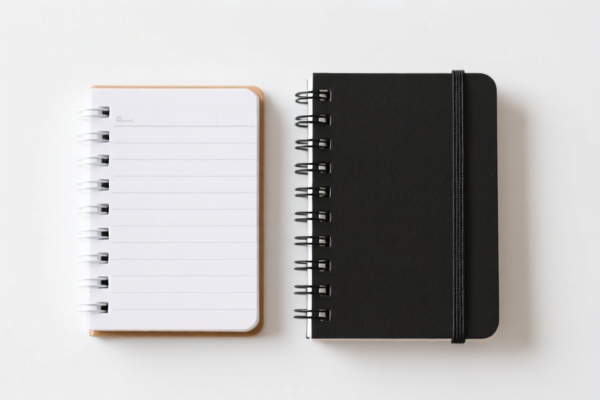

AI Analysis
📓 Student Practice Notebook (Exercise Books)
🌐 HS Code Reference & Customs Clearance Guide | 2026 Latest Tariff Analysis | Professional Compliance Strategy
📌 I. Product Definition & Classification: Do You Really Understand "Practice Notebooks"?
In international trade, "Student Practice Notebooks" (also known as exercise books, school notebooks, or writing pads) are categorized primarily under Chapter 48 (Paper and Paperboard; Articles of Paper Pulp, of Cardboard, of Paper or Paperboard). The specific HS Code depends on the binding method, structure, and intended use.
⚠️ Key Distinction Point:
- If it is a bound notebook (stitched, glued, or spiral-bound) intended for writing/drawing → Heading 4820.
- If it is a loose sheet or cut-to-size paper product without specific binding structure for sequential writing → Heading 4823.
- Critical Note: Most standard school exercise books fall under 4820, but certain generic paper pads or cut sheets may fall under 4823. Misclassification leads to significant tax discrepancies.
📦 II. HS Code Classification Details (2026 Latest Tariff Authority Reference)
Based on the provided data, here are the precise HS Codes and their corresponding descriptions for Student Practice Notebooks:
| HS Code | Product Description | Application Scenario | Binding/Structure Type |
|---|---|---|---|
4820.20.00.00 |
Student exercise books or practice books, specifically for use as exercise books, made of paper or paperboard | Standard school exercise books, lined paper, used for daily homework | ✅ Bound (Specific "Exercise Book" category) |
4820.10.20.60 |
Student exercise books or student practice books, classified as notebooks, made of paper | General student notebooks, often with covers, multi-page binding | ✅ Bound (General "Notebook" category) |
4820.10.40.00 |
Exercise books, classified as stationery notebooks, made of paper | Generic exercise books, standard stationery store items | ✅ Bound (Notebook type) |
4823.90.86.80 |
Exercise books, classified as other paper products, made of paper | Paper pads, cut sheets, or unbound practice papers | ❌ Unbound / Cut-to-size |
4823.90.67.00 |
Exercise books, classified as paper products cut to specific sizes or shapes | Custom-sized paper pads, cut paper products | ❌ Cut-to-size |
🔍 Important Reminder:
- 4820 codes are for bound notebooks (standard school exercise books).
- 4823 codes are for paper products that are cut or not fully bound as traditional notebooks.
- Do not misdeclare a bound notebook as "cut paper" (4823) to avoid scrutiny, but ensure you do not over-declare loose sheets as "bound" (4820) if they are not. The structure defines the code.
💰 III. 2026 Latest Tariff Rate Details (Including Surtaxes & Policy Add-ons)
✅ Applicable Country: United States (US)
✅ Country of Origin: China (CN)
✅ Effective Date: November 10, 2025 (including subsequent imports)
🎯 1. 4820.20.00.00 – Student Exercise Books (Specific Use)
| Item | Content |
|---|---|
| Base Tariff Rate | 0.0% (ad valorem) |
| USITC Surtax (Section 301) | +25.0% |
| IEEPA Surtax (Section 122) | +10.0% (Specific provision referenced as "122 Clause Tariff") |
| Total Tax Rate | 35.0% |
| Tax Calculation | CIF Value × 35% |
| De Minimis Exemption Eligibility | ❌ Not Eligible (Due to 35% total rate exceeding threshold considerations; Section 301 goods often excluded from 80.01a relief in practice when surtaxes apply) |
| Legal Basis Path | USITC:4820.20.00.00 → FOOTNOTE:301.01 (25%) → IEEPA:122.01 (10%) |
📌 Explanation:
- The 25% Section 301 tariff applies to most paper products from China.
- The 10% "122 Clause Tariff" (likely referring to specific recent enforcement actions or Section 122/701 provisions depending on current trade directives) adds an additional layer.
- Total 35% is a high-cost item. Importers must factor this into pricing strategies.
🎯 2. 4820.10.20.60 & 4820.10.40.00 – General Student Notebooks
| Item | Content |
|---|---|
| Base Tariff Rate | 0.0% |
| USITC Surtax (Section 301) | +25.0% |
| IEEPA Surtax (Section 122) | +10.0% |
| Total Tax Rate | 35.0% |
| Tax Calculation | CIF Value × 35% |
| De Minimis Exemption Eligibility | ❌ Not Eligible |
| Legal Basis Path | USITC:4820.10.x0.00 → FOOTNOTE:301.01 → IEEPA:122.01 |
📌 Note:
- These codes cover general student notebooks.
- Same 35% total rate applies.
- No difference in tax treatment between4820.10.20.60and4820.10.40.00for tariff purposes.
🎯 3. 4823.90.86.80 & 4823.90.67.00 – Cut Paper Products / Other Paper Items
| Item | Content |
|---|---|
| Base Tariff Rate | 0.0% |
| USITC Surtax (Section 301) | +25.0% |
| IEEPA Surtax (Section 122) | +10.0% |
| Total Tax Rate | 35.0% |
| Tax Calculation | CIF Value × 35% |
| De Minimis Exemption Eligibility | ❌ Not Eligible |
| Legal Basis Path | USITC:4823.90.xx.00 → FOOTNOTE:301.01 → IEEPA:122.01 |
📌 Note:
- Even if the product is classified under 4823 (cut paper/products), the same 35% tariff applies because Section 301 and Section 122 surtaxes broadly cover these paper categories from China.
- Do not assume 4823 has lower taxes; it does not.
📌 Summary of Tariff Structure:
- Base Duty: 0%
- Section 301 Duty: 25%
- Section 122 Clause Duty: 10%
- Total Effective Rate: 35%
- Applicable to All Listed HS Codes for Chinese-origin goods.
🛠️ IV. Customs Clearance Practical Advice (Real-World Pitfall Avoidance Guide)
✅ 1. Required Documentation Checklist (Non-Negotiable)
| Document | Required | Explanation |
|---|---|---|
| ✅ Product Specification Sheet | ✔️ | Must specify: Paper weight (GSM), page count, binding type (stitch/glue/spiral), paper type (lined/blanks). |
| ✅ Material Composition | ✔️ | Confirm 100% paper/paperboard. No plastic covers with electronics, etc. |
| ✅ Commercial Invoice | ✔️ | Must clearly state: "Student Practice Notebook" or "Exercise Book," NOT generic "Stationery." |
| ✅ Packing List | ✔️ | Detail quantities per carton, total cartons, gross/net weight. |
| ✅ Country of Origin Certificate | ✔️ | Crucial for proving Chinese origin (and thus applying the 35% rate accurately). |
| ✅ Proof of Material | ✔️ | Supplier declaration of paper content. |
✅ 2. Declaration Techniques (Key Mantra)
🔥 "Bind Matters, Paper Defines, Origin Determines, Rate is 35!"
| Scenario | Correct Declaration | Common Mistake |
|---|---|---|
| Standard School Exercise Book | 4820.20.00.00 or 4820.10.20.60 |
Misdeclare as 4823 (cut paper) → Audit Risk |
| Loose Paper Sheets / Pads | 4823.90.86.80 |
Misdeclare as 4820 (bound) → Misclassification Penalty |
| Notebooks with Non-Paper Items (e.g., plastic ruler attached) | Separate Line Items | Bundle together → Complex Tax Calculation |
| Generic "Stationery" | Specify "Notebook" | Vague description → Customs Delay |
✅ 3. Special Circumstances Handling
| Situation | Handling Advice |
|---|---|
| Notebooks with Plastic Covers | Still classified under 4820 if paper is the essential character. Ensure no electronic components. |
| Notebooks with Glued/Stitched Binding | Clearly describe binding method in specs. Helps distinguish from 4823 (loose/cut). |
| Bulk Import for Retail | Provide retail packaging images. Customs may inspect for labeling compliance. |
| Sample Shipments | Even samples are subject to 35% duty if declared as commercial goods. Use temporary import bonds if possible. |
🌍 V. Global Market Clearance Comparison (2026 Latest)
| Country/Region | Recommended HS Code | Tariff (China Origin) | Certification Requirements | Notes |
|---|---|---|---|---|
| 🇺🇸 USA | 4820.20.00.00 / 4820.10.20.60 |
35% (0% + 25% + 10%) | None specific for paper | High tariff barrier |
| 🇨🇳 China | 4820.20.00.00 |
8% | None | Domestic trade |
| 🇪🇺 EU | 4820.10.00 |
6.5% | CE (if applicable), REACH | No Section 301 equivalent |
| 🇬🇧 UK | 4820.10.00 |
6.5% | None | Post-Brexit tariff applies |
| 🇯🇵 Japan | 4820.10.00 |
0% - 3% | FSC (if eco-friendly claimed) | Low tariff |
📌 Conclusion:
- USA has the highest effective tariff (35%) due to Section 301 and Section 122 measures.
- EU, UK, and Japan offer significantly lower duty rates (0%–8%).
- Strategy: Consider diversifying sourcing to non-China origins (e.g., Vietnam, Thailand) if targeting the US market to avoid the 35% surtax.
📌 VI. Common Errors & Pitfall Guide (Lessons Learned the Hard Way)
❌ Mistake 1: Declaring "Notebooks" as "Cut Paper" (4823) to avoid scrutiny.
👉 Consequence: Customs may reclassify as 4820 if binding is evident, but tax remains 35%. However, it triggers manual review, delaying clearance.
❌ Mistake 2: Using generic term "Stationery" on Invoice.
👉 Consequence: Customs assigns highest residual duty rate or flags for misdescription. Leads to delays and penalties.
❌ Mistake 3: Ignoring "122 Clause" tariff impact.
👉 Consequence: Underestimating landed cost. The 10% additional tariff is significant for low-margin goods.
❌ Mistake 4: Not declaring binding type.
👉 Consequence: Inability to distinguish between 4820 (bound) and 4823 (cut). Leads to classification uncertainty.
✅ Correct Practice:
"Student Exercise Book, 80gsm Lined Paper, Stitched Binding, 100 Sheets, 200x250mm, Model XYZ, Made in China"
🎯 VII. Conclusion: Precise Classification Saves Money!
🎯 Remember the Mantra:
🔹 "Bound is 4820, Cut is 4823, but Tax is 35% for China!"
🔹 "HS Code defines structure, Tariff defines cost, De Minimis is off the table!"
📌 Pro Tip:
If you are importing Student Practice Notebooks from China to the USA, budget for 35% total duties.
Recommendation:
- Pre-Ruling: Apply for an HS Code Binding Ruling from CBP to confirm4820vs4823.
- Sourcing Alternative: Consider sourcing from Vietnam or Indonesia to potentially avoid Section 301/122 surtaxes (verify current FTA/CVEP status).
- Documentation: Always provide clear product specs to avoid manual examination.
📣 Immediate Action Required:
📞 Contact your Customs Broker with product samples and spec sheets.
🚀 Accurate Declaration = Smooth Clearance = Predictable Costs.
✨ Professional Clearance Starts with Accurate Classification!
💼 Every dollar saved in misclassification is profit earned!
Customer Reviews
About HS Code Classification
The Harmonized System (HS) is an internationally standardized nomenclature developed by the World Customs Organization (WCO) to classify traded products. Over 200 countries use the HS system as the basis for customs tariffs, trade statistics, and import/export regulations.
Each HS code follows a hierarchical structure:
- Chapter (2 digits) — Broad category of goods (e.g., Chapter 84: Machinery and Mechanical Appliances)
- Heading (4 digits) — More specific grouping within the chapter
- Subheading (6 digits) — Internationally standardized breakdown, used by all WCO member countries
- National subdivisions (8-10 digits) — Country-specific extensions for further classification, such as US HTSUS 10-digit codes
Correct HS code classification is essential for smooth customs clearance, accurate duty payment, and compliance with trade regulations. Misclassification can lead to customs delays, overpayment of duties, or penalties.
When importing from CN to US, the applicable tariff rates may include:
- Most-Favored-Nation (MFN) rate — The standard duty rate applied to WTO members
- General rate — Applied to countries without trade agreements
- Trade remedy duties — Additional tariffs such as Section 301 (anti-dumping), Section 232 (national security), or countervailing duties
The information provided on this page is for reference purposes only. For official classification, please consult with your local customs authority or a licensed customs broker.