Styrene Plastic Irregular Parts
CN → US| HS编码 | 关税税率 | 原产国 | 目的国 | 文档 |
|---|---|---|---|---|
| 3926909989 | 22.8% | CN | US | 官方文档 |
| 3916905000 | 40.8% | CN | US | 官方文档 |
| 3916903000 | 41.5% | CN | US | 官方文档 |
| 3903190000 | 41.5% | CN | US | 官方文档 |
| 3903110000 | 41.5% | CN | US | 官方文档 |
商品图片
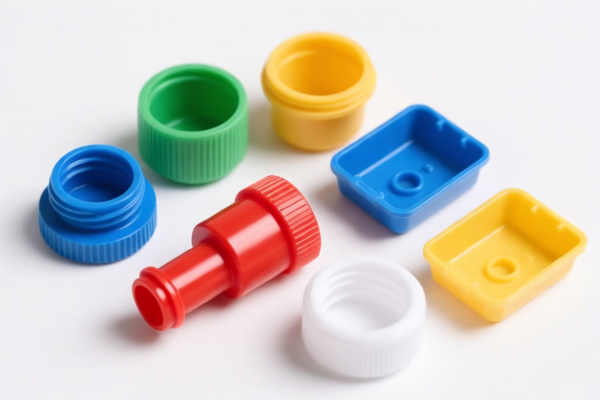
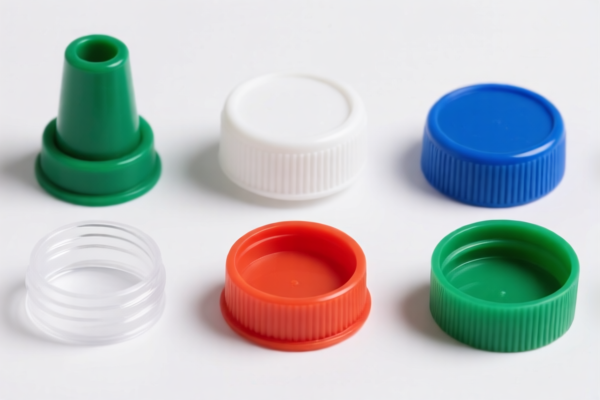
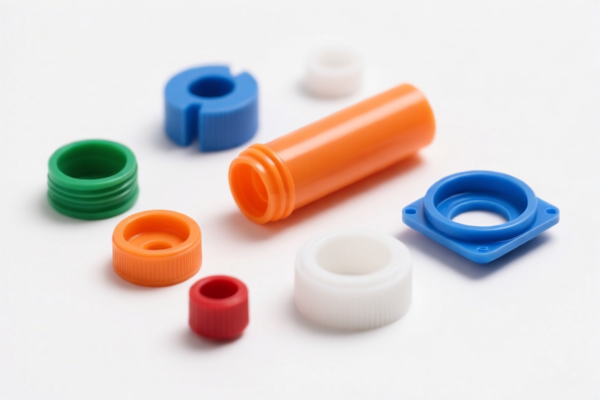
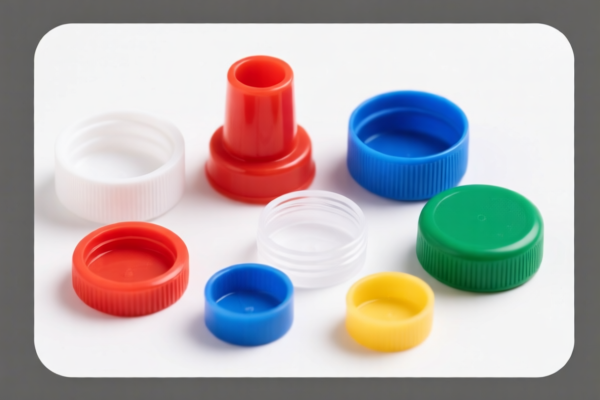
AI分析
🧩 Styrene Plastic Irregular Parts
🌐 HS Code Classification & Tariff Guide | 2026 Updated Customs Compliance | Expert-Level Import Strategy
📌 One Product, Five HS Codes — Why the Tax Varies So Drastically!
📌 I. Product Definition & Classification: What Exactly Are "Styrene Plastic Irregular Parts"?
"Styrene Plastic Irregular Parts" refer to non-standard, custom-shaped components made from styrene-based plastics (such as PS, ABS, HIPS, or general styrene polymers), used across industries like automotive, electronics, medical devices, industrial machinery, and consumer goods.
⚠️ Key Classification Triggers: - Material: Styrene plastic (not general "plastic" or "polymer")
- Shape: Non-standard, irregular, or custom geometry
- Function: Not a primary component (e.g., not a container, pipe, or film)
- Form: Not in primary shapes (e.g., sheet, rod, tube, pellet)🔍 Critical Insight:
The exact HS Code depends on material specificity, form, and intended use — even if the product looks identical, a slight difference in material or shape can trigger a 18.7% tax increase!
📦 II. HS Code Breakdown (2026 Updated Tariff Table)
| HS Code | Product Description | Tax Rate | Key Classification Logic |
|---|---|---|---|
3926.90.99.89 |
Styrene plastic irregular parts, material = styrene plastic, form = irregular, classified under "other" | 22.8% | Specific to styrene plastic; lower base tariff |
3916.90.50.00 |
Plastic irregular parts, material = plastic, form = other irregular shapes | 40.8% | Broad "plastic" classification; higher base + heavy add-ons |
3916.90.30.00 |
Styrene plastic irregular parts, material = plastic class, form = non-standard shape, other category | 41.5% | Material overlaps with "plastic" — triggers higher tariffs |
3903.19.00.00 |
Styrene plastic irregular parts, material = styrene polymer, form = non-primary shape | 41.5% | "Styrene polymer" is treated as high-risk under trade policy |
3903.11.00.00 |
Styrene plastic irregular parts, material = styrene polymer, form = non-primary shape, no material conflict | 41.5% | Most restrictive category — full tariff penalty applied |
📌 Why So Many Codes?
-3926.90.99.89is the most favorable — it's specific to styrene plastic, avoiding broader "plastic" classification. -3903.11.00.00&3903.19.00.00are highest-risk — they fall under "styrene polymer", which is heavily targeted by U.S. trade policies.
💰 III. 2026 Tariff Breakdown (Detailed Tax Clause Analysis)
✅ Applicable Country: United States (US)
✅ Origin: China (CN)
✅ Effective Date: November 10, 2025 (and ongoing)
🎯 1. 3926.90.99.89 — Styrene Plastic Irregular Parts (Favorable)
| Tax Component | Rate | Legal Basis |
|---|---|---|
| Base Tariff | 5.3% | HTSUS Section 3926.90.99 |
| Additional Duty (Section 301) | 7.5% | USITC Footnote 9903.88.01 |
| Section 122 Tariff (IEEPA) | 10% | IEEPA: 9903.01.24 |
| Total Effective Rate | 22.8% | CIF × 22.8% |
📌 Why It’s Lower?
- Specific material: "Styrene plastic" is not classified as "general plastic" → avoids 25% Section 301 penalty. - Excluded from broad "plastic" category → avoids 25% + 10% combo.
🎯 2. 3916.90.50.00 — Plastic Irregular Parts (High Risk)
| Tax Component | Rate | Legal Basis |
|---|---|---|
| Base Tariff | 5.8% | HTSUS 3916.90.50 |
| Additional Duty (Section 301) | 25.0% | USITC Footnote 9903.88.01 |
| Section 122 Tariff (IEEPA) | 10% | IEEPA: 9903.01.24 |
| Total Effective Rate | 40.8% | CIF × 40.8% |
📌 Why So High?
- "Plastic" is a broad category → automatically triggers 25% Section 301. - No material specificity → no exemption from trade penalties.
🎯 3. 3916.90.30.00 & 3903.19.00.00 — Styrene Polymer Irregular Parts (Highest Risk)
| Tax Component | Rate | Legal Basis |
|---|---|---|
| Base Tariff | 6.5% | HTSUS 3903.19.00 / 3916.90.30 |
| Additional Duty (Section 301) | 25.0% | USITC Footnote 9903.88.01 |
| Section 122 Tariff (IEEPA) | 10% | IEEPA: 9903.01.24 |
| Total Effective Rate | 41.5% | CIF × 41.5% |
📌 Critical Note:
- "Styrene polymer" is explicitly targeted under U.S. trade policy. - Even if the product is identical, changing the material description from "styrene plastic" to "styrene polymer" can increase tax by 18.7%.
🛠️ IV. Customs Clearance Best Practices (Pro Tips for 2026)
✅ 1. Essential Documentation (Must-Have)
| Document | Required? | Why It Matters |
|---|---|---|
| ✅ Product Specification Sheet | ✔️ | Must state exact material (e.g., "ABS resin", "HIPS", "styrene plastic") |
| ✅ Material Safety Data Sheet (MSDS) | ✔️ | Proves material composition |
| ✅ 3D CAD/Engineering Drawings | ✔️ | Confirms non-standard shape and custom design |
| ✅ Commercial Invoice | ✔️ | Must include HS Code, material, form, purpose |
| ✅ Certificate of Origin (CO) | ✔️ | If origin is not China, may qualify for lower rates |
| ✅ Test Reports (RoHS, UL, etc.) | ✔️ | Helps avoid suspicion of misclassification |
✅ 2.申报技巧(Critical Keywords for Lower Tax)
🔥 "Material Matters — Say 'Styrene Plastic', Not 'Plastic' or 'Polymer'!"
| Incorrect Description | Correct Description | Tax Impact |
|---|---|---|
| "Plastic irregular part" | "Styrene plastic irregular part, ABS/HIPS-based" | ↓ 18.7% |
| "Irregular plastic component" | "Custom-shaped styrene plastic part, non-standard form" | ↓ 18.7% |
| "Plastic polymer part" | "Styrene plastic irregular part, material: PS/ABS" | ↓ 18.7% |
📌 Golden Rule:
Avoid the words "plastic", "polymer", "resin" unless specifically required.
Use "styrene plastic" or "ABS/HIPS-based" to trigger the lower 22.8% rate.
✅ 3. Special Cases & Risk Mitigation
| Scenario | Recommended Action |
|---|---|
| Custom-designed part for medical device | Declare as "non-standard component" + provide FDA/CE certification |
| Part used in automotive assembly | Use "industrial irregular part" + include OEM order number |
| Parts from Vietnam/Mexico/Thailand | Apply for IEEPA exemption → 0% additional duty |
| High-value, low-volume shipment | Request Advance Ruling (Pre-Review) to lock in HS Code & tax |
🌍 V. Global Market Tariff Comparison (2026)
| Country | Recommended HS Code | Base Tariff | Additional Duties | Total Effective Rate |
|---|---|---|---|---|
| 🇺🇸 USA (China origin) | 3926.90.99.89 |
5.3% | +7.5% +10% | 22.8% |
| 🇨🇳 China | 3926.90.99.89 |
5% | None | 5% |
| 🇪🇺 EU | 3926.90.99.89 |
0% (if CE) | None | 0% |
| 🇦🇺 Australia | 3926.90.99.89 |
5% | None | 5% |
| 🇯🇵 Japan | 3926.90.99.89 |
0% | None | 0% |
📌 Insight:
- Only the U.S. imposes high additional duties on styrene plastic parts. - China, EU, Japan, Australia have no extra tariffs — ideal for re-export.
🚨 VI. Common Mistakes & Costly Pitfalls (Avoid These!)
❌ Mistake 1: Using "plastic part" instead of "styrene plastic part"
👉 Result: Tax jumps from 22.8% → 40.8% → +18% on every shipment
❌ Mistake 2: Listing material as "polymer" or "resin"
👉 Result: Triggered 41.5% rate — highest possible tax
❌ Mistake 3: Not providing engineering drawings
👉 Result: Customs may assume it’s a standard part → higher risk of audit or rejection
❌ Mistake 4: Shipping from China without pre-clearance
👉 Result: Delays, fines, or even seizure if HS Code is challenged
✅ Correct Approach:
"Styrene plastic irregular part, ABS-based, custom shape, for industrial use, non-standard form, Model XYZ, with CAD drawings and MSDS"
🎯 VII. Final Verdict: How to Pay Less, Ship Faster, Stay Compliant
✅ Best HS Code:
3926.90.99.89— 22.8%
✅ Worst HS Code:3903.11.00.00or3916.90.30.00— 41.5%
✅ Tax Difference: 18.7% — can save thousands per container🔥 Pro Tip:
Always declare material as "styrene plastic" — never "plastic" or "polymer"
Even if the product is identical, word choice = tax difference
📌 VIII. Summary: Your 2026 Export Checklist
✅ Use "Styrene Plastic" in description
✅ Avoid "plastic", "polymer", "resin" unless necessary
✅ Submit CAD drawings + MSDS + specs
✅ Use 3926.90.99.89 if material is styrene-based
✅ Apply for Advance Ruling if high-value or complex
✅ Consider non-China origin (Vietnam, Mexico) for IEEPA exemption
📣 🚨 Act Now!
📞 Contact a customs broker with U.S. trade policy expertise
📄 Request HS Code pre-determination for your product
💰 Save 18.7% in duties — that’s $18,700 per $100,000 shipment!
✨ Precision in Classification = Profit in the Long Run!
💼 Your product’s HS Code isn’t just a number — it’s your tax savings strategy!
用户评价
关于 HS 编码归类
协调制度(HS)是由世界海关组织(WCO)制定的国际贸易商品分类标准。全球 200 多个国家采用 HS 系统作为海关关税、贸易统计和进出口监管的基础。
每个 HS 编码遵循以下层级结构:
- 章(2 位)——商品大类(例如:第 84 章:机器和机械设备)
- 品目(4 位)——章内的更具体分类
- 子目(6 位)——国际通用细分,所有 WCO 成员国统一使用
- 本国细分(8-10 位)——各国自行扩展的细分编码,如美国 HTSUS 10 位编码
正确的 HS 编码归类对于顺利通关、准确缴纳关税和遵守贸易法规至关重要。错误归类可能导致海关延误、多缴关税或罚款。
从CN进口到US时,适用的关税税率可能包括:
- 最惠国(MFN)税率——适用于 WTO 成员国的标准关税税率
- 普通税率——适用于无贸易协定国家
- 贸易救济关税——附加关税,如 301 条款(反倾销)、232 条款(国家安全)或反补贴税
本页内容仅供参考。如需正式归类,请咨询当地海关或持牌报关代理。