Styrene Plastic Irregular Parts
CN → US| HS Code | Tariff Rate | Origin | Destination | Doc |
|---|---|---|---|---|
| 3926909989 | 22.8% | CN | US | Official Doc |
| 3916905000 | 40.8% | CN | US | Official Doc |
| 3916903000 | 41.5% | CN | US | Official Doc |
| 3903190000 | 41.5% | CN | US | Official Doc |
| 3903110000 | 41.5% | CN | US | Official Doc |
Product Images
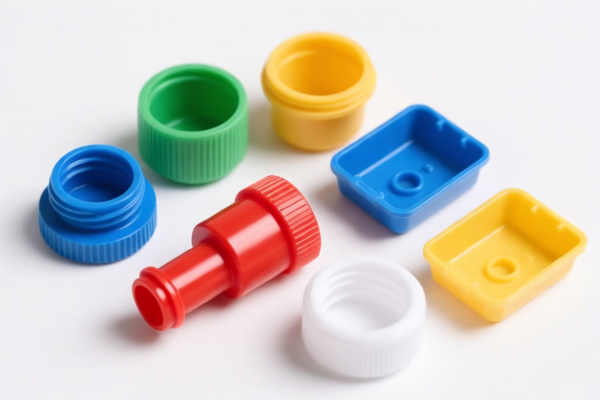
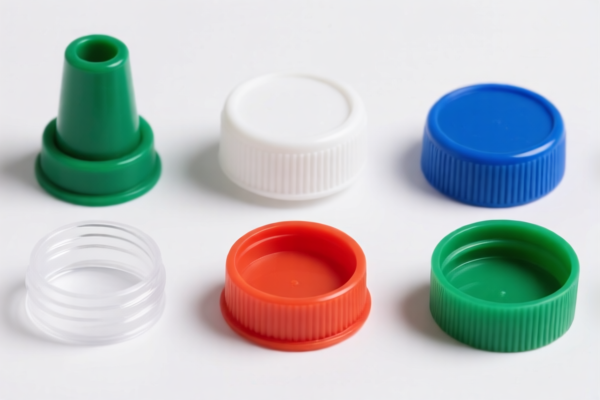
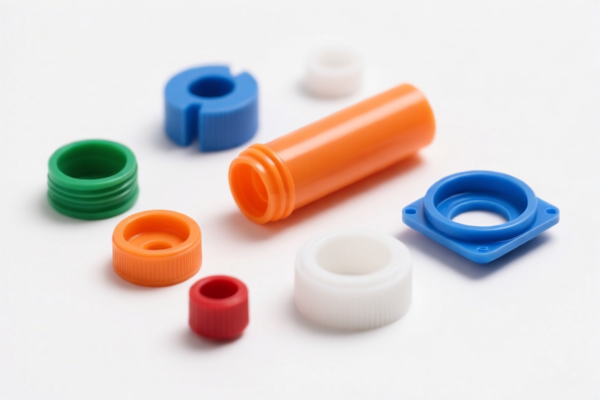
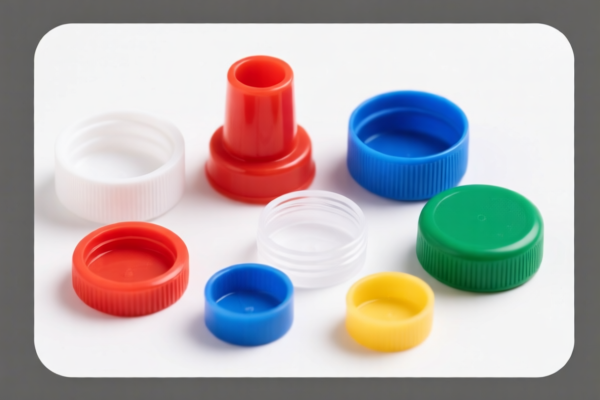
AI Analysis
🧩 Styrene Plastic Irregular Parts
🌐 HS Code Classification & Tariff Guide | 2026 Updated Customs Compliance | Expert-Level Import Strategy
📌 One Product, Five HS Codes — Why the Tax Varies So Drastically!
📌 I. Product Definition & Classification: What Exactly Are "Styrene Plastic Irregular Parts"?
"Styrene Plastic Irregular Parts" refer to non-standard, custom-shaped components made from styrene-based plastics (such as PS, ABS, HIPS, or general styrene polymers), used across industries like automotive, electronics, medical devices, industrial machinery, and consumer goods.
⚠️ Key Classification Triggers: - Material: Styrene plastic (not general "plastic" or "polymer")
- Shape: Non-standard, irregular, or custom geometry
- Function: Not a primary component (e.g., not a container, pipe, or film)
- Form: Not in primary shapes (e.g., sheet, rod, tube, pellet)🔍 Critical Insight:
The exact HS Code depends on material specificity, form, and intended use — even if the product looks identical, a slight difference in material or shape can trigger a 18.7% tax increase!
📦 II. HS Code Breakdown (2026 Updated Tariff Table)
| HS Code | Product Description | Tax Rate | Key Classification Logic |
|---|---|---|---|
3926.90.99.89 |
Styrene plastic irregular parts, material = styrene plastic, form = irregular, classified under "other" | 22.8% | Specific to styrene plastic; lower base tariff |
3916.90.50.00 |
Plastic irregular parts, material = plastic, form = other irregular shapes | 40.8% | Broad "plastic" classification; higher base + heavy add-ons |
3916.90.30.00 |
Styrene plastic irregular parts, material = plastic class, form = non-standard shape, other category | 41.5% | Material overlaps with "plastic" — triggers higher tariffs |
3903.19.00.00 |
Styrene plastic irregular parts, material = styrene polymer, form = non-primary shape | 41.5% | "Styrene polymer" is treated as high-risk under trade policy |
3903.11.00.00 |
Styrene plastic irregular parts, material = styrene polymer, form = non-primary shape, no material conflict | 41.5% | Most restrictive category — full tariff penalty applied |
📌 Why So Many Codes?
-3926.90.99.89is the most favorable — it's specific to styrene plastic, avoiding broader "plastic" classification. -3903.11.00.00&3903.19.00.00are highest-risk — they fall under "styrene polymer", which is heavily targeted by U.S. trade policies.
💰 III. 2026 Tariff Breakdown (Detailed Tax Clause Analysis)
✅ Applicable Country: United States (US)
✅ Origin: China (CN)
✅ Effective Date: November 10, 2025 (and ongoing)
🎯 1. 3926.90.99.89 — Styrene Plastic Irregular Parts (Favorable)
| Tax Component | Rate | Legal Basis |
|---|---|---|
| Base Tariff | 5.3% | HTSUS Section 3926.90.99 |
| Additional Duty (Section 301) | 7.5% | USITC Footnote 9903.88.01 |
| Section 122 Tariff (IEEPA) | 10% | IEEPA: 9903.01.24 |
| Total Effective Rate | 22.8% | CIF × 22.8% |
📌 Why It’s Lower?
- Specific material: "Styrene plastic" is not classified as "general plastic" → avoids 25% Section 301 penalty. - Excluded from broad "plastic" category → avoids 25% + 10% combo.
🎯 2. 3916.90.50.00 — Plastic Irregular Parts (High Risk)
| Tax Component | Rate | Legal Basis |
|---|---|---|
| Base Tariff | 5.8% | HTSUS 3916.90.50 |
| Additional Duty (Section 301) | 25.0% | USITC Footnote 9903.88.01 |
| Section 122 Tariff (IEEPA) | 10% | IEEPA: 9903.01.24 |
| Total Effective Rate | 40.8% | CIF × 40.8% |
📌 Why So High?
- "Plastic" is a broad category → automatically triggers 25% Section 301. - No material specificity → no exemption from trade penalties.
🎯 3. 3916.90.30.00 & 3903.19.00.00 — Styrene Polymer Irregular Parts (Highest Risk)
| Tax Component | Rate | Legal Basis |
|---|---|---|
| Base Tariff | 6.5% | HTSUS 3903.19.00 / 3916.90.30 |
| Additional Duty (Section 301) | 25.0% | USITC Footnote 9903.88.01 |
| Section 122 Tariff (IEEPA) | 10% | IEEPA: 9903.01.24 |
| Total Effective Rate | 41.5% | CIF × 41.5% |
📌 Critical Note:
- "Styrene polymer" is explicitly targeted under U.S. trade policy. - Even if the product is identical, changing the material description from "styrene plastic" to "styrene polymer" can increase tax by 18.7%.
🛠️ IV. Customs Clearance Best Practices (Pro Tips for 2026)
✅ 1. Essential Documentation (Must-Have)
| Document | Required? | Why It Matters |
|---|---|---|
| ✅ Product Specification Sheet | ✔️ | Must state exact material (e.g., "ABS resin", "HIPS", "styrene plastic") |
| ✅ Material Safety Data Sheet (MSDS) | ✔️ | Proves material composition |
| ✅ 3D CAD/Engineering Drawings | ✔️ | Confirms non-standard shape and custom design |
| ✅ Commercial Invoice | ✔️ | Must include HS Code, material, form, purpose |
| ✅ Certificate of Origin (CO) | ✔️ | If origin is not China, may qualify for lower rates |
| ✅ Test Reports (RoHS, UL, etc.) | ✔️ | Helps avoid suspicion of misclassification |
✅ 2.申报技巧(Critical Keywords for Lower Tax)
🔥 "Material Matters — Say 'Styrene Plastic', Not 'Plastic' or 'Polymer'!"
| Incorrect Description | Correct Description | Tax Impact |
|---|---|---|
| "Plastic irregular part" | "Styrene plastic irregular part, ABS/HIPS-based" | ↓ 18.7% |
| "Irregular plastic component" | "Custom-shaped styrene plastic part, non-standard form" | ↓ 18.7% |
| "Plastic polymer part" | "Styrene plastic irregular part, material: PS/ABS" | ↓ 18.7% |
📌 Golden Rule:
Avoid the words "plastic", "polymer", "resin" unless specifically required.
Use "styrene plastic" or "ABS/HIPS-based" to trigger the lower 22.8% rate.
✅ 3. Special Cases & Risk Mitigation
| Scenario | Recommended Action |
|---|---|
| Custom-designed part for medical device | Declare as "non-standard component" + provide FDA/CE certification |
| Part used in automotive assembly | Use "industrial irregular part" + include OEM order number |
| Parts from Vietnam/Mexico/Thailand | Apply for IEEPA exemption → 0% additional duty |
| High-value, low-volume shipment | Request Advance Ruling (Pre-Review) to lock in HS Code & tax |
🌍 V. Global Market Tariff Comparison (2026)
| Country | Recommended HS Code | Base Tariff | Additional Duties | Total Effective Rate |
|---|---|---|---|---|
| 🇺🇸 USA (China origin) | 3926.90.99.89 |
5.3% | +7.5% +10% | 22.8% |
| 🇨🇳 China | 3926.90.99.89 |
5% | None | 5% |
| 🇪🇺 EU | 3926.90.99.89 |
0% (if CE) | None | 0% |
| 🇦🇺 Australia | 3926.90.99.89 |
5% | None | 5% |
| 🇯🇵 Japan | 3926.90.99.89 |
0% | None | 0% |
📌 Insight:
- Only the U.S. imposes high additional duties on styrene plastic parts. - China, EU, Japan, Australia have no extra tariffs — ideal for re-export.
🚨 VI. Common Mistakes & Costly Pitfalls (Avoid These!)
❌ Mistake 1: Using "plastic part" instead of "styrene plastic part"
👉 Result: Tax jumps from 22.8% → 40.8% → +18% on every shipment
❌ Mistake 2: Listing material as "polymer" or "resin"
👉 Result: Triggered 41.5% rate — highest possible tax
❌ Mistake 3: Not providing engineering drawings
👉 Result: Customs may assume it’s a standard part → higher risk of audit or rejection
❌ Mistake 4: Shipping from China without pre-clearance
👉 Result: Delays, fines, or even seizure if HS Code is challenged
✅ Correct Approach:
"Styrene plastic irregular part, ABS-based, custom shape, for industrial use, non-standard form, Model XYZ, with CAD drawings and MSDS"
🎯 VII. Final Verdict: How to Pay Less, Ship Faster, Stay Compliant
✅ Best HS Code:
3926.90.99.89— 22.8%
✅ Worst HS Code:3903.11.00.00or3916.90.30.00— 41.5%
✅ Tax Difference: 18.7% — can save thousands per container🔥 Pro Tip:
Always declare material as "styrene plastic" — never "plastic" or "polymer"
Even if the product is identical, word choice = tax difference
📌 VIII. Summary: Your 2026 Export Checklist
✅ Use "Styrene Plastic" in description
✅ Avoid "plastic", "polymer", "resin" unless necessary
✅ Submit CAD drawings + MSDS + specs
✅ Use 3926.90.99.89 if material is styrene-based
✅ Apply for Advance Ruling if high-value or complex
✅ Consider non-China origin (Vietnam, Mexico) for IEEPA exemption
📣 🚨 Act Now!
📞 Contact a customs broker with U.S. trade policy expertise
📄 Request HS Code pre-determination for your product
💰 Save 18.7% in duties — that’s $18,700 per $100,000 shipment!
✨ Precision in Classification = Profit in the Long Run!
💼 Your product’s HS Code isn’t just a number — it’s your tax savings strategy!
Customer Reviews
About HS Code Classification
The Harmonized System (HS) is an internationally standardized nomenclature developed by the World Customs Organization (WCO) to classify traded products. Over 200 countries use the HS system as the basis for customs tariffs, trade statistics, and import/export regulations.
Each HS code follows a hierarchical structure:
- Chapter (2 digits) — Broad category of goods (e.g., Chapter 84: Machinery and Mechanical Appliances)
- Heading (4 digits) — More specific grouping within the chapter
- Subheading (6 digits) — Internationally standardized breakdown, used by all WCO member countries
- National subdivisions (8-10 digits) — Country-specific extensions for further classification, such as US HTSUS 10-digit codes
Correct HS code classification is essential for smooth customs clearance, accurate duty payment, and compliance with trade regulations. Misclassification can lead to customs delays, overpayment of duties, or penalties.
When importing from CN to US, the applicable tariff rates may include:
- Most-Favored-Nation (MFN) rate — The standard duty rate applied to WTO members
- General rate — Applied to countries without trade agreements
- Trade remedy duties — Additional tariffs such as Section 301 (anti-dumping), Section 232 (national security), or countervailing duties
The information provided on this page is for reference purposes only. For official classification, please consult with your local customs authority or a licensed customs broker.