Sulfurized Cork Rubber Building Board
CN → US| HS编码 | 关税税率 | 原产国 | 目的国 | 文档 |
|---|---|---|---|---|
| 4008111000 | 35.0% | CN | US | 官方文档 |
| 4008210000 | 35.0% | CN | US | 官方文档 |
| 4016996050 | 37.5% | CN | US | 官方文档 |
| 4016935010 | 37.5% | CN | US | 官方文档 |
| 4016931010 | 37.5% | CN | US | 官方文档 |
商品图片
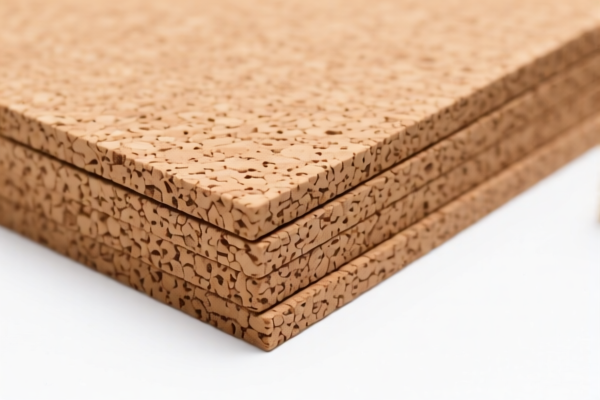
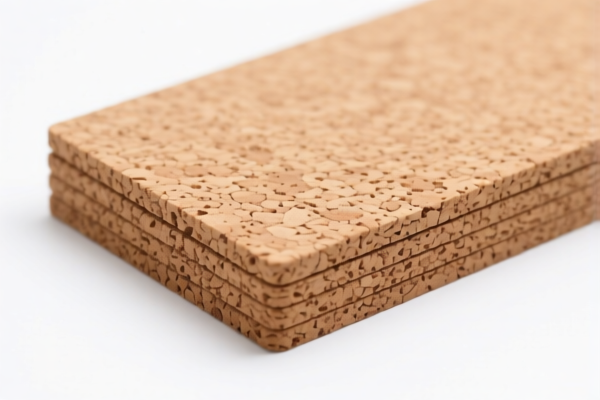
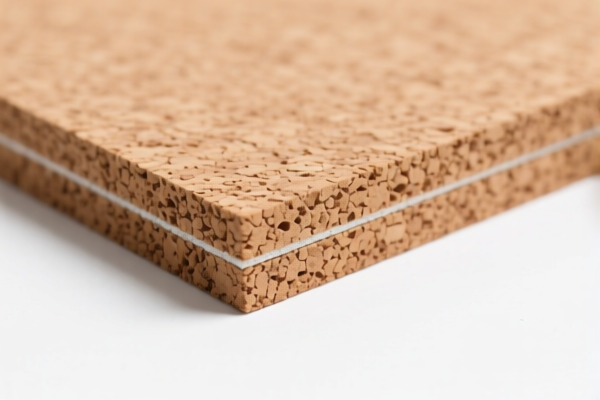
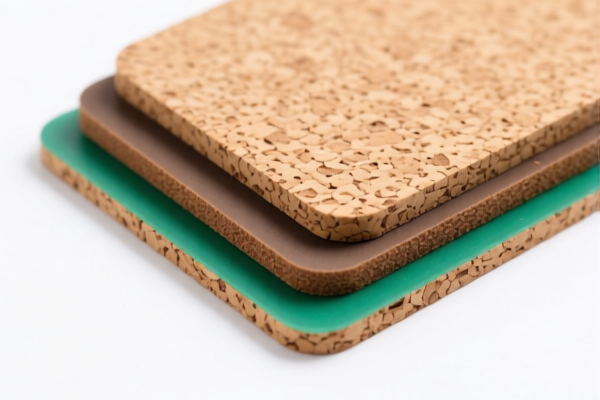
AI分析
🏗️ Sulfurized Cork Rubber Building Board (硫化橡胶板/制品)
🌐 HS Code Reference & Customs Clearance Guide | 2026 Latest Tariff Analysis | Professional Level Clearance Strategy
📌 1. Product Definition & Classification: Do You Really Understand "Sulfurized Cork Rubber"?
"Sulfurized Cork Rubber Building Board" refers to construction materials made from rubber compounds containing cork particles, subjected to vulcanization (sulfurization) to create a durable, elastic, and shock-absorbing sheet or board.
In international trade, these products are often confused with simple cork sheets or non-sulfurized rubber mats. The key distinction lies in the vulcanization process and the specific rubber composition:
- Vulcanized Rubber Sheets/Boards: High elasticity, heat resistance, and durability. Typically classified under Chapter 40 (Rubber and Articles Thereof).
- Cork Rubber Composites: Often used for flooring, soundproofing, or industrial sealing.
- Sealing Gaskets/Pads: Specific shapes or functions may lead to different sub-headings.
⚠️ Key Classification Point:
- If it is a general-purpose vulcanized rubber sheet/board (even with cork filler), it often falls under 4008 (Vulcanized rubber plates, sheets, strip...) or 4016 (Other articles of vulcanized rubber other than hard rubber).
- If it is specifically a gasket/sealing pad, it may fall under 4016.93.
- The exact 8-digit HS Code depends on the precise rubber compound and whether it contains cork, but the provided dataset lists specific codes for "Vulcanized Rubber Boards" and "Sealing Pieces."
📦 2. HS Code Classification Details (2026 Official Tariff Reference)
Based on the provided dataset, here are the applicable HS Codes for Sulfurized Cork Rubber Building Boards and related rubber articles:
| HS Code | Product Description | Application Scenario | Key Distinction |
|---|---|---|---|
4008.11.10.00 |
Vulcanized rubber plate, material: vulcanized rubber, form: plate | General-purpose rubber boards, flooring base, insulation | General "Plate/Sheet" form |
4008.21.00.00 |
Vulcanized rubber plate, material: vulcanized rubber, form: plate | Similar to above, possibly different thickness/density specifics | General "Plate/Sheet" form |
4016.99.60.50 |
Vulcanized rubber articles, material: vulcanized rubber, form: plate/other | Specialized rubber boards not classified under 4008, e.g., composite cork-rubber | Broader "Articles" category |
4016.93.50.10 |
Vulcanized rubber sealing piece, material: vulcanized rubber, form: sealing piece | Used specifically as gaskets, seals, or shock-absorbing pads in construction | Function: Sealing |
4016.93.10.10 |
Vulcanized rubber sealing piece, material: vulcanized rubber, form: sealing piece | Similar to above, possibly different size or specific sealing application | Function: Sealing |
🔍 Critical Reminder:
- General Building Boards: If the product is a flat board used for flooring or insulation, it is most likely classified under 4008 or 4016.99.
- Sealing Gaskets: If the board is cut into specific shapes for sealing joints or gaps, it may be classified under 4016.93.
- Misclassification Risk: Declaring a "Sealing Gasket" as a "General Plate" or vice versa can lead to significant tariff differences (e.g., 35% vs. 37.5%).
💰 3. 2026 Latest Tariff Rate Breakdown (Including Surtaxes & Policy Add-ons)
✅ Applicable Country: United States (US)
✅ Origin: China (CN)
✅ Effective Date: From November 10, 2025 (for subsequent imports)
🎯 1. 4008.11.10.00 & 4008.21.00.00 —— Vulcanized Rubber Plates/Sheets
| Item | Details |
|---|---|
| Base Tariff Rate | 0% (ad valorem) |
| USITC Surtax | +25% (Under Section 301 Trade Act) |
| IEEPA Surtax | +10% (Targeting China/HK products, effective Nov 10, 2025) |
| Total Tariff Rate | 35.0% |
| Tax Calculation | CIF Value × 35% |
| De Minimis Exemption | ❌ Not Available (deny_de_minimis) |
| Legal Basis Path | IEEPA:9903.01.25 → IEEPA:9903.01.24 → USITC:4008.xx.xx.xx → FOOTNOTE:301 |
📌 Explanation:
- The 25% USITC surtax is part of the ongoing Section 301 tariffs on Chinese goods.
- The 10% IEEPA surtax is a new/additional layer targeting specific categories.
- Total 35% is a high tariff. Must be factored into cost calculations.
- Base rate is 0%, so the entire burden comes from surtaxes.
🎯 2. 4016.99.60.50 —— Other Vulcanized Rubber Articles (Plates/Other)
| Item | Details |
|---|---|
| Base Tariff Rate | 2.5% |
| USITC Surtax | +25% |
| IEEPA Surtax | +10% |
| Total Tariff Rate | 37.5% |
| Tax Calculation | CIF Value × 37.5% |
| De Minimis Exemption | ❌ Not Available |
| Legal Basis Path | IEEPA:9903.01.25 → IEEPA:9903.01.24 → USITC:4016.99.60.50 → FOOTNOTE:301 |
📌 Note:
- This code carries a 2.5% base tariff, which is not subject to duty-free treatment.
- The surtaxes (25% + 10%) are applied on top of the base, resulting in a higher total rate (37.5%) compared to the 4008 codes.
- Critical: If your product is classified under 4016 instead of 4008, you pay 2.5% more in base duty.
🎯 3. 4016.93.50.10 & 4016.93.10.10 —— Vulcanized Rubber Sealing Pieces
| Item | Details |
|---|---|
| Base Tariff Rate | 2.5% |
| USITC Surtax | +25% |
| IEEPA Surtax | +10% |
| Total Tariff Rate | 37.5% |
| Tax Calculation | CIF Value × 37.5% |
| De Minimis Exemption | ❌ Not Available |
| Legal Basis Path | IEEPA:9903.01.25 → IEEPA:9903.01.24 → USITC:4016.93.xx.xx → FOOTNOTE:301 |
📌 Note:
- Same as above: Base 2.5% + Surtaxes 35% = 37.5%.
- Function as sealing pieces triggers this classification.
- Do not misdeclare as "general plates" to avoid higher base rates or customs disputes.
🛠️ 4. Customs Clearance Practical Advice (Battle-Tested Pitfall Avoidance)
✅ 1. Required Documentation Checklist (No Exceptions)
| Document | Required | Purpose |
|---|---|---|
| ✅ Product Specification Sheet | ✔️ | Must detail: Rubber type, cork content %, thickness, density, vulcanization method. |
| ✅ Technical Data Sheet (TDS) | ✔️ | To prove it is "vulcanized rubber" and not simple cork or non-sulfurized material. |
| ✅ Product Photos (Including Label) | ✔️ | Show markings: "Vulcanized," "Cork Rubber," "Board/Sheet," model number. |
| ✅ Commercial Invoice | ✔️ | Clearly state: "Vulcanized Rubber Board for Building/Insulation" or "Rubber Sealing Gasket." |
| ✅ Packing List | ✔️ | Confirm dimensions and weight to avoid volume/weight discrepancies. |
| ✅ Certificate of Origin (CO) | ✔️ | Required for proving Chinese origin (which triggers surtaxes). |
✅ 2. Declaration Tips (Critical Mantra)
🔥 "Function Defines Code: Plate vs. Seal, Base Rate Varies!"
| Scenario | Correct HS Code | Incorrect Practice | Consequence |
|---|---|---|---|
| General rubber board (flooring/insulation) | 4008.11.10.00 or 4008.21.00.00 |
Declare as "Rubber Articles" (4016) | Higher Base Rate (2.5% vs 0%) → Pay more duty. |
| Rubber board specifically for sealing joints | 4016.93.50.10 |
Declare as "General Plate" (4008) | Customs Audit Risk → Potential reclassification & fines. |
| Composite Cork-Rubber Board (not just rubber) | 4016.99.60.50 |
Declare as pure rubber (4008) | Misdescription → Delay in clearance. |
📌 Key Insight:
- If the product is a simple plate/sheet, 4008 is preferred due to 0% base tariff.
- If the product has a specific sealing function, 4016.93 applies, but you pay a 2.5% base.
- Do not use generic terms like "Rubber Mat" or "Cork Sheet" without specifying "Vulcanized."
✅ 3. Special Case Handling
| Situation | Handling Advice |
|---|---|
| Cork-Rubber Composite | Provide a detailed composition report. If cork is a minor filler, it may still be classified as rubber (4008/4016). If cork is the primary material, it might fall under Chapter 45 (Cork), but the dataset only lists rubber codes. Stick to rubber codes if rubber is dominant. |
| Custom-Size Boards | Ensure invoice states "Cut to Size" if applicable, but classification depends on form (plate vs. article). |
| Imported as "Gaskets" | If used for sealing, declare as such. Use 4016.93 codes. |
| Imported as "Insulation Boards" | If used for insulation/flooring, declare as "Plates/Sheets." Use 4008 codes if possible to minimize base duty. |
🌍 5. Global Market Comparison (2026 Latest)
| Country/Region | Recommended HS Code | Tariff Rate (China Origin) | Certification Requirements | Notes |
|---|---|---|---|---|
| 🇺🇸 USA | 4008.11.10.00 / 4016.99.60.50 |
35% (4008) / 37.5% (4016) | None specific | High surtaxes apply. No de minimis. |
| 🇨🇳 China | 4008 / 4016 |
0-5% | None | No surtaxes. Standard import duty applies. |
| 🇪🇺 EU | 4008 / 4016 |
0% (if under quota) / ~3% | REACH, RoHS | No Section 301 or IEEPA surtaxes. |
| 🇯🇵 Japan | 4008 / 4016 |
0-3% | JIS Standards | No special surtaxes. |
| 🇦🇺 Australia | 4008 / 4016 |
5% | RCM (if electrical) | Standard duty. No surtaxes. |
📌 Conclusion:
- The US is the most expensive market due to 35-37.5% total tariffs.
- EU, Japan, Australia have significantly lower rates (0-5%).
- Strategy: If possible, consider transshipment (not recommended due to legal risks) or supply chain diversification to non-China origins to avoid surtaxes.
📌 6. Common Mistakes & Pitfall Avoidance (Lessons Learned)
❌ Mistake 1: Declaring "Cork Rubber Board" as "Cork" (Chapter 45)
👉 Consequence: Misclassification. If rubber is the essential character, it must be Class 40. Risk of penalties and back taxes.
❌ Mistake 2: Using 4016 for a general-purpose plate to avoid "301" scrutiny
👉 Consequence: Higher base rate (2.5% vs 0%). You pay more duty unnecessarily.
❌ Mistake 3: Ignoring the "Vulcanized" aspect
👉 Consequence: If not vulcanized, it may fall under different sub-headings with different tax rates. Ensure your spec sheet clearly states "Vulcanized."
❌ Mistake 4: Assuming de minimis applies
👉 Consequence: No de minimis for these goods from China to the US. Even small shipments are fully taxed.
✅ Correct Practice:
"Vulcanized Rubber Board, 5mm Thick, 30% Cork Filler, for Flooring Insulation, Model XYZ, US Origin: China"
🎯 7. Conclusion: Professional Declaration, Time-Saving, Cost-Optimization!
🎯 Remember the Mantra:
🔹 "4008 for Plates (0% Base), 4016 for Articles (2.5% Base)"
🔹 "Surtaxes are Fixed: 35% Total for 4008, 37.5% for 4016"
🔹 "Function Matters: Plate vs. Seal determines the 8-digit Code"
🔹 "No De Minimis: Every Dollar is Taxed!"
📌 Pro Tip:
If your product is not made in China, you can apply for IEEPA Exemption or Section 301 Exclusion, reducing tariffs to 0-5%.
Recommendation: Apply for an Advance Ruling (Pre-Ruling) from US Customs to confirm the correct HS Code and avoid post-import audits.
📣 Immediate Action:
📞 Contact a Professional Customs Broker + Provide Product Spec + Apply for HS Code Pre-Ruling
🚀 Let your Sulfurized Cork Rubber Board clear customs smoothly, efficiently, and profitably!
✨ Professional Clearance Starts with Accurate Classification!
💼 Every Cent of Your Cost Deserves Precise Calculation!
用户评价
关于 HS 编码归类
协调制度(HS)是由世界海关组织(WCO)制定的国际贸易商品分类标准。全球 200 多个国家采用 HS 系统作为海关关税、贸易统计和进出口监管的基础。
每个 HS 编码遵循以下层级结构:
- 章(2 位)——商品大类(例如:第 84 章:机器和机械设备)
- 品目(4 位)——章内的更具体分类
- 子目(6 位)——国际通用细分,所有 WCO 成员国统一使用
- 本国细分(8-10 位)——各国自行扩展的细分编码,如美国 HTSUS 10 位编码
正确的 HS 编码归类对于顺利通关、准确缴纳关税和遵守贸易法规至关重要。错误归类可能导致海关延误、多缴关税或罚款。
从CN进口到US时,适用的关税税率可能包括:
- 最惠国(MFN)税率——适用于 WTO 成员国的标准关税税率
- 普通税率——适用于无贸易协定国家
- 贸易救济关税——附加关税,如 301 条款(反倾销)、232 条款(国家安全)或反补贴税
本页内容仅供参考。如需正式归类,请咨询当地海关或持牌报关代理。