Sulfurized Cork Rubber Building Board
CN → US| HS Code | Tariff Rate | Origin | Destination | Doc |
|---|---|---|---|---|
| 4008111000 | 35.0% | CN | US | Official Doc |
| 4008210000 | 35.0% | CN | US | Official Doc |
| 4016996050 | 37.5% | CN | US | Official Doc |
| 4016935010 | 37.5% | CN | US | Official Doc |
| 4016931010 | 37.5% | CN | US | Official Doc |
Product Images
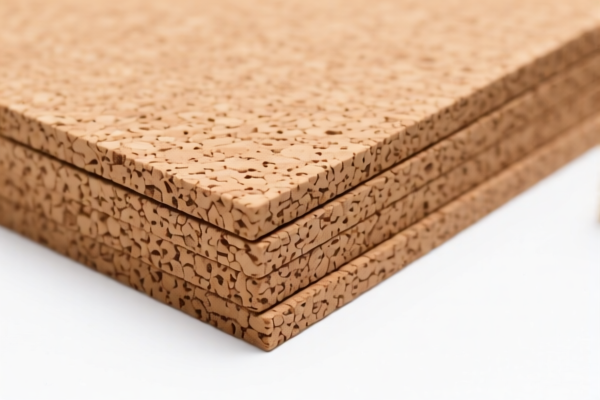
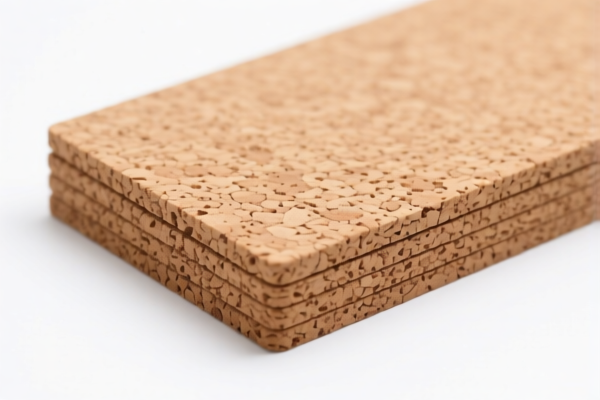
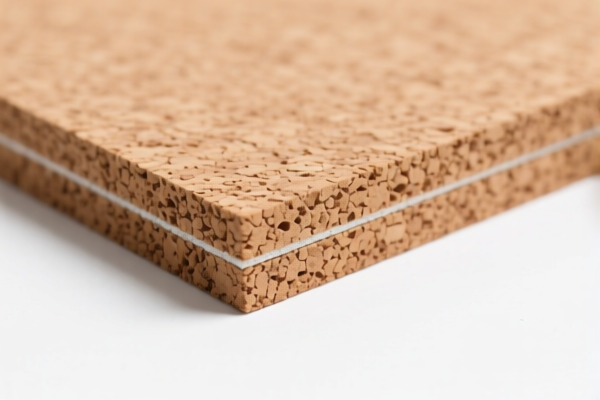
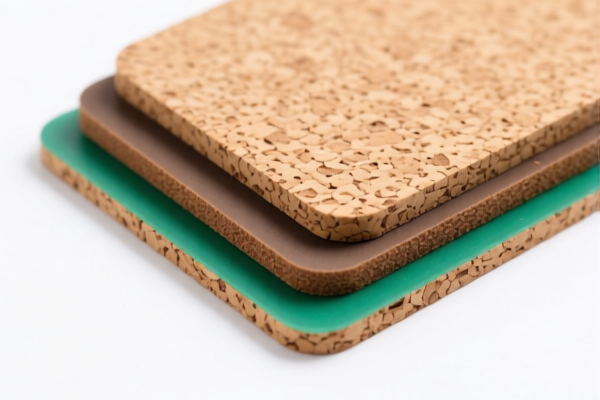
AI Analysis
🏗️ Sulfurized Cork Rubber Building Board (硫化橡胶板/制品)
🌐 HS Code Reference & Customs Clearance Guide | 2026 Latest Tariff Analysis | Professional Level Clearance Strategy
📌 1. Product Definition & Classification: Do You Really Understand "Sulfurized Cork Rubber"?
"Sulfurized Cork Rubber Building Board" refers to construction materials made from rubber compounds containing cork particles, subjected to vulcanization (sulfurization) to create a durable, elastic, and shock-absorbing sheet or board.
In international trade, these products are often confused with simple cork sheets or non-sulfurized rubber mats. The key distinction lies in the vulcanization process and the specific rubber composition:
- Vulcanized Rubber Sheets/Boards: High elasticity, heat resistance, and durability. Typically classified under Chapter 40 (Rubber and Articles Thereof).
- Cork Rubber Composites: Often used for flooring, soundproofing, or industrial sealing.
- Sealing Gaskets/Pads: Specific shapes or functions may lead to different sub-headings.
⚠️ Key Classification Point:
- If it is a general-purpose vulcanized rubber sheet/board (even with cork filler), it often falls under 4008 (Vulcanized rubber plates, sheets, strip...) or 4016 (Other articles of vulcanized rubber other than hard rubber).
- If it is specifically a gasket/sealing pad, it may fall under 4016.93.
- The exact 8-digit HS Code depends on the precise rubber compound and whether it contains cork, but the provided dataset lists specific codes for "Vulcanized Rubber Boards" and "Sealing Pieces."
📦 2. HS Code Classification Details (2026 Official Tariff Reference)
Based on the provided dataset, here are the applicable HS Codes for Sulfurized Cork Rubber Building Boards and related rubber articles:
| HS Code | Product Description | Application Scenario | Key Distinction |
|---|---|---|---|
4008.11.10.00 |
Vulcanized rubber plate, material: vulcanized rubber, form: plate | General-purpose rubber boards, flooring base, insulation | General "Plate/Sheet" form |
4008.21.00.00 |
Vulcanized rubber plate, material: vulcanized rubber, form: plate | Similar to above, possibly different thickness/density specifics | General "Plate/Sheet" form |
4016.99.60.50 |
Vulcanized rubber articles, material: vulcanized rubber, form: plate/other | Specialized rubber boards not classified under 4008, e.g., composite cork-rubber | Broader "Articles" category |
4016.93.50.10 |
Vulcanized rubber sealing piece, material: vulcanized rubber, form: sealing piece | Used specifically as gaskets, seals, or shock-absorbing pads in construction | Function: Sealing |
4016.93.10.10 |
Vulcanized rubber sealing piece, material: vulcanized rubber, form: sealing piece | Similar to above, possibly different size or specific sealing application | Function: Sealing |
🔍 Critical Reminder:
- General Building Boards: If the product is a flat board used for flooring or insulation, it is most likely classified under 4008 or 4016.99.
- Sealing Gaskets: If the board is cut into specific shapes for sealing joints or gaps, it may be classified under 4016.93.
- Misclassification Risk: Declaring a "Sealing Gasket" as a "General Plate" or vice versa can lead to significant tariff differences (e.g., 35% vs. 37.5%).
💰 3. 2026 Latest Tariff Rate Breakdown (Including Surtaxes & Policy Add-ons)
✅ Applicable Country: United States (US)
✅ Origin: China (CN)
✅ Effective Date: From November 10, 2025 (for subsequent imports)
🎯 1. 4008.11.10.00 & 4008.21.00.00 —— Vulcanized Rubber Plates/Sheets
| Item | Details |
|---|---|
| Base Tariff Rate | 0% (ad valorem) |
| USITC Surtax | +25% (Under Section 301 Trade Act) |
| IEEPA Surtax | +10% (Targeting China/HK products, effective Nov 10, 2025) |
| Total Tariff Rate | 35.0% |
| Tax Calculation | CIF Value × 35% |
| De Minimis Exemption | ❌ Not Available (deny_de_minimis) |
| Legal Basis Path | IEEPA:9903.01.25 → IEEPA:9903.01.24 → USITC:4008.xx.xx.xx → FOOTNOTE:301 |
📌 Explanation:
- The 25% USITC surtax is part of the ongoing Section 301 tariffs on Chinese goods.
- The 10% IEEPA surtax is a new/additional layer targeting specific categories.
- Total 35% is a high tariff. Must be factored into cost calculations.
- Base rate is 0%, so the entire burden comes from surtaxes.
🎯 2. 4016.99.60.50 —— Other Vulcanized Rubber Articles (Plates/Other)
| Item | Details |
|---|---|
| Base Tariff Rate | 2.5% |
| USITC Surtax | +25% |
| IEEPA Surtax | +10% |
| Total Tariff Rate | 37.5% |
| Tax Calculation | CIF Value × 37.5% |
| De Minimis Exemption | ❌ Not Available |
| Legal Basis Path | IEEPA:9903.01.25 → IEEPA:9903.01.24 → USITC:4016.99.60.50 → FOOTNOTE:301 |
📌 Note:
- This code carries a 2.5% base tariff, which is not subject to duty-free treatment.
- The surtaxes (25% + 10%) are applied on top of the base, resulting in a higher total rate (37.5%) compared to the 4008 codes.
- Critical: If your product is classified under 4016 instead of 4008, you pay 2.5% more in base duty.
🎯 3. 4016.93.50.10 & 4016.93.10.10 —— Vulcanized Rubber Sealing Pieces
| Item | Details |
|---|---|
| Base Tariff Rate | 2.5% |
| USITC Surtax | +25% |
| IEEPA Surtax | +10% |
| Total Tariff Rate | 37.5% |
| Tax Calculation | CIF Value × 37.5% |
| De Minimis Exemption | ❌ Not Available |
| Legal Basis Path | IEEPA:9903.01.25 → IEEPA:9903.01.24 → USITC:4016.93.xx.xx → FOOTNOTE:301 |
📌 Note:
- Same as above: Base 2.5% + Surtaxes 35% = 37.5%.
- Function as sealing pieces triggers this classification.
- Do not misdeclare as "general plates" to avoid higher base rates or customs disputes.
🛠️ 4. Customs Clearance Practical Advice (Battle-Tested Pitfall Avoidance)
✅ 1. Required Documentation Checklist (No Exceptions)
| Document | Required | Purpose |
|---|---|---|
| ✅ Product Specification Sheet | ✔️ | Must detail: Rubber type, cork content %, thickness, density, vulcanization method. |
| ✅ Technical Data Sheet (TDS) | ✔️ | To prove it is "vulcanized rubber" and not simple cork or non-sulfurized material. |
| ✅ Product Photos (Including Label) | ✔️ | Show markings: "Vulcanized," "Cork Rubber," "Board/Sheet," model number. |
| ✅ Commercial Invoice | ✔️ | Clearly state: "Vulcanized Rubber Board for Building/Insulation" or "Rubber Sealing Gasket." |
| ✅ Packing List | ✔️ | Confirm dimensions and weight to avoid volume/weight discrepancies. |
| ✅ Certificate of Origin (CO) | ✔️ | Required for proving Chinese origin (which triggers surtaxes). |
✅ 2. Declaration Tips (Critical Mantra)
🔥 "Function Defines Code: Plate vs. Seal, Base Rate Varies!"
| Scenario | Correct HS Code | Incorrect Practice | Consequence |
|---|---|---|---|
| General rubber board (flooring/insulation) | 4008.11.10.00 or 4008.21.00.00 |
Declare as "Rubber Articles" (4016) | Higher Base Rate (2.5% vs 0%) → Pay more duty. |
| Rubber board specifically for sealing joints | 4016.93.50.10 |
Declare as "General Plate" (4008) | Customs Audit Risk → Potential reclassification & fines. |
| Composite Cork-Rubber Board (not just rubber) | 4016.99.60.50 |
Declare as pure rubber (4008) | Misdescription → Delay in clearance. |
📌 Key Insight:
- If the product is a simple plate/sheet, 4008 is preferred due to 0% base tariff.
- If the product has a specific sealing function, 4016.93 applies, but you pay a 2.5% base.
- Do not use generic terms like "Rubber Mat" or "Cork Sheet" without specifying "Vulcanized."
✅ 3. Special Case Handling
| Situation | Handling Advice |
|---|---|
| Cork-Rubber Composite | Provide a detailed composition report. If cork is a minor filler, it may still be classified as rubber (4008/4016). If cork is the primary material, it might fall under Chapter 45 (Cork), but the dataset only lists rubber codes. Stick to rubber codes if rubber is dominant. |
| Custom-Size Boards | Ensure invoice states "Cut to Size" if applicable, but classification depends on form (plate vs. article). |
| Imported as "Gaskets" | If used for sealing, declare as such. Use 4016.93 codes. |
| Imported as "Insulation Boards" | If used for insulation/flooring, declare as "Plates/Sheets." Use 4008 codes if possible to minimize base duty. |
🌍 5. Global Market Comparison (2026 Latest)
| Country/Region | Recommended HS Code | Tariff Rate (China Origin) | Certification Requirements | Notes |
|---|---|---|---|---|
| 🇺🇸 USA | 4008.11.10.00 / 4016.99.60.50 |
35% (4008) / 37.5% (4016) | None specific | High surtaxes apply. No de minimis. |
| 🇨🇳 China | 4008 / 4016 |
0-5% | None | No surtaxes. Standard import duty applies. |
| 🇪🇺 EU | 4008 / 4016 |
0% (if under quota) / ~3% | REACH, RoHS | No Section 301 or IEEPA surtaxes. |
| 🇯🇵 Japan | 4008 / 4016 |
0-3% | JIS Standards | No special surtaxes. |
| 🇦🇺 Australia | 4008 / 4016 |
5% | RCM (if electrical) | Standard duty. No surtaxes. |
📌 Conclusion:
- The US is the most expensive market due to 35-37.5% total tariffs.
- EU, Japan, Australia have significantly lower rates (0-5%).
- Strategy: If possible, consider transshipment (not recommended due to legal risks) or supply chain diversification to non-China origins to avoid surtaxes.
📌 6. Common Mistakes & Pitfall Avoidance (Lessons Learned)
❌ Mistake 1: Declaring "Cork Rubber Board" as "Cork" (Chapter 45)
👉 Consequence: Misclassification. If rubber is the essential character, it must be Class 40. Risk of penalties and back taxes.
❌ Mistake 2: Using 4016 for a general-purpose plate to avoid "301" scrutiny
👉 Consequence: Higher base rate (2.5% vs 0%). You pay more duty unnecessarily.
❌ Mistake 3: Ignoring the "Vulcanized" aspect
👉 Consequence: If not vulcanized, it may fall under different sub-headings with different tax rates. Ensure your spec sheet clearly states "Vulcanized."
❌ Mistake 4: Assuming de minimis applies
👉 Consequence: No de minimis for these goods from China to the US. Even small shipments are fully taxed.
✅ Correct Practice:
"Vulcanized Rubber Board, 5mm Thick, 30% Cork Filler, for Flooring Insulation, Model XYZ, US Origin: China"
🎯 7. Conclusion: Professional Declaration, Time-Saving, Cost-Optimization!
🎯 Remember the Mantra:
🔹 "4008 for Plates (0% Base), 4016 for Articles (2.5% Base)"
🔹 "Surtaxes are Fixed: 35% Total for 4008, 37.5% for 4016"
🔹 "Function Matters: Plate vs. Seal determines the 8-digit Code"
🔹 "No De Minimis: Every Dollar is Taxed!"
📌 Pro Tip:
If your product is not made in China, you can apply for IEEPA Exemption or Section 301 Exclusion, reducing tariffs to 0-5%.
Recommendation: Apply for an Advance Ruling (Pre-Ruling) from US Customs to confirm the correct HS Code and avoid post-import audits.
📣 Immediate Action:
📞 Contact a Professional Customs Broker + Provide Product Spec + Apply for HS Code Pre-Ruling
🚀 Let your Sulfurized Cork Rubber Board clear customs smoothly, efficiently, and profitably!
✨ Professional Clearance Starts with Accurate Classification!
💼 Every Cent of Your Cost Deserves Precise Calculation!
Customer Reviews
About HS Code Classification
The Harmonized System (HS) is an internationally standardized nomenclature developed by the World Customs Organization (WCO) to classify traded products. Over 200 countries use the HS system as the basis for customs tariffs, trade statistics, and import/export regulations.
Each HS code follows a hierarchical structure:
- Chapter (2 digits) — Broad category of goods (e.g., Chapter 84: Machinery and Mechanical Appliances)
- Heading (4 digits) — More specific grouping within the chapter
- Subheading (6 digits) — Internationally standardized breakdown, used by all WCO member countries
- National subdivisions (8-10 digits) — Country-specific extensions for further classification, such as US HTSUS 10-digit codes
Correct HS code classification is essential for smooth customs clearance, accurate duty payment, and compliance with trade regulations. Misclassification can lead to customs delays, overpayment of duties, or penalties.
When importing from CN to US, the applicable tariff rates may include:
- Most-Favored-Nation (MFN) rate — The standard duty rate applied to WTO members
- General rate — Applied to countries without trade agreements
- Trade remedy duties — Additional tariffs such as Section 301 (anti-dumping), Section 232 (national security), or countervailing duties
The information provided on this page is for reference purposes only. For official classification, please consult with your local customs authority or a licensed customs broker.