Synchronous Timing Belt with Textile Material
CN → US| HS编码 | 关税税率 | 原产国 | 目的国 | 文档 |
|---|---|---|---|---|
| 4010354100 | 43.0% | CN | US | 官方文档 |
| 4010354500 | 41.4% | CN | US | 官方文档 |
| 5911900080 | 38.8% | CN | US | 官方文档 |
| 5911900040 | 38.8% | CN | US | 官方文档 |
| 8483905080 | 37.5% | CN | US | 官方文档 |
| 8483908040 | 37.8% | CN | US | 官方文档 |
商品图片
AI分析
🎡 Synchronous Timing Belts with Textile Material (Technical Analysis)
🌐 HS Code Reference & Customs Clearance Guide | 2026 Latest Tariff Analysis | Professional Clearance Strategy
📌 I. Product Definition & Classification: What is a "Synchronous Timing Belt"?
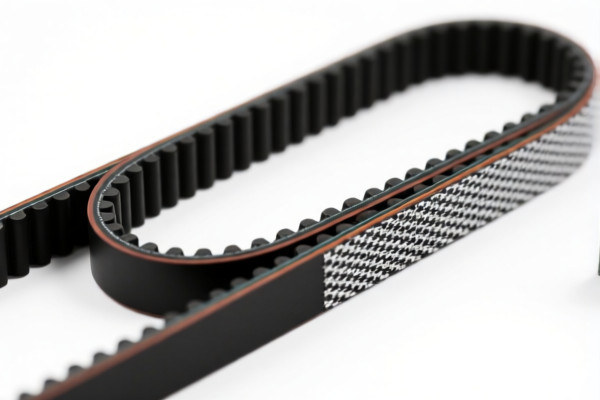
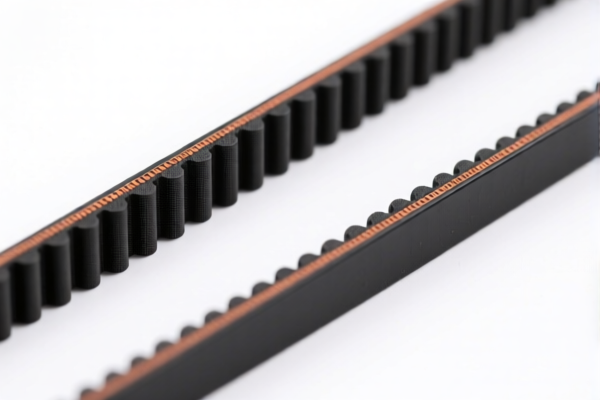
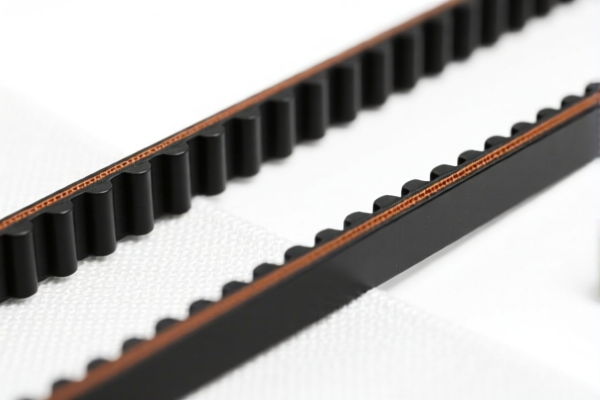
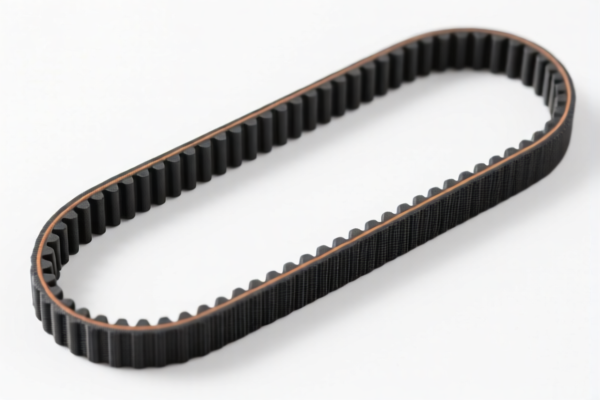
A Synchronous Timing Belt (also known as a toothed belt) is a mechanical power transmission element that uses interlocking teeth on the inner surface to engage with pulleys, ensuring zero-slippage synchronization between the driving and driven shafts.
When combined with textile materials, the belt’s structural integrity relies on a tension cord (usually polyester, aramid, or steel) embedded in rubber, where the textile component plays a critical role in weight distribution and flexibility.
⚠️ Key Classification Distinction:
- Endless (Continuous) Belts: Belts with no joints, forming a complete loop.
- Outside Circumference > 60cm but ≤ 150cm: This size range triggers specific subheading requirements in Chapter 40 (Rubber Articles).
- Textile Predominance: If man-made fibers (e.g., polyester) make up more than 50% by weight of the textile component, it falls under specific subheadings.
📦 II. HS Code Classification Details (2026 Latest Tariff Authority)
Based on the provided data, here are the two possible HS Codes for this product, depending on the width of the belt.
| HS Code | Product Description | Application Scenario | Key Classification Criteria |
|---|---|---|---|
4010.35.41.00 |
Endless synchronous belts, O/C 60-150cm, combined with textile, man-made fibers predominate, Width > 20 cm | Industrial large-scale machinery, heavy-duty conveyor systems, wide pulley drives | ✅ Width > 20cm |
4010.35.45.00 |
Endless synchronous belts, O/C 60-150cm, combined with textile, man-made fibers predominate, Other (Width ≤ 20 cm) | Standard automotive engines, office equipment, precision machinery, narrow drives | ✅ Width ≤ 20cm |
🔍 Critical Note:
- The primary differentiator is the WIDTH of the belt.
- If Width > 20 cm: Use4010.35.41.00.
- If Width ≤ 20 cm: Use4010.35.45.00.
- Both codes assume the belt is Endless, has an Outside Circumference between 60 cm and 150 cm, and contains Man-Made Fibers as the predominant textile material.
💰 III. 2026 Latest Tariff Rate Breakdown (Including Surcharges)
✅ Applicable Country: United States (US)
✅ Country of Origin: China (CN)
✅ Effective Date: Current rates apply for imports from China.
🎯 1. 4010.35.41.00 —— Wide Synchronous Belt (Width > 20 cm)
| Item | Details |
|---|---|
| Base Tariff Rate | 8.0% (Ad Valorem) |
| Section 301 Surcharge | +25.0% (China-specific) |
| Total Tax Rate | 33.0% |
| Tax Calculation | CIF Value × 33% |
| De Minimis Exemption | ❌ Not Applicable (This is a formal entry article with significant duty) |
| Legal Basis Path | USITC:4010.35.41.00 → Footnote: Section 301 |
📌 Explanation:
- This is a high-duty item. The base rate of 8% is already moderate, but the 25% additional tariff makes it one of the most expensive rubber goods to import from China.
- Total Cost Impact: For every $10,000 of goods, you pay $3,300 in duties.
🎯 2. 4010.35.45.00 —— Narrow Synchronous Belt (Width ≤ 20 cm)
| Item | Details |
|---|---|
| Base Tariff Rate | 0.0% (Ad Valorem) |
| Section 301 Surcharge | 0.0% (Exempt from current 301 list for this specific subheading) |
| Total Tax Rate | 0.0% |
| Tax Calculation | $0 |
| De Minimis Exemption | N/A (But cost is zero anyway) |
| Legal Basis Path | USITC:4010.35.45.00 → No 301 Footnote |
📌 Explanation:
- This is a duty-free entry (for this specific subheading).
- Crucial Strategy: If your belt can be designed or classified as ≤ 20 cm in width, you save 33% compared to the wider version.
🛠️ IV. Customs Clearance Practical Advice (Avoid Pitfalls)
✅ 1. Documentation Checklist (Mandatory)
| Document | Required? | Description |
|---|---|---|
| ✅ Product Specification Sheet | ✔️ | Must state: Outside Circumference, Width, Material Composition (Rubber + Man-Made Fiber %), Type (Synchronous/Toothed). |
| ✅ Technical Drawing | ✔️ | Clearly mark the WIDTH and Circumference. This is the #1 reason for misclassification. |
| ✅ Commercial Invoice | ✔️ | Must explicitly state: "Endless Synchronous Timing Belt, Rubber with Textile Reinforcement, Width [X] cm, Circumference [Y] cm". |
| ✅ Certificate of Origin | ✔️ | Standard CO for China origin. |
✅ 2. Declaration Tips (Key Rules)
🔥 “Width Defines Duty! Be Precise!”
| Scenario | Correct Declaration | Wrong Declaration | Consequence |
|---|---|---|---|
| Belt Width = 15 cm | 4010.35.45.00 (0% Duty) |
4010.35.41.00 |
Overpaid 33% tax |
| Belt Width = 25 cm | 4010.35.41.00 (33% Duty) |
4010.35.45.00 |
Under-declared → Penalties + Back Taxes |
| Circumference < 60 cm | Different HS Code (Not in this list) | 4010.35.xxxx |
Wrong Code → Delay/Seizure |
| Circumference > 150 cm | Different HS Code (Not in this list) | 4010.35.xxxx |
Wrong Code → Delay/Seizure |
✅ 3. Special Case Handling
| Situation | Advice |
|---|---|
| Belt has Steel Cord + Textile Cover | Still falls under 4010 if rubber/textile is the main body. Ensure textile composition is declared. |
| Custom Width Measurement | Measure the effective working width of the toothed section, not just the overall edge-to-edge width if flanges exist. Consult with a customs broker if ambiguous. |
| Small Packages (De Minimis) | Even if the duty is 0%, ensure the item is not misclassified as "parts of machinery" (which may have different rules). Stick to 4010 for belts. |
🌍 V. Global Market Comparison (2026)
| Country/Region | Recommended HS Code | Duty Rate (China Origin) | Certification Required | Notes |
|---|---|---|---|---|
| 🇺🇸 USA | 4010.35.41.00 / 45.00 |
33% (Wide) / 0% (Narrow) | None specific | High impact of 301 Tariff on wide belts. |
| 🇨🇳 China | 4010.35 |
5-10% (Import Duty) | CCC (if for certain equipment) | No surtax for imports into China. |
| 🇪🇺 EU | 4010.35 |
0-4% | CE (if safety components) | No Section 301 equivalent. |
| 🇨🇦 Canada | 4010.35 |
0% (Under CUSMA if eligible) | None | Check preferential trade agreements. |
📌 Conclusion:
- USA is the most critical market due to the 33% tariff on wide belts.
- Strategy: If possible, modify product design to keep width ≤ 20 cm to achieve 0% duty.
- Documentation: Must clearly specify Circumference (60-150 cm) and Width.
📌 VI. Common Errors & Pitfalls (Lessons Learned)
❌ Error 1: Ignoring the Circumference range.
👉 Consequence: If circumference is <60cm or >150cm, these HS codes are invalid. Use other 4010 subheadings.
❌ Error 2: Misstating the Width.
👉 Consequence: Declaring a 25cm belt as "Other" (45.00) to save 33% tax → Heavy fines and seizure.
❌ Error 3: Not specifying Man-Made Fibers.
👉 Consequence: If natural fibers predominate, the HS code changes entirely. Must declare fiber content % accurately.
✅ Correct Declaration Example:
"Endless Synchronous Timing Belt, Vulcanized Rubber with Polyester Textile Reinforcement, Outside Circumference 100cm, Width 20cm, Man-Made Fibers Predominate. HS Code: 4010.35.45.00"
🎯 VII. Conclusion: Professional Clearance for Lower Costs
🎯 Remember the Golden Rule:
🔹 "Width Under 20cm = Free! Width Over 20cm = 33% Tax!"
🔹 "Circumference 60-150cm is Key – Outside this Range, Use Different Codes!"
🔹 "Declare Man-Made Fibers Clearly to Avoid Reclassification!"
📌 Pro Tip:
If your timing belt width is marginally over 20 cm (e.g., 20.5 cm), consult a customs broker to see if a Section 321 Exemption (for small packages) or Product-Specific Exclusion (if available) applies. However, for large shipments, design optimization to stay under 20 cm is the most reliable cost-saving strategy.
📣 Immediate Action:
📞 Verify Belt Width & Circumference with Engineering Team
🚀 Adjust Declaration to Match Exact Dimensions
💰 Save up to 33% in Duties by choosing the right HS Code!
✨ Professional Classification, Precision Declaration, Maximum Savings!
💼 Every Cent Counts in Global Trade!
用户评价
关于 HS 编码归类
协调制度(HS)是由世界海关组织(WCO)制定的国际贸易商品分类标准。全球 200 多个国家采用 HS 系统作为海关关税、贸易统计和进出口监管的基础。
每个 HS 编码遵循以下层级结构:
- 章(2 位)——商品大类(例如:第 84 章:机器和机械设备)
- 品目(4 位)——章内的更具体分类
- 子目(6 位)——国际通用细分,所有 WCO 成员国统一使用
- 本国细分(8-10 位)——各国自行扩展的细分编码,如美国 HTSUS 10 位编码
正确的 HS 编码归类对于顺利通关、准确缴纳关税和遵守贸易法规至关重要。错误归类可能导致海关延误、多缴关税或罚款。
从CN进口到US时,适用的关税税率可能包括:
- 最惠国(MFN)税率——适用于 WTO 成员国的标准关税税率
- 普通税率——适用于无贸易协定国家
- 贸易救济关税——附加关税,如 301 条款(反倾销)、232 条款(国家安全)或反补贴税
本页内容仅供参考。如需正式归类,请咨询当地海关或持牌报关代理。