Synchronous Timing Belt with Textile Material
CN → US| HS Code | Tariff Rate | Origin | Destination | Doc |
|---|---|---|---|---|
| 4010354100 | 43.0% | CN | US | Official Doc |
| 4010354500 | 41.4% | CN | US | Official Doc |
| 5911900080 | 38.8% | CN | US | Official Doc |
| 5911900040 | 38.8% | CN | US | Official Doc |
| 8483905080 | 37.5% | CN | US | Official Doc |
| 8483908040 | 37.8% | CN | US | Official Doc |
Product Images
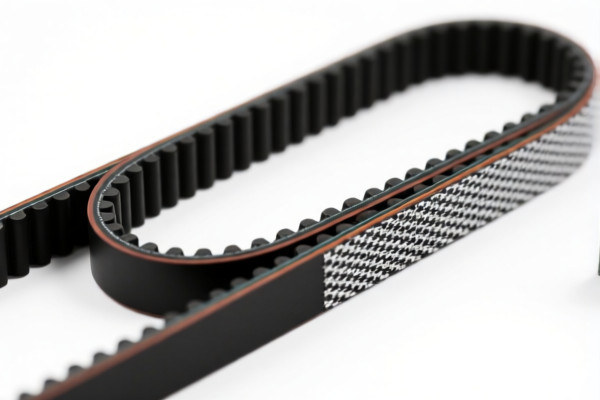
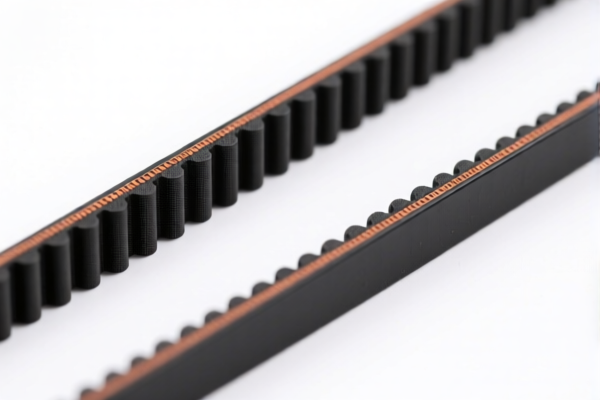
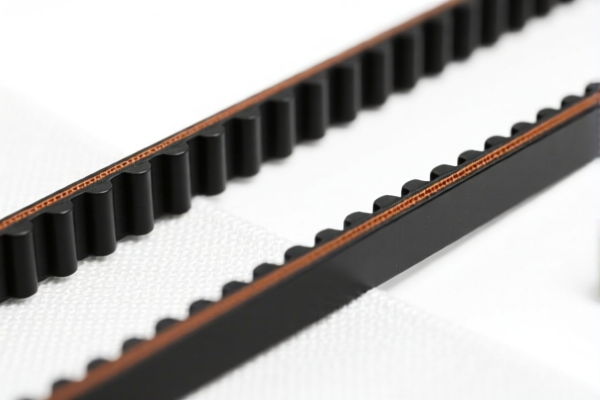
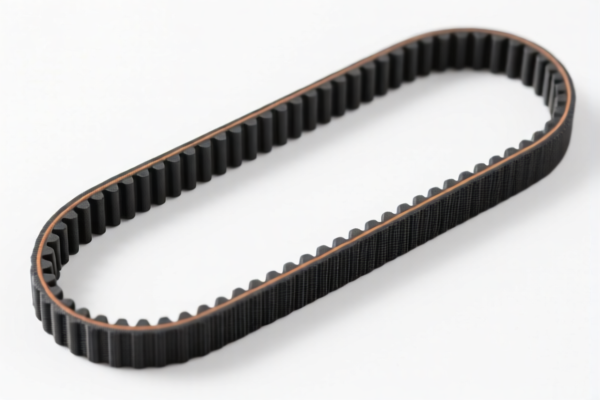
AI Analysis
🎡 Synchronous Timing Belts with Textile Material (Technical Analysis)
🌐 HS Code Reference & Customs Clearance Guide | 2026 Latest Tariff Analysis | Professional Clearance Strategy
📌 I. Product Definition & Classification: What is a "Synchronous Timing Belt"?
A Synchronous Timing Belt (also known as a toothed belt) is a mechanical power transmission element that uses interlocking teeth on the inner surface to engage with pulleys, ensuring zero-slippage synchronization between the driving and driven shafts.
When combined with textile materials, the belt’s structural integrity relies on a tension cord (usually polyester, aramid, or steel) embedded in rubber, where the textile component plays a critical role in weight distribution and flexibility.
⚠️ Key Classification Distinction:
- Endless (Continuous) Belts: Belts with no joints, forming a complete loop.
- Outside Circumference > 60cm but ≤ 150cm: This size range triggers specific subheading requirements in Chapter 40 (Rubber Articles).
- Textile Predominance: If man-made fibers (e.g., polyester) make up more than 50% by weight of the textile component, it falls under specific subheadings.
📦 II. HS Code Classification Details (2026 Latest Tariff Authority)
Based on the provided data, here are the two possible HS Codes for this product, depending on the width of the belt.
| HS Code | Product Description | Application Scenario | Key Classification Criteria |
|---|---|---|---|
4010.35.41.00 |
Endless synchronous belts, O/C 60-150cm, combined with textile, man-made fibers predominate, Width > 20 cm | Industrial large-scale machinery, heavy-duty conveyor systems, wide pulley drives | ✅ Width > 20cm |
4010.35.45.00 |
Endless synchronous belts, O/C 60-150cm, combined with textile, man-made fibers predominate, Other (Width ≤ 20 cm) | Standard automotive engines, office equipment, precision machinery, narrow drives | ✅ Width ≤ 20cm |
🔍 Critical Note:
- The primary differentiator is the WIDTH of the belt.
- If Width > 20 cm: Use4010.35.41.00.
- If Width ≤ 20 cm: Use4010.35.45.00.
- Both codes assume the belt is Endless, has an Outside Circumference between 60 cm and 150 cm, and contains Man-Made Fibers as the predominant textile material.
💰 III. 2026 Latest Tariff Rate Breakdown (Including Surcharges)
✅ Applicable Country: United States (US)
✅ Country of Origin: China (CN)
✅ Effective Date: Current rates apply for imports from China.
🎯 1. 4010.35.41.00 —— Wide Synchronous Belt (Width > 20 cm)
| Item | Details |
|---|---|
| Base Tariff Rate | 8.0% (Ad Valorem) |
| Section 301 Surcharge | +25.0% (China-specific) |
| Total Tax Rate | 33.0% |
| Tax Calculation | CIF Value × 33% |
| De Minimis Exemption | ❌ Not Applicable (This is a formal entry article with significant duty) |
| Legal Basis Path | USITC:4010.35.41.00 → Footnote: Section 301 |
📌 Explanation:
- This is a high-duty item. The base rate of 8% is already moderate, but the 25% additional tariff makes it one of the most expensive rubber goods to import from China.
- Total Cost Impact: For every $10,000 of goods, you pay $3,300 in duties.
🎯 2. 4010.35.45.00 —— Narrow Synchronous Belt (Width ≤ 20 cm)
| Item | Details |
|---|---|
| Base Tariff Rate | 0.0% (Ad Valorem) |
| Section 301 Surcharge | 0.0% (Exempt from current 301 list for this specific subheading) |
| Total Tax Rate | 0.0% |
| Tax Calculation | $0 |
| De Minimis Exemption | N/A (But cost is zero anyway) |
| Legal Basis Path | USITC:4010.35.45.00 → No 301 Footnote |
📌 Explanation:
- This is a duty-free entry (for this specific subheading).
- Crucial Strategy: If your belt can be designed or classified as ≤ 20 cm in width, you save 33% compared to the wider version.
🛠️ IV. Customs Clearance Practical Advice (Avoid Pitfalls)
✅ 1. Documentation Checklist (Mandatory)
| Document | Required? | Description |
|---|---|---|
| ✅ Product Specification Sheet | ✔️ | Must state: Outside Circumference, Width, Material Composition (Rubber + Man-Made Fiber %), Type (Synchronous/Toothed). |
| ✅ Technical Drawing | ✔️ | Clearly mark the WIDTH and Circumference. This is the #1 reason for misclassification. |
| ✅ Commercial Invoice | ✔️ | Must explicitly state: "Endless Synchronous Timing Belt, Rubber with Textile Reinforcement, Width [X] cm, Circumference [Y] cm". |
| ✅ Certificate of Origin | ✔️ | Standard CO for China origin. |
✅ 2. Declaration Tips (Key Rules)
🔥 “Width Defines Duty! Be Precise!”
| Scenario | Correct Declaration | Wrong Declaration | Consequence |
|---|---|---|---|
| Belt Width = 15 cm | 4010.35.45.00 (0% Duty) |
4010.35.41.00 |
Overpaid 33% tax |
| Belt Width = 25 cm | 4010.35.41.00 (33% Duty) |
4010.35.45.00 |
Under-declared → Penalties + Back Taxes |
| Circumference < 60 cm | Different HS Code (Not in this list) | 4010.35.xxxx |
Wrong Code → Delay/Seizure |
| Circumference > 150 cm | Different HS Code (Not in this list) | 4010.35.xxxx |
Wrong Code → Delay/Seizure |
✅ 3. Special Case Handling
| Situation | Advice |
|---|---|
| Belt has Steel Cord + Textile Cover | Still falls under 4010 if rubber/textile is the main body. Ensure textile composition is declared. |
| Custom Width Measurement | Measure the effective working width of the toothed section, not just the overall edge-to-edge width if flanges exist. Consult with a customs broker if ambiguous. |
| Small Packages (De Minimis) | Even if the duty is 0%, ensure the item is not misclassified as "parts of machinery" (which may have different rules). Stick to 4010 for belts. |
🌍 V. Global Market Comparison (2026)
| Country/Region | Recommended HS Code | Duty Rate (China Origin) | Certification Required | Notes |
|---|---|---|---|---|
| 🇺🇸 USA | 4010.35.41.00 / 45.00 |
33% (Wide) / 0% (Narrow) | None specific | High impact of 301 Tariff on wide belts. |
| 🇨🇳 China | 4010.35 |
5-10% (Import Duty) | CCC (if for certain equipment) | No surtax for imports into China. |
| 🇪🇺 EU | 4010.35 |
0-4% | CE (if safety components) | No Section 301 equivalent. |
| 🇨🇦 Canada | 4010.35 |
0% (Under CUSMA if eligible) | None | Check preferential trade agreements. |
📌 Conclusion:
- USA is the most critical market due to the 33% tariff on wide belts.
- Strategy: If possible, modify product design to keep width ≤ 20 cm to achieve 0% duty.
- Documentation: Must clearly specify Circumference (60-150 cm) and Width.
📌 VI. Common Errors & Pitfalls (Lessons Learned)
❌ Error 1: Ignoring the Circumference range.
👉 Consequence: If circumference is <60cm or >150cm, these HS codes are invalid. Use other 4010 subheadings.
❌ Error 2: Misstating the Width.
👉 Consequence: Declaring a 25cm belt as "Other" (45.00) to save 33% tax → Heavy fines and seizure.
❌ Error 3: Not specifying Man-Made Fibers.
👉 Consequence: If natural fibers predominate, the HS code changes entirely. Must declare fiber content % accurately.
✅ Correct Declaration Example:
"Endless Synchronous Timing Belt, Vulcanized Rubber with Polyester Textile Reinforcement, Outside Circumference 100cm, Width 20cm, Man-Made Fibers Predominate. HS Code: 4010.35.45.00"
🎯 VII. Conclusion: Professional Clearance for Lower Costs
🎯 Remember the Golden Rule:
🔹 "Width Under 20cm = Free! Width Over 20cm = 33% Tax!"
🔹 "Circumference 60-150cm is Key – Outside this Range, Use Different Codes!"
🔹 "Declare Man-Made Fibers Clearly to Avoid Reclassification!"
📌 Pro Tip:
If your timing belt width is marginally over 20 cm (e.g., 20.5 cm), consult a customs broker to see if a Section 321 Exemption (for small packages) or Product-Specific Exclusion (if available) applies. However, for large shipments, design optimization to stay under 20 cm is the most reliable cost-saving strategy.
📣 Immediate Action:
📞 Verify Belt Width & Circumference with Engineering Team
🚀 Adjust Declaration to Match Exact Dimensions
💰 Save up to 33% in Duties by choosing the right HS Code!
✨ Professional Classification, Precision Declaration, Maximum Savings!
💼 Every Cent Counts in Global Trade!
Customer Reviews
About HS Code Classification
The Harmonized System (HS) is an internationally standardized nomenclature developed by the World Customs Organization (WCO) to classify traded products. Over 200 countries use the HS system as the basis for customs tariffs, trade statistics, and import/export regulations.
Each HS code follows a hierarchical structure:
- Chapter (2 digits) — Broad category of goods (e.g., Chapter 84: Machinery and Mechanical Appliances)
- Heading (4 digits) — More specific grouping within the chapter
- Subheading (6 digits) — Internationally standardized breakdown, used by all WCO member countries
- National subdivisions (8-10 digits) — Country-specific extensions for further classification, such as US HTSUS 10-digit codes
Correct HS code classification is essential for smooth customs clearance, accurate duty payment, and compliance with trade regulations. Misclassification can lead to customs delays, overpayment of duties, or penalties.
When importing from CN to US, the applicable tariff rates may include:
- Most-Favored-Nation (MFN) rate — The standard duty rate applied to WTO members
- General rate — Applied to countries without trade agreements
- Trade remedy duties — Additional tariffs such as Section 301 (anti-dumping), Section 232 (national security), or countervailing duties
The information provided on this page is for reference purposes only. For official classification, please consult with your local customs authority or a licensed customs broker.