Synthetic Rubber for Electronic Use
CN → US| HS编码 | 关税税率 | 原产国 | 目的国 | 文档 |
|---|---|---|---|---|
| 3901909000 | 41.5% | CN | US | 官方文档 |
| 3901901000 | 35.0% | CN | US | 官方文档 |
| 4008210000 | 35.0% | CN | US | 官方文档 |
| 4008294000 | 37.9% | CN | US | 官方文档 |
| 4002990000 | 35.0% | CN | US | 官方文档 |
商品图片
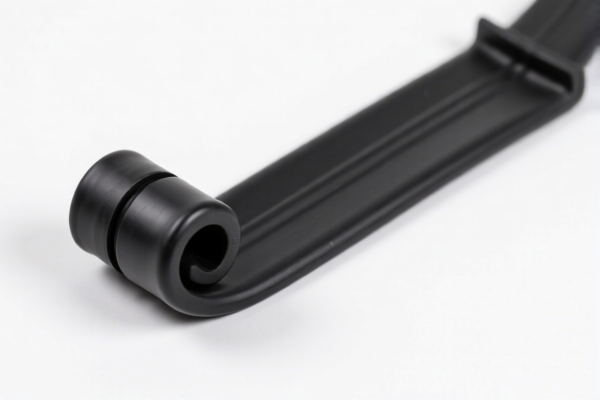
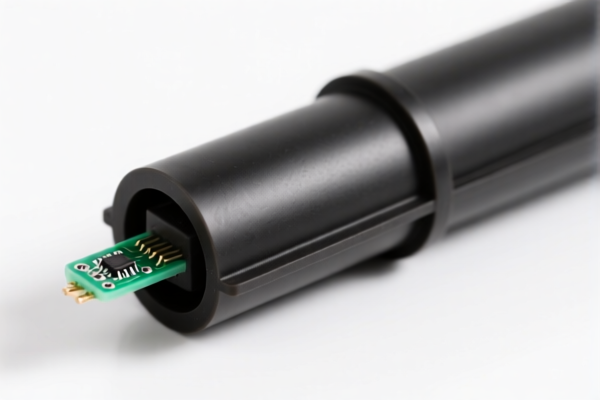
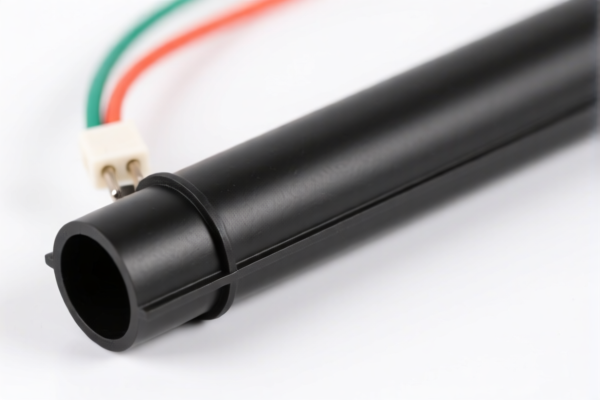
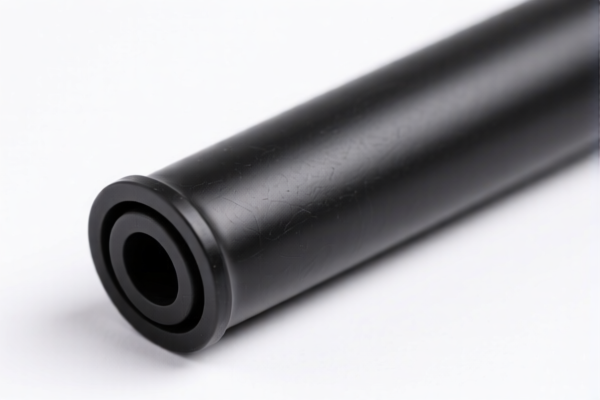
AI分析
🧪 Synthetic Rubber for Electronic Use (导电合成橡胶)
🌐 HS Code Reference & Customs Clearance Guide | 2026 Latest Tariff Analysis | Professional Clearance Strategy
📌 I. Product Definition & Classification: Do You Really Understand "Electronic Synthetic Rubber"?
Synthetic rubber for electronic use, often referred to as Conductive Synthetic Rubber, is a specialized material used in EMI/RFI shielding, gaskets, seals, and conductive components. In international trade, its classification depends heavily on its chemical composition and physical form.
Key Distinction:
- Unvulcanized/Primary Form: If the rubber is in raw pellets, sheets, or blocks before final shaping → Often classified under Chapter 39 (Plastics/Ethylene Polymers) or Chapter 40 (Rubber) depending on specific polymer type.
- Vulcanized/Finished Form: If the rubber is cured, shaped into gaskets, sheets, or strips, and has elastic properties → Typically classified under Chapter 40 (Rubber).
⚠️ Critical Classification Point:
- If the product is described as "Ethylene Polymer" with synthetic rubber characteristics → HS 3901.90.xxxx
- If the product is described as "Vulcanized Rubber" (elastic, shaped) → HS 4002.xxxx or 4008.xxxx
- "Conductive" Property: Does not automatically change the HS code to Chapter 85 (Electrical Machinery). It remains a material unless it is a specific component with electrical function integrated into a machine. For bulk material, it stays in Ch. 39/40.
📦 II. HS Code Classification Details (2026 Latest Tariff Authority Comparison)
| HS Code | Product Description | Application Scenario | Tax Rate (Total) | Key Classification Note |
|---|---|---|---|---|
3901.90.90.00 |
Ethylene polymers in primary forms, other | Raw synthetic rubber pellets, primary shape, high conductivity additive mixed in | 41.5% | "Ethylene polymer" category. High tax due to 25% + 122 clause. |
3901.90.10.00 |
Ethylene polymers in other forms | Semi-finished or specific synthetic rubber forms, elastic properties | 35.0% | "Ethylene polymer" category. Lower base duty (0%). |
4008.21.00.00 |
Vulcanized rubber in plates, sheets, strips, basic form | Cured rubber sheets, basic shapes, no further working | 35.0% | "Vulcanized rubber" category. Basic form, no complex processing. |
4008.29.40.00 |
Vulcanized rubber in plates, sheets, strips, other | Cured rubber sheets/strips, specific profiles, basic morphology | 37.9% | "Vulcanized rubber" category. Slightly higher base duty (2.9%). |
4002.99.00.00 |
Other synthetic rubber (e.g., SBR, NBR) in primary forms | Raw synthetic rubber (non-ethylene based like SBR/NBR), primary form | 35.0% | "Synthetic Rubber" category. Primary form, no vulcanization implied. |
🔍 Key Takeaway:
- Chapter 39 (3901.xxxx): Used if the material is chemically defined as an Ethylene Polymer.
- Chapter 40 (40xx.xxxx): Used if the material is defined as Synthetic Rubber (e.g., SBR, NBR) or Vulcanized Rubber.
- Tax Implication: The "Conductive" aspect does not remove it from these chapters. The tax rate varies based on whether it is ethylene-based (Ch.39) or other synthetic rubber (Ch.40), and its form (primary vs. vulcanized).
💰 III. 2026 Latest Tariff Rate Breakdown (Including Additional Taxes & Policies)
✅ Applicable Country: United States (US)
✅ Country of Origin: China (CN)
✅ Effective Date: 2025 November 10 onwards (including subsequent imports)
🎯 1. 3901.90.90.00 — Ethylene Polymer, Other (High Tax Scenario)
| Item | Details |
|---|---|
| Base Duty | 6.5% (Ad Valorem) |
| Section 301 Additional Duty | +25.0% |
| 122 Clause Duty | +10.0% |
| Total Effective Rate | 41.5% |
| Tax Calculation | CIF Value × 41.5% |
| De Minimis Eligibility | ❌ No (deny_de_minimis) |
| Legal Basis Path | Section 301: 9903.01.24 → 122 Clause: 9903.01.25 → USITC: 3901.90.90.00 |
📌 Explanation:
- This classification applies if the conductive rubber is primarily an ethylene-based polymer.
- The 41.5% rate is the highest among the options, driven by the 25% Section 301 tariff and the additional 10% under the "122 Clause" (often related to specific trade remedies or administrative rulings).
- No de minimis exemption: Small shipments are still taxed.
🎯 2. 3901.90.10.00 — Ethylene Polymer, Other Forms
| Item | Details |
|---|---|
| Base Duty | 0.0% |
| Section 301 Additional Duty | +25.0% |
| 122 Clause Duty | +10.0% |
| Total Effective Rate | 35.0% |
| Tax Calculation | CIF Value × 35.0% |
| De Minimis Eligibility | ❌ No |
| Legal Basis Path | Section 301: 9903.01.24 → 122 Clause: 9903.01.25 → USITC: 3901.90.10.00 |
📌 Explanation:
- Same chapter as above, but potentially different sub-form or processing status.
- Saves 6.5% compared to3901.90.90.00due to 0% base duty.
- Still subject to heavy add-ons (35% total).
🎯 3. 4008.21.00.00 & 4002.99.00.00 — Vulcanized/Other Synthetic Rubber
| Item | Details |
|---|---|
| Base Duty | 0.0% (4008.21.00.00) / 0.0% (4002.99.00.00) |
| Section 301 Additional Duty | +25.0% |
| 122 Clause Duty | +10.0% |
| Total Effective Rate | 35.0% |
| Tax Calculation | CIF Value × 35.0% |
| De Minimis Eligibility | ❌ No |
| Legal Basis Path | Section 301: 9903.01.24 → 122 Clause: 9903.01.25 → USITC: 4008.21.00.00 / 4002.99.00.00 |
📌 Explanation:
- If the product is clearly vulcanized (4008) or other synthetic rubber like SBR/NBR (4002), the base duty is 0%.
- Total tax remains 35% due to the same Section 301 (25%) and 122 Clause (10%) add-ons.
- Note:4008.29.40.00has a 2.9% base duty, resulting in a 37.9% total rate.
🛠️ IV. Customs Clearance Practical Advice (Battle-Tested Pitfall Avoidance)
✅ 1. Required Documentation Checklist (Non-Negotiable)
| Document | Required | Description |
|---|---|---|
| ✅ Material Safety Data Sheet (MSDS) | ✔️ | Must specify chemical composition, confirm if it's ethylene-based or other synthetic rubber. |
| ✅ Technical Data Sheet | ✔️ | Detail conductivity level, hardness, vulcanization status, and form (raw/vulcanized). |
| ✅ Product Photos | ✔️ | Show raw pellets vs. cured sheets/gaskets. Critical for distinguishing Ch. 39 vs. Ch. 40. |
| ✅ Commercial Invoice | ✔️ | Clearly state "Synthetic Rubber for Electronic Use" or "Conductive Rubber Gasket". |
| ✅ Packing List | ✔️ | Detail net/gross weight, volume. |
| ✅ Origin Certificate (if applicable) | ✔️ | To confirm CN origin for Section 301 applicability. |
✅ 2. Declaration Strategy (Key Mnemonics)
🔥 "Form Determines Chapter, Conductivity Does Not Change It!"
| Scenario | Correct HS Code Declaration | Error to Avoid |
|---|---|---|
| Raw Pellets/Blocks (Ethylene-based) | 3901.90.90.00 or 3901.90.10.00 |
❌ Do NOT declare as "Gasket" or "Seal" |
| Raw Pellets/Blocks (SBR/NBR) | 4002.99.00.00 |
❌ Do NOT declare as "Vulcanized Rubber" |
| Cured Sheets/Strips (Basic) | 4008.21.00.00 or 4008.29.40.00 |
❌ Do NOT declare as "Ethylene Polymer" |
| Finished Gaskets/Seals | Still likely 4008.xxxx if basic form |
❌ Do NOT declare as "Electrical Component" (Ch. 85) unless integrated |
📌 Crucial Point:
- If the product is pre-shaped for a specific electronic device (e.g., a custom EMI gasket with adhesive backing), it may still fall under4008if it retains basic rubber characteristics.
- Do not use HS codes from Chapter 85 (e.g.,8536for electrical connectors) unless the rubber is part of a completed electrical assembly with defined function.
✅ 3. Special Cases Handling
| Scenario | Handling Advice |
|---|---|
| High Conductivity Carbon-Black Filled | Ensure MSDS specifies the primary polymer. If ethylene-based, Ch. 39; if SBR/NBR, Ch. 40. |
| Adhesive-Backed Conductive Rubber | Still classified as rubber (4008) if the adhesive is secondary. Do not split the declaration. |
| OEM Custom Gaskets | Provide customer drawings. If the shape is simple (sheet/strip), use 4008. If complex, ensure it doesn't meet "part of a machine" criteria. |
| Mixed Shipments | If shipping both raw rubber and finished gaskets, declare separately to avoid confusion and potential higher taxes on the wrong code. |
🌍 V. Global Market Comparison (2026 Latest)
| Country/Region | Recommended HS Code | Total Tax Rate (CN Origin) | Notes |
|---|---|---|---|
| 🇺🇸 USA | 3901.90.90.00 or 4008.21.00.00 |
35.0% – 41.5% | High Section 301 + 122 Clause impact. |
| 🇨🇳 China | 3901.90.90.00 or 4008.21.00.00 |
Low (Import Duty ~0-6.5%) | No Section 301 for imports into China. |
| 🇪🇺 EU | 4002.99 or 3901.90 |
0% - 6.5% | No additional Section 301 tariffs. |
| 🇯🇵 Japan | 4002.99 or 3901.90 |
0% - 3.2% | Favorable FTAs may apply. |
📌 Conclusion:
- USA is the most expensive market for this product due to political tariffs.
- EU/Japan/China offer significantly lower or zero additional duties.
- Supply chain diversification to Vietnam or Mexico may help avoid Section 301, but origin rules must be strictly followed.
📌 VI. Common Mistakes & Pitfalls (Lessons Learned)
❌ Mistake 1: Declaring conductive rubber as "Electrical Insulator" or "Component" (Ch. 85)
👉 Consequence: Misclassification, delay, and potential penalties. The rubber itself is a material, not a functional electrical device.
❌ Mistake 2: Ignoring the "Ethylene Polymer" vs. "Synthetic Rubber" distinction
👉 Consequence: Wrong HS code selection leads to incorrect tax calculation (35% vs. 41.5%). Customs may reclassify and charge back taxes + interest.
❌ Mistake 3: Assuming "Conductive" = "Electronic Part"
👉 Consequence: Using HS 8536/8538 codes. This is incorrect for bulk material or basic rubber forms. It only applies if it's a specialized electrical component (e.g., a conductive connector housing).
❌ Mistake 4: Not declaring vulcanization status
👉 Consequence: Confusion between Ch. 39 (primary forms) and Ch. 40 (vulcanized). If vulcanized, it must be declared under Ch. 40.
✅ Correct Declaration Example:
"Conductive Synthetic Rubber Sheets, Vulcanized, Ethylene-Based, for EMI Shielding, Model XYZ, Raw Material for Gasket Fabrication"
HS Code:4008.21.00.00(if vulcanized) or3901.90.10.00(if ethylene polymer, primary form).
🎯 VII. Conclusion: Precision Classification Saves Money!
🎯 Remember:
🔹 "Chemical Base Determines Chapter, Form Determines Sub-Heading, Conductivity is Irrelevant for HS!"
🔹 "US Tariffs are High: 35-41.5%. Plan Ahead!"
🔹 "Vulcanized = Ch. 40, Raw Ethylene = Ch. 39. Don't Mix Them!"
📌 Pro Tip:
- For shipments to the US, pre-classify with a customs broker.
- If possible, optimize supply chain to source from non-China origins to avoid Section 301/122 duties.
- Always provide MSDS and Technical Data Sheets to support the "Synthetic Rubber" vs. "Ethylene Polymer" classification.
📣 Act Now:
📞 Consult a Licensed Customs Broker + Provide Product Specs + Get Advance Ruling
🚀 Ensure Smooth Clearance, Avoid Delays, and Protect Margins!
✨ Professional Classification, From the Ground Up!
💼 Every Percent of Tax Saved is Pure Profit!
用户评价
关于 HS 编码归类
协调制度(HS)是由世界海关组织(WCO)制定的国际贸易商品分类标准。全球 200 多个国家采用 HS 系统作为海关关税、贸易统计和进出口监管的基础。
每个 HS 编码遵循以下层级结构:
- 章(2 位)——商品大类(例如:第 84 章:机器和机械设备)
- 品目(4 位)——章内的更具体分类
- 子目(6 位)——国际通用细分,所有 WCO 成员国统一使用
- 本国细分(8-10 位)——各国自行扩展的细分编码,如美国 HTSUS 10 位编码
正确的 HS 编码归类对于顺利通关、准确缴纳关税和遵守贸易法规至关重要。错误归类可能导致海关延误、多缴关税或罚款。
从CN进口到US时,适用的关税税率可能包括:
- 最惠国(MFN)税率——适用于 WTO 成员国的标准关税税率
- 普通税率——适用于无贸易协定国家
- 贸易救济关税——附加关税,如 301 条款(反倾销)、232 条款(国家安全)或反补贴税
本页内容仅供参考。如需正式归类,请咨询当地海关或持牌报关代理。