Synthetic Rubber for Electronic Use
CN → US| HS Code | Tariff Rate | Origin | Destination | Doc |
|---|---|---|---|---|
| 3901909000 | 41.5% | CN | US | Official Doc |
| 3901901000 | 35.0% | CN | US | Official Doc |
| 4008210000 | 35.0% | CN | US | Official Doc |
| 4008294000 | 37.9% | CN | US | Official Doc |
| 4002990000 | 35.0% | CN | US | Official Doc |
Product Images
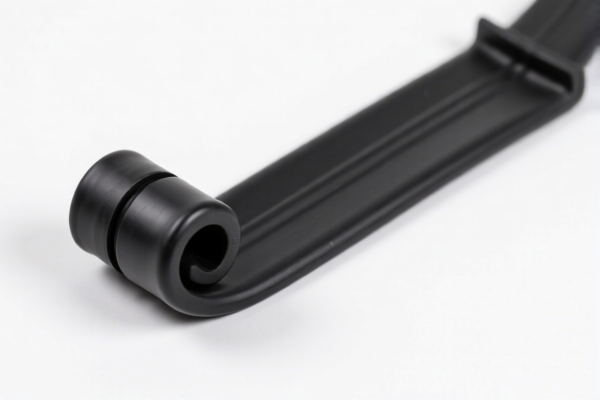
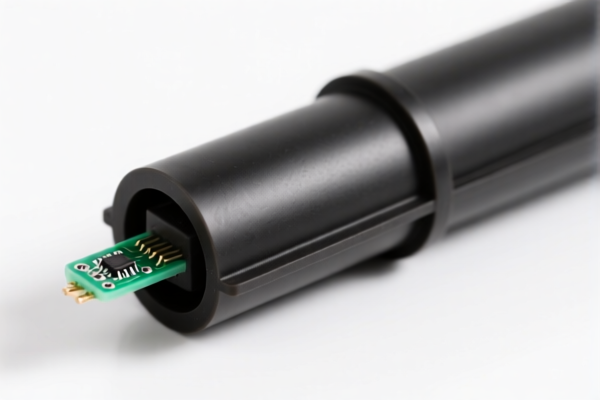
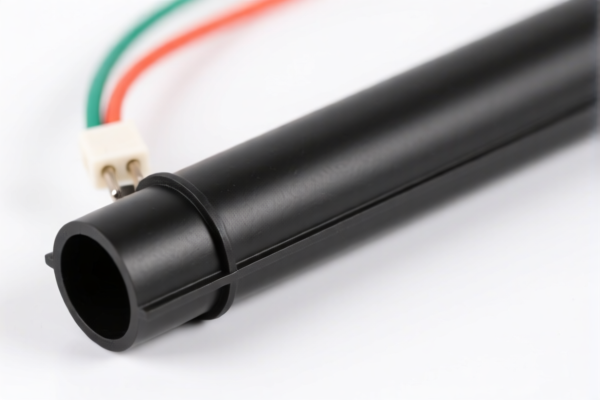
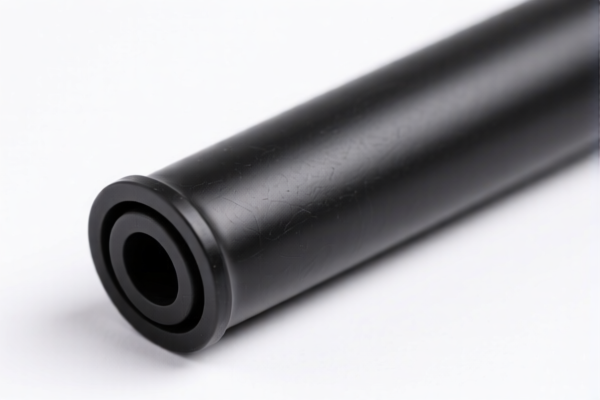
AI Analysis
🧪 Synthetic Rubber for Electronic Use (导电合成橡胶)
🌐 HS Code Reference & Customs Clearance Guide | 2026 Latest Tariff Analysis | Professional Clearance Strategy
📌 I. Product Definition & Classification: Do You Really Understand "Electronic Synthetic Rubber"?
Synthetic rubber for electronic use, often referred to as Conductive Synthetic Rubber, is a specialized material used in EMI/RFI shielding, gaskets, seals, and conductive components. In international trade, its classification depends heavily on its chemical composition and physical form.
Key Distinction:
- Unvulcanized/Primary Form: If the rubber is in raw pellets, sheets, or blocks before final shaping → Often classified under Chapter 39 (Plastics/Ethylene Polymers) or Chapter 40 (Rubber) depending on specific polymer type.
- Vulcanized/Finished Form: If the rubber is cured, shaped into gaskets, sheets, or strips, and has elastic properties → Typically classified under Chapter 40 (Rubber).
⚠️ Critical Classification Point:
- If the product is described as "Ethylene Polymer" with synthetic rubber characteristics → HS 3901.90.xxxx
- If the product is described as "Vulcanized Rubber" (elastic, shaped) → HS 4002.xxxx or 4008.xxxx
- "Conductive" Property: Does not automatically change the HS code to Chapter 85 (Electrical Machinery). It remains a material unless it is a specific component with electrical function integrated into a machine. For bulk material, it stays in Ch. 39/40.
📦 II. HS Code Classification Details (2026 Latest Tariff Authority Comparison)
| HS Code | Product Description | Application Scenario | Tax Rate (Total) | Key Classification Note |
|---|---|---|---|---|
3901.90.90.00 |
Ethylene polymers in primary forms, other | Raw synthetic rubber pellets, primary shape, high conductivity additive mixed in | 41.5% | "Ethylene polymer" category. High tax due to 25% + 122 clause. |
3901.90.10.00 |
Ethylene polymers in other forms | Semi-finished or specific synthetic rubber forms, elastic properties | 35.0% | "Ethylene polymer" category. Lower base duty (0%). |
4008.21.00.00 |
Vulcanized rubber in plates, sheets, strips, basic form | Cured rubber sheets, basic shapes, no further working | 35.0% | "Vulcanized rubber" category. Basic form, no complex processing. |
4008.29.40.00 |
Vulcanized rubber in plates, sheets, strips, other | Cured rubber sheets/strips, specific profiles, basic morphology | 37.9% | "Vulcanized rubber" category. Slightly higher base duty (2.9%). |
4002.99.00.00 |
Other synthetic rubber (e.g., SBR, NBR) in primary forms | Raw synthetic rubber (non-ethylene based like SBR/NBR), primary form | 35.0% | "Synthetic Rubber" category. Primary form, no vulcanization implied. |
🔍 Key Takeaway:
- Chapter 39 (3901.xxxx): Used if the material is chemically defined as an Ethylene Polymer.
- Chapter 40 (40xx.xxxx): Used if the material is defined as Synthetic Rubber (e.g., SBR, NBR) or Vulcanized Rubber.
- Tax Implication: The "Conductive" aspect does not remove it from these chapters. The tax rate varies based on whether it is ethylene-based (Ch.39) or other synthetic rubber (Ch.40), and its form (primary vs. vulcanized).
💰 III. 2026 Latest Tariff Rate Breakdown (Including Additional Taxes & Policies)
✅ Applicable Country: United States (US)
✅ Country of Origin: China (CN)
✅ Effective Date: 2025 November 10 onwards (including subsequent imports)
🎯 1. 3901.90.90.00 — Ethylene Polymer, Other (High Tax Scenario)
| Item | Details |
|---|---|
| Base Duty | 6.5% (Ad Valorem) |
| Section 301 Additional Duty | +25.0% |
| 122 Clause Duty | +10.0% |
| Total Effective Rate | 41.5% |
| Tax Calculation | CIF Value × 41.5% |
| De Minimis Eligibility | ❌ No (deny_de_minimis) |
| Legal Basis Path | Section 301: 9903.01.24 → 122 Clause: 9903.01.25 → USITC: 3901.90.90.00 |
📌 Explanation:
- This classification applies if the conductive rubber is primarily an ethylene-based polymer.
- The 41.5% rate is the highest among the options, driven by the 25% Section 301 tariff and the additional 10% under the "122 Clause" (often related to specific trade remedies or administrative rulings).
- No de minimis exemption: Small shipments are still taxed.
🎯 2. 3901.90.10.00 — Ethylene Polymer, Other Forms
| Item | Details |
|---|---|
| Base Duty | 0.0% |
| Section 301 Additional Duty | +25.0% |
| 122 Clause Duty | +10.0% |
| Total Effective Rate | 35.0% |
| Tax Calculation | CIF Value × 35.0% |
| De Minimis Eligibility | ❌ No |
| Legal Basis Path | Section 301: 9903.01.24 → 122 Clause: 9903.01.25 → USITC: 3901.90.10.00 |
📌 Explanation:
- Same chapter as above, but potentially different sub-form or processing status.
- Saves 6.5% compared to3901.90.90.00due to 0% base duty.
- Still subject to heavy add-ons (35% total).
🎯 3. 4008.21.00.00 & 4002.99.00.00 — Vulcanized/Other Synthetic Rubber
| Item | Details |
|---|---|
| Base Duty | 0.0% (4008.21.00.00) / 0.0% (4002.99.00.00) |
| Section 301 Additional Duty | +25.0% |
| 122 Clause Duty | +10.0% |
| Total Effective Rate | 35.0% |
| Tax Calculation | CIF Value × 35.0% |
| De Minimis Eligibility | ❌ No |
| Legal Basis Path | Section 301: 9903.01.24 → 122 Clause: 9903.01.25 → USITC: 4008.21.00.00 / 4002.99.00.00 |
📌 Explanation:
- If the product is clearly vulcanized (4008) or other synthetic rubber like SBR/NBR (4002), the base duty is 0%.
- Total tax remains 35% due to the same Section 301 (25%) and 122 Clause (10%) add-ons.
- Note:4008.29.40.00has a 2.9% base duty, resulting in a 37.9% total rate.
🛠️ IV. Customs Clearance Practical Advice (Battle-Tested Pitfall Avoidance)
✅ 1. Required Documentation Checklist (Non-Negotiable)
| Document | Required | Description |
|---|---|---|
| ✅ Material Safety Data Sheet (MSDS) | ✔️ | Must specify chemical composition, confirm if it's ethylene-based or other synthetic rubber. |
| ✅ Technical Data Sheet | ✔️ | Detail conductivity level, hardness, vulcanization status, and form (raw/vulcanized). |
| ✅ Product Photos | ✔️ | Show raw pellets vs. cured sheets/gaskets. Critical for distinguishing Ch. 39 vs. Ch. 40. |
| ✅ Commercial Invoice | ✔️ | Clearly state "Synthetic Rubber for Electronic Use" or "Conductive Rubber Gasket". |
| ✅ Packing List | ✔️ | Detail net/gross weight, volume. |
| ✅ Origin Certificate (if applicable) | ✔️ | To confirm CN origin for Section 301 applicability. |
✅ 2. Declaration Strategy (Key Mnemonics)
🔥 "Form Determines Chapter, Conductivity Does Not Change It!"
| Scenario | Correct HS Code Declaration | Error to Avoid |
|---|---|---|
| Raw Pellets/Blocks (Ethylene-based) | 3901.90.90.00 or 3901.90.10.00 |
❌ Do NOT declare as "Gasket" or "Seal" |
| Raw Pellets/Blocks (SBR/NBR) | 4002.99.00.00 |
❌ Do NOT declare as "Vulcanized Rubber" |
| Cured Sheets/Strips (Basic) | 4008.21.00.00 or 4008.29.40.00 |
❌ Do NOT declare as "Ethylene Polymer" |
| Finished Gaskets/Seals | Still likely 4008.xxxx if basic form |
❌ Do NOT declare as "Electrical Component" (Ch. 85) unless integrated |
📌 Crucial Point:
- If the product is pre-shaped for a specific electronic device (e.g., a custom EMI gasket with adhesive backing), it may still fall under4008if it retains basic rubber characteristics.
- Do not use HS codes from Chapter 85 (e.g.,8536for electrical connectors) unless the rubber is part of a completed electrical assembly with defined function.
✅ 3. Special Cases Handling
| Scenario | Handling Advice |
|---|---|
| High Conductivity Carbon-Black Filled | Ensure MSDS specifies the primary polymer. If ethylene-based, Ch. 39; if SBR/NBR, Ch. 40. |
| Adhesive-Backed Conductive Rubber | Still classified as rubber (4008) if the adhesive is secondary. Do not split the declaration. |
| OEM Custom Gaskets | Provide customer drawings. If the shape is simple (sheet/strip), use 4008. If complex, ensure it doesn't meet "part of a machine" criteria. |
| Mixed Shipments | If shipping both raw rubber and finished gaskets, declare separately to avoid confusion and potential higher taxes on the wrong code. |
🌍 V. Global Market Comparison (2026 Latest)
| Country/Region | Recommended HS Code | Total Tax Rate (CN Origin) | Notes |
|---|---|---|---|
| 🇺🇸 USA | 3901.90.90.00 or 4008.21.00.00 |
35.0% – 41.5% | High Section 301 + 122 Clause impact. |
| 🇨🇳 China | 3901.90.90.00 or 4008.21.00.00 |
Low (Import Duty ~0-6.5%) | No Section 301 for imports into China. |
| 🇪🇺 EU | 4002.99 or 3901.90 |
0% - 6.5% | No additional Section 301 tariffs. |
| 🇯🇵 Japan | 4002.99 or 3901.90 |
0% - 3.2% | Favorable FTAs may apply. |
📌 Conclusion:
- USA is the most expensive market for this product due to political tariffs.
- EU/Japan/China offer significantly lower or zero additional duties.
- Supply chain diversification to Vietnam or Mexico may help avoid Section 301, but origin rules must be strictly followed.
📌 VI. Common Mistakes & Pitfalls (Lessons Learned)
❌ Mistake 1: Declaring conductive rubber as "Electrical Insulator" or "Component" (Ch. 85)
👉 Consequence: Misclassification, delay, and potential penalties. The rubber itself is a material, not a functional electrical device.
❌ Mistake 2: Ignoring the "Ethylene Polymer" vs. "Synthetic Rubber" distinction
👉 Consequence: Wrong HS code selection leads to incorrect tax calculation (35% vs. 41.5%). Customs may reclassify and charge back taxes + interest.
❌ Mistake 3: Assuming "Conductive" = "Electronic Part"
👉 Consequence: Using HS 8536/8538 codes. This is incorrect for bulk material or basic rubber forms. It only applies if it's a specialized electrical component (e.g., a conductive connector housing).
❌ Mistake 4: Not declaring vulcanization status
👉 Consequence: Confusion between Ch. 39 (primary forms) and Ch. 40 (vulcanized). If vulcanized, it must be declared under Ch. 40.
✅ Correct Declaration Example:
"Conductive Synthetic Rubber Sheets, Vulcanized, Ethylene-Based, for EMI Shielding, Model XYZ, Raw Material for Gasket Fabrication"
HS Code:4008.21.00.00(if vulcanized) or3901.90.10.00(if ethylene polymer, primary form).
🎯 VII. Conclusion: Precision Classification Saves Money!
🎯 Remember:
🔹 "Chemical Base Determines Chapter, Form Determines Sub-Heading, Conductivity is Irrelevant for HS!"
🔹 "US Tariffs are High: 35-41.5%. Plan Ahead!"
🔹 "Vulcanized = Ch. 40, Raw Ethylene = Ch. 39. Don't Mix Them!"
📌 Pro Tip:
- For shipments to the US, pre-classify with a customs broker.
- If possible, optimize supply chain to source from non-China origins to avoid Section 301/122 duties.
- Always provide MSDS and Technical Data Sheets to support the "Synthetic Rubber" vs. "Ethylene Polymer" classification.
📣 Act Now:
📞 Consult a Licensed Customs Broker + Provide Product Specs + Get Advance Ruling
🚀 Ensure Smooth Clearance, Avoid Delays, and Protect Margins!
✨ Professional Classification, From the Ground Up!
💼 Every Percent of Tax Saved is Pure Profit!
Customer Reviews
About HS Code Classification
The Harmonized System (HS) is an internationally standardized nomenclature developed by the World Customs Organization (WCO) to classify traded products. Over 200 countries use the HS system as the basis for customs tariffs, trade statistics, and import/export regulations.
Each HS code follows a hierarchical structure:
- Chapter (2 digits) — Broad category of goods (e.g., Chapter 84: Machinery and Mechanical Appliances)
- Heading (4 digits) — More specific grouping within the chapter
- Subheading (6 digits) — Internationally standardized breakdown, used by all WCO member countries
- National subdivisions (8-10 digits) — Country-specific extensions for further classification, such as US HTSUS 10-digit codes
Correct HS code classification is essential for smooth customs clearance, accurate duty payment, and compliance with trade regulations. Misclassification can lead to customs delays, overpayment of duties, or penalties.
When importing from CN to US, the applicable tariff rates may include:
- Most-Favored-Nation (MFN) rate — The standard duty rate applied to WTO members
- General rate — Applied to countries without trade agreements
- Trade remedy duties — Additional tariffs such as Section 301 (anti-dumping), Section 232 (national security), or countervailing duties
The information provided on this page is for reference purposes only. For official classification, please consult with your local customs authority or a licensed customs broker.