THE HANDBAG
CN → US| HS编码 | 关税税率 | 原产国 | 目的国 | 文档 |
|---|---|---|---|---|
| 4202224020 | 42.4% | CN | US | 官方文档 |
| 4602192920 | 40.3% | CN | US | 官方文档 |
| 4602112100 | 41.2% | CN | US | 官方文档 |
| 4202228980 | 52.6% | CN | US | 官方文档 |
| 6305200000 | 23.7% | CN | US | 官方文档 |
商品图片

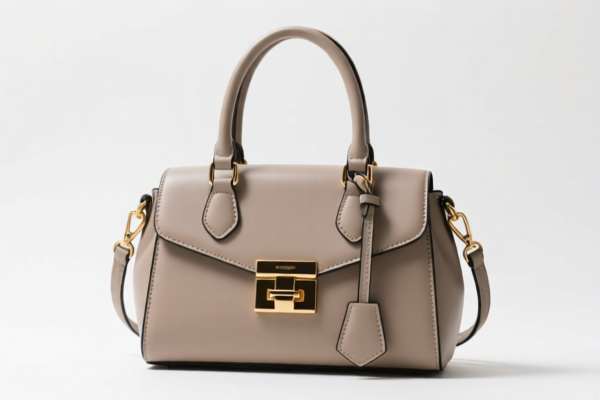
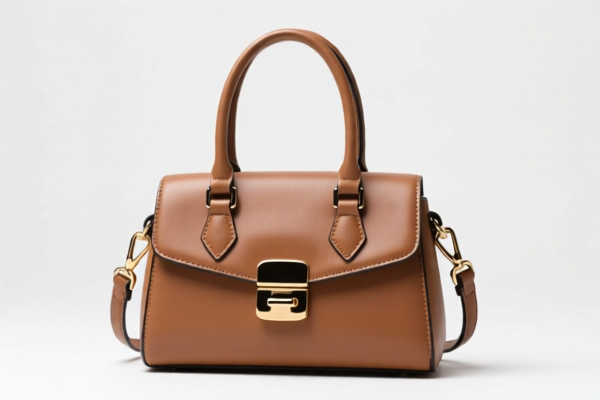
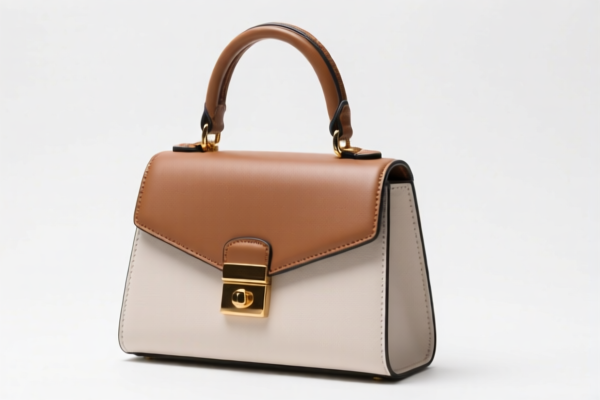
AI分析
👜 The Handbag: The Ultimate Guide to HS Code Classification & US Customs Clearance (2026 Edition)
🌐 HS Code Reference & Customs Clearance Guide | 2026 Latest Tariff Analysis | Strategic Import Strategy
📌 Part I: Product Definition & Classification – Do You Really Understand "Handbags"?
A handbag is not just a container; it is a fashion statement and a functional accessory. In international trade, the classification hinges strictly on two factors: Material Composition and Intended Use/Form. Misclassification here can lead to massive tariff discrepancies due to the complex web of US import duties, Section 301 tariffs, and Section 122 tariffs applied to Chinese goods.
⚠️ Key Distinction Points:
- Textile/Cotton Base: If the bag is primarily made of textile materials or cotton, it falls under Chapter 42 or 63.
- Plant Material/Woven: If crafted from bamboo, rattan, or other woven plant materials, it falls under Chapter 46.
- Form Factor: Must be recognizable as a "handbag" or similar carrying article.
📦 Part II: HS Code Classification Details (2026 Latest Tariff Authority Comparison)
Below are the precise HS Codes matched to specific handbag materials as per the provided data. Each code carries a distinct tax burden.
| HS Code | Material Description | Summary | Total Tax Rate (CN Origin) |
|---|---|---|---|
4202.22.40.20 |
Textile Materials / Cotton | Handbags made of textile materials or cotton. | 42.4% |
4602.19.29.20 |
Plant Material Woven | Handbags made of woven plant material products (general). | 40.3% |
4602.11.21.00 |
Bamboo / Rattan Woven | Handbags specifically woven from bamboo, rattan, or similar plant materials. | 41.2% |
4202.22.89.80 |
Other Textiles / Unclassified | Handbags made of other textile materials or unspecified materials. | 52.6% |
6305.20.00.00 |
Cotton Bags | Sacks and bags, specifically made of cotton (not strictly "fashion handbags" but related). | 23.7% |
🔍 Critical Insight:
- Textile vs. Woven: Bags made of woven plant fibers (Bamboo/Rattan) are treated differently than standard textile bags.
- The "Cotton Bag" Trap:6305.20.00.00is significantly cheaper (23.7%) but applies to "Sacks and bags" of cotton, which may not qualify as "fashion handbags" depending on design. If it looks like a luxury handbag but is cotton, customs may reject6305and force4202, jumping the tax to 42.4%+.
- Highest Risk Code:4202.22.89.80carries the highest burden at 52.6% due to a higher base tariff (17.6%).
💰 Part III: 2026 Latest Tariff Rate Breakdown (Including Surcharges & Policy Add-ons)
✅ Applicable Country: United States (US)
✅ Origin: China (CN)
✅ Effective Time: Current tariffs apply (Section 301 & Section 122)
🎯 1. 4202.22.40.20 – Handbags (Textile/Cotton)
| Item | Detail |
|---|---|
| Base Tariff | 7.4% (MFN Rate) |
| Section 301 Surcharge | +25.0% (Trade War Tariff) |
| Section 122 Tariff | +10.0% (Specific Chinese Import Provision) |
| Total Effective Rate | 42.4% |
| Tax Calculation | CIF Value × 42.4% |
| De Minimis Exemption | ❌ Not Eligible (Section 301/122 tariffs generally block de minimis for these categories) |
| Legal Basis | HTSUS 4202.22.40.20 + Footnotes for Sec 301 & Sec 122 |
📌 Explanation:
- The 25% is the standard Section 301 tariff on many textile/consumer goods from China.
- The 10% is an additional levy under Section 122 (31 U.S.C. § 2101 et seq.), targeting specific imports.
- Base 7.4% is the standard Most Favored Nation (MFN) duty for handbags of other materials (including textile components).
🎯 2. 4602.19.29.20 – Handbags (Woven Plant Materials - General)
| Item | Detail |
|---|---|
| Base Tariff | 5.3% |
| Section 301 Surcharge | +25.0% |
| Section 122 Tariff | +10.0% |
| Total Effective Rate | 40.3% |
| Tax Calculation | CIF Value × 40.3% |
| De Minimis Exemption | ❌ Not Eligible |
| Legal Basis | HTSUS 4602.19.29.20 + Footnotes |
📌 Note:
- Woven plant materials often have lower base tariffs (5.3%) compared to standard textiles (7.4% or higher).
- However, the 35% surcharge (25% + 10%) remains constant, making the total still very high.
🎯 3. 4602.11.21.00 – Handbags (Bamboo/Rattan Specific)
| Item | Detail |
|---|---|
| Base Tariff | 6.2% |
| Section 301 Surcharge | +25.0% |
| Section 122 Tariff | +10.0% |
| Total Effective Rate | 41.2% |
| Tax Calculation | CIF Value × 41.2% |
| De Minimis Exemption | ❌ Not Eligible |
| Legal Basis | HTSUS 4602.11.21.00 + Footnotes |
📌 Note:
- Specific bamboo/rattan items (4602.11) have a slightly higher base (6.2%) than general woven plants (4602.19at 5.3%), but the total tax is competitive.
🎯 4. 4202.22.89.80 – Handbags (Other Textiles/Unspecified)
| Item | Detail |
|---|---|
| Base Tariff | 17.6% |
| Section 301 Surcharge | +25.0% |
| Section 122 Tariff | +10.0% |
| Total Effective Rate | 52.6% |
| Tax Calculation | CIF Value × 52.6% |
| De Minimis Exemption | ❌ Not Eligible |
| Legal Basis | HTSUS 4202.22.89.80 + Footnotes |
📌 Warning:
- This is the most expensive classification in the dataset.
- It applies if the material is textile but doesn't fit the specific "Cotton" (4202.22.40.20) or other specific sub-headings.
- 17.6% base is nearly 3x higher than the cotton textile base. Avoid this code if your bag is clearly cotton or woven plant material.
🎯 5. 6305.20.00.00 – Cotton Bags (Sacks/Storage)
| Item | Detail |
|---|---|
| Base Tariff | 6.2% |
| Section 301 Surcharge | +7.5% (Reduced Sec 301 Rate) |
| Section 122 Tariff | +10.0% |
| Total Effective Rate | 23.7% |
| Tax Calculation | CIF Value × 23.7% |
| De Minimis Exemption | ❌ Check Specific Exclusions |
| Legal Basis | HTSUS 6305.20.00.00 |
📌 Crucial Distinction:
- This code has a significantly lower Section 301 rate (7.5%) compared to the standard 25%.
- BUT: It is for "Sacks and bags for the packing of goods," NOT fashion handbags.
- Risk: If you import a fashion tote labeled "Handbag" but classify as6305, Customs may reclassify it to4202(42.4%) + penalties. Only use if the item is purely utilitarian (e.g., bulk packaging, market produce bags).
🛠️ Part IV: Customs Clearance Practical Advice (Battle-Tested Pitfall Guide)
✅ 1. Documentation Checklist (Non-Negotiable)
| Document | Mandatory? | Purpose |
|---|---|---|
| ✅ Product Specification Sheet | ✔️ | Must detail material composition (e.g., "100% Cotton Woven" vs. "Polyester Blend"). |
| ✅ Detailed Photos (Inside/Outside) | ✔️ | To prove "Handbag" form factor vs. "Sack" form factor. |
| ✅ Commercial Invoice | ✔️ | Must clearly state: "Handbag, Made of [Material], Country of Origin: China." |
| ✅ Packing List | ✔️ | To verify quantity and weight. |
| ✅ Material Test Report | ✔️ | If challenged on "Plant Material" vs. "Synthetic Weave," a lab report is vital. |
✅ 2. Declaration Strategy (Key Mnemonics)
🔥 “Material First, Form Second, Avoid ‘Other’ at All Cost!”
| Scenario | Correct Classification | Incorrect Classification | Consequence |
|---|---|---|---|
| Cotton Tote | 4202.22.40.20 (42.4%) |
6305.20.00.00 (23.7%) |
Penalty: If deemed a "Handbag," not a "Sack," you owe ~19% more + fines. |
| Bamboo Woven Bag | 4602.11.21.00 (41.2%) |
4202.22.89.80 (52.6%) |
Overpayment: You lose ~11% in unnecessary tariffs. |
| Mixed Fabric Bag | 4202.22.40.20 (if Textile >50%) |
4202.22.89.80 (52.6%) |
Risk: "Other" codes are audit traps. Prove primary material. |
| Generic "Other" Bag | 4202.22.89.80 (52.6%) |
N/A | High Cost: Only use if no other material category fits. |
✅ 3. Special Circumstances Handling
| Situation | Handling Advice |
|---|---|
| Mixed Materials (e.g., Leather Trim + Cotton Body) | Generally follows the principal material (Cotton → 4202.22.40.20). Do NOT split lines unless distinct articles. |
| "Handbag" vs. "Shoulder Bag" vs. "Clutch" | All fall under 4202.22 if textile. Ensure the description says "Handbag" or "Carrying Article." |
| Section 122 Tariff Exclusions | Check if your specific supplier/product type has any temporary exclusions for Sec 122 (10%). Most fashion handbags do not have exclusions. |
| De Minimis (Section 321) | DO NOT ATTEMPT to ship handbags from China under $800 de minimis if they fall under Sec 301/122. CBP actively blocks these. You must pay the ~40-52% duty. |
🌍 Part V: Global Market Comparison (2026 Snapshot)
| Country | Recommended HS Code | Approx. Total Duty (China Origin) | Notes |
|---|---|---|---|
| 🇺🇸 USA | 4202.22.40.20 |
42.4% | High Sec 301 (25%) + Sec 122 (10%). |
| 🇪🇺 EU | 4202.22.40 |
~12-16% | No Sec 301/122. Standard EU duty for handbags. |
| 🇨🇳 China | 4202.22.40 |
~7-10% | Lower import duty. No punitive surcharges. |
| 🇬🇧 UK | 4202.22.40 |
~12% | Post-Brexit standard rates. |
📌 Conclusion:
- The US market is uniquely punitive for Chinese handbags due to the combination of MFN + Sec 301 + Sec 122.
- Margin Compression: A 42.4% duty means your landed cost nearly doubles. Pricing strategies must account for this.
📌 Part VI: Common Mistakes & Pitfalls (Blood-Ledging Lessons)
❌ Mistake 1: Classifying a Cotton Handbag as 6305.20.00.00 to save tax.
👉 Consequence: CBP reclassifies to 4202. You pay the difference (42.4% - 23.7% = 18.7%) + Interest + Penalties.
❌ Mistake 2: Using "Bag" instead of "Handbag" on the Invoice.
👉 Consequence: Ambiguity leads to holds. Customs asks for clarification, delaying release by 7-14 days.
❌ Mistake 3: Ignoring Section 122 (10%).
👉 Consequence: Underpayment. Many importers forget the 10% Sec 122 layer, thinking only Sec 301 (25%) applies. Total is actually 35%+base.
❌ Mistake 4: Assuming "Woven" means "Plastic."
👉 Consequence: If "Woven" is actually synthetic plastic fibers, it might fall under Chapter 39, not Chapter 46. Misclassification leads to different duty rates and potential fraud allegations.
✅ Correct Practice:
"Women's Handbag, 100% Cotton Woven, with Zipper Closure, Model XYZ, Made in China."
HS Code:4202.22.40.20
🎯 Part VII: Conclusion – Professional Classification Saves Money!
🎯 Remember the Mantra:
🔹 "Cotton Handbag = 4202 (42.4%),
🔹 "Bamboo Woven = 4602 (41.2%),
🔹 "Other Textile = 4202 (52.6%)!
🔹 "Cotton Sack = 6305 (23.7%) – But Are You Sure It's a Sack?"
📌 Pro Tip:
For high-volume imports, consider Advance Rulings from CBP. Pay a small fee to get a binding determination on your specific handbag design. It prevents future audits and penalties.
📣 Immediate Action:
📞 Consult a Customs Broker with specific HS code expertise.
🚀 Audit Your Supplier's Material Declarations.
💼 Factor 42.4% into your FOB/CIF Pricing. Your profit margin depends on it!
✨ Precision in Classification, Profit in Clearance!
💼 Every percent saved is pure profit!
用户评价
关于 HS 编码归类
协调制度(HS)是由世界海关组织(WCO)制定的国际贸易商品分类标准。全球 200 多个国家采用 HS 系统作为海关关税、贸易统计和进出口监管的基础。
每个 HS 编码遵循以下层级结构:
- 章(2 位)——商品大类(例如:第 84 章:机器和机械设备)
- 品目(4 位)——章内的更具体分类
- 子目(6 位)——国际通用细分,所有 WCO 成员国统一使用
- 本国细分(8-10 位)——各国自行扩展的细分编码,如美国 HTSUS 10 位编码
正确的 HS 编码归类对于顺利通关、准确缴纳关税和遵守贸易法规至关重要。错误归类可能导致海关延误、多缴关税或罚款。
从CN进口到US时,适用的关税税率可能包括:
- 最惠国(MFN)税率——适用于 WTO 成员国的标准关税税率
- 普通税率——适用于无贸易协定国家
- 贸易救济关税——附加关税,如 301 条款(反倾销)、232 条款(国家安全)或反补贴税
本页内容仅供参考。如需正式归类,请咨询当地海关或持牌报关代理。