Tableware Set
CN → US| HS编码 | 关税税率 | 原产国 | 目的国 | 文档 |
|---|---|---|---|---|
| 8215200000 | 0.0% | CN | US | 官方文档 |
| 6911103710 | 25.5% | CN | US | 官方文档 |
| 4419901100 | 15.3% | CN | US | 官方文档 |
| 4419909100 | 20.7% | CN | US | 官方文档 |
| 8215100000 | 0.0% | CN | US | 官方文档 |
| 6911103510 | 43.5% | CN | US | 官方文档 |
商品图片
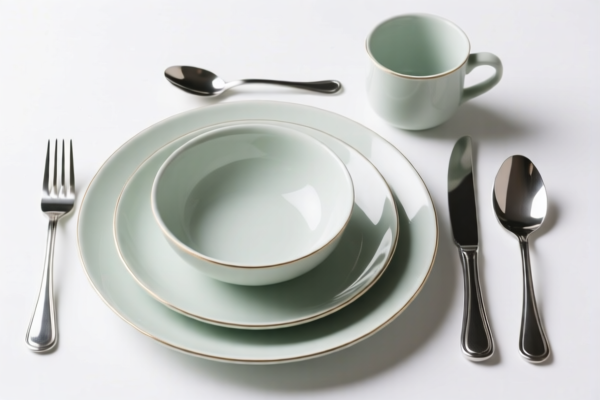
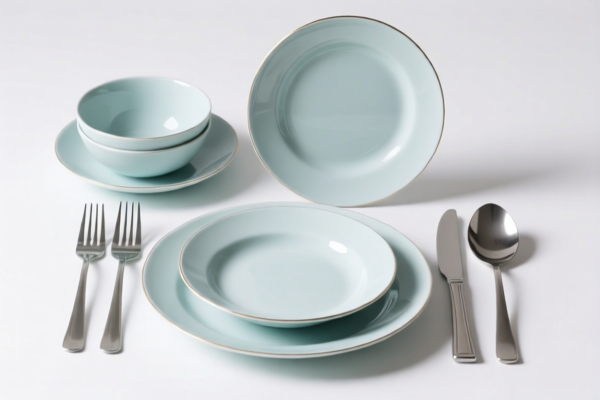
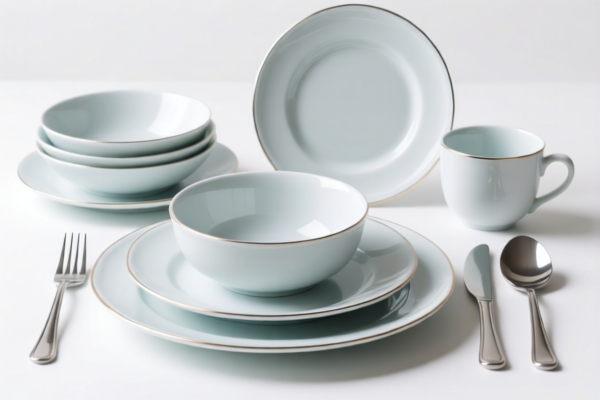
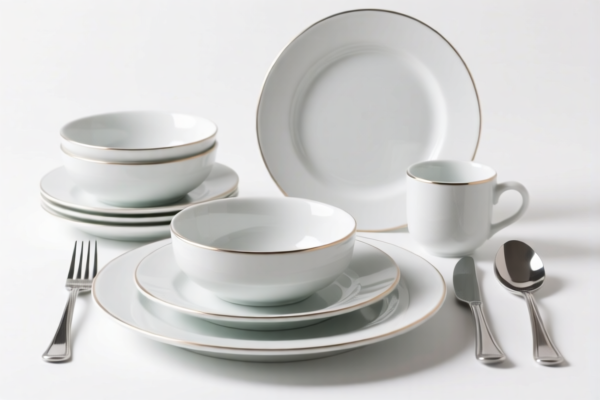
AI分析
🍽️ Tableware Set: Ultimate HS Code Classification & Customs Clearance Guide (2026 Update)
🌐 HS Code Reference & Customs Strategy | 2026 Latest Tariff Analysis | Professional Clearance Guide
📌 I. Product Definition & Classification: What Exactly is a "Tableware Set"?
A Tableware Set in international trade refers to a collection of utensils, plates, bowls, or cups designed for serving food and beverages. The critical factor in classification is material and form (whether it constitutes a "set").
In global trade, these sets are primarily categorized by three materials: 1. Ceramic/Porcelain (e.g., dinner sets, tea sets) 2. Metal/Vanadium Steel (e.g., cutlery sets with forks, knives, spoons) 3. Wood/Bamboo (e.g., wooden serving boards, chopstick sets)
⚠️ Key Distinction:
- If the set contains items of different materials (e.g., ceramic plate + wooden handle), it is usually classified under the material that gives the set its essential character.
- If the set contains items of the same material (e.g., 10 ceramic plates + 10 bowls), it falls under the specific heading for that material's tableware.
📦 II. HS Code Classification Details (2026 Latest Tariff Authority Cross-Reference)
Based on the provided data, here are the specific HS Codes applicable to Tableware Sets, categorized by material type.
| HS Code | Product Description | Material Inference | Suitability Reason |
|---|---|---|---|
6911.10.37.10 |
Ceramic Tableware Set | Ceramic | Matches "Tableware Set" usage; infers ceramic material; conforms to "suitable for being supplied as sets" feature. |
6911.10.35.10 |
Ceramic Tableware & Set Form | Ceramic | Matches "Tableware" usage and "Set" form; infers ceramic material; conforms to "suitable for being supplied as sets" feature. |
8215.20.00.00 |
Metal Cutlery Set | Metal / Base Metal | Matches "Tableware Set" usage; infers metal/base metal material; conforms to "Combined Set" definition. |
8215.10.00.00 |
Metal Utensil Set (Base) | Metal / Base Metal | Matches "Set" form; infers inclusion of spoons/forks; no precious metal plating conflict; serves as a fallback match. |
4419.90.11.00 |
Wooden Tableware & Kitchen Utensils | Wood | Matches "Wooden Tableware & Kitchen Utensils" usage; inferred based on common sense of sets containing various vessels. |
4419.90.91.00 |
Wooden Tableware (General) | Wood | Matches "Tableware" usage; inferred material does not conflict with wooden categories; serves as a fallback category. |
🔍 Key Insight:
- Ceramic Sets (6911) and Metal Sets (8215) have distinct classification paths based on their specific composition.
- Wooden Sets (4419) are often classified under "other wooden tableware," with variations depending on whether they are specific kitchen utensils or general tableware.
💰 III. 2026 Latest Tariff Rate Breakdown (Including Surtaxes & Policy Add-ons)
✅ Applicable Country: United States (US)
✅ Origin: China (CN) (Implied by the presence of Section 301 and IEEPA tariffs in the data)
✅ Effective Time: 2025/2026 Current Rates
🎯 1. 6911.10.37.10 & 6911.10.35.10 —— Ceramic Tableware Sets
| Item | Detail |
|---|---|
| Base Tariff | 8.0% (for .37.10) / 26.0% (for .35.10) |
| Section 301 Surtax | +7.5% (Additional Tax) |
| Section 122 Tariff | +10% (Specific Tariff Clause) |
| Total Tariff Rate | 25.5% (for .37.10) 43.5% (for .35.10) |
| Tax Calculation | CIF Value × Total Rate |
| De Minimis Exemption | ❌ Not Applicable (High tariff rate typically excludes low-value shipments from informal entry benefits) |
| Legal Basis | Based on provided summary data: "Base Tariff + Additional Tax + Section 122" |
📌 Explanation:
- .37.10: Lower base rate (8%) results in a total of 25.5%.
- .35.10: Higher base rate (26%) results in a total of 43.5%.
- Both are subject to 7.5% additional tax and 10% Section 122 tariff.
🎯 2. 8215.20.00.00 & 8215.10.00.00 —— Metal/Cutlery Sets
| Item | Detail |
|---|---|
| Base Tariff | "The rate of duty applicable to that article in the set subject t" |
| Section 301 Surtax | +35.0% (for .20.00) / +7.5% (for .10.00) |
| Section 122 Tariff | +10% |
| Total Tariff Rate | Variable (High): Base Rate + 45% (for .20.00) Variable (Medium): Base Rate + 17.5% (for .10.00) |
| Tax Calculation | CIF Value × (Base Rate + Surtax + 122) |
| De Minimis Exemption | ❌ Not Applicable |
| Legal Basis | Based on provided summary data |
📌 Explanation:
- .20.00: Carries a massive 35% additional tax + 10% Section 122. This is a very high-cost category for metal cutlery.
- .10.00: Lower additional tax of 7.5% + 10% Section 122.
- Note: The base rate for metal cutlery is often low (e.g., 5.7%), but the surtaxes dominate the cost.
🎯 3. 4419.90.11.00 & 4419.90.91.00 —— Wooden Tableware Sets
| Item | Detail |
|---|---|
| Base Tariff | 5.3% (for .11.00) / 3.2% (for .91.00) |
| Section 301 Surtax | 0.0% (for .11.00) / 7.5% (for .91.00) |
| Section 122 Tariff | +10% |
| Total Tariff Rate | 15.3% (for .11.00) 20.7% (for .91.00) |
| Tax Calculation | CIF Value × Total Rate |
| De Minimis Exemption | ❌ Not Applicable |
| Legal Basis | Based on provided summary data |
📌 Explanation:
- .11.00 (Kitchen Utensils): Lowest total tax at 15.3% because it has 0% additional surtax.
- .91.00 (General Tableware): Higher total tax at 20.7% due to a 7.5% additional surtax.
🛠️ IV. Customs Clearance Practical Advice (Pitfall Avoidance Guide)
✅ 1. Preparation Checklist (Essential Documents)
| Document | Required | Note |
|---|---|---|
| ✅ Product Specification Sheet | ✔️ | Must clearly state Material (Ceramic, Metal, Wood), Contents of the set, and Usage. |
| ✅ Photos of Set | ✔️ | Show all items together to prove it is a "Set" (not sold separately). |
| ✅ Commercial Invoice | ✔️ | Must describe the item accurately (e.g., "12-Piece Ceramic Dinner Set" not just "Plates"). |
| ✅ Packing List | ✔️ | List individual items in the set to verify composition. |
| ✅ Material Declaration | ✔️ | Explicitly state if metal is stainless steel, wood is bamboo/oak, etc. |
✅ 2. Declaration Tips (Critical Mnemonics)
🔥 "Material First, Set Second, Tariff Depends on Combo!"
| Scenario | Correct Declaration | Wrong Approach |
|---|---|---|
| Ceramic Set | Declare as 6911.10.37.10 or .35.10 based on specific form. |
Declaring as generic "Ceramic Plates" → Risk of misclassification. |
| Metal Cutlery Set | Declare as 8215.20.00.00 if it includes knives/forks. |
Declaring as separate "Spoons" and "Forks" → Higher combined tax if not recognized as a set. |
| Wooden Set | Declare as 4419.90.11.00 if it's kitchen utensils (lower tax). |
Declaring as .91.00 (General) → Unnecessarily higher tax (20.7% vs 15.3%). |
| Mixed Material Set | Declare based on Essential Character (usually the dominant material). | Attempting to split the set → Customs may reject and reclassify. |
✅ 3. Special Cases Handling
| Case | Handling Advice |
|---|---|
| Plated Metal Tableware | If gold/silver plated, it may fall under Chapter 71. If base metal plated, it falls under 8215. Ensure accurate material description. |
| Gift Sets with Non-Tableware Items | If the set includes a napkin ring or placemat, ensure the tableware gives the "essential character." Otherwise, it may be classified differently. |
| Sample Shipments | Even for samples, declare properly. High tariffs (25-45%) apply regardless of value if not using a duty-free exemption program. |
| Origin Marking | Ensure products are marked "Made in China" if applicable, as this triggers the Section 301 and IEEPA tariffs. |
🌍 V. Global Market Comparison (2026 Latest)
| Market | Recommended HS Code Range | Est. Total Tax (China Origin) | Key Certification |
|---|---|---|---|
| 🇺🇸 USA | 6911.10, 8215.10/20, 4419.90 |
15.3% – 43.5%+ (High due to surtaxes) | FDA (Food Contact) |
| 🇨🇳 China | Same HS Codes | 5% – 10% (Low, no surtaxes) | CCC (if applicable) |
| 🇪🇺 EU | 6912.00, 8215.99, 4419.99 |
0% – 4% (Mostly free trade) | LFGB, PFAS Compliance |
| 🇬🇧 UK | Same as EU | 0% – 4% | FSA Standards |
| 🇦🇺 Australia | Similar to US/EU | 5% – 10% | Food Standards Code |
📌 Conclusion:
- USA imposes heavy tariffs on Chinese tableware, especially ceramic and metal sets.
- EU/UK are low-tariff markets but have strict food safety standards (FDA/LFGB equivalents).
- Wooden sets are the most tax-efficient to ship to the US due to lower surtax rates.
📌 VI. Common Errors & Pitfall Guide (Lessons Learned)
❌ Error 1: Misclassifying a Metal Cutlery Set as separate utensils.
👉 Consequence: May lose "Set" classification benefits or face higher individual taxes.
❌ Error 2: Declaring Ceramic Set as 6911.10.35.10 when it fits .37.10.
👉 Consequence: Paying 43.5% tax instead of 25.5%. Save 18%!
❌ Error 3: Ignoring Section 122 Tariff.
👉 Consequence: Under-declaring tax by 10%. Leads to penalties and back taxes.
❌ Error 4: Not marking "Made in China" properly.
👉 Consequence: Customs may assign a higher default duty rate or seize goods.
✅ Correct Practice:
"12-Piece Ceramic Dinner Set, White, Glazed, Includes Plates, Bowls, Mugs. HS: 6911.10.37.10. Country of Origin: China."
🎯 VII. Conclusion: Smart Classification Saves Money!
🎯 Key Takeaway:
🔹 Wooden sets are the cheapest to import to the US (15.3%).
🔹 Ceramic sets vary wildly (25.5% vs 43.5%) based on specific sub-heading. Verify your sub-code!
🔹 Metal sets are expensive (up to 45%+). Consider sourcing from non-China origins if possible.
📌 Pro Tip:
If your tableware set is originally from Vietnam, Thailand, or India, you may qualify for IEEPA/Section 301 exemptions or lower tariffs.
Recommendation: Apply for a Pre-Ruling (Advance Ruling) with US Customs to confirm the exact HS Code and tax rate before shipping.
📣 Immediate Action:
📞 Consult a licensed customs broker.
📸 Provide clear photos of the complete set and material composition.
🚀 Accurate classification ensures smooth clearance and maximizes profit!
✨ Professional Clearance Starts with Precise Classification!
💼 Every percentage point of tax reduction is pure profit!
用户评价
关于 HS 编码归类
协调制度(HS)是由世界海关组织(WCO)制定的国际贸易商品分类标准。全球 200 多个国家采用 HS 系统作为海关关税、贸易统计和进出口监管的基础。
每个 HS 编码遵循以下层级结构:
- 章(2 位)——商品大类(例如:第 84 章:机器和机械设备)
- 品目(4 位)——章内的更具体分类
- 子目(6 位)——国际通用细分,所有 WCO 成员国统一使用
- 本国细分(8-10 位)——各国自行扩展的细分编码,如美国 HTSUS 10 位编码
正确的 HS 编码归类对于顺利通关、准确缴纳关税和遵守贸易法规至关重要。错误归类可能导致海关延误、多缴关税或罚款。
从CN进口到US时,适用的关税税率可能包括:
- 最惠国(MFN)税率——适用于 WTO 成员国的标准关税税率
- 普通税率——适用于无贸易协定国家
- 贸易救济关税——附加关税,如 301 条款(反倾销)、232 条款(国家安全)或反补贴税
本页内容仅供参考。如需正式归类,请咨询当地海关或持牌报关代理。