Tableware Set
CN → US| HS Code | Tariff Rate | Origin | Destination | Doc |
|---|---|---|---|---|
| 8215200000 | 0.0% | CN | US | Official Doc |
| 6911103710 | 25.5% | CN | US | Official Doc |
| 4419901100 | 15.3% | CN | US | Official Doc |
| 4419909100 | 20.7% | CN | US | Official Doc |
| 8215100000 | 0.0% | CN | US | Official Doc |
| 6911103510 | 43.5% | CN | US | Official Doc |
Product Images
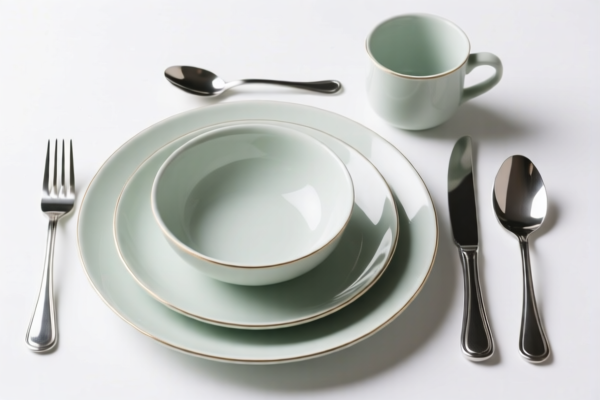
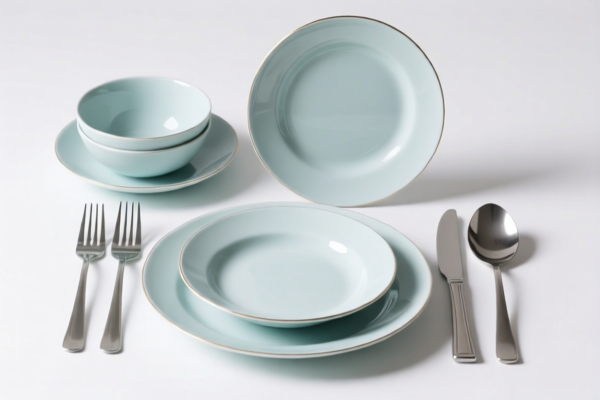
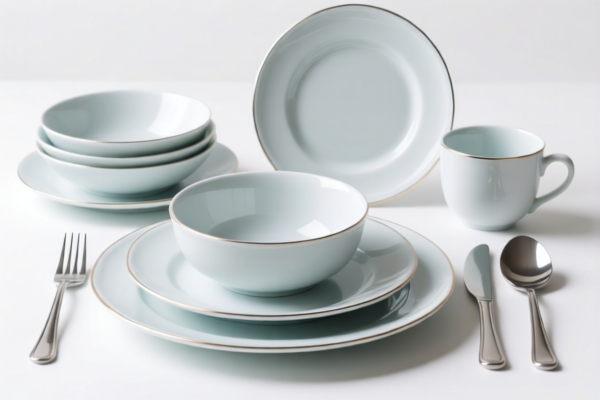
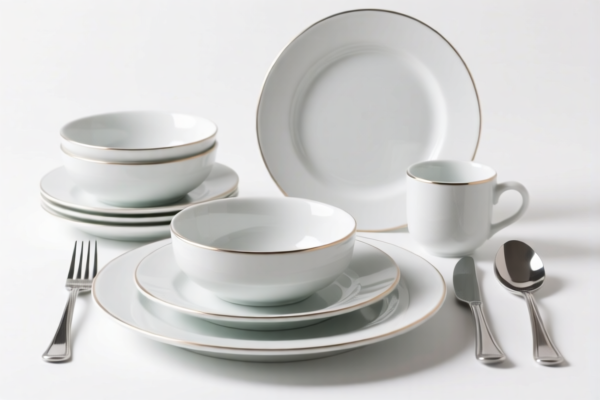
AI Analysis
🍽️ Tableware Set: Ultimate HS Code Classification & Customs Clearance Guide (2026 Update)
🌐 HS Code Reference & Customs Strategy | 2026 Latest Tariff Analysis | Professional Clearance Guide
📌 I. Product Definition & Classification: What Exactly is a "Tableware Set"?
A Tableware Set in international trade refers to a collection of utensils, plates, bowls, or cups designed for serving food and beverages. The critical factor in classification is material and form (whether it constitutes a "set").
In global trade, these sets are primarily categorized by three materials: 1. Ceramic/Porcelain (e.g., dinner sets, tea sets) 2. Metal/Vanadium Steel (e.g., cutlery sets with forks, knives, spoons) 3. Wood/Bamboo (e.g., wooden serving boards, chopstick sets)
⚠️ Key Distinction:
- If the set contains items of different materials (e.g., ceramic plate + wooden handle), it is usually classified under the material that gives the set its essential character.
- If the set contains items of the same material (e.g., 10 ceramic plates + 10 bowls), it falls under the specific heading for that material's tableware.
📦 II. HS Code Classification Details (2026 Latest Tariff Authority Cross-Reference)
Based on the provided data, here are the specific HS Codes applicable to Tableware Sets, categorized by material type.
| HS Code | Product Description | Material Inference | Suitability Reason |
|---|---|---|---|
6911.10.37.10 |
Ceramic Tableware Set | Ceramic | Matches "Tableware Set" usage; infers ceramic material; conforms to "suitable for being supplied as sets" feature. |
6911.10.35.10 |
Ceramic Tableware & Set Form | Ceramic | Matches "Tableware" usage and "Set" form; infers ceramic material; conforms to "suitable for being supplied as sets" feature. |
8215.20.00.00 |
Metal Cutlery Set | Metal / Base Metal | Matches "Tableware Set" usage; infers metal/base metal material; conforms to "Combined Set" definition. |
8215.10.00.00 |
Metal Utensil Set (Base) | Metal / Base Metal | Matches "Set" form; infers inclusion of spoons/forks; no precious metal plating conflict; serves as a fallback match. |
4419.90.11.00 |
Wooden Tableware & Kitchen Utensils | Wood | Matches "Wooden Tableware & Kitchen Utensils" usage; inferred based on common sense of sets containing various vessels. |
4419.90.91.00 |
Wooden Tableware (General) | Wood | Matches "Tableware" usage; inferred material does not conflict with wooden categories; serves as a fallback category. |
🔍 Key Insight:
- Ceramic Sets (6911) and Metal Sets (8215) have distinct classification paths based on their specific composition.
- Wooden Sets (4419) are often classified under "other wooden tableware," with variations depending on whether they are specific kitchen utensils or general tableware.
💰 III. 2026 Latest Tariff Rate Breakdown (Including Surtaxes & Policy Add-ons)
✅ Applicable Country: United States (US)
✅ Origin: China (CN) (Implied by the presence of Section 301 and IEEPA tariffs in the data)
✅ Effective Time: 2025/2026 Current Rates
🎯 1. 6911.10.37.10 & 6911.10.35.10 —— Ceramic Tableware Sets
| Item | Detail |
|---|---|
| Base Tariff | 8.0% (for .37.10) / 26.0% (for .35.10) |
| Section 301 Surtax | +7.5% (Additional Tax) |
| Section 122 Tariff | +10% (Specific Tariff Clause) |
| Total Tariff Rate | 25.5% (for .37.10) 43.5% (for .35.10) |
| Tax Calculation | CIF Value × Total Rate |
| De Minimis Exemption | ❌ Not Applicable (High tariff rate typically excludes low-value shipments from informal entry benefits) |
| Legal Basis | Based on provided summary data: "Base Tariff + Additional Tax + Section 122" |
📌 Explanation:
- .37.10: Lower base rate (8%) results in a total of 25.5%.
- .35.10: Higher base rate (26%) results in a total of 43.5%.
- Both are subject to 7.5% additional tax and 10% Section 122 tariff.
🎯 2. 8215.20.00.00 & 8215.10.00.00 —— Metal/Cutlery Sets
| Item | Detail |
|---|---|
| Base Tariff | "The rate of duty applicable to that article in the set subject t" |
| Section 301 Surtax | +35.0% (for .20.00) / +7.5% (for .10.00) |
| Section 122 Tariff | +10% |
| Total Tariff Rate | Variable (High): Base Rate + 45% (for .20.00) Variable (Medium): Base Rate + 17.5% (for .10.00) |
| Tax Calculation | CIF Value × (Base Rate + Surtax + 122) |
| De Minimis Exemption | ❌ Not Applicable |
| Legal Basis | Based on provided summary data |
📌 Explanation:
- .20.00: Carries a massive 35% additional tax + 10% Section 122. This is a very high-cost category for metal cutlery.
- .10.00: Lower additional tax of 7.5% + 10% Section 122.
- Note: The base rate for metal cutlery is often low (e.g., 5.7%), but the surtaxes dominate the cost.
🎯 3. 4419.90.11.00 & 4419.90.91.00 —— Wooden Tableware Sets
| Item | Detail |
|---|---|
| Base Tariff | 5.3% (for .11.00) / 3.2% (for .91.00) |
| Section 301 Surtax | 0.0% (for .11.00) / 7.5% (for .91.00) |
| Section 122 Tariff | +10% |
| Total Tariff Rate | 15.3% (for .11.00) 20.7% (for .91.00) |
| Tax Calculation | CIF Value × Total Rate |
| De Minimis Exemption | ❌ Not Applicable |
| Legal Basis | Based on provided summary data |
📌 Explanation:
- .11.00 (Kitchen Utensils): Lowest total tax at 15.3% because it has 0% additional surtax.
- .91.00 (General Tableware): Higher total tax at 20.7% due to a 7.5% additional surtax.
🛠️ IV. Customs Clearance Practical Advice (Pitfall Avoidance Guide)
✅ 1. Preparation Checklist (Essential Documents)
| Document | Required | Note |
|---|---|---|
| ✅ Product Specification Sheet | ✔️ | Must clearly state Material (Ceramic, Metal, Wood), Contents of the set, and Usage. |
| ✅ Photos of Set | ✔️ | Show all items together to prove it is a "Set" (not sold separately). |
| ✅ Commercial Invoice | ✔️ | Must describe the item accurately (e.g., "12-Piece Ceramic Dinner Set" not just "Plates"). |
| ✅ Packing List | ✔️ | List individual items in the set to verify composition. |
| ✅ Material Declaration | ✔️ | Explicitly state if metal is stainless steel, wood is bamboo/oak, etc. |
✅ 2. Declaration Tips (Critical Mnemonics)
🔥 "Material First, Set Second, Tariff Depends on Combo!"
| Scenario | Correct Declaration | Wrong Approach |
|---|---|---|
| Ceramic Set | Declare as 6911.10.37.10 or .35.10 based on specific form. |
Declaring as generic "Ceramic Plates" → Risk of misclassification. |
| Metal Cutlery Set | Declare as 8215.20.00.00 if it includes knives/forks. |
Declaring as separate "Spoons" and "Forks" → Higher combined tax if not recognized as a set. |
| Wooden Set | Declare as 4419.90.11.00 if it's kitchen utensils (lower tax). |
Declaring as .91.00 (General) → Unnecessarily higher tax (20.7% vs 15.3%). |
| Mixed Material Set | Declare based on Essential Character (usually the dominant material). | Attempting to split the set → Customs may reject and reclassify. |
✅ 3. Special Cases Handling
| Case | Handling Advice |
|---|---|
| Plated Metal Tableware | If gold/silver plated, it may fall under Chapter 71. If base metal plated, it falls under 8215. Ensure accurate material description. |
| Gift Sets with Non-Tableware Items | If the set includes a napkin ring or placemat, ensure the tableware gives the "essential character." Otherwise, it may be classified differently. |
| Sample Shipments | Even for samples, declare properly. High tariffs (25-45%) apply regardless of value if not using a duty-free exemption program. |
| Origin Marking | Ensure products are marked "Made in China" if applicable, as this triggers the Section 301 and IEEPA tariffs. |
🌍 V. Global Market Comparison (2026 Latest)
| Market | Recommended HS Code Range | Est. Total Tax (China Origin) | Key Certification |
|---|---|---|---|
| 🇺🇸 USA | 6911.10, 8215.10/20, 4419.90 |
15.3% – 43.5%+ (High due to surtaxes) | FDA (Food Contact) |
| 🇨🇳 China | Same HS Codes | 5% – 10% (Low, no surtaxes) | CCC (if applicable) |
| 🇪🇺 EU | 6912.00, 8215.99, 4419.99 |
0% – 4% (Mostly free trade) | LFGB, PFAS Compliance |
| 🇬🇧 UK | Same as EU | 0% – 4% | FSA Standards |
| 🇦🇺 Australia | Similar to US/EU | 5% – 10% | Food Standards Code |
📌 Conclusion:
- USA imposes heavy tariffs on Chinese tableware, especially ceramic and metal sets.
- EU/UK are low-tariff markets but have strict food safety standards (FDA/LFGB equivalents).
- Wooden sets are the most tax-efficient to ship to the US due to lower surtax rates.
📌 VI. Common Errors & Pitfall Guide (Lessons Learned)
❌ Error 1: Misclassifying a Metal Cutlery Set as separate utensils.
👉 Consequence: May lose "Set" classification benefits or face higher individual taxes.
❌ Error 2: Declaring Ceramic Set as 6911.10.35.10 when it fits .37.10.
👉 Consequence: Paying 43.5% tax instead of 25.5%. Save 18%!
❌ Error 3: Ignoring Section 122 Tariff.
👉 Consequence: Under-declaring tax by 10%. Leads to penalties and back taxes.
❌ Error 4: Not marking "Made in China" properly.
👉 Consequence: Customs may assign a higher default duty rate or seize goods.
✅ Correct Practice:
"12-Piece Ceramic Dinner Set, White, Glazed, Includes Plates, Bowls, Mugs. HS: 6911.10.37.10. Country of Origin: China."
🎯 VII. Conclusion: Smart Classification Saves Money!
🎯 Key Takeaway:
🔹 Wooden sets are the cheapest to import to the US (15.3%).
🔹 Ceramic sets vary wildly (25.5% vs 43.5%) based on specific sub-heading. Verify your sub-code!
🔹 Metal sets are expensive (up to 45%+). Consider sourcing from non-China origins if possible.
📌 Pro Tip:
If your tableware set is originally from Vietnam, Thailand, or India, you may qualify for IEEPA/Section 301 exemptions or lower tariffs.
Recommendation: Apply for a Pre-Ruling (Advance Ruling) with US Customs to confirm the exact HS Code and tax rate before shipping.
📣 Immediate Action:
📞 Consult a licensed customs broker.
📸 Provide clear photos of the complete set and material composition.
🚀 Accurate classification ensures smooth clearance and maximizes profit!
✨ Professional Clearance Starts with Precise Classification!
💼 Every percentage point of tax reduction is pure profit!
Customer Reviews
About HS Code Classification
The Harmonized System (HS) is an internationally standardized nomenclature developed by the World Customs Organization (WCO) to classify traded products. Over 200 countries use the HS system as the basis for customs tariffs, trade statistics, and import/export regulations.
Each HS code follows a hierarchical structure:
- Chapter (2 digits) — Broad category of goods (e.g., Chapter 84: Machinery and Mechanical Appliances)
- Heading (4 digits) — More specific grouping within the chapter
- Subheading (6 digits) — Internationally standardized breakdown, used by all WCO member countries
- National subdivisions (8-10 digits) — Country-specific extensions for further classification, such as US HTSUS 10-digit codes
Correct HS code classification is essential for smooth customs clearance, accurate duty payment, and compliance with trade regulations. Misclassification can lead to customs delays, overpayment of duties, or penalties.
When importing from CN to US, the applicable tariff rates may include:
- Most-Favored-Nation (MFN) rate — The standard duty rate applied to WTO members
- General rate — Applied to countries without trade agreements
- Trade remedy duties — Additional tariffs such as Section 301 (anti-dumping), Section 232 (national security), or countervailing duties
The information provided on this page is for reference purposes only. For official classification, please consult with your local customs authority or a licensed customs broker.