Tanned Rawhide or Horsehide Hairless
CN → US| HS编码 | 关税税率 | 原产国 | 目的国 | 文档 |
|---|---|---|---|---|
| 4107997090 | 15.0% | CN | US | 官方文档 |
| 4107998000 | 12.4% | CN | US | 官方文档 |
| 4107994000 | 12.5% | CN | US | 官方文档 |
| 4205001000 | 35.0% | CN | US | 官方文档 |
| 4303100030 | 39.0% | CN | US | 官方文档 |
商品图片
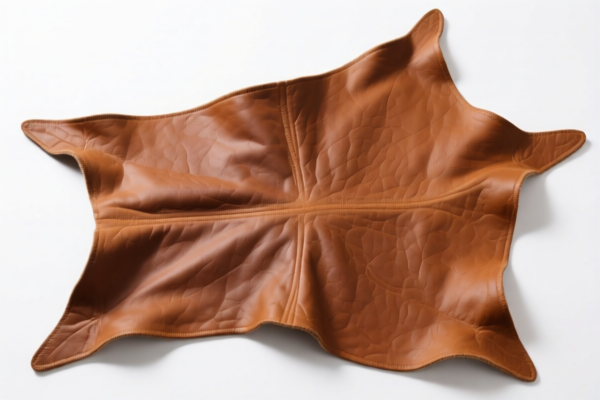
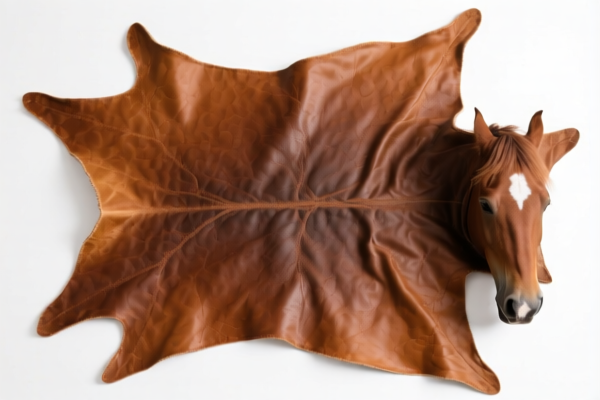
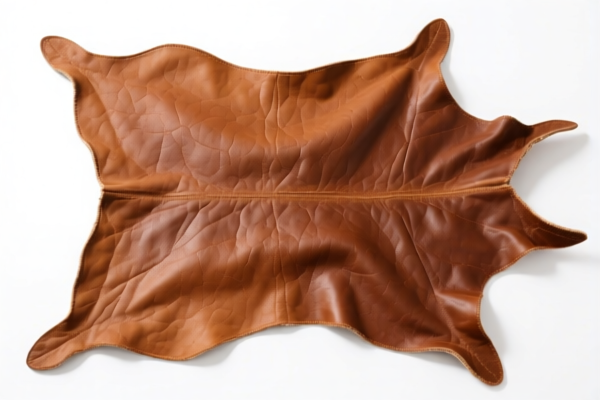

AI分析
🐴 Tanned Rawhide or Horsehide (Hairless / Split)
🌐 HS Code Reference & Customs Clearance Guide | 2024/2025 Tariff Breakdown | Professional Entry Strategy
📌 I. Product Definition & Classification: What Exactly Is "Tanned Horsehide"?
In international trade, Tanned Rawhide or Horsehide (Hairless) refers to equine hides that have undergone the tanning process but retain no hair/fur and are often split (cut into layers). These are distinct from fur skins (which have hair intact) and raw untanned hides.
The key distinction lies in: * Hair Removal: The outer layer with hair is removed or shaved off (hairless). * Tanning Process: The skin has been chemically treated to prevent decay. * Splitting: The hide is often split into top-grain and flesh-layer, affecting the HS code.
⚠️ Critical Distinction:
- If the hide has hair/fur → It is classified as Fur Skin (Chapter 43), NOT Chapter 41.
- If the hide is tanned but hairless → It falls under Chapter 41 (Leather).
- If it is further processed (e.g., made into garments, bags) → It moves to Chapter 42 (Articles of Leather).
📦 II. HS Code Classification Details (Based on Provided Data)
The following HS Codes are derived strictly from the provided <DATA> for tanned, hairless, split horsehide/rawhide.
| HS Code | Summary Description | Total Tax Rate | Tax Detail Breakdown |
|---|---|---|---|
| 4107.99.70.90 | Further prepared leather (hairless, split, other) | 15.0% | Base: 5.0% Additional: 0.0% Section 301 (122): 10% |
| 4107.99.80.00 | Further prepared leather (hairless, split, other) | 12.4% | Base: 2.4% Additional: 0.0% Section 301 (122): 10% |
| 4107.99.40.00 | Tanned rawhide or horsehide (not further prepared) | 12.5% | Base: 2.5% Additional: 0.0% Section 301 (122): 10% |
🔍 Key Analysis:
- 4107.99.70.90 and 4107.99.80.00 are for "Further Prepared" leathers (e.g., chrome-tanned, finished for commercial use).
- 4107.99.40.00 is for "Tanned Rawhide" (less processed, often vegetable-tanned, not yet finished for end-use).
- All three include a 10% Section 301 tariff (likely referring to U.S. trade remedies, labeled as "122条款" in the source).
💰 III. Tariff Rate Breakdown (Detailed Explanation)
✅ Applicable Market: Implied U.S. (due to "Section 301/122 Clause" reference)
✅ Origin: Likely China (given the high base tariffs + Section 301)
✅ Status: Subject to additional trade tariffs
🎯 1. 4107.99.40.00 – Tanned Rawhide or Horsehide (Basic Tanning)
| Item | Content |
|---|---|
| Base Tariff | 2.5% (MFN/General Rate) |
| Additional Tariff | 0.0% (No extra anti-dumping/countervailing duty listed) |
| Section 301 Tariff | +10% (List 4 / Clause 122) |
| Total Effective Rate | 12.5% |
| Calculation | CIF Value × 12.5% |
| De Minimis Exemption | ❌ Not Eligible (Section 301 goods are excluded from de minimis) |
📌 Explanation:
- This code applies to hides that are tanned but not further processed into finished leather sheets ready for manufacturing bags/shoes.
- The 10% Section 301 tariff is mandatory for Chinese-origin goods.
- Risk: If you misclassify "finished leather" as "rawhide," you may face penalties. Ensure the tanning process matches the description.
🎯 2. 4107.99.70.90 – Further Prepared Leather (Specific Type)
| Item | Content |
|---|---|
| Base Tariff | 5.0% |
| Additional Tariff | 0.0% |
| Section 301 Tariff | +10% (List 4 / Clause 122) |
| Total Effective Rate | 15.0% |
| Calculation | CIF Value × 15.0% |
| De Minimis Exemption | ❌ Not Eligible |
📌 Explanation:
- This is a "Other" category for further prepared leathers.
- Higher base rate (5%) vs. 4107.99.80.00 (2.4%).
- Use this if the leather does not fit other specific "further prepared" subheadings (e.g., bovine, caprine).
🎯 3. 4107.99.80.00 – Further Prepared Leather (Other)
| Item | Content |
|---|---|
| Base Tariff | 2.4% |
| Additional Tariff | 0.0% |
| Section 301 Tariff | +10% (List 4 / Clause 122) |
| Total Effective Rate | 12.4% |
| Calculation | CIF Value × 12.4% |
| De Minimis Exemption | ❌ Not Eligible |
📌 Explanation:
- Often the "catch-all" for further prepared leathers not specified elsewhere.
- Lowest total rate (12.4%) among the three, but requires precise documentation that the leather is indeed "further prepared" and not rawhide.
- Best for: Finished leather sheets with chrome tanning, uniform thickness, and commercial finish.
🛠️ IV. Customs Clearance Practical Advice (Pitfall Avoidance)
✅ 1. Documentation Checklist (Mandatory)
| Document | Required | Notes |
|---|---|---|
| ✅ Tanning Certificate | ✔️ | Must specify tanning method (Chrome/Vegetable) and confirm no hair. |
| ✅ Product Specification Sheet | ✔️ | Detail if the hide is split (top/flesh layer) and final thickness. |
| ✅ Commercial Invoice | ✔️ | Clearly state: "Tanned Horsehide, Hairless, Split, Further Prepared" or "Tanned Rawhide". |
| ✅ Bill of Lading / Packing List | ✔️ | Match weights and dimensions precisely. |
| ✅ Origin Certificate (CO) | ✔️ | Critical for Section 301 determination. |
✅ 2. Classification Tips (Key Mnemonic)
🔥 "Hairless = Ch41, Hair = Ch43. Rawhide = 40%, Prepared = 12-15%."
| Scenario | Correct HS Code | Tax Rate | Why? |
|---|---|---|---|
| Tanned, Hairless, Split, Ready to Use | 4107.99.80.00 or 4107.99.70.90 |
12.4% - 15% | "Further prepared" leathers fall here. |
| Tanned, Hairless, Basic Tanning Only | 4107.99.40.00 |
12.5% | "Rawhide" definition – not further finished. |
| Tanned, WITH Hair (Fur) | 4303.10.00.30 |
39.0% | WRONG CODE IF NO HAIR. Fur skins go to Ch43. |
| Made into Bags/Shoes | 4205.00.10.00 |
35.0% | WRONG CODE FOR RAW MATERIALS. Articles of leather go to Ch42. |
⚠️ Critical Warning:
- Do NOT classify hairless tanned hides as Fur Skins (Ch43) if there is no hair.
- Do NOT classify them as Finished Goods (Ch42) if they are still raw leather sheets.
- Misclassification can lead to penalties, delays, and re-inspection.
✅ 3. Special Handling Scenarios
| Scenario | Recommendation |
|---|---|
| Mixed Shipments (Rawhide + Finished Leather) | Separate Bills of Lading. Do not mix Ch41 and Ch42 items. |
| Partial Tanning (Rawhide) | Provide tanning process report. Customs may question if it’s "further prepared." |
| Section 301 Exemption | ❌ Not Applicable. Horsehide/leather from China is subject to 10% Section 301 tariff. No de minimis exemption. |
| Origin Shifting (Vietnam/Mexico) | If processed in a third country, may qualify for lower tariffs. Requires substantial transformation proof. |
🌍 V. Global Market Comparison (2024/2025)
| Market | Recommended HS Code | Base Tariff | Additional Duties | Total Est. Rate | Notes |
|---|---|---|---|---|---|
| 🇺🇸 USA | 4107.99.80.00 |
2.4% | +10% (Sec 301) | 12.4% | Strict hair/no-hair classification. |
| 🇨🇳 China | 4107.99.80.00 |
5.0-10% | None | ~5-10% | Import duty varies by trade agreement. |
| 🇪🇺 EU | 4107.99 |
0-4.5% | None | ~0-4.5% | No Section 301. Easier clearance. |
| 🇬🇧 UK | 4107.99 |
0-4.5% | None | ~0-4.5% | Post-Brexit tariffs. |
📌 Insight:
- The 10% Section 301 tariff is a U.S.-specific burden.
- For non-U.S. markets, leather tariffs are generally lower (0-5%).
- Consider supply chain diversification if targeting the U.S. market to avoid the 10% surcharge.
📌 VI. Common Errors & Pitfalls (Blood & Tears Lessons)
❌ Error 1: Classifying hairless tanned horsehide as Fur Skin (4303).
👉 Result: Incorrect HS Code → Customs rejects entry → Reclassification & Delay.
👉 Why: 4303 is for fur with hair. Hairless = Chapter 41.
❌ Error 2: Mislabeling "Further Prepared" as "Rawhide".
👉 Result: Tax rate drop from 15% to 12.5% → Underpayment Penalty.
👉 Why: "Further prepared" implies additional processing (chrome tanning, finishing). If it’s just vegetable-tanned, use 4107.99.40.00.
❌ Error 3: Ignoring Section 301 Tariff.
👉 Result: Underpaid duties → Seizure of Goods + Fines.
👉 Why: Chinese leather is subject to 10% extra tariff. Must be declared.
❌ Error 4: Using "Leather Sheets" as a generic description.
👉 Result: Customs may ask for detailed specs.
👉 Solution: Specify "Tanned Horsehide, Hairless, Split, Chrome-Tanned".
✅ Correct Declaration Example:
"Tanned Horsehide, Hairless, Split, Further Prepared, Chrome-Tanned, for Manufacturing Bags, HS Code 4107.99.80.00, Origin: China"
🎯 VII. Conclusion: Precision Classification Saves Money!
🎯 Remember the Mantra:
🔹 "Hair = Fur (Ch43), No Hair = Leather (Ch41)"
🔹 "Rawhide = 12.5%, Prepared = 12.4-15%, All +10% Sec 301"
🔹 "Misclassify = Penalty, Correctly Declare = Smooth Clearance"
📌 Pro Tip:
If you are exporting to the U.S., ensure your supplier provides a detailed tanning report to prove the hairless status and "further prepared" nature. This prevents customs audits and delays.
For non-U.S. markets, focus on securing FTA certificates to reduce base tariffs.
📣 Immediate Action:
📞 Verify Tanning Process with your supplier.
📄 Confirm HS Code with a licensed customs broker.
🚀 Avoid the 10% Pitfall by accurate declaration!
✨ Professional Customs Clearance Starts with Accurate Classification!
💼 Every Percentage Point Matters in Tariff Planning!
用户评价
关于 HS 编码归类
协调制度(HS)是由世界海关组织(WCO)制定的国际贸易商品分类标准。全球 200 多个国家采用 HS 系统作为海关关税、贸易统计和进出口监管的基础。
每个 HS 编码遵循以下层级结构:
- 章(2 位)——商品大类(例如:第 84 章:机器和机械设备)
- 品目(4 位)——章内的更具体分类
- 子目(6 位)——国际通用细分,所有 WCO 成员国统一使用
- 本国细分(8-10 位)——各国自行扩展的细分编码,如美国 HTSUS 10 位编码
正确的 HS 编码归类对于顺利通关、准确缴纳关税和遵守贸易法规至关重要。错误归类可能导致海关延误、多缴关税或罚款。
从CN进口到US时,适用的关税税率可能包括:
- 最惠国(MFN)税率——适用于 WTO 成员国的标准关税税率
- 普通税率——适用于无贸易协定国家
- 贸易救济关税——附加关税,如 301 条款(反倾销)、232 条款(国家安全)或反补贴税
本页内容仅供参考。如需正式归类,请咨询当地海关或持牌报关代理。