Tanned Rawhide or Horsehide Hairless
CN → US| HS Code | Tariff Rate | Origin | Destination | Doc |
|---|---|---|---|---|
| 4107997090 | 15.0% | CN | US | Official Doc |
| 4107998000 | 12.4% | CN | US | Official Doc |
| 4107994000 | 12.5% | CN | US | Official Doc |
| 4205001000 | 35.0% | CN | US | Official Doc |
| 4303100030 | 39.0% | CN | US | Official Doc |
Product Images
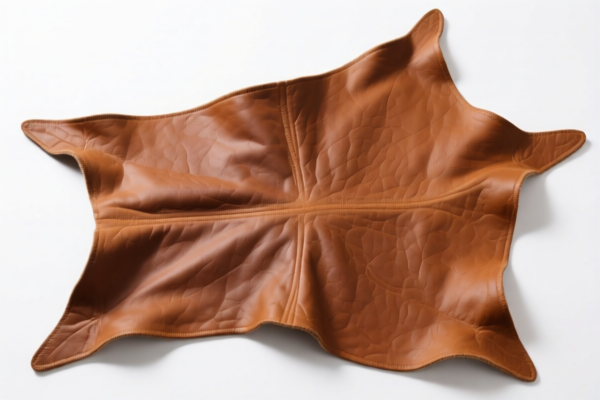
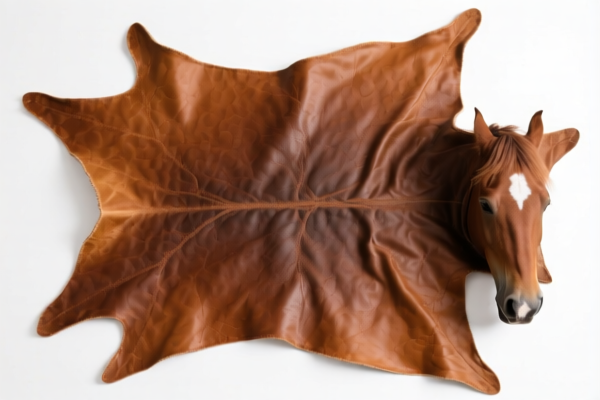
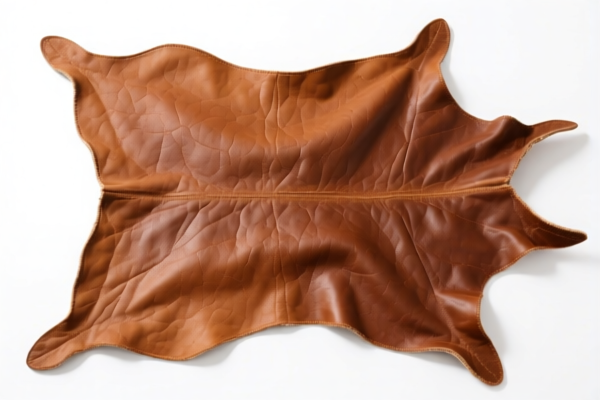

AI Analysis
🐴 Tanned Rawhide or Horsehide (Hairless / Split)
🌐 HS Code Reference & Customs Clearance Guide | 2024/2025 Tariff Breakdown | Professional Entry Strategy
📌 I. Product Definition & Classification: What Exactly Is "Tanned Horsehide"?
In international trade, Tanned Rawhide or Horsehide (Hairless) refers to equine hides that have undergone the tanning process but retain no hair/fur and are often split (cut into layers). These are distinct from fur skins (which have hair intact) and raw untanned hides.
The key distinction lies in: * Hair Removal: The outer layer with hair is removed or shaved off (hairless). * Tanning Process: The skin has been chemically treated to prevent decay. * Splitting: The hide is often split into top-grain and flesh-layer, affecting the HS code.
⚠️ Critical Distinction:
- If the hide has hair/fur → It is classified as Fur Skin (Chapter 43), NOT Chapter 41.
- If the hide is tanned but hairless → It falls under Chapter 41 (Leather).
- If it is further processed (e.g., made into garments, bags) → It moves to Chapter 42 (Articles of Leather).
📦 II. HS Code Classification Details (Based on Provided Data)
The following HS Codes are derived strictly from the provided <DATA> for tanned, hairless, split horsehide/rawhide.
| HS Code | Summary Description | Total Tax Rate | Tax Detail Breakdown |
|---|---|---|---|
| 4107.99.70.90 | Further prepared leather (hairless, split, other) | 15.0% | Base: 5.0% Additional: 0.0% Section 301 (122): 10% |
| 4107.99.80.00 | Further prepared leather (hairless, split, other) | 12.4% | Base: 2.4% Additional: 0.0% Section 301 (122): 10% |
| 4107.99.40.00 | Tanned rawhide or horsehide (not further prepared) | 12.5% | Base: 2.5% Additional: 0.0% Section 301 (122): 10% |
🔍 Key Analysis:
- 4107.99.70.90 and 4107.99.80.00 are for "Further Prepared" leathers (e.g., chrome-tanned, finished for commercial use).
- 4107.99.40.00 is for "Tanned Rawhide" (less processed, often vegetable-tanned, not yet finished for end-use).
- All three include a 10% Section 301 tariff (likely referring to U.S. trade remedies, labeled as "122条款" in the source).
💰 III. Tariff Rate Breakdown (Detailed Explanation)
✅ Applicable Market: Implied U.S. (due to "Section 301/122 Clause" reference)
✅ Origin: Likely China (given the high base tariffs + Section 301)
✅ Status: Subject to additional trade tariffs
🎯 1. 4107.99.40.00 – Tanned Rawhide or Horsehide (Basic Tanning)
| Item | Content |
|---|---|
| Base Tariff | 2.5% (MFN/General Rate) |
| Additional Tariff | 0.0% (No extra anti-dumping/countervailing duty listed) |
| Section 301 Tariff | +10% (List 4 / Clause 122) |
| Total Effective Rate | 12.5% |
| Calculation | CIF Value × 12.5% |
| De Minimis Exemption | ❌ Not Eligible (Section 301 goods are excluded from de minimis) |
📌 Explanation:
- This code applies to hides that are tanned but not further processed into finished leather sheets ready for manufacturing bags/shoes.
- The 10% Section 301 tariff is mandatory for Chinese-origin goods.
- Risk: If you misclassify "finished leather" as "rawhide," you may face penalties. Ensure the tanning process matches the description.
🎯 2. 4107.99.70.90 – Further Prepared Leather (Specific Type)
| Item | Content |
|---|---|
| Base Tariff | 5.0% |
| Additional Tariff | 0.0% |
| Section 301 Tariff | +10% (List 4 / Clause 122) |
| Total Effective Rate | 15.0% |
| Calculation | CIF Value × 15.0% |
| De Minimis Exemption | ❌ Not Eligible |
📌 Explanation:
- This is a "Other" category for further prepared leathers.
- Higher base rate (5%) vs. 4107.99.80.00 (2.4%).
- Use this if the leather does not fit other specific "further prepared" subheadings (e.g., bovine, caprine).
🎯 3. 4107.99.80.00 – Further Prepared Leather (Other)
| Item | Content |
|---|---|
| Base Tariff | 2.4% |
| Additional Tariff | 0.0% |
| Section 301 Tariff | +10% (List 4 / Clause 122) |
| Total Effective Rate | 12.4% |
| Calculation | CIF Value × 12.4% |
| De Minimis Exemption | ❌ Not Eligible |
📌 Explanation:
- Often the "catch-all" for further prepared leathers not specified elsewhere.
- Lowest total rate (12.4%) among the three, but requires precise documentation that the leather is indeed "further prepared" and not rawhide.
- Best for: Finished leather sheets with chrome tanning, uniform thickness, and commercial finish.
🛠️ IV. Customs Clearance Practical Advice (Pitfall Avoidance)
✅ 1. Documentation Checklist (Mandatory)
| Document | Required | Notes |
|---|---|---|
| ✅ Tanning Certificate | ✔️ | Must specify tanning method (Chrome/Vegetable) and confirm no hair. |
| ✅ Product Specification Sheet | ✔️ | Detail if the hide is split (top/flesh layer) and final thickness. |
| ✅ Commercial Invoice | ✔️ | Clearly state: "Tanned Horsehide, Hairless, Split, Further Prepared" or "Tanned Rawhide". |
| ✅ Bill of Lading / Packing List | ✔️ | Match weights and dimensions precisely. |
| ✅ Origin Certificate (CO) | ✔️ | Critical for Section 301 determination. |
✅ 2. Classification Tips (Key Mnemonic)
🔥 "Hairless = Ch41, Hair = Ch43. Rawhide = 40%, Prepared = 12-15%."
| Scenario | Correct HS Code | Tax Rate | Why? |
|---|---|---|---|
| Tanned, Hairless, Split, Ready to Use | 4107.99.80.00 or 4107.99.70.90 |
12.4% - 15% | "Further prepared" leathers fall here. |
| Tanned, Hairless, Basic Tanning Only | 4107.99.40.00 |
12.5% | "Rawhide" definition – not further finished. |
| Tanned, WITH Hair (Fur) | 4303.10.00.30 |
39.0% | WRONG CODE IF NO HAIR. Fur skins go to Ch43. |
| Made into Bags/Shoes | 4205.00.10.00 |
35.0% | WRONG CODE FOR RAW MATERIALS. Articles of leather go to Ch42. |
⚠️ Critical Warning:
- Do NOT classify hairless tanned hides as Fur Skins (Ch43) if there is no hair.
- Do NOT classify them as Finished Goods (Ch42) if they are still raw leather sheets.
- Misclassification can lead to penalties, delays, and re-inspection.
✅ 3. Special Handling Scenarios
| Scenario | Recommendation |
|---|---|
| Mixed Shipments (Rawhide + Finished Leather) | Separate Bills of Lading. Do not mix Ch41 and Ch42 items. |
| Partial Tanning (Rawhide) | Provide tanning process report. Customs may question if it’s "further prepared." |
| Section 301 Exemption | ❌ Not Applicable. Horsehide/leather from China is subject to 10% Section 301 tariff. No de minimis exemption. |
| Origin Shifting (Vietnam/Mexico) | If processed in a third country, may qualify for lower tariffs. Requires substantial transformation proof. |
🌍 V. Global Market Comparison (2024/2025)
| Market | Recommended HS Code | Base Tariff | Additional Duties | Total Est. Rate | Notes |
|---|---|---|---|---|---|
| 🇺🇸 USA | 4107.99.80.00 |
2.4% | +10% (Sec 301) | 12.4% | Strict hair/no-hair classification. |
| 🇨🇳 China | 4107.99.80.00 |
5.0-10% | None | ~5-10% | Import duty varies by trade agreement. |
| 🇪🇺 EU | 4107.99 |
0-4.5% | None | ~0-4.5% | No Section 301. Easier clearance. |
| 🇬🇧 UK | 4107.99 |
0-4.5% | None | ~0-4.5% | Post-Brexit tariffs. |
📌 Insight:
- The 10% Section 301 tariff is a U.S.-specific burden.
- For non-U.S. markets, leather tariffs are generally lower (0-5%).
- Consider supply chain diversification if targeting the U.S. market to avoid the 10% surcharge.
📌 VI. Common Errors & Pitfalls (Blood & Tears Lessons)
❌ Error 1: Classifying hairless tanned horsehide as Fur Skin (4303).
👉 Result: Incorrect HS Code → Customs rejects entry → Reclassification & Delay.
👉 Why: 4303 is for fur with hair. Hairless = Chapter 41.
❌ Error 2: Mislabeling "Further Prepared" as "Rawhide".
👉 Result: Tax rate drop from 15% to 12.5% → Underpayment Penalty.
👉 Why: "Further prepared" implies additional processing (chrome tanning, finishing). If it’s just vegetable-tanned, use 4107.99.40.00.
❌ Error 3: Ignoring Section 301 Tariff.
👉 Result: Underpaid duties → Seizure of Goods + Fines.
👉 Why: Chinese leather is subject to 10% extra tariff. Must be declared.
❌ Error 4: Using "Leather Sheets" as a generic description.
👉 Result: Customs may ask for detailed specs.
👉 Solution: Specify "Tanned Horsehide, Hairless, Split, Chrome-Tanned".
✅ Correct Declaration Example:
"Tanned Horsehide, Hairless, Split, Further Prepared, Chrome-Tanned, for Manufacturing Bags, HS Code 4107.99.80.00, Origin: China"
🎯 VII. Conclusion: Precision Classification Saves Money!
🎯 Remember the Mantra:
🔹 "Hair = Fur (Ch43), No Hair = Leather (Ch41)"
🔹 "Rawhide = 12.5%, Prepared = 12.4-15%, All +10% Sec 301"
🔹 "Misclassify = Penalty, Correctly Declare = Smooth Clearance"
📌 Pro Tip:
If you are exporting to the U.S., ensure your supplier provides a detailed tanning report to prove the hairless status and "further prepared" nature. This prevents customs audits and delays.
For non-U.S. markets, focus on securing FTA certificates to reduce base tariffs.
📣 Immediate Action:
📞 Verify Tanning Process with your supplier.
📄 Confirm HS Code with a licensed customs broker.
🚀 Avoid the 10% Pitfall by accurate declaration!
✨ Professional Customs Clearance Starts with Accurate Classification!
💼 Every Percentage Point Matters in Tariff Planning!
Customer Reviews
About HS Code Classification
The Harmonized System (HS) is an internationally standardized nomenclature developed by the World Customs Organization (WCO) to classify traded products. Over 200 countries use the HS system as the basis for customs tariffs, trade statistics, and import/export regulations.
Each HS code follows a hierarchical structure:
- Chapter (2 digits) — Broad category of goods (e.g., Chapter 84: Machinery and Mechanical Appliances)
- Heading (4 digits) — More specific grouping within the chapter
- Subheading (6 digits) — Internationally standardized breakdown, used by all WCO member countries
- National subdivisions (8-10 digits) — Country-specific extensions for further classification, such as US HTSUS 10-digit codes
Correct HS code classification is essential for smooth customs clearance, accurate duty payment, and compliance with trade regulations. Misclassification can lead to customs delays, overpayment of duties, or penalties.
When importing from CN to US, the applicable tariff rates may include:
- Most-Favored-Nation (MFN) rate — The standard duty rate applied to WTO members
- General rate — Applied to countries without trade agreements
- Trade remedy duties — Additional tariffs such as Section 301 (anti-dumping), Section 232 (national security), or countervailing duties
The information provided on this page is for reference purposes only. For official classification, please consult with your local customs authority or a licensed customs broker.