Tear off Paper Label
CN → US| HS编码 | 关税税率 | 原产国 | 目的国 | 文档 |
|---|---|---|---|---|
| 4821902000 | 35.0% | CN | US | 官方文档 |
| 4821904000 | 35.0% | CN | US | 官方文档 |
| 4911996000 | 17.5% | CN | US | 官方文档 |
| 4911998000 | 17.5% | CN | US | 官方文档 |
商品图片

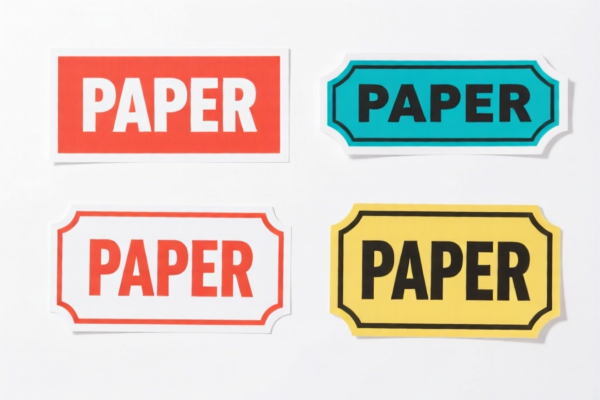
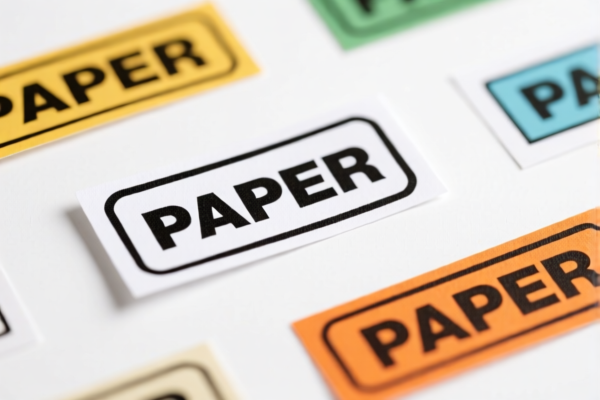
AI分析
🏷️ Tear-Off Paper Label (Tear-off Adhesive Labels)
🌐 HS Code Reference & Customs Clearance Guide | 2026 Latest Tariff Analysis | Professional Strategy for Cross-Border Trade
📌 I. Product Definition & Classification: What Exactly is a "Tear-Off Label"?
A Tear-off Paper Label is a self-adhesive label printed on paper substrate, designed to be torn off the liner or roll after application. It is distinct from permanent "permanent adhesive" labels due to its re-removability or specific tear-line functionality.
In international trade, the classification hinges on two critical factors: 1. Material Composition: Is it purely paper, or does it contain significant synthetic components? 2. Printing Nature: Is it considered a simple "label" under Chapter 48, or a complex "printed matter" under Chapter 49?
⚠️ Key Classification Distinction:
- Paper Substrate + Adhesive Liner: Falls under Chapter 48 (Paper/Paperboard) if the primary value is the paper structure.
- Printed Matter: Falls under Chapter 49 (Printed Books/Newspapers) if the value is primarily in the printing content itself, and it fits the definition of "other printed matter."
📦 II. HS Code Classification Details (2026 Latest Tariff Authority Comparison)
Based on the provided data, there are four potential HS Codes. Here is the precise breakdown for Tear-Off Paper Labels:
| HS Code | Product Description | Application Scenario | Classification Logic |
|---|---|---|---|
4821.90.20.00 |
Labels, of paper or paperboard | Standard tear-off labels, price tags, shipping labels where the paper substrate is dominant. | Matches Material: Paper. Matches Use: Label. Category: Paper Labels. |
4821.90.40.00 |
Other labels, of paper or paperboard | Generic paper labels not specifically enumerated elsewhere. "Paper labels" consistency. | Matches Material: "Paper label" in name aligns with "Paper/Board labels" in classification. |
4911.99.60.00 |
Other printed matter | Labels where the printing is the primary characteristic (e.g., complex graphics, branding). Assumed planar printing process. | Matches Material: "Printed on paper". Assumption: Common sense infers planar printing technology. |
4911.99.80.00 |
Other printed matter | General "other printed matter" category. No material conflict. | Matches Attribute: Fits "other printed matter" regarding printed media/materials. |
🔍 Critical Note:
- Chapter 48 (4821): Focuses on the physical product (the label itself). This is the most common classification for commercial paper labels.
- Chapter 49 (4911): Focuses on the content/printing. This is often used for high-value printed materials where the paper cost is negligible compared to the print value.
- Risk: Misclassifying a standard paper label as "printed matter" (Ch 49) when it should be "paper labels" (Ch 48) can lead to duty discrepancies. Ch 48 is generally safer for standard adhesive labels.
💰 III. 2026 Latest Tariff Rate Breakdown (Including Surtaxes & Policy Add-ons)
✅ Applicable Country: United States (US)
✅ Origin: China (CN)
✅ Effective Date: 2025/2026 Import Period
🎯 1. 4821.90.20.00 & 4821.90.40.00 —— Paper Labels (Chapter 48)
These two codes share the same tariff structure in the provided data.
| Item | Content |
|---|---|
| Base Rate | 0.0% (Ad Valorem) |
| USITC Surtax (Section 301) | +25.0% |
| IEEPA Surtax (Section 122) | +10.0% |
| Total Duty Rate | 35.0% |
| Duty Calculation | CIF Value × 35% |
| De Minimis Eligibility | ❌ NO (Denied under current rules for high-duty items from CN) |
| Legal Basis Path | Base: 4821 → USITC: 301 Clause (25%) → IEEPA: 122 Clause (10%) |
📌 Explanation:
- "Base 0%": Paper labels generally have low base tariffs in the US Harmonized Tariff Schedule.
- "301 Clause 25%": Additional duty on Chinese goods under Trade Act Section 301.
- "122 Clause 10%": Specific surcharge referenced in the data (likely related to recent executive orders or specific trade provisions).
- Total 35%: This is a significant cost factor. Even though the base is 0%, the surtaxes make it expensive.
🎯 2. 4911.99.60.00 & 4911.99.80.00 —— Other Printed Matter (Chapter 49)
These two codes also share the same tariff structure.
| Item | Content |
|---|---|
| Base Rate | 0.0% (Ad Valorem) |
| USITC Surtax (Section 301) | +7.5% |
| IEEPA Surtax (Section 122) | +10.0% |
| Total Duty Rate | 17.5% |
| Duty Calculation | CIF Value × 17.5% |
| De Minimis Eligibility | ❌ NO (Check latest de minimis thresholds; often restricted for CN origin) |
| Legal Basis Path | Base: 4911 → USITC: 301 Clause (7.5%) → IEEPA: 122 Clause (10%) |
📌 Explanation:
- Why Lower?: The USITC surtax for "Other Printed Matter" (4911) is listed as 7.5% in the data, compared to 25% for Paper Labels (4821).
- Strategic Implication: If your product can legally be classified under Chapter 49, you save 17.5% in duties (17.5% vs 35%).
- Caution: This classification requires strong justification that the item is primarily "printed matter" rather than a "label" by use. Customs may challenge this if the product is functionally a label.
🛠️ IV. Customs Clearance Practical Advice (Real-World Pitfall Guide)
✅ 1. Preparation Checklist (Non-Negotiable)
| Document | Required? | Explanation |
|---|---|---|
| ✅ Product Specification Sheet | ✔️ | Must specify: Material (Paper type), Adhesive type (Removable/Tear-off), Dimensions, Printing method. |
| ✅ Product Photos | ✔️ | Show the tear-off line, the label surface, and the liner. Prove it is a "label." |
| ✅ Commercial Invoice | ✔️ | Clearly describe as "Tear-off Paper Labels" or "Printed Paper Labels." Avoid vague terms like "Paper Product." |
| ✅ Origin Certificate | ✔️ | Crucial for determining eligibility for surtax exemptions (if any) or verifying CN origin. |
| ✅ Printing Details | ✔️ | If claiming Ch 49 (17.5%), provide evidence of printing process (e.g., Litho, Digital) to support "Printed Matter" status. |
✅ 2. Declaration Strategy (Key Mantra)
🔥 "Paper Labels = 35%, Printed Matter = 17.5%. Choose Wisely!"
| Scenario | Correct HS Code | Estimated Duty | Risk Level |
|---|---|---|---|
| Standard Price Tag / Shipping Label | 4821.90.20.00 |
35.0% | 🟢 Low (Standard) |
| Generic Paper Labels (no specific sub-item) | 4821.90.40.00 |
35.0% | 🟢 Low (Standard) |
| High-Graphic, Branding-Heavy Labels | 4911.99.60.00 / 4911.99.80.00 |
17.5% | 🟡 Medium (May require customs ruling) |
💡 Pro Tip:
- If the label is a simple price tag, stick to 4821 (35%). It’s safer and less likely to be audited for classification error.
- If the label is high-value packaging with complex art, argue for 4911 (17.5%) to save costs, but be prepared to justify why it’s "printed matter" and not just a "label."
✅ 3. Special Cases & Handling
| Case | Handling Advice |
|---|---|
| Tear-Off Mechanism | Clearly document that the label is designed to be torn. This confirms it is a "label" (4821) and not a "sheet of paper" (4816). |
| Adhesive Type | Specify "Removable" or "Tear-off" adhesive. This distinguishes it from permanent labels, though HS classification for paper remains similar. |
| Multi-Material | If the label has a plastic overlaminate, it may move out of Chapter 48. Stick to pure paper for these codes. |
| Sample vs. Commercial | Commercial shipments will be audited strictly. Ensure sample descriptions match commercial goods. |
🌍 V. Global Market Comparison (2026 Outlook)
| Country/Region | Recommended HS Code | Duty Rate (CN Origin) | Key Certification | Notes |
|---|---|---|---|---|
| 🇺🇸 USA | 4821.90.20.00 |
35.0% (Total) | None | High surtaxes make classification critical. |
| 🇨🇳 China | 4821.90.20.00 |
~5-10% | None | Lower base tariffs. |
| 🇪🇺 EU | 4821.90.90 |
~0-2% | None | Generally low duties for paper labels. |
| 🇬🇧 UK | 4821.90.00 |
~0-2% | None | Post-Brexit rules may vary slightly. |
| 🇦🇺 Australia | 4821.90.00 |
~5% | None | Moderate duties. |
📌 Conclusion:
- The US is the most expensive market due to the 35% total duty (0% base + 25% 301 + 10% 122).
- Cost Optimization: If possible, explore Ch 49 classification (17.5%) to save nearly half the duty, but ensure it’s defensible.
- Competitor Edge: Many competitors absorb this 35% cost. Offering a 17.5% landed cost via correct classification can be a major competitive advantage.
📌 VI. Common Mistakes & Pitfall Guide (Lessons Learned)
❌ Mistake 1: Ignoring the 35% surtax in profit calculations.
👉 Consequence: Profit margin eaten by unexpected customs duties.
❌ Mistake 2: Misclassifying "Tear-Off Labels" as "Stationery" (e.g., 4820).
👉 Consequence: Incorrect duty rate, potential audits, and delays.
❌ Mistake 3: Claiming 4911 (17.5%) for a simple white label with a small black print.
👉 Consequence: Customs will reclassify to 4821 (35%), charge the difference + penalties.
❌ Mistake 4: Failing to specify "Adhesive" or "Label" in the description.
👉 Consequence: Customs may view it as "Paper Sheets" (higher duty or different rule).
✅ Correct Practice:
"Tear-Off Adhesive Paper Labels, Self-Adhesive, Paper Substrate, Unframed, for Commercial Use"
🎯 VII. Conclusion: Precision Saves Money!
🎯 Remember the Golden Rule:
🔹 "Paper Label = 35%, Printed Matter = 17.5%. Justify the 17.5% carefully!"
🔹 "301 + 122 = 35%. Don’t let it surprise you at the border."
📌 Pro Tip:
If your labels are originally from Vietnam, Thailand, or Malaysia, you may be eligible for IEEPA exemptions or lower USITC rates.
For US-bound goods, consider applying for a Customs Ruling (Pre-classification) to secure the 17.5% rate if applicable, or lock in the 35% rate for certainty.
📣 Immediate Action:
📞 Consult a Customs Broker + Provide Product Photos + Clarify "Label vs. Printed Matter".
🚀 Minimize Tariff Impact, Accelerate Clearance, Maximize Profit!
✨ Professional Clearance Starts with Precise Classification!
💼 Every Percentage Point of Duty is Your Bottom Line!
用户评价
关于 HS 编码归类
协调制度(HS)是由世界海关组织(WCO)制定的国际贸易商品分类标准。全球 200 多个国家采用 HS 系统作为海关关税、贸易统计和进出口监管的基础。
每个 HS 编码遵循以下层级结构:
- 章(2 位)——商品大类(例如:第 84 章:机器和机械设备)
- 品目(4 位)——章内的更具体分类
- 子目(6 位)——国际通用细分,所有 WCO 成员国统一使用
- 本国细分(8-10 位)——各国自行扩展的细分编码,如美国 HTSUS 10 位编码
正确的 HS 编码归类对于顺利通关、准确缴纳关税和遵守贸易法规至关重要。错误归类可能导致海关延误、多缴关税或罚款。
从CN进口到US时,适用的关税税率可能包括:
- 最惠国(MFN)税率——适用于 WTO 成员国的标准关税税率
- 普通税率——适用于无贸易协定国家
- 贸易救济关税——附加关税,如 301 条款(反倾销)、232 条款(国家安全)或反补贴税
本页内容仅供参考。如需正式归类,请咨询当地海关或持牌报关代理。