Telescopic Straw
CN → US| HS编码 | 关税税率 | 原产国 | 目的国 | 文档 |
|---|---|---|---|---|
| 3917290090 | 38.1% | CN | US | 官方文档 |
| 3924905650 | 20.9% | CN | US | 官方文档 |
| 3924104000 | 13.4% | CN | US | 官方文档 |
| 3917390050 | 38.1% | CN | US | 官方文档 |
| 4823690040 | 35.0% | CN | US | 官方文档 |
商品图片
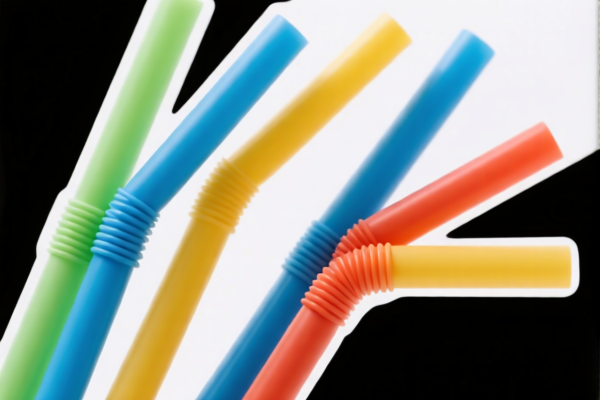
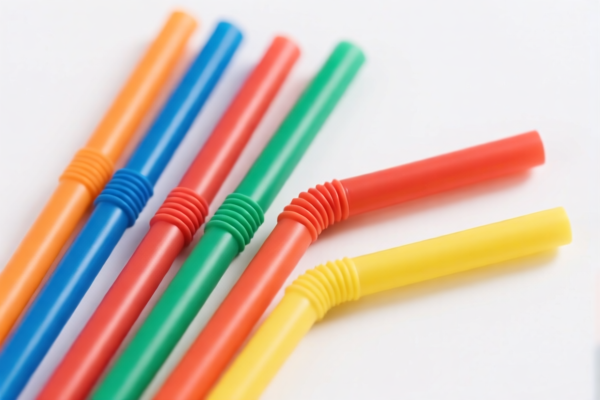
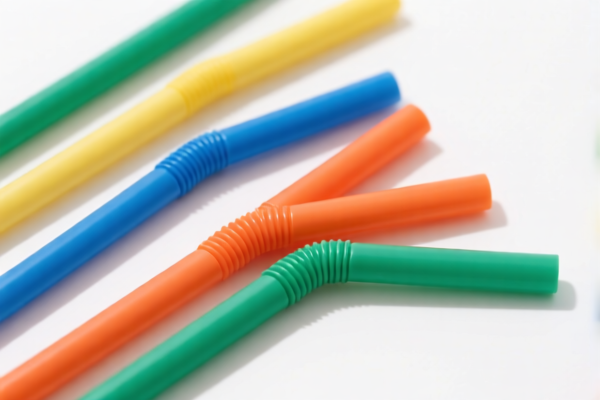
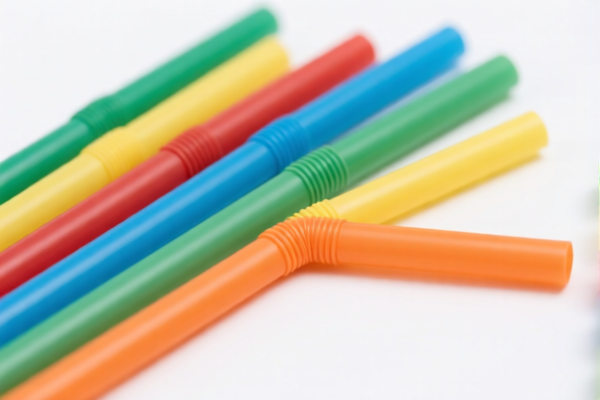
AI分析
🧪 Telescopic Straw (Retractable Drinking Straw)
🌐 HS Code Reference & Customs Clearance Guide | 2024/2025 Latest Tariff Analysis | Professional Entry Strategy
📌 I. Product Definition & Classification: What Exactly is a "Telescopic Straw"?
A Telescopic Straw, also known as a retractable straw, is a reusable, portable drinking accessory designed for travel and environmental protection. Its defining characteristic is its collapsible/telescopic structure, allowing it to shrink into a compact form for easy storage.
In international trade, it is strictly categorized by material and functional form. Despite being a "straw," it is rarely classified under standard beverage containers. Instead, it falls under: 1. Plastic Straws/Tableware: If made primarily of rigid plastic tubes. 2. Plastic Piping/Tubing: If classified as a flexible or specific plastic pipe structure. 3. Rubber Products: If made of silicone/rubber.
⚠️ Key Classification Nuance:
- If the item is a finished good intended directly for consumption (cut to size, packaged as cutlery) → It is often treated as Plastic Tableware or Other Plastic Articles.
- If the item is sold as a component or a tube not yet finished as a specific utensil → It may fall under Plastic Pipes/Tubes.
- Crucial Warning: Many "telescopic" straws are actually flexible PVC or silicone tubes. Customs authorities may scrutinize these heavily under "Plastic Pipes" or "Rubber Tubing" depending on hardness and use.
📦 II. HS Code Classification Matrix (Based on Provided Data)
| HS Code | Product Description | Material | Form/Usage | Key Differentiator |
|---|---|---|---|---|
3924.10.40.00 |
Plastic Straws | Plastic | Tableware / Household Items | Standard rigid plastic straws. Best for simple, non-telescopic, or rigid reusable straws. |
3924.90.56.50 |
Other Plastic Straws | Plastic | Other Household Items / Tableware | Specific to "Other" plastic tableware. Often used for complex designs, collapsible mechanisms, or premium reusable straws that don't fit basic "straw" definitions. |
3917.29.00.90 |
Plastic Tubes | Plastic | Tubular Form, Non-specified Length | Flexible or semi-rigid tubing. High tariff. Applied if customs views the telescopic mechanism as a "pipe" or "tube" rather than a utensil. |
3917.39.00.50 |
Plastic Pipes | Plastic | Tubular Structure | Rigid or semi-rigid pipes. Similar to above; high tariff. Used if the product is deemed a "component" or "industrial tube" rather than finished tableware. |
4016.99.60.50 |
Rubber Straws | Rubber | Vulcanized Rubber Products | Silicone/Rubber straws. Specifically for flexible, bendable, or collapsible silicone straws. |
🔍 Critical Insight:
- The difference between3924(Tableware) and3917(Pipes/Tubes) is often the intended use and packaging.
- If marketed and packaged as "Reusable Travel Straw with Pouch," argue for3924or4016.
- If marketed as "Silicone Tube" or "Plastic Tubing," you risk being classified under3917or4016, triggering higher tariffs.
💰 III. 2024/2025 Tariff Rate Breakdown (High Tariff Warning!)
✅ Applicable Country: United States (US)
✅ Origin: China (CN)
✅ Effective Date: Current (Including Section 301 & Section 122 Measures)
🎯 1. 3924.10.40.00 — Plastic Straws (Basic Tableware)
| Item | Detail |
|---|---|
| Base Tariff | 3.4% (Ad Valorem) |
| Section 301 Tariff | 0.0% (Note: Standard plastic straws often exempt from highest tiers, but verify specific 2025 updates) |
| Section 122 Tariff | 10% (Additional levy on certain goods) |
| Total Effective Rate | 13.4% |
| Calculation | CIF Value × 13.4% |
| De Minimis Exemption | ❌ Not Applicable (Section 321 shipments under $800 may still face scrutiny if deemed "subject to tariff," but usually cleared faster. For formal entries, tax applies.) |
| Legal Basis | HTSUS:3924.10.40.00 → Section 122: 10% |
📌 Explanation:
- This is the most favorable rate for plastic straws.
- "Section 122" refers to additional tariffs on specific consumer goods.
- Total Cost Impact: Moderate. 13.4% is manageable for mid-to-high margin products.
🎯 2. 3924.90.56.50 — Other Plastic Straws (Premium/Complex)
| Item | Detail |
|---|---|
| Base Tariff | 3.4% |
| Section 301 Tariff | +7.5% (List 4B or similar category) |
| Section 122 Tariff | +10% |
| Total Effective Rate | 20.9% |
| Calculation | CIF Value × 20.9% |
| De Minimis Exemption | ❌ Not Applicable |
| Legal Basis | HTSUS:3924.90.56.50 → Section 301: 7.5% → Section 122: 10% |
📌 Explanation:
- Used for reusable, collapsible, or decorative plastic straws that don't fit "basic" straw definitions.
- Total Cost Impact: High. 20.9% significantly eats into margins.
- Strategy: Try to justify classification under3924.10.40.00if possible.
🎯 3. 3917.29.00.90 & 3917.39.00.50 — Plastic Tubes/Pipes
| Item | Detail |
|---|---|
| Base Tariff | 3.1% |
| Section 301 Tariff | +25.0% (High penalty tier) |
| Section 122 Tariff | +10% |
| Total Effective Rate | 38.1% |
| Calculation | CIF Value × 38.1% |
| De Minimis Exemption | ❌ Not Applicable |
📌 Explanation:
- DANGER ZONE. If customs interprets your telescopic straw as a "tube" or "pipe" (especially if flexible or uncut), this tariff applies.
- Total Cost Impact: Very High. 38.1% makes most products unprofitable unless priced very high.
- Why? Plastic pipes/tubes are often subject to stricter trade remedies.
🎯 4. 4016.99.60.50 — Rubber/Silicone Straws
| Item | Detail |
|---|---|
| Base Tariff | 2.5% |
| Section 301 Tariff | +25.0% |
| Section 122 Tariff | +10% |
| Total Effective Rate | 37.5% |
| Calculation | CIF Value × 37.5% |
| De Minimis Exemption | ❌ Not Applicable |
📌 Explanation:
- Applies to silicone or rubber collapsible straws.
- Total Cost Impact: Very High. Similar to plastic tubes.
- Note: Even though rubber is "natural," trade policies often treat flexible plastic/rubber tubes similarly for tariff purposes.
🛠️ IV. Customs Clearance Practical Advice (Avoiding Pitfalls)
✅ 1. Documentation Checklist (Mandatory)
| Document | Required? | Explanation |
|---|---|---|
| ✅ Product Specification Sheet | ✔️ | Must clearly state: "Reusable Drinking Straw," "Telescopic/Retractable," "Food Grade Material." |
| ✅ Photos | ✔️ | Show the straw in both extended and retracted states. Include packaging labeled "Tableware" or "Utensil." |
| ✅ Material Declaration | ✔️ | Explicitly state: "100% Food Grade Plastic (PP/Tritan)" or "Food Grade Silicone." Avoid vague terms like "Plastic Tube." |
| ✅ Commercial Invoice | ✔️ | Description: "Reusable Telescopic Plastic Straw, for Drinking Purposes." Avoid words like "Tube," "Pipe," or "Hose." |
| ✅ HS Code Pre-Ruling Request | ✔️ | Highly recommended for first-time imports to lock in 3924 classification. |
✅ 2. Classification Strategy (Key Tactics)
🔥 "It's a Straw, Not a Pipe!"
| Scenario | Recommended HS Code | Risk Level | Explanation |
|---|---|---|---|
| Rigid Plastic Straw (even if collapsible sections) | 3924.10.40.00 |
🟢 Low | Clearly a tableware item. Lowest tariff (13.4%). |
| Reusable Collapsible Straw (Plastic) | 3924.90.56.50 |
🟡 Medium | If it's too complex for 3924.10, this is the safe fallback (20.9%). |
| Silicone/Rubber Straw | 4016.99.60.50 |
🔴 High | High tariff (37.5%). Hard to argue otherwise for silicone. |
| Sold as "Tube" or "Component" | 3917.xxxx |
🔴 Very High | AVOID. Never describe it as a pipe or tubing. Always emphasize "Tableware" or "Utensil." |
✅ 3. Special Situations
| Situation | Advice |
|---|---|
| OEM Custom Design | Provide customer design files to prove it's a finished consumer good, not a raw material or component. |
| With Accessories (Pouch, Brush) | Declare as a Set. The primary character of the set determines the HS code (usually the straw). Ensure the pouch is included in the value. |
| Mixed Container (Plastic + Silicone) | Split the shipment. Classify plastic straws under 3924 and silicone under 4016. Do not mix, or Customs may apply the higher rate to the entire lot. |
🌍 V. Global Market Comparison (2024/2025)
| Country/Region | Recommended HS Code | Estimated Duty (China Origin) | Key Certifications | Notes |
|---|---|---|---|---|
| 🇺🇸 USA | 3924.10.40.00 |
13.4% (Plastic) / 37.5% (Rubber) | FDA, BPA-Free | High scrutiny on Section 301/122. |
| 🇨🇳 China | 3924.10.40.00 |
15% (Import Duty) + VAT | GB Standard | No Section 301. |
| 🇪🇺 EU | 3924.10.10 |
6.5% | LFGB, Food Grade | No retaliatory tariffs. |
| 🇬🇧 UK | 3924.10.00 |
6.5% | UKCA | Post-Brexit rules apply. |
| 🇦🇺 Australia | 3924.10.00 |
5% | TGA/Food Standard | Low barrier. |
📌 Conclusion:
- USA is the most expensive market for plastic straws due to Section 301 & 122 tariffs.
- EU and UK offer significantly lower duties (~6.5%).
- Silicone straws face high tariffs globally if classified as rubber products, but better in EU than US.
📌 VI. Common Mistakes & Pitfalls (Blood & Tears Lessons)
❌ Mistake 1: Describing the product as "Silicone Tube" or "Plastic Pipe" in the invoice.
👉 Consequence: Customs classifies as 3917 or 4016 → 37-38% tariff instead of 13%.
❌ Mistake 2: Using "Straw" for a rigid plastic tube but classifying it under 3917.
👉 Consequence: Overpaying taxes. You should use 3924 (Tableware) for finished straws.
❌ Mistake 3: Ignoring Section 122 Tariff.
👉 Consequence: Even if base tariff is low, the 10% Section 122 adds up. Factor this into your FOB pricing.
❌ Mistake 4: Mixing Plastic and Silicone in one HS code entry.
👉 Consequence: Customs may reject the entry or apply the highest tariff to all items. Separate them.
✅ Correct Declaration Example:
"Reusable Telescopic Drinking Straw, Plastic, Food Grade, for Household Use, Model: TS-01"
NOT: "Plastic Tube for Drinking"
🎯 VII. Conclusion: Precision Classification Saves Money!
🎯 Key Takeaway:
🔹 Plastic Straw = Tableware (
3924) → 13.4% - 20.9%
🔹 Plastic Tube/Rubber Straw = Industrial/Rubber (3917/4016) → 37.5% - 38.1%
🎯 Strategy:
1. Always market as "Tableware" or "Utensil."
2. Provide clear photos showing the straw in use.
3. Pre-classify with a customs broker to lock in 3924 if possible.
4. For Silicone: Accept the higher tariff or consider shipping to non-US markets (EU/UK) where duties are lower.
📌 Pro Tip:
If you are exporting to the USA, consider pricing accordingly or exploring tariff engineering (e.g., bundling with other low-tariff items) where legal.
For EU/UK, highlight BPA-Free and Food-Grade certifications to ensure smooth clearance.
📣 Action Item:
📞 Consult your customs broker BEFORE shipping.
📄 Provide Product Images and Invoice Descriptions for pre-approval.
🚀 Avoid Surprises: Pay 13% now, not 38% later!
✨ Smart Classification, Lower Costs, Faster Clearance!
💼 Your Profit Margin Depends on Your HS Code!
用户评价
关于 HS 编码归类
协调制度(HS)是由世界海关组织(WCO)制定的国际贸易商品分类标准。全球 200 多个国家采用 HS 系统作为海关关税、贸易统计和进出口监管的基础。
每个 HS 编码遵循以下层级结构:
- 章(2 位)——商品大类(例如:第 84 章:机器和机械设备)
- 品目(4 位)——章内的更具体分类
- 子目(6 位)——国际通用细分,所有 WCO 成员国统一使用
- 本国细分(8-10 位)——各国自行扩展的细分编码,如美国 HTSUS 10 位编码
正确的 HS 编码归类对于顺利通关、准确缴纳关税和遵守贸易法规至关重要。错误归类可能导致海关延误、多缴关税或罚款。
从CN进口到US时,适用的关税税率可能包括:
- 最惠国(MFN)税率——适用于 WTO 成员国的标准关税税率
- 普通税率——适用于无贸易协定国家
- 贸易救济关税——附加关税,如 301 条款(反倾销)、232 条款(国家安全)或反补贴税
本页内容仅供参考。如需正式归类,请咨询当地海关或持牌报关代理。