Telescopic Straw
CN → US| HS Code | Tariff Rate | Origin | Destination | Doc |
|---|---|---|---|---|
| 3917290090 | 38.1% | CN | US | Official Doc |
| 3924905650 | 20.9% | CN | US | Official Doc |
| 3924104000 | 13.4% | CN | US | Official Doc |
| 3917390050 | 38.1% | CN | US | Official Doc |
| 4823690040 | 35.0% | CN | US | Official Doc |
Product Images

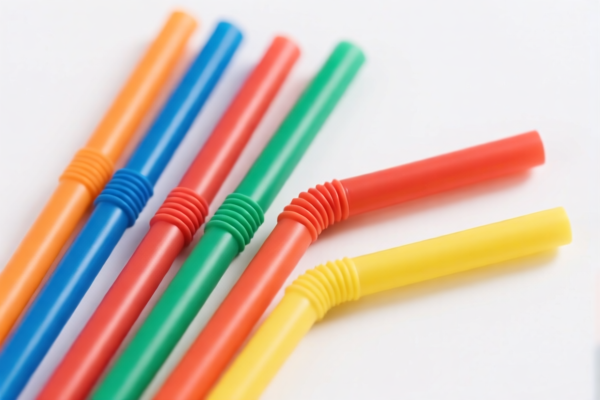
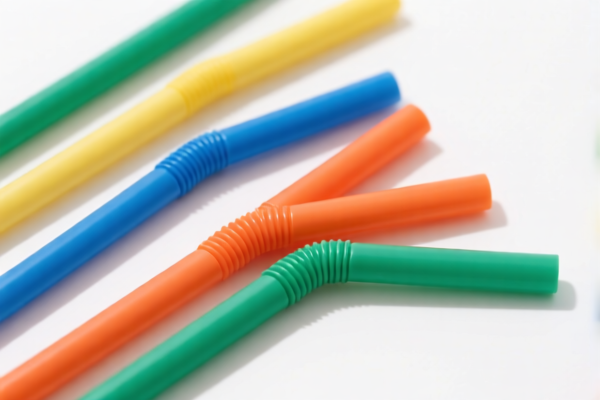
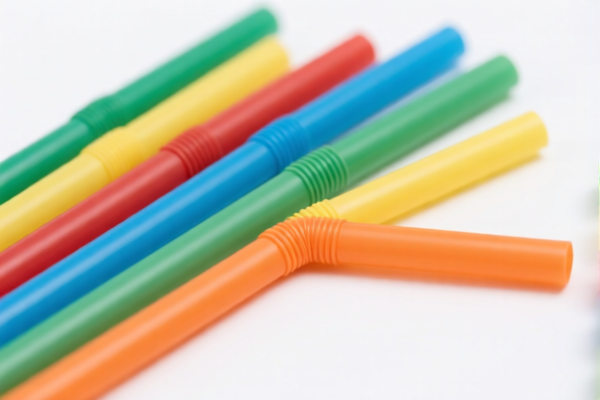
AI Analysis
🧪 Telescopic Straw (Retractable Drinking Straw)
🌐 HS Code Reference & Customs Clearance Guide | 2024/2025 Latest Tariff Analysis | Professional Entry Strategy
📌 I. Product Definition & Classification: What Exactly is a "Telescopic Straw"?
A Telescopic Straw, also known as a retractable straw, is a reusable, portable drinking accessory designed for travel and environmental protection. Its defining characteristic is its collapsible/telescopic structure, allowing it to shrink into a compact form for easy storage.
In international trade, it is strictly categorized by material and functional form. Despite being a "straw," it is rarely classified under standard beverage containers. Instead, it falls under: 1. Plastic Straws/Tableware: If made primarily of rigid plastic tubes. 2. Plastic Piping/Tubing: If classified as a flexible or specific plastic pipe structure. 3. Rubber Products: If made of silicone/rubber.
⚠️ Key Classification Nuance:
- If the item is a finished good intended directly for consumption (cut to size, packaged as cutlery) → It is often treated as Plastic Tableware or Other Plastic Articles.
- If the item is sold as a component or a tube not yet finished as a specific utensil → It may fall under Plastic Pipes/Tubes.
- Crucial Warning: Many "telescopic" straws are actually flexible PVC or silicone tubes. Customs authorities may scrutinize these heavily under "Plastic Pipes" or "Rubber Tubing" depending on hardness and use.
📦 II. HS Code Classification Matrix (Based on Provided Data)
| HS Code | Product Description | Material | Form/Usage | Key Differentiator |
|---|---|---|---|---|
3924.10.40.00 |
Plastic Straws | Plastic | Tableware / Household Items | Standard rigid plastic straws. Best for simple, non-telescopic, or rigid reusable straws. |
3924.90.56.50 |
Other Plastic Straws | Plastic | Other Household Items / Tableware | Specific to "Other" plastic tableware. Often used for complex designs, collapsible mechanisms, or premium reusable straws that don't fit basic "straw" definitions. |
3917.29.00.90 |
Plastic Tubes | Plastic | Tubular Form, Non-specified Length | Flexible or semi-rigid tubing. High tariff. Applied if customs views the telescopic mechanism as a "pipe" or "tube" rather than a utensil. |
3917.39.00.50 |
Plastic Pipes | Plastic | Tubular Structure | Rigid or semi-rigid pipes. Similar to above; high tariff. Used if the product is deemed a "component" or "industrial tube" rather than finished tableware. |
4016.99.60.50 |
Rubber Straws | Rubber | Vulcanized Rubber Products | Silicone/Rubber straws. Specifically for flexible, bendable, or collapsible silicone straws. |
🔍 Critical Insight:
- The difference between3924(Tableware) and3917(Pipes/Tubes) is often the intended use and packaging.
- If marketed and packaged as "Reusable Travel Straw with Pouch," argue for3924or4016.
- If marketed as "Silicone Tube" or "Plastic Tubing," you risk being classified under3917or4016, triggering higher tariffs.
💰 III. 2024/2025 Tariff Rate Breakdown (High Tariff Warning!)
✅ Applicable Country: United States (US)
✅ Origin: China (CN)
✅ Effective Date: Current (Including Section 301 & Section 122 Measures)
🎯 1. 3924.10.40.00 — Plastic Straws (Basic Tableware)
| Item | Detail |
|---|---|
| Base Tariff | 3.4% (Ad Valorem) |
| Section 301 Tariff | 0.0% (Note: Standard plastic straws often exempt from highest tiers, but verify specific 2025 updates) |
| Section 122 Tariff | 10% (Additional levy on certain goods) |
| Total Effective Rate | 13.4% |
| Calculation | CIF Value × 13.4% |
| De Minimis Exemption | ❌ Not Applicable (Section 321 shipments under $800 may still face scrutiny if deemed "subject to tariff," but usually cleared faster. For formal entries, tax applies.) |
| Legal Basis | HTSUS:3924.10.40.00 → Section 122: 10% |
📌 Explanation:
- This is the most favorable rate for plastic straws.
- "Section 122" refers to additional tariffs on specific consumer goods.
- Total Cost Impact: Moderate. 13.4% is manageable for mid-to-high margin products.
🎯 2. 3924.90.56.50 — Other Plastic Straws (Premium/Complex)
| Item | Detail |
|---|---|
| Base Tariff | 3.4% |
| Section 301 Tariff | +7.5% (List 4B or similar category) |
| Section 122 Tariff | +10% |
| Total Effective Rate | 20.9% |
| Calculation | CIF Value × 20.9% |
| De Minimis Exemption | ❌ Not Applicable |
| Legal Basis | HTSUS:3924.90.56.50 → Section 301: 7.5% → Section 122: 10% |
📌 Explanation:
- Used for reusable, collapsible, or decorative plastic straws that don't fit "basic" straw definitions.
- Total Cost Impact: High. 20.9% significantly eats into margins.
- Strategy: Try to justify classification under3924.10.40.00if possible.
🎯 3. 3917.29.00.90 & 3917.39.00.50 — Plastic Tubes/Pipes
| Item | Detail |
|---|---|
| Base Tariff | 3.1% |
| Section 301 Tariff | +25.0% (High penalty tier) |
| Section 122 Tariff | +10% |
| Total Effective Rate | 38.1% |
| Calculation | CIF Value × 38.1% |
| De Minimis Exemption | ❌ Not Applicable |
📌 Explanation:
- DANGER ZONE. If customs interprets your telescopic straw as a "tube" or "pipe" (especially if flexible or uncut), this tariff applies.
- Total Cost Impact: Very High. 38.1% makes most products unprofitable unless priced very high.
- Why? Plastic pipes/tubes are often subject to stricter trade remedies.
🎯 4. 4016.99.60.50 — Rubber/Silicone Straws
| Item | Detail |
|---|---|
| Base Tariff | 2.5% |
| Section 301 Tariff | +25.0% |
| Section 122 Tariff | +10% |
| Total Effective Rate | 37.5% |
| Calculation | CIF Value × 37.5% |
| De Minimis Exemption | ❌ Not Applicable |
📌 Explanation:
- Applies to silicone or rubber collapsible straws.
- Total Cost Impact: Very High. Similar to plastic tubes.
- Note: Even though rubber is "natural," trade policies often treat flexible plastic/rubber tubes similarly for tariff purposes.
🛠️ IV. Customs Clearance Practical Advice (Avoiding Pitfalls)
✅ 1. Documentation Checklist (Mandatory)
| Document | Required? | Explanation |
|---|---|---|
| ✅ Product Specification Sheet | ✔️ | Must clearly state: "Reusable Drinking Straw," "Telescopic/Retractable," "Food Grade Material." |
| ✅ Photos | ✔️ | Show the straw in both extended and retracted states. Include packaging labeled "Tableware" or "Utensil." |
| ✅ Material Declaration | ✔️ | Explicitly state: "100% Food Grade Plastic (PP/Tritan)" or "Food Grade Silicone." Avoid vague terms like "Plastic Tube." |
| ✅ Commercial Invoice | ✔️ | Description: "Reusable Telescopic Plastic Straw, for Drinking Purposes." Avoid words like "Tube," "Pipe," or "Hose." |
| ✅ HS Code Pre-Ruling Request | ✔️ | Highly recommended for first-time imports to lock in 3924 classification. |
✅ 2. Classification Strategy (Key Tactics)
🔥 "It's a Straw, Not a Pipe!"
| Scenario | Recommended HS Code | Risk Level | Explanation |
|---|---|---|---|
| Rigid Plastic Straw (even if collapsible sections) | 3924.10.40.00 |
🟢 Low | Clearly a tableware item. Lowest tariff (13.4%). |
| Reusable Collapsible Straw (Plastic) | 3924.90.56.50 |
🟡 Medium | If it's too complex for 3924.10, this is the safe fallback (20.9%). |
| Silicone/Rubber Straw | 4016.99.60.50 |
🔴 High | High tariff (37.5%). Hard to argue otherwise for silicone. |
| Sold as "Tube" or "Component" | 3917.xxxx |
🔴 Very High | AVOID. Never describe it as a pipe or tubing. Always emphasize "Tableware" or "Utensil." |
✅ 3. Special Situations
| Situation | Advice |
|---|---|
| OEM Custom Design | Provide customer design files to prove it's a finished consumer good, not a raw material or component. |
| With Accessories (Pouch, Brush) | Declare as a Set. The primary character of the set determines the HS code (usually the straw). Ensure the pouch is included in the value. |
| Mixed Container (Plastic + Silicone) | Split the shipment. Classify plastic straws under 3924 and silicone under 4016. Do not mix, or Customs may apply the higher rate to the entire lot. |
🌍 V. Global Market Comparison (2024/2025)
| Country/Region | Recommended HS Code | Estimated Duty (China Origin) | Key Certifications | Notes |
|---|---|---|---|---|
| 🇺🇸 USA | 3924.10.40.00 |
13.4% (Plastic) / 37.5% (Rubber) | FDA, BPA-Free | High scrutiny on Section 301/122. |
| 🇨🇳 China | 3924.10.40.00 |
15% (Import Duty) + VAT | GB Standard | No Section 301. |
| 🇪🇺 EU | 3924.10.10 |
6.5% | LFGB, Food Grade | No retaliatory tariffs. |
| 🇬🇧 UK | 3924.10.00 |
6.5% | UKCA | Post-Brexit rules apply. |
| 🇦🇺 Australia | 3924.10.00 |
5% | TGA/Food Standard | Low barrier. |
📌 Conclusion:
- USA is the most expensive market for plastic straws due to Section 301 & 122 tariffs.
- EU and UK offer significantly lower duties (~6.5%).
- Silicone straws face high tariffs globally if classified as rubber products, but better in EU than US.
📌 VI. Common Mistakes & Pitfalls (Blood & Tears Lessons)
❌ Mistake 1: Describing the product as "Silicone Tube" or "Plastic Pipe" in the invoice.
👉 Consequence: Customs classifies as 3917 or 4016 → 37-38% tariff instead of 13%.
❌ Mistake 2: Using "Straw" for a rigid plastic tube but classifying it under 3917.
👉 Consequence: Overpaying taxes. You should use 3924 (Tableware) for finished straws.
❌ Mistake 3: Ignoring Section 122 Tariff.
👉 Consequence: Even if base tariff is low, the 10% Section 122 adds up. Factor this into your FOB pricing.
❌ Mistake 4: Mixing Plastic and Silicone in one HS code entry.
👉 Consequence: Customs may reject the entry or apply the highest tariff to all items. Separate them.
✅ Correct Declaration Example:
"Reusable Telescopic Drinking Straw, Plastic, Food Grade, for Household Use, Model: TS-01"
NOT: "Plastic Tube for Drinking"
🎯 VII. Conclusion: Precision Classification Saves Money!
🎯 Key Takeaway:
🔹 Plastic Straw = Tableware (
3924) → 13.4% - 20.9%
🔹 Plastic Tube/Rubber Straw = Industrial/Rubber (3917/4016) → 37.5% - 38.1%
🎯 Strategy:
1. Always market as "Tableware" or "Utensil."
2. Provide clear photos showing the straw in use.
3. Pre-classify with a customs broker to lock in 3924 if possible.
4. For Silicone: Accept the higher tariff or consider shipping to non-US markets (EU/UK) where duties are lower.
📌 Pro Tip:
If you are exporting to the USA, consider pricing accordingly or exploring tariff engineering (e.g., bundling with other low-tariff items) where legal.
For EU/UK, highlight BPA-Free and Food-Grade certifications to ensure smooth clearance.
📣 Action Item:
📞 Consult your customs broker BEFORE shipping.
📄 Provide Product Images and Invoice Descriptions for pre-approval.
🚀 Avoid Surprises: Pay 13% now, not 38% later!
✨ Smart Classification, Lower Costs, Faster Clearance!
💼 Your Profit Margin Depends on Your HS Code!
Customer Reviews
About HS Code Classification
The Harmonized System (HS) is an internationally standardized nomenclature developed by the World Customs Organization (WCO) to classify traded products. Over 200 countries use the HS system as the basis for customs tariffs, trade statistics, and import/export regulations.
Each HS code follows a hierarchical structure:
- Chapter (2 digits) — Broad category of goods (e.g., Chapter 84: Machinery and Mechanical Appliances)
- Heading (4 digits) — More specific grouping within the chapter
- Subheading (6 digits) — Internationally standardized breakdown, used by all WCO member countries
- National subdivisions (8-10 digits) — Country-specific extensions for further classification, such as US HTSUS 10-digit codes
Correct HS code classification is essential for smooth customs clearance, accurate duty payment, and compliance with trade regulations. Misclassification can lead to customs delays, overpayment of duties, or penalties.
When importing from CN to US, the applicable tariff rates may include:
- Most-Favored-Nation (MFN) rate — The standard duty rate applied to WTO members
- General rate — Applied to countries without trade agreements
- Trade remedy duties — Additional tariffs such as Section 301 (anti-dumping), Section 232 (national security), or countervailing duties
The information provided on this page is for reference purposes only. For official classification, please consult with your local customs authority or a licensed customs broker.