Tetrafluoroethylene Dispersion
CN → US商品图片
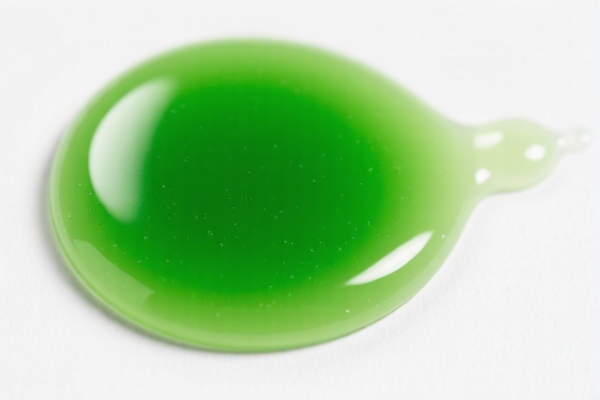
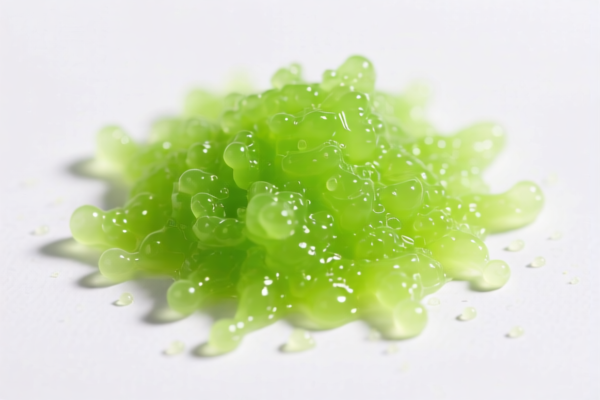
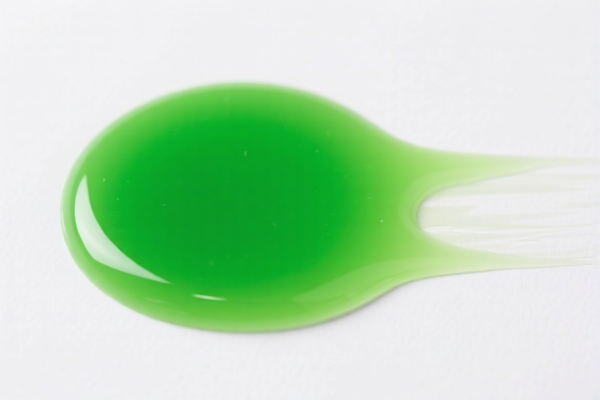
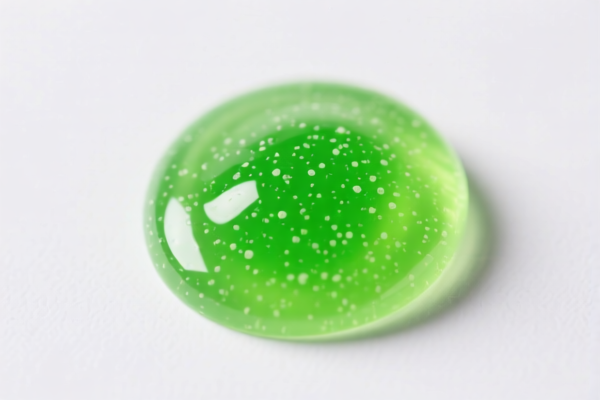
AI分析
🧪 Tetrafluoroethylene (TFE) Dispersion (Polytetrafluoroethylene Emulsion)
🌐 HS Code Reference & Customs Clearance Guide | 2026 Latest Tariff Analysis | Professional Clearance Strategy
📌 I. Product Definition and Classification: Do You Really Understand "TFE Dispersion"?
Tetrafluoroethylene (TFE) Dispersion, commonly known as PTFE Emulsion or PTFE Latex, is a liquid suspension of fine polytetrafluoroethylene (PTFE) particles in water. It is a critical raw material used in the manufacturing of non-stick coatings (e.g., cookware), chemical-resistant linings, wire and cable insulation, and high-performance industrial fabrics.
In international trade, it is strictly classified based on its physical state and polymer type:
Key Distinction:
- If it is a liquid dispersion/emulsion containing PTFE particles → Classified under 3906
- If it is solid powder, pellets, or granules → Classified under 3904.10
- If it is a finished coated fabric → Classified under 5903 or 5911
⚠️ Critical Classification Point:
- State of Matter: TFE Dispersion is a liquid/aqueous emulsion. It is NOT a solid polymer.
- Chemical Nature: It is a polymerization product of tetrafluoroethylene.
- Common Misclassification: Do NOT classify as "Chemical Products" (Chapter 29) or "Preparations" (Chapter 38). It is a Plastic in primary forms (Chapter 39).
📦 II. HS Code Classification Details (2026 Latest Tariff Authority Comparison)
| HS Code | Product Description | Application Scenario | Physical State |
|---|---|---|---|
3906.10.00.00 |
Poly(tetrafluoroethylene) (PTFE) in primary forms | TFE Dispersion/Emulsion, PTFE powder, pellets | ✅ Liquid or Solid Primary Form |
3906.10.90.00 |
Other poly(tetrafluoroethylene) in primary forms | Specialized PTFE compounds, modified dispersions | ✅ Liquid or Solid |
3904.10.00.00 |
Poly(vinyl chloride) primaries | ❌ Incorrect for PTFE | ❌ N/A |
3824.99.90.00 |
Other prepared binders for foundry molds | ❌ Incorrect unless it's a pre-mixed industrial binder | ❌ N/A |
3214.10.00.00 |
Prepared paints and varnishes | ❌ Incorrect if it's raw resin dispersion for coating later | ❌ N/A |
🔍 Key Reminder:
-3906.10.00.00is the standard HS Code for TFE Dispersion.
- PTFE is a distinct polymer from PVC, PE, or PP. It must be declared under 3906.10.
- If the dispersion contains additives (e.g., surfactants, stabilizers) that change its essential character, it may still fall under 3906 if the PTFE remains the principal material. However, if it is a "prepared product" for direct coating, customs may scrutinize it.
💰 III. 2026 Latest Tariff Rate Breakdown (Including Surcharges, Policy Add-ons)
✅ Applicable Country: United States (US)
✅ Country of Origin: China (CN)
✅ Effective Date: November 10, 2025 (and subsequent imports)
🎯 1. 3906.10.00.00 —— Poly(tetrafluoroethylene) in Primary Forms
| Item | Content |
|---|---|
| Base Tariff Rate | 0% (ad valorem) |
| USITC Surtax | +25% (Under USITC Footnote 9903.39.01, Section 301) |
| IEEPA Surtax | +10% (On China/HK products, effective Nov 10, 2025) |
| Total Tariff Rate | 35% |
| Tax Calculation | CIF Value × 35% |
| De Minimis Eligibility | ❌ Not Eligible (deny_de_minimis) |
| Legal Basis Path | IEEPA:9903.01.25 → IEEPA:9903.01.24 → USITC:3906.10.00.00 → FOOTNOTE:9903.39.01 |
📌 Explanation:
- The 25% USITC surtax is part of the Section 301 tariffs on specific Chinese chemicals and plastics.
- The 10% IEEPA surtax is a new layer of tariffs under the International Emergency Economic Powers Act targeting Chinese-origin goods.
- Total 35% is a high tariff. Importers must plan for this cost.
- Note: While PTFE is often used in high-tech applications, it is not exempt from Section 301 tariffs under current 2026 rules.
🎯 2. 3906.10.90.00 —— Other Poly(tetrafluoroethylene) in Primary Forms
| Item | Content |
|---|---|
| Base Tariff Rate | 0% |
| USITC Surtax | +25% |
| IEEPA Surtax | +10% |
| Total Tariff Rate | 35% |
| Tax Calculation | CIF × 35% |
| De Minimis Eligibility | ❌ Not Eligible |
| Legal Basis Path | IEEPA:9901.25 → IEEPA:9903.01.24 → USITC:3906.10.90.00 → FOOTNOTE:9903.39.01 |
📌 Note:
- If your TFE dispersion is a specialized modified emulsion not covered under3906.10.00, it may fall here.
- The tariff rate is identical to the standard PTFE code.
- Ensure the product description clearly states "Polytetrafluoroethylene Dispersion" to avoid misclassification.
🛠️ IV. Customs Clearance Practical Advice (Avoiding Pitfalls)
✅ 1. Documentation Checklist (Mandatory)
| Document | Required | Description |
|---|---|---|
| ✅ Product Spec Sheet | ✔️ | Must specify: PTFE content (%), particle size, solid content, viscosity, emulsion type. |
| ✅ Safety Data Sheet (SDS) | ✔️ | Critical for hazardous material classification (if any). TFE dispersion is generally non-hazardous but check for surfactants. |
| ✅ Certificate of Origin (CO) | ✔️ | Essential for proving origin. If non-China, may qualify for exemptions. |
| ✅ Commercial Invoice | ✔️ | Clearly state: "PTFE Dispersion, HS Code 3906.10.00.00, Origin China" |
| ✅ Bill of Lading | ✔️ | Ensure packaging details (drums, IBCs) match declaration. |
| ✅ FCC/ROHS/REACH | ✔️ | For market compliance, though not always required for raw materials. |
✅ 2. Declaration Tips (Key Mnemonics)
🔥 "Liquid PTFE, 3906, 35% Tax, Don't Split, Declare Full!"
| Scenario | Correct Declaration | Wrong Practice |
|---|---|---|
| Raw TFE Dispersion | 3906.10.00.00 |
Misclassifying as "Chemical Preparation" (Ch 38) → Higher scrutiny |
| PTFE Powder | 3906.10.00.00 |
Misclassifying as "Polymer Resin" (Ch 3904) → Incorrect |
| Coated Fabric | 5903.10 or 5911.90 |
Misclassifying raw material as finished good → Delays |
| Mixed with Additives | 3906.10.00.00 |
Splitting into "Additive" + "Resin" → Audit risk |
✅ 3. Special Case Handling
| Case | Handling Advice |
|---|---|
| OEM Branded PTFE | Provide customer PO + brand authorization if applicable. |
| High-Purity Medical Grade | May require FDA documentation if intended for medical devices, but HS remains 3906.10. |
| Non-China Origin (e.g., USA, Japan) | If PTFE is manufactured in the US, 0% tariff applies (no Section 301). |
| Small Sample Shipments | Still subject to 35% tariff. No de minimis exemption. |
🌍 V. Global Market Comparison (2026 Latest)
| Country/Region | Recommended HS Code | Tariff (China Origin) | Certification | Notes |
|---|---|---|---|---|
| 🇺🇸 USA | 3906.10.00.00 |
35% | N/A | High tariff due to Section 301 + IEEPA |
| 🇨🇳 China | 3906.10.00.00 |
0% | N/A | No import tariff on raw materials |
| 🇪🇺 EU | 3906.10.00 |
0% | REACH | No additional surtaxes |
| 🇦🇺 Australia | 3906.10.00 |
5% | AUSTAL | No Section 301 equivalent |
| 🇯🇵 Japan | 3906.10.00 |
0% | PSE | Free Trade Agreement may apply |
📌 Conclusion:
- USA is the most challenging market for PTFE imports due to 35% combined tariffs.
- EU, Japan, Australia offer competitive tariff rates.
- Consider supply chain diversification if exporting to the US heavily.
📌 VI. Common Errors & Pitfalls (Lessons Learned)
❌ Error 1: Classifying TFE Dispersion as 3824.99 (Prepared Binders)
👉 Consequence: Higher scrutiny, potential 5%+ penalty for misclassification.
❌ Error 2: Claiming De Minimis for small shipments
👉 Consequence: 35% tariff applied retroactively + fines. PTFE is not de minimis eligible.
❌ Error 3: Missing SDS or Spec Sheet
👉 Consequence: Customs may hold shipment for chemical analysis, delaying clearance by weeks.
❌ Error 4: Mislabeling as "Teflon™" without brand authorization
👉 Consequence: IP infringement claims. Use generic name "PTFE Dispersion."
✅ Correct Practice:
"PTFE Dispersion, Poly(tetrafluoroethylene) in primary form, 60% solid content, aqueous emulsion, HS Code 3906.10.00.00, Origin China"
🎯 VII. Conclusion: Professional Declaration, Cost Control, Efficiency!
🎯 Remember:
🔹 "PTFE is 3906, 35% Tax, No De Minimis, SDS Required!"
🔹 "HS Code is King, Tariff is Queen, Declaration is the Stage!"
📌 Tip:
If your PTFE dispersion is manufactured in the US, Japan, or Germany, it may qualify for 0% tariff in the US under certain trade agreements or general rules of origin.
Recommend Pre-Ruling (Advance Ruling) from CBP to confirm HS Code and tariff liability before shipment.
📣 Act Now:
📞 Contact a licensed customs broker + Provide Spec Sheet + Request CBP Pre-Ruling
🚀 Ensure your PTFE Dispersion clears customs smoothly, reducing costs and delays!
✨ Professional Customs Clearance Starts with Accurate Classification!
💼 Every cent of tariff cost must be calculated precisely!
用户评价
关于 HS 编码归类
协调制度(HS)是由世界海关组织(WCO)制定的国际贸易商品分类标准。全球 200 多个国家采用 HS 系统作为海关关税、贸易统计和进出口监管的基础。
每个 HS 编码遵循以下层级结构:
- 章(2 位)——商品大类(例如:第 84 章:机器和机械设备)
- 品目(4 位)——章内的更具体分类
- 子目(6 位)——国际通用细分,所有 WCO 成员国统一使用
- 本国细分(8-10 位)——各国自行扩展的细分编码,如美国 HTSUS 10 位编码
正确的 HS 编码归类对于顺利通关、准确缴纳关税和遵守贸易法规至关重要。错误归类可能导致海关延误、多缴关税或罚款。
从CN进口到US时,适用的关税税率可能包括:
- 最惠国(MFN)税率——适用于 WTO 成员国的标准关税税率
- 普通税率——适用于无贸易协定国家
- 贸易救济关税——附加关税,如 301 条款(反倾销)、232 条款(国家安全)或反补贴税
本页内容仅供参考。如需正式归类,请咨询当地海关或持牌报关代理。