Tetrafluoroethylene Dispersion
CN → USProduct Images

AI Analysis
🧪 Tetrafluoroethylene (TFE) Dispersion (Polytetrafluoroethylene Emulsion)
🌐 HS Code Reference & Customs Clearance Guide | 2026 Latest Tariff Analysis | Professional Clearance Strategy
📌 I. Product Definition and Classification: Do You Really Understand "TFE Dispersion"?
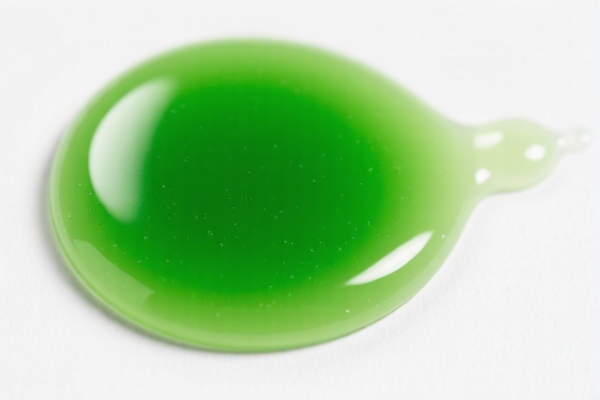
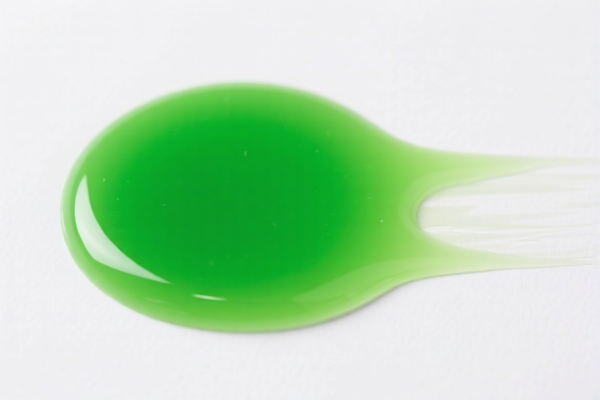
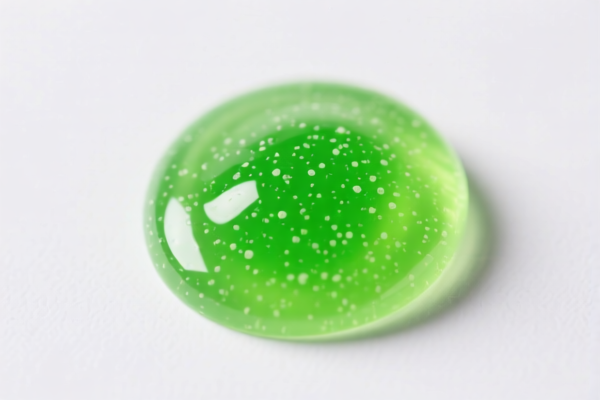
Tetrafluoroethylene (TFE) Dispersion, commonly known as PTFE Emulsion or PTFE Latex, is a liquid suspension of fine polytetrafluoroethylene (PTFE) particles in water. It is a critical raw material used in the manufacturing of non-stick coatings (e.g., cookware), chemical-resistant linings, wire and cable insulation, and high-performance industrial fabrics.
In international trade, it is strictly classified based on its physical state and polymer type:
Key Distinction:
- If it is a liquid dispersion/emulsion containing PTFE particles → Classified under 3906
- If it is solid powder, pellets, or granules → Classified under 3904.10
- If it is a finished coated fabric → Classified under 5903 or 5911
⚠️ Critical Classification Point:
- State of Matter: TFE Dispersion is a liquid/aqueous emulsion. It is NOT a solid polymer.
- Chemical Nature: It is a polymerization product of tetrafluoroethylene.
- Common Misclassification: Do NOT classify as "Chemical Products" (Chapter 29) or "Preparations" (Chapter 38). It is a Plastic in primary forms (Chapter 39).
📦 II. HS Code Classification Details (2026 Latest Tariff Authority Comparison)
| HS Code | Product Description | Application Scenario | Physical State |
|---|---|---|---|
3906.10.00.00 |
Poly(tetrafluoroethylene) (PTFE) in primary forms | TFE Dispersion/Emulsion, PTFE powder, pellets | ✅ Liquid or Solid Primary Form |
3906.10.90.00 |
Other poly(tetrafluoroethylene) in primary forms | Specialized PTFE compounds, modified dispersions | ✅ Liquid or Solid |
3904.10.00.00 |
Poly(vinyl chloride) primaries | ❌ Incorrect for PTFE | ❌ N/A |
3824.99.90.00 |
Other prepared binders for foundry molds | ❌ Incorrect unless it's a pre-mixed industrial binder | ❌ N/A |
3214.10.00.00 |
Prepared paints and varnishes | ❌ Incorrect if it's raw resin dispersion for coating later | ❌ N/A |
🔍 Key Reminder:
-3906.10.00.00is the standard HS Code for TFE Dispersion.
- PTFE is a distinct polymer from PVC, PE, or PP. It must be declared under 3906.10.
- If the dispersion contains additives (e.g., surfactants, stabilizers) that change its essential character, it may still fall under 3906 if the PTFE remains the principal material. However, if it is a "prepared product" for direct coating, customs may scrutinize it.
💰 III. 2026 Latest Tariff Rate Breakdown (Including Surcharges, Policy Add-ons)
✅ Applicable Country: United States (US)
✅ Country of Origin: China (CN)
✅ Effective Date: November 10, 2025 (and subsequent imports)
🎯 1. 3906.10.00.00 —— Poly(tetrafluoroethylene) in Primary Forms
| Item | Content |
|---|---|
| Base Tariff Rate | 0% (ad valorem) |
| USITC Surtax | +25% (Under USITC Footnote 9903.39.01, Section 301) |
| IEEPA Surtax | +10% (On China/HK products, effective Nov 10, 2025) |
| Total Tariff Rate | 35% |
| Tax Calculation | CIF Value × 35% |
| De Minimis Eligibility | ❌ Not Eligible (deny_de_minimis) |
| Legal Basis Path | IEEPA:9903.01.25 → IEEPA:9903.01.24 → USITC:3906.10.00.00 → FOOTNOTE:9903.39.01 |
📌 Explanation:
- The 25% USITC surtax is part of the Section 301 tariffs on specific Chinese chemicals and plastics.
- The 10% IEEPA surtax is a new layer of tariffs under the International Emergency Economic Powers Act targeting Chinese-origin goods.
- Total 35% is a high tariff. Importers must plan for this cost.
- Note: While PTFE is often used in high-tech applications, it is not exempt from Section 301 tariffs under current 2026 rules.
🎯 2. 3906.10.90.00 —— Other Poly(tetrafluoroethylene) in Primary Forms
| Item | Content |
|---|---|
| Base Tariff Rate | 0% |
| USITC Surtax | +25% |
| IEEPA Surtax | +10% |
| Total Tariff Rate | 35% |
| Tax Calculation | CIF × 35% |
| De Minimis Eligibility | ❌ Not Eligible |
| Legal Basis Path | IEEPA:9901.25 → IEEPA:9903.01.24 → USITC:3906.10.90.00 → FOOTNOTE:9903.39.01 |
📌 Note:
- If your TFE dispersion is a specialized modified emulsion not covered under3906.10.00, it may fall here.
- The tariff rate is identical to the standard PTFE code.
- Ensure the product description clearly states "Polytetrafluoroethylene Dispersion" to avoid misclassification.
🛠️ IV. Customs Clearance Practical Advice (Avoiding Pitfalls)
✅ 1. Documentation Checklist (Mandatory)
| Document | Required | Description |
|---|---|---|
| ✅ Product Spec Sheet | ✔️ | Must specify: PTFE content (%), particle size, solid content, viscosity, emulsion type. |
| ✅ Safety Data Sheet (SDS) | ✔️ | Critical for hazardous material classification (if any). TFE dispersion is generally non-hazardous but check for surfactants. |
| ✅ Certificate of Origin (CO) | ✔️ | Essential for proving origin. If non-China, may qualify for exemptions. |
| ✅ Commercial Invoice | ✔️ | Clearly state: "PTFE Dispersion, HS Code 3906.10.00.00, Origin China" |
| ✅ Bill of Lading | ✔️ | Ensure packaging details (drums, IBCs) match declaration. |
| ✅ FCC/ROHS/REACH | ✔️ | For market compliance, though not always required for raw materials. |
✅ 2. Declaration Tips (Key Mnemonics)
🔥 "Liquid PTFE, 3906, 35% Tax, Don't Split, Declare Full!"
| Scenario | Correct Declaration | Wrong Practice |
|---|---|---|
| Raw TFE Dispersion | 3906.10.00.00 |
Misclassifying as "Chemical Preparation" (Ch 38) → Higher scrutiny |
| PTFE Powder | 3906.10.00.00 |
Misclassifying as "Polymer Resin" (Ch 3904) → Incorrect |
| Coated Fabric | 5903.10 or 5911.90 |
Misclassifying raw material as finished good → Delays |
| Mixed with Additives | 3906.10.00.00 |
Splitting into "Additive" + "Resin" → Audit risk |
✅ 3. Special Case Handling
| Case | Handling Advice |
|---|---|
| OEM Branded PTFE | Provide customer PO + brand authorization if applicable. |
| High-Purity Medical Grade | May require FDA documentation if intended for medical devices, but HS remains 3906.10. |
| Non-China Origin (e.g., USA, Japan) | If PTFE is manufactured in the US, 0% tariff applies (no Section 301). |
| Small Sample Shipments | Still subject to 35% tariff. No de minimis exemption. |
🌍 V. Global Market Comparison (2026 Latest)
| Country/Region | Recommended HS Code | Tariff (China Origin) | Certification | Notes |
|---|---|---|---|---|
| 🇺🇸 USA | 3906.10.00.00 |
35% | N/A | High tariff due to Section 301 + IEEPA |
| 🇨🇳 China | 3906.10.00.00 |
0% | N/A | No import tariff on raw materials |
| 🇪🇺 EU | 3906.10.00 |
0% | REACH | No additional surtaxes |
| 🇦🇺 Australia | 3906.10.00 |
5% | AUSTAL | No Section 301 equivalent |
| 🇯🇵 Japan | 3906.10.00 |
0% | PSE | Free Trade Agreement may apply |
📌 Conclusion:
- USA is the most challenging market for PTFE imports due to 35% combined tariffs.
- EU, Japan, Australia offer competitive tariff rates.
- Consider supply chain diversification if exporting to the US heavily.
📌 VI. Common Errors & Pitfalls (Lessons Learned)
❌ Error 1: Classifying TFE Dispersion as 3824.99 (Prepared Binders)
👉 Consequence: Higher scrutiny, potential 5%+ penalty for misclassification.
❌ Error 2: Claiming De Minimis for small shipments
👉 Consequence: 35% tariff applied retroactively + fines. PTFE is not de minimis eligible.
❌ Error 3: Missing SDS or Spec Sheet
👉 Consequence: Customs may hold shipment for chemical analysis, delaying clearance by weeks.
❌ Error 4: Mislabeling as "Teflon™" without brand authorization
👉 Consequence: IP infringement claims. Use generic name "PTFE Dispersion."
✅ Correct Practice:
"PTFE Dispersion, Poly(tetrafluoroethylene) in primary form, 60% solid content, aqueous emulsion, HS Code 3906.10.00.00, Origin China"
🎯 VII. Conclusion: Professional Declaration, Cost Control, Efficiency!
🎯 Remember:
🔹 "PTFE is 3906, 35% Tax, No De Minimis, SDS Required!"
🔹 "HS Code is King, Tariff is Queen, Declaration is the Stage!"
📌 Tip:
If your PTFE dispersion is manufactured in the US, Japan, or Germany, it may qualify for 0% tariff in the US under certain trade agreements or general rules of origin.
Recommend Pre-Ruling (Advance Ruling) from CBP to confirm HS Code and tariff liability before shipment.
📣 Act Now:
📞 Contact a licensed customs broker + Provide Spec Sheet + Request CBP Pre-Ruling
🚀 Ensure your PTFE Dispersion clears customs smoothly, reducing costs and delays!
✨ Professional Customs Clearance Starts with Accurate Classification!
💼 Every cent of tariff cost must be calculated precisely!
Customer Reviews
About HS Code Classification
The Harmonized System (HS) is an internationally standardized nomenclature developed by the World Customs Organization (WCO) to classify traded products. Over 200 countries use the HS system as the basis for customs tariffs, trade statistics, and import/export regulations.
Each HS code follows a hierarchical structure:
- Chapter (2 digits) — Broad category of goods (e.g., Chapter 84: Machinery and Mechanical Appliances)
- Heading (4 digits) — More specific grouping within the chapter
- Subheading (6 digits) — Internationally standardized breakdown, used by all WCO member countries
- National subdivisions (8-10 digits) — Country-specific extensions for further classification, such as US HTSUS 10-digit codes
Correct HS code classification is essential for smooth customs clearance, accurate duty payment, and compliance with trade regulations. Misclassification can lead to customs delays, overpayment of duties, or penalties.
When importing from CN to US, the applicable tariff rates may include:
- Most-Favored-Nation (MFN) rate — The standard duty rate applied to WTO members
- General rate — Applied to countries without trade agreements
- Trade remedy duties — Additional tariffs such as Section 301 (anti-dumping), Section 232 (national security), or countervailing duties
The information provided on this page is for reference purposes only. For official classification, please consult with your local customs authority or a licensed customs broker.