Textile Composite Plastic Greenhouse Films
CN → US| HS编码 | 关税税率 | 原产国 | 目的国 | 文档 |
|---|---|---|---|---|
| 3926906090 | 39.2% | CN | US | 官方文档 |
| 3926905900 | 37.4% | CN | US | 官方文档 |
商品图片

AI分析
🌱 Textile Composite Plastic Greenhouse Films (Agricultural Plastic Products)
🌐 HS Code Reference & Customs Clearance Guide | 2026 Latest Tariff Analysis | Professional-Level Clearance Strategy
📌 I. Product Definition and Classification: What Exactly Are "Textile Composite Plastic Greenhouse Films"?
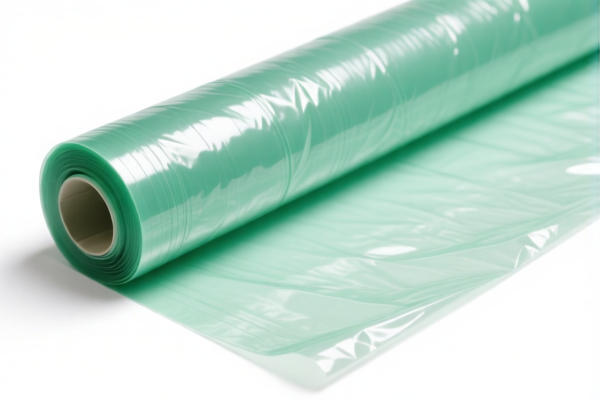
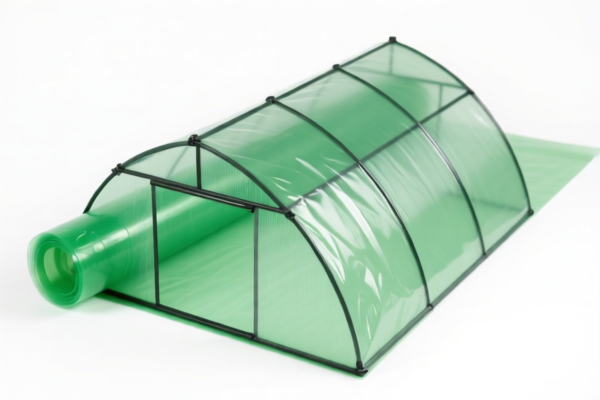
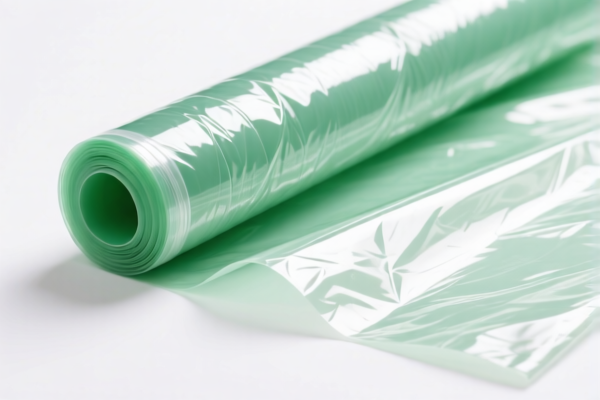
Textile Composite Plastic Greenhouse Films are multi-layer agricultural films designed to protect crops from weather, pests, and temperature fluctuations. Unlike simple single-layer polyethylene (PE) films, these composite films typically consist of a plastic core layer reinforced with textile fibers (such as polyester or glass fiber) to enhance durability, tear resistance, and lifespan.
Key Distinction Point:
- If the film contains textile fibers as a structural component (for reinforcement), it falls under Heading 3926.90.59.00 ("Containing textile fibers").
- If the film is made purely of plastics without textile reinforcement (e.g., pure PE/PP film with additives only), it may fall under Heading 3926.90.60.90 ("Other").
⚠️ Critical Clarification:
- Composite Films with Textile Reinforcement → Must be classified under 3926.90.59.00 due to the presence of textile fibers.
- Pure Plastic Films (No Textile) → Classified under 3926.90.60.90.
- Misclassification Risk: Declaring textile-reinforced films as "pure plastic" can lead to severe penalties, back taxes, and cargo detention.
📦 II. HS Code Classification Details (2026 Latest Tariff Authority Comparison)
| HS Code | Product Description | Application Scenario | Contains Textile Fibers? |
|---|---|---|---|
3926.90.60.90 |
Other articles of plastics: Belting and belts, for machinery: Other Other | Pure plastic agricultural films (PE/PP), non-reinforced greenhouse films | ❌ No |
3926.90.59.00 |
Other articles of plastics: Belting and belts, for machinery: Containing textile fibers: Other: Other | Textile-reinforced composite greenhouse films, durable agricultural nets, reinforced plastic fabrics | ✅ Yes |
🔍 Key Reminder:
- The presence of textile fibers (even if embedded in plastic) triggers the higher tariff category (3926.90.59.00).
- If the textile component is merely a surface coating or non-structural, it may not qualify for "containing textile fibers," but in greenhouse films, reinforcement is usually structural.
💰 III. 2026 Latest Tariff Rate Details (Including Additional Taxes and Policy Surcharges)
✅ Applicable Country: United States (US)
✅ Origin: China (CN)
✅ Effective Date: November 10, 2025 onwards (including subsequent imports)
🎯 1. 3926.90.60.90 — Other Plastic Articles (Pure Plastic, No Textile)
| Item | Content |
|---|---|
| Base Tariff Rate | 0% (ad valorem) |
| USITC Additional Tax | 0% |
| IEEPA Additional Tax | 0% |
| Total Tariff Rate | 0% |
| Tax Calculation | CIF Value × 0% = $0 |
| De Minimis Eligibility | ✅ Eligible (under $800 per shipment, if applicable) |
| Legal Basis Path | USITC:3926.90.60.90 → No additional footnotes applying |
📌 Explanation:
- This classification applies to pure plastic agricultural films without textile reinforcement.
- Total tax is 0%, making it highly competitive for duty-free entry (subject to de minimis rules).
- No additional Section 301 or IEEPA taxes apply.
🎯 2. 3926.90.59.00 — Plastic Articles Containing Textile Fibers
| Item | Content |
|---|---|
| Base Tariff Rate | 2.4% (ad valorem) |
| USITC Additional Tax | +25% (under USITC Footnote 9903.88.01) |
| IEEPA Additional Tax | +10% (for Chinese/HK products, effective Nov 10, 2025) |
| Total Tariff Rate | 27.4% |
| Tax Calculation | CIF Value × 27.4% |
| De Minimis Eligibility | ❌ Not Eligible (deny_de_minimis) |
| Legal Basis Path | IEEPA:9903.01.25 → IEEPA:9903.01.24 → USITC:3926.90.59.00 → FOOTNOTE:9903.88.01 |
📌 Key Note:
- The 2.4% base rate is relatively low, but the additional taxes (35%) result in a total burden of 27.4%.
- This is a high-cost classification for Chinese-origin textile-composite plastic films.
- De minimis (Section 321) is NOT applicable, meaning even small shipments must pay full tariffs.
- Reason for High Tax: The presence of textile fibers triggers Section 301 and IEEPA surcharges, similar to other composite textile-plastic products.
🛠️ IV. Customs Clearance Practical Advice (实战避坑指南)
✅ 1. Required Documentation Checklist (Mandatory)
| Document | Must Provide | Explanation |
|---|---|---|
| ✅ Product Specification Sheet | ✔️ | Details layers, materials (plastic type, textile type), thickness, UV resistance |
| ✅ Material Composition Report | ✔️ | Must explicitly state % of plastic vs. textile fibers |
| ✅ Product Photos (Unpacked) | ✔️ | Show cross-section to prove textile reinforcement |
| ✅ Certificate of Origin (CO) | ✔️ | For duty calculation; may help if origin is non-China |
| ✅ Commercial Invoice | ✔️ | Clearly describe as "Textile-Reinforced Plastic Greenhouse Film" or "Pure Plastic Film" |
| ✅ Packing List | ✔️ | Show weight, volume, and packaging type |
| ✅ Third-Party Test Report | ✔️ | ASTM, ISO, or CE certifications for agricultural use |
✅ 2. Declaration Tips (Critical Maneuvers)
🔥 "True Composition, Correct HS, Avoid 27.4% Trap!"
| Scenario | Correct Declaration | Incorrect Practice |
|---|---|---|
| Film contains textile fibers (e.g., polyester mesh) | 3926.90.59.00 (27.4%) |
Declare as "Pure Plastic" → Fraud Risk, Penalties |
| Film is pure plastic (PE/PP, no textile) | 3926.90.60.90 (0%) |
Declare as "Textile-Composite" → Unnecessary 27.4% Tax |
| Mixed shipment (some with textile, some without) | Split Declaration | Combine under one HS → Confusion, Delays, Audits |
| Film used for industrial belting | Check Heading 39.16/39.17 | Misclassify as agricultural film → Wrong Duty |
✅ 3. Special Case Handling
| Scenario | Recommendation |
|---|---|
| OEM Custom Films | Provide customer design specs and material bills of lading to prove composition |
| Films with Anti-UV Additives Only | NOT textile fibers → Use 3926.90.60.90 (0% tax) |
| Films with Fiberglass Reinforcement | Fiberglass is not textile → May qualify for 3926.90.60.90 (0% tax) if no natural/synthetic textile fibers |
| Films Shipped with Accessories (Clips, Tapes) | Declare separately or include if minor; avoid splitting main product |
🌍 V. Global Market Comparison (2026 Latest)
| Country/Region | Recommended HS Code | Tariff Rate | Certification Requirements | Notes |
|---|---|---|---|---|
| 🇺🇸 USA | 3926.90.59.00 (Textile) |
27.4% (China) | None Specific | 3926.90.60.90 is 0% if no textile |
| 🇨🇳 China | 3926.90.59.00 |
~5-7% | None | Lower base rate, no Section 301 |
| 🇪🇺 EU | 3926.90.99 |
~4.5% | CE, RoHS | No IEEPA-style surcharges |
| 🇯🇵 Japan | 3926.90.90 |
~6% | JIS Standard | No additional taxes |
| 🇦🇺 Australia | 3926.90.90 |
~5% | ACMA | No surcharges |
📌 Conclusion:
- The US imposes the highest effective tariff (27.4%) on textile-composite plastic greenhouse films from China.
- Pure plastic films (0% tax) offer significant cost advantages.
- Strategy: If possible, redesign films to use non-textile reinforcement (e.g., fiberglass, carbon fiber) or remove textile components to qualify for3926.90.60.90.
📌 VI. Common Errors & Pitfalls (Blood-Stained Lessons)
❌ Error 1: Declaring textile-reinforced films as "Pure Plastic"
👉 Consequence: Customs audit reveals textile fibers → Back taxes (27.4%) + Penalties + Cargo Seizure
❌ Error 2: Assuming all agricultural films are duty-free
👉 Consequence: Textile-composite films are NOT duty-free in the US → Unexpected 27.4% cost
❌ Error 3: Mixing shipments of pure plastic and textile-reinforced films under one HS Code
👉 Consequence: Customs rejects mixed declaration → Delays, Re-inspection, Possible Rejection
❌ Error 4: Not providing material composition reports
👉 Consequence: Customs assumes worst-case (textile) → Automatic 27.4% assessment
✅ Correct Practice:
"Greenhouse Film, 0.15mm, PE Core, Polyethylene Terephthalate (PET) Textile Reinforcement, UV-Stabilized, ASTM D638 Certified, Model GHF-2026"
🎯 VII. Conclusion: Professional Declaration, Cost Savings, Efficient Clearance!
🎯 Remember the Mantra:
🔹 "Textile In? Tax Out! (27.4%)"
🔹 "No Textile? Duty Free! (0%)"
🔹 "Split Shipment, Correct HS, Avoid Audits!"🔹 "HS Code Determines Fate, Tax Difference Is Key, Declaration Error Costs Thousands!"
📌 Pro Tips:
- If your film uses fiberglass or carbon fiber reinforcement, argue for non-textile classification (3926.90.60.90) to avoid the 27.4% tax.
- Consider supply chain relocation (e.g., Vietnam, Mexico) if textile reinforcement is unavoidable, to potentially avoid Section 301 taxes.
- Apply for an Advance Ruling (CBP Ruling) before shipping to confirm classification and avoid surprise duties.
📣 Immediate Action:
📞 Contact Professional Customs Broker + Provide Material Composition Report + Apply for CBP Advance Ruling
🚀 Ensure Your Greenhouse Films Pass Customs Smoothly, Maximize Profit Margins!
✨ Professional Customs Clearance Starts with Accurate Classification!
💼 Every Dollar of Tax Saved Is Pure Profit!
用户评价
关于 HS 编码归类
协调制度(HS)是由世界海关组织(WCO)制定的国际贸易商品分类标准。全球 200 多个国家采用 HS 系统作为海关关税、贸易统计和进出口监管的基础。
每个 HS 编码遵循以下层级结构:
- 章(2 位)——商品大类(例如:第 84 章:机器和机械设备)
- 品目(4 位)——章内的更具体分类
- 子目(6 位)——国际通用细分,所有 WCO 成员国统一使用
- 本国细分(8-10 位)——各国自行扩展的细分编码,如美国 HTSUS 10 位编码
正确的 HS 编码归类对于顺利通关、准确缴纳关税和遵守贸易法规至关重要。错误归类可能导致海关延误、多缴关税或罚款。
从CN进口到US时,适用的关税税率可能包括:
- 最惠国(MFN)税率——适用于 WTO 成员国的标准关税税率
- 普通税率——适用于无贸易协定国家
- 贸易救济关税——附加关税,如 301 条款(反倾销)、232 条款(国家安全)或反补贴税
本页内容仅供参考。如需正式归类,请咨询当地海关或持牌报关代理。