Textile Composite Plastic Greenhouse Films
CN → US| HS Code | Tariff Rate | Origin | Destination | Doc |
|---|---|---|---|---|
| 3926906090 | 39.2% | CN | US | Official Doc |
| 3926905900 | 37.4% | CN | US | Official Doc |
Product Images


AI Analysis
🌱 Textile Composite Plastic Greenhouse Films (Agricultural Plastic Products)
🌐 HS Code Reference & Customs Clearance Guide | 2026 Latest Tariff Analysis | Professional-Level Clearance Strategy
📌 I. Product Definition and Classification: What Exactly Are "Textile Composite Plastic Greenhouse Films"?
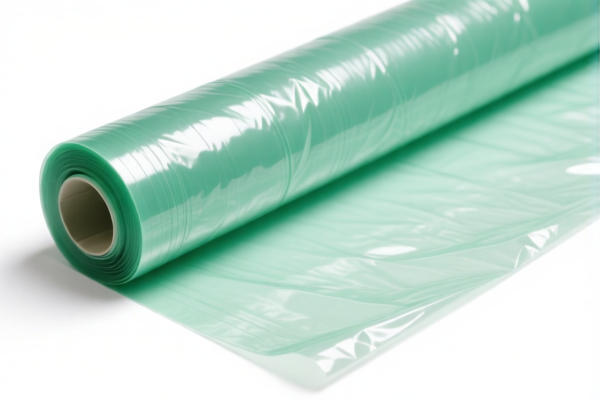
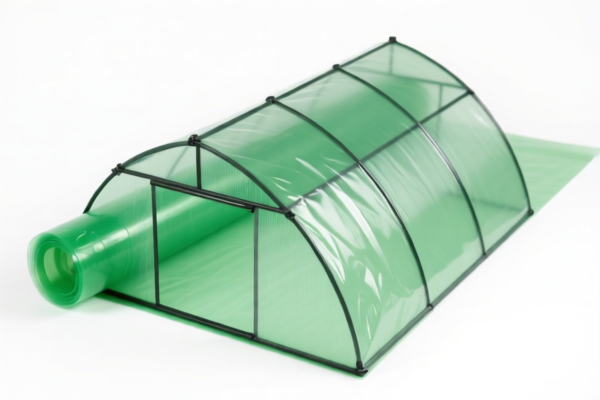
Textile Composite Plastic Greenhouse Films are multi-layer agricultural films designed to protect crops from weather, pests, and temperature fluctuations. Unlike simple single-layer polyethylene (PE) films, these composite films typically consist of a plastic core layer reinforced with textile fibers (such as polyester or glass fiber) to enhance durability, tear resistance, and lifespan.
Key Distinction Point:
- If the film contains textile fibers as a structural component (for reinforcement), it falls under Heading 3926.90.59.00 ("Containing textile fibers").
- If the film is made purely of plastics without textile reinforcement (e.g., pure PE/PP film with additives only), it may fall under Heading 3926.90.60.90 ("Other").
⚠️ Critical Clarification:
- Composite Films with Textile Reinforcement → Must be classified under 3926.90.59.00 due to the presence of textile fibers.
- Pure Plastic Films (No Textile) → Classified under 3926.90.60.90.
- Misclassification Risk: Declaring textile-reinforced films as "pure plastic" can lead to severe penalties, back taxes, and cargo detention.
📦 II. HS Code Classification Details (2026 Latest Tariff Authority Comparison)
| HS Code | Product Description | Application Scenario | Contains Textile Fibers? |
|---|---|---|---|
3926.90.60.90 |
Other articles of plastics: Belting and belts, for machinery: Other Other | Pure plastic agricultural films (PE/PP), non-reinforced greenhouse films | ❌ No |
3926.90.59.00 |
Other articles of plastics: Belting and belts, for machinery: Containing textile fibers: Other: Other | Textile-reinforced composite greenhouse films, durable agricultural nets, reinforced plastic fabrics | ✅ Yes |
🔍 Key Reminder:
- The presence of textile fibers (even if embedded in plastic) triggers the higher tariff category (3926.90.59.00).
- If the textile component is merely a surface coating or non-structural, it may not qualify for "containing textile fibers," but in greenhouse films, reinforcement is usually structural.
💰 III. 2026 Latest Tariff Rate Details (Including Additional Taxes and Policy Surcharges)
✅ Applicable Country: United States (US)
✅ Origin: China (CN)
✅ Effective Date: November 10, 2025 onwards (including subsequent imports)
🎯 1. 3926.90.60.90 — Other Plastic Articles (Pure Plastic, No Textile)
| Item | Content |
|---|---|
| Base Tariff Rate | 0% (ad valorem) |
| USITC Additional Tax | 0% |
| IEEPA Additional Tax | 0% |
| Total Tariff Rate | 0% |
| Tax Calculation | CIF Value × 0% = $0 |
| De Minimis Eligibility | ✅ Eligible (under $800 per shipment, if applicable) |
| Legal Basis Path | USITC:3926.90.60.90 → No additional footnotes applying |
📌 Explanation:
- This classification applies to pure plastic agricultural films without textile reinforcement.
- Total tax is 0%, making it highly competitive for duty-free entry (subject to de minimis rules).
- No additional Section 301 or IEEPA taxes apply.
🎯 2. 3926.90.59.00 — Plastic Articles Containing Textile Fibers
| Item | Content |
|---|---|
| Base Tariff Rate | 2.4% (ad valorem) |
| USITC Additional Tax | +25% (under USITC Footnote 9903.88.01) |
| IEEPA Additional Tax | +10% (for Chinese/HK products, effective Nov 10, 2025) |
| Total Tariff Rate | 27.4% |
| Tax Calculation | CIF Value × 27.4% |
| De Minimis Eligibility | ❌ Not Eligible (deny_de_minimis) |
| Legal Basis Path | IEEPA:9903.01.25 → IEEPA:9903.01.24 → USITC:3926.90.59.00 → FOOTNOTE:9903.88.01 |
📌 Key Note:
- The 2.4% base rate is relatively low, but the additional taxes (35%) result in a total burden of 27.4%.
- This is a high-cost classification for Chinese-origin textile-composite plastic films.
- De minimis (Section 321) is NOT applicable, meaning even small shipments must pay full tariffs.
- Reason for High Tax: The presence of textile fibers triggers Section 301 and IEEPA surcharges, similar to other composite textile-plastic products.
🛠️ IV. Customs Clearance Practical Advice (实战避坑指南)
✅ 1. Required Documentation Checklist (Mandatory)
| Document | Must Provide | Explanation |
|---|---|---|
| ✅ Product Specification Sheet | ✔️ | Details layers, materials (plastic type, textile type), thickness, UV resistance |
| ✅ Material Composition Report | ✔️ | Must explicitly state % of plastic vs. textile fibers |
| ✅ Product Photos (Unpacked) | ✔️ | Show cross-section to prove textile reinforcement |
| ✅ Certificate of Origin (CO) | ✔️ | For duty calculation; may help if origin is non-China |
| ✅ Commercial Invoice | ✔️ | Clearly describe as "Textile-Reinforced Plastic Greenhouse Film" or "Pure Plastic Film" |
| ✅ Packing List | ✔️ | Show weight, volume, and packaging type |
| ✅ Third-Party Test Report | ✔️ | ASTM, ISO, or CE certifications for agricultural use |
✅ 2. Declaration Tips (Critical Maneuvers)
🔥 "True Composition, Correct HS, Avoid 27.4% Trap!"
| Scenario | Correct Declaration | Incorrect Practice |
|---|---|---|
| Film contains textile fibers (e.g., polyester mesh) | 3926.90.59.00 (27.4%) |
Declare as "Pure Plastic" → Fraud Risk, Penalties |
| Film is pure plastic (PE/PP, no textile) | 3926.90.60.90 (0%) |
Declare as "Textile-Composite" → Unnecessary 27.4% Tax |
| Mixed shipment (some with textile, some without) | Split Declaration | Combine under one HS → Confusion, Delays, Audits |
| Film used for industrial belting | Check Heading 39.16/39.17 | Misclassify as agricultural film → Wrong Duty |
✅ 3. Special Case Handling
| Scenario | Recommendation |
|---|---|
| OEM Custom Films | Provide customer design specs and material bills of lading to prove composition |
| Films with Anti-UV Additives Only | NOT textile fibers → Use 3926.90.60.90 (0% tax) |
| Films with Fiberglass Reinforcement | Fiberglass is not textile → May qualify for 3926.90.60.90 (0% tax) if no natural/synthetic textile fibers |
| Films Shipped with Accessories (Clips, Tapes) | Declare separately or include if minor; avoid splitting main product |
🌍 V. Global Market Comparison (2026 Latest)
| Country/Region | Recommended HS Code | Tariff Rate | Certification Requirements | Notes |
|---|---|---|---|---|
| 🇺🇸 USA | 3926.90.59.00 (Textile) |
27.4% (China) | None Specific | 3926.90.60.90 is 0% if no textile |
| 🇨🇳 China | 3926.90.59.00 |
~5-7% | None | Lower base rate, no Section 301 |
| 🇪🇺 EU | 3926.90.99 |
~4.5% | CE, RoHS | No IEEPA-style surcharges |
| 🇯🇵 Japan | 3926.90.90 |
~6% | JIS Standard | No additional taxes |
| 🇦🇺 Australia | 3926.90.90 |
~5% | ACMA | No surcharges |
📌 Conclusion:
- The US imposes the highest effective tariff (27.4%) on textile-composite plastic greenhouse films from China.
- Pure plastic films (0% tax) offer significant cost advantages.
- Strategy: If possible, redesign films to use non-textile reinforcement (e.g., fiberglass, carbon fiber) or remove textile components to qualify for3926.90.60.90.
📌 VI. Common Errors & Pitfalls (Blood-Stained Lessons)
❌ Error 1: Declaring textile-reinforced films as "Pure Plastic"
👉 Consequence: Customs audit reveals textile fibers → Back taxes (27.4%) + Penalties + Cargo Seizure
❌ Error 2: Assuming all agricultural films are duty-free
👉 Consequence: Textile-composite films are NOT duty-free in the US → Unexpected 27.4% cost
❌ Error 3: Mixing shipments of pure plastic and textile-reinforced films under one HS Code
👉 Consequence: Customs rejects mixed declaration → Delays, Re-inspection, Possible Rejection
❌ Error 4: Not providing material composition reports
👉 Consequence: Customs assumes worst-case (textile) → Automatic 27.4% assessment
✅ Correct Practice:
"Greenhouse Film, 0.15mm, PE Core, Polyethylene Terephthalate (PET) Textile Reinforcement, UV-Stabilized, ASTM D638 Certified, Model GHF-2026"
🎯 VII. Conclusion: Professional Declaration, Cost Savings, Efficient Clearance!
🎯 Remember the Mantra:
🔹 "Textile In? Tax Out! (27.4%)"
🔹 "No Textile? Duty Free! (0%)"
🔹 "Split Shipment, Correct HS, Avoid Audits!"🔹 "HS Code Determines Fate, Tax Difference Is Key, Declaration Error Costs Thousands!"
📌 Pro Tips:
- If your film uses fiberglass or carbon fiber reinforcement, argue for non-textile classification (3926.90.60.90) to avoid the 27.4% tax.
- Consider supply chain relocation (e.g., Vietnam, Mexico) if textile reinforcement is unavoidable, to potentially avoid Section 301 taxes.
- Apply for an Advance Ruling (CBP Ruling) before shipping to confirm classification and avoid surprise duties.
📣 Immediate Action:
📞 Contact Professional Customs Broker + Provide Material Composition Report + Apply for CBP Advance Ruling
🚀 Ensure Your Greenhouse Films Pass Customs Smoothly, Maximize Profit Margins!
✨ Professional Customs Clearance Starts with Accurate Classification!
💼 Every Dollar of Tax Saved Is Pure Profit!
Customer Reviews
About HS Code Classification
The Harmonized System (HS) is an internationally standardized nomenclature developed by the World Customs Organization (WCO) to classify traded products. Over 200 countries use the HS system as the basis for customs tariffs, trade statistics, and import/export regulations.
Each HS code follows a hierarchical structure:
- Chapter (2 digits) — Broad category of goods (e.g., Chapter 84: Machinery and Mechanical Appliances)
- Heading (4 digits) — More specific grouping within the chapter
- Subheading (6 digits) — Internationally standardized breakdown, used by all WCO member countries
- National subdivisions (8-10 digits) — Country-specific extensions for further classification, such as US HTSUS 10-digit codes
Correct HS code classification is essential for smooth customs clearance, accurate duty payment, and compliance with trade regulations. Misclassification can lead to customs delays, overpayment of duties, or penalties.
When importing from CN to US, the applicable tariff rates may include:
- Most-Favored-Nation (MFN) rate — The standard duty rate applied to WTO members
- General rate — Applied to countries without trade agreements
- Trade remedy duties — Additional tariffs such as Section 301 (anti-dumping), Section 232 (national security), or countervailing duties
The information provided on this page is for reference purposes only. For official classification, please consult with your local customs authority or a licensed customs broker.