Textile Composite Plastic Research Board
CN → US| HS编码 | 关税税率 | 原产国 | 目的国 | 文档 |
|---|---|---|---|---|
| 5911900080 | 38.8% | CN | US | 官方文档 |
| 3921902100 | 41.5% | CN | US | 官方文档 |
| 3921902900 | 39.4% | CN | US | 官方文档 |
| 3920992000 | 39.2% | CN | US | 官方文档 |
| 3921905050 | 39.8% | CN | US | 官方文档 |
商品图片
AI分析
🧪 Textile Composite Plastic Research Board (Technical Textile Composite Panels)
🌐 HS Code Reference & Customs Clearance Guide | 2026 Latest Tariff Analysis | Professional Strategy for US Imports
📌 I. Product Definition and Classification: What exactly is a "Composite Research Board"?
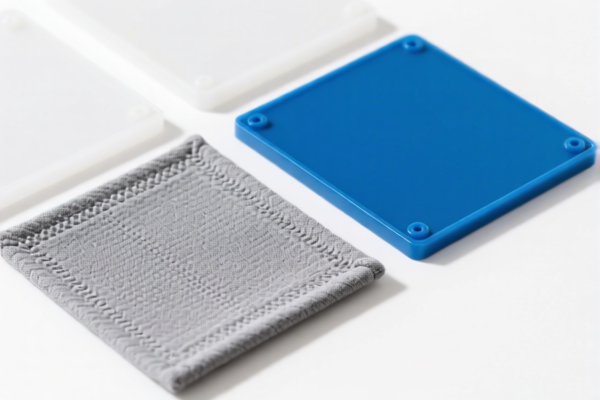
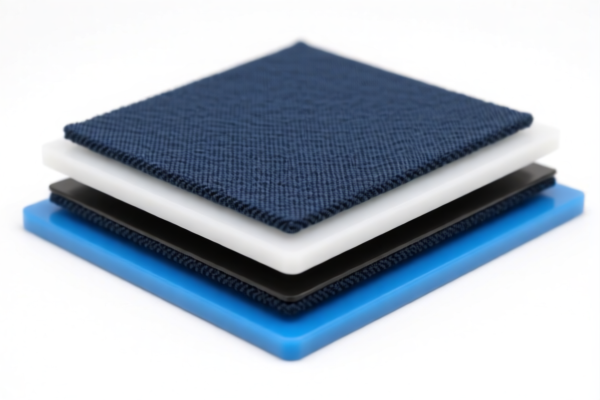
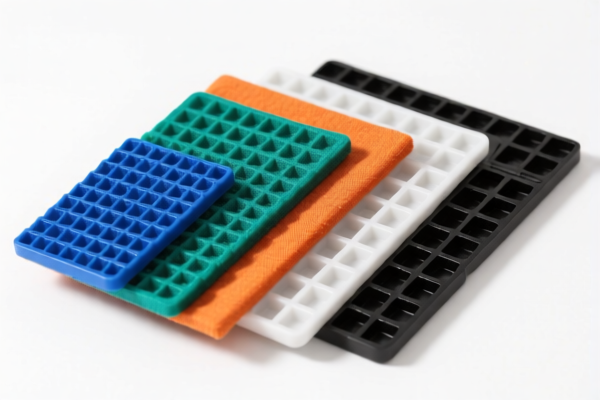
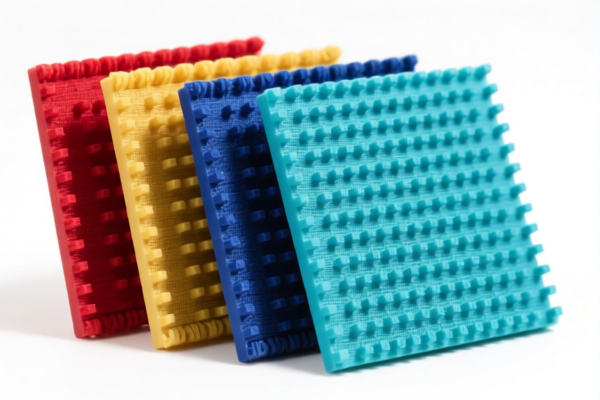
A "Textile Composite Plastic Research Board" is a specialized material used in laboratory testing, industrial prototyping, and technical research. It is not a standard consumer good but a technical textile or laminated material. In international trade, the classification hinges on the primary characteristic of the board:
1. Textile-Dominant (Cotton-Based Composite): If the board is primarily a textile product (cotton) with a plastic layer for reinforcement or coating, and the textile character is fundamental to its identity → Classified under Chapter 59 (Impregnated, Coated, Covered or Laminated Textile Fabrics).
2. Plastic-Dominant (Plastic-Textile Lamination): If the board is primarily a plastic sheet/plate with an embedded or laminated textile layer (cotton), and the plastic character defines its essential nature → Classified under Chapter 39 (Plastics and Articles Thereof).
⚠️ Key Distinction Point:
- If the cotton fabric is the core/substrate and plastic is a thin coating/lamination → HS 5911.90.00.80
- If the plastic is the main structural component with cotton embedded/laminated → HS 3921.90.21.00 / 3921.90.29.00 / 3921.90.50.50
- If it is a pure plastic composite without significant textile content as a defining feature → HS 3920.99.20.00
📦 II. HS Code Classification Details (2026 Latest Tariff Authority Cross-Reference)
| HS Code | Product Description | Material Composition | Key Characteristic | Tariff Classification Logic |
|---|---|---|---|---|
5911.90.00.80 |
Cotton Textile Composite Board, Material: Cotton, Form: Composite Board, Type: Technical Textile Product | Primarily Cotton | Textile Character Prevails. Used for technical purposes (e.g., filtration, insulation, testing). | Classified as "Other technical textile articles" under Chapter 59. |
3921.90.21.00 |
Cotton-Containing Plastic Composite Board, Material: Contains Cotton, Form: Plate, Category: Plastic-Textile Combination | Plastic + Cotton | Plastic Character Prevails. Laminated/layered product where plastic is the main binding/structural element. | Classified as "Other plates, sheets, film, foil and strip, of plastics" under Chapter 39. |
3921.90.29.00 |
Cotton Textile and Plastic Combined Composite Board, Material: Cotton Textile, Form: Plate, Feature: Combined with Textile Materials | Plastic + Cotton Textile | Plastic Character Prevails. Similar to above, but specific subheading for other combinations not covered in 21. | Classified under "Other plates... of plastics". |
3920.99.20.00 |
Plastic Composite Board, Material: Plastic, Form: Composite Board, Type: Laminated or Composite Material | Primarily Plastic | Pure Plastic Focus. If cotton content is minimal/non-defining, or it's a general plastic laminate. | Classified as "Other plates... of plastics" (Chapter 39). |
3921.90.50.50 |
Plastic Composite Board, Material: Plastic, Form: Plate, Feature: Matches Plastic Plate/Sheet/Film Characteristics | Primarily Plastic | Plastic Character Prevails. General plastic plate with composite features. | Classified under "Other plates... of plastics". |
🔍 Crucial Reminder:
- If the product is primarily cotton with a plastic finish, it MUST be classified under 5911. Misclassifying as 3921 will result in penalties. - If the product is primarily plastic with cotton reinforcement, it falls under 3921. - Commercial Invoice must clearly state the weight percentage of cotton vs. plastic to support the classification.
💰 III. 2026 Latest Tariff Rate Details (Including Surtaxes & Policy Add-ons)
✅ Applicable Country: United States (US)
✅ Country of Origin: China (CN)
✅ Effective Date: 2025年11月10日起 (November 10, 2025, onwards)
🎯 1. 5911.90.00.80 —— Cotton Textile Composite Board (Textile-Dominant)
| Item | Details |
|---|---|
| Base Tariff Rate | 3.8% |
| USITC Surtax (Section 301) | +25.0% |
| 122 Clause Surtax | +10.0% |
| Total Tariff Rate | 38.8% |
| Tax Calculation | CIF Value × 38.8% |
| De Minimis Eligibility | ❌ Not Eligible (Deny de minimis for Section 301 goods) |
| Legal Basis Path | USITC:5911.90.00.80 → SECTION_301:25% → 122_CLAUSE:10% |
📌 Explanation:
- This code is under Chapter 59 (Textiles), which generally attracts Section 301 tariffs (25%). - Additionally, the 122 Clause (10%) applies to specific Chinese-origin goods. - Total 38.8% is high. Ensure the textile content is genuinely dominant to avoid reclassification.
🎯 2. 3921.90.21.00 —— Cotton-Containing Plastic Composite Board (Plastic-Dominant)
| Item | Details |
|---|---|
| Base Tariff Rate | 6.5% |
| USITC Surtax (Section 301) | +25.0% |
| 122 Clause Surtax | +10.0% |
| Total Tariff Rate | 41.5% |
| Tax Calculation | CIF Value × 41.5% |
| De Minimis Eligibility | ❌ Not Eligible |
| Legal Basis Path | USITC:3921.90.21.00 → SECTION_301:25% → 122_CLAUSE:10% |
📌 Explanation:
- Chapter 39 plastics generally have higher base rates than some textiles. - Still subject to Section 301 (25%) and 122 Clause (10%). - Total 41.5% is the highest among the provided options. Consider if5911.90.00.80(38.8%) is more accurate if cotton is significant.
🎯 3. 3921.90.29.00 —— Cotton Textile & Plastic Combined Composite Board
| Item | Details |
|---|---|
| Base Tariff Rate | 4.4% |
| USITC Surtax (Section 301) | +25.0% |
| 122 Clause Surtax | +10.0% |
| Total Tariff Rate | 39.4% |
| Tax Calculation | CIF Value × 39.4% |
| De Minimis Eligibility | ❌ Not Eligible |
| Legal Basis Path | USITC:3921.90.29.00 → SECTION_301:25% → 122_CLAUSE:10% |
📌 Explanation:
- A slightly lower base rate (4.4%) compared to 3921.90.21.00. - Still subject to full surtaxes. Total 39.4%.
🎯 4. 3920.99.20.00 —— Plastic Composite Board (General Plastic Focus)
| Item | Details |
|---|---|
| Base Tariff Rate | 4.2% |
| USITC Surtax (Section 301) | +25.0% |
| 122 Clause Surtax | +10.0% |
| Total Tariff Rate | 39.2% |
| Tax Calculation | CIF Value × 39.2% |
| De Minimis Eligibility | ❌ Not Eligible |
| Legal Basis Path | USITC:3920.99.20.00 → SECTION_301:25% → 122_CLAUSE:10% |
📌 Explanation:
- If the cotton content is negligible or not the defining feature, this code may apply. - Total 39.2%. Lower than 3921.90.21.00.
🎯 5. 3921.90.50.50 —— Plastic Composite Board (Plastic Plate Form)
| Item | Details |
|---|---|
| Base Tariff Rate | 4.8% |
| USITC Surtax (Section 301) | +25.0% |
| 122 Clause Surtax | +10.0% |
| Total Tariff Rate | 39.8% |
| Tax Calculation | CIF Value × 39.8% |
| De Minimis Eligibility | ❌ Not Eligible |
| Legal Basis Path | USITC:3921.90.50.50 → SECTION_301:25% → 122_CLAUSE:10% |
📌 Explanation:
- General plastic plate code. - Total 39.8%.
🛠️ IV. Customs Clearance Practical Advice (Real-World Pitfall Avoidance)
✅ 1. Required Documentation Checklist (Non-Negotiable)
| Document | Must Provide | Purpose |
|---|---|---|
| ✅ Product Specification Sheet | ✔️ | Details material composition (Cotton % vs. Plastic %), thickness, density. |
| ✅ Composition Analysis Report | ✔️ | Critical: Lab report proving whether textile or plastic is the "essential character." |
| ✅ Product Photos (Clear) | ✔️ | Show cross-section to visualize layering (Cotton core? Plastic coating?). |
| ✅ Commercial Invoice | ✔️ | Must state "Technical Textile Composite Board" or "Plastic Composite Plate" accurately. |
| ✅ Packing List | ✔️ | Weight and dimensions for CIF calculation. |
| ✅ Certificate of Origin (CO) | ✔️ | To confirm Chinese origin for surtax application. |
✅ 2. Classification Strategy (Key Mnemonic)
🔥 "Textile Core = 5911 (38.8%); Plastic Core = 3921 (39-41%); Less Cotton = 3920 (39.2%)"
| Scenario | Correct HS Code | Why? | Risk if Wrong |
|---|---|---|---|
| Cotton is the main material, plastic is a thin layer/coating | 5911.90.00.80 |
Textile character dominates (GRI 3(b)). | Underpayment: 3.8% vs 4.4%+ → Penalty + Back Taxes. |
| Plastic is the main material, cotton is embedded/reinforced | 3921.90.21.00 or 3921.90.29.00 |
Plastic character dominates. | Overpayment: 41.5% vs 38.8% → Lost Profit. |
| Negligible cotton, mostly plastic laminate | 3920.99.20.00 |
Not primarily textile or plastic-textile laminate. | Misclassification: Incorrect duty assessment. |
✅ 3. Special Situation Handling
| Situation | Handling Advice |
|---|---|
| High Cotton Content (>50%) | Strongly consider 5911.90.00.80 to save ~2-3% in duties. |
| OEM/Custom Research Boards | Provide detailed design specs to prove "technical use" (Chapter 59 benefit). |
| Mixed Shipment (Textile + Plastic) | Declare separately. Do not mix HS codes on one line item to avoid ambiguity. |
| De Minimis (Section 321) | ❌ NOT APPLICABLE. Section 301 goods (China origin) are excluded from de minimis entry. Must formal entry. |
🌍 V. Global Market Comparison (2026 Latest)
| Country/Region | Recommended HS Code | Tariff Rate (China Origin) | Notes |
|---|---|---|---|
| 🇺🇸 USA | 5911.90.00.80 / 3921.90.xxxx |
38.8% - 41.5% | High due to Section 301 + 122 Clause. |
| 🇨🇳 China (Import) | 5911.90.00.80 |
~5-8% | Lower base rates, no Section 301. |
| 🇪🇺 EU | 5911.90 / 3921 |
0% - 4.5% | Depends on specific subheading. No US-style surtaxes. |
| 🇯🇵 Japan | 5911 / 3921 |
0% - 3.8% | Generally low duties for technical goods. |
📌 Conclusion:
- The US market is the most costly for this product due to Section 301 (25%) and 122 Clause (10%). - Choosing the right HS Code (5911 vs 3921) can save 2-3% in duty, which is significant for high-volume shipments.
📌 VI. Common Errors & Pitfalls (Blood-Teaching Lessons)
❌ Error 1: Classifying a Cotton-Dominant board as 3921 (Plastic)
👉 Consequence: Overpaying 2-3% unnecessarily.
💡 Fix: If cotton is the main material, use 5911.90.00.80.
❌ Error 2: Classifying a Plastic-Dominant board as 5911 (Textile)
👉 Consequence: Underpayment → Customs audit, back taxes, and penalties.
💡 Fix: If plastic is the main structural material, use 3921 codes.
❌ Error 3: Omitting Cotton Content Percentage on Invoice
👉 Consequence: Customs may reclassify based on their assessment, leading to delays.
💡 Fix: Always state "Material: 60% Cotton, 40% Plastic" or similar.
❌ Error 4: Assuming De Minimis applies
👉 Consequence: Shipment held at border. Section 301 goods are excluded.
💡 Fix: Prepare for Formal Entry with full duty payment.
🎯 VII. Conclusion: Precise Classification, Cost Efficiency!
🎯 Remember the Mnemonic:
🔹 "Cotton Core = 5911 (38.8%); Plastic Core = 3921 (39-41%); Less Cotton = 3920 (39.2%)"
🔹 "Section 301 is 25%, 122 Clause is 10%, Total is High!"
🔹 "HS Code Choice Saves 2-3%, Don't Guess, Prove with Lab Report!"
📌 Pro Tip:
If your board is primarily cotton-based, insist on 5911.90.00.80 (38.8%) as it is the lowest among the provided options.
If it is primarily plastic-based, choose between 3920.99.20.00 (39.2%) and 3921.90.29.00 (39.4%) for slightly lower rates than 3921.90.21.00 (41.5%).
📣 Immediate Action:
📞 Contact a Customs Broker + Provide Lab Report on material composition + Apply for Advanced Ruling if possible.
🚀 Ensure your Commercial Invoice matches the chosen HS Code exactly.
💡 Your bottom line depends on this 2-3% difference!
✨ Professional Customs Clearance Starts with Accurate Classification!
💼 Every Percentage Point Saved is Pure Profit!
用户评价
关于 HS 编码归类
协调制度(HS)是由世界海关组织(WCO)制定的国际贸易商品分类标准。全球 200 多个国家采用 HS 系统作为海关关税、贸易统计和进出口监管的基础。
每个 HS 编码遵循以下层级结构:
- 章(2 位)——商品大类(例如:第 84 章:机器和机械设备)
- 品目(4 位)——章内的更具体分类
- 子目(6 位)——国际通用细分,所有 WCO 成员国统一使用
- 本国细分(8-10 位)——各国自行扩展的细分编码,如美国 HTSUS 10 位编码
正确的 HS 编码归类对于顺利通关、准确缴纳关税和遵守贸易法规至关重要。错误归类可能导致海关延误、多缴关税或罚款。
从CN进口到US时,适用的关税税率可能包括:
- 最惠国(MFN)税率——适用于 WTO 成员国的标准关税税率
- 普通税率——适用于无贸易协定国家
- 贸易救济关税——附加关税,如 301 条款(反倾销)、232 条款(国家安全)或反补贴税
本页内容仅供参考。如需正式归类,请咨询当地海关或持牌报关代理。