Textile Composite Plastic Research Board
CN → US| HS Code | Tariff Rate | Origin | Destination | Doc |
|---|---|---|---|---|
| 5911900080 | 38.8% | CN | US | Official Doc |
| 3921902100 | 41.5% | CN | US | Official Doc |
| 3921902900 | 39.4% | CN | US | Official Doc |
| 3920992000 | 39.2% | CN | US | Official Doc |
| 3921905050 | 39.8% | CN | US | Official Doc |
Product Images
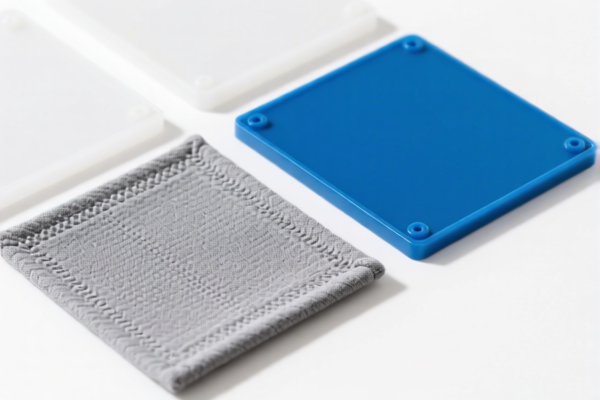
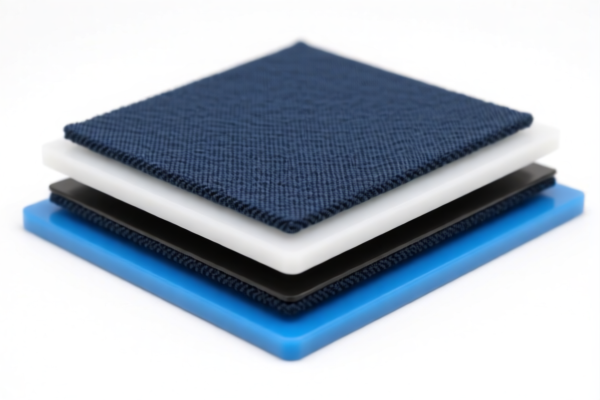
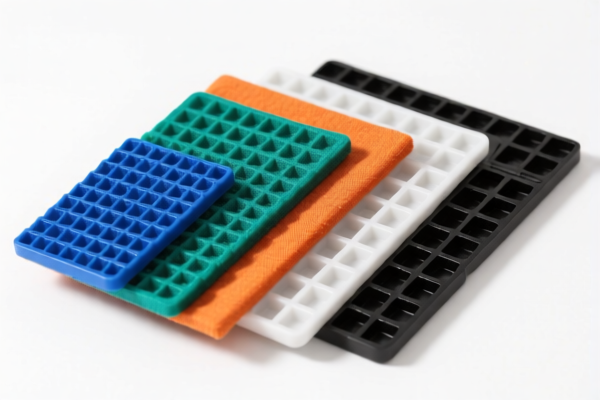
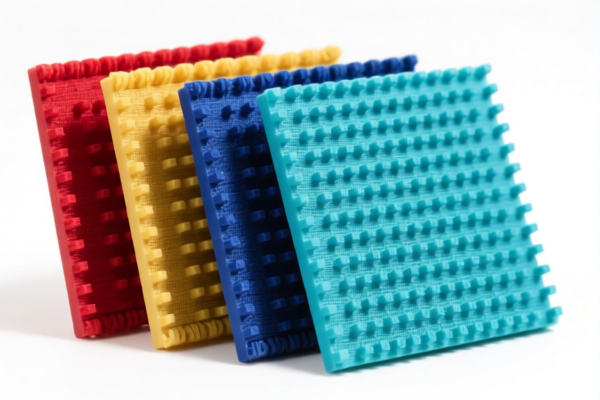
AI Analysis
🧪 Textile Composite Plastic Research Board (Technical Textile Composite Panels)
🌐 HS Code Reference & Customs Clearance Guide | 2026 Latest Tariff Analysis | Professional Strategy for US Imports
📌 I. Product Definition and Classification: What exactly is a "Composite Research Board"?
A "Textile Composite Plastic Research Board" is a specialized material used in laboratory testing, industrial prototyping, and technical research. It is not a standard consumer good but a technical textile or laminated material. In international trade, the classification hinges on the primary characteristic of the board:
1. Textile-Dominant (Cotton-Based Composite): If the board is primarily a textile product (cotton) with a plastic layer for reinforcement or coating, and the textile character is fundamental to its identity → Classified under Chapter 59 (Impregnated, Coated, Covered or Laminated Textile Fabrics).
2. Plastic-Dominant (Plastic-Textile Lamination): If the board is primarily a plastic sheet/plate with an embedded or laminated textile layer (cotton), and the plastic character defines its essential nature → Classified under Chapter 39 (Plastics and Articles Thereof).
⚠️ Key Distinction Point:
- If the cotton fabric is the core/substrate and plastic is a thin coating/lamination → HS 5911.90.00.80
- If the plastic is the main structural component with cotton embedded/laminated → HS 3921.90.21.00 / 3921.90.29.00 / 3921.90.50.50
- If it is a pure plastic composite without significant textile content as a defining feature → HS 3920.99.20.00
📦 II. HS Code Classification Details (2026 Latest Tariff Authority Cross-Reference)
| HS Code | Product Description | Material Composition | Key Characteristic | Tariff Classification Logic |
|---|---|---|---|---|
5911.90.00.80 |
Cotton Textile Composite Board, Material: Cotton, Form: Composite Board, Type: Technical Textile Product | Primarily Cotton | Textile Character Prevails. Used for technical purposes (e.g., filtration, insulation, testing). | Classified as "Other technical textile articles" under Chapter 59. |
3921.90.21.00 |
Cotton-Containing Plastic Composite Board, Material: Contains Cotton, Form: Plate, Category: Plastic-Textile Combination | Plastic + Cotton | Plastic Character Prevails. Laminated/layered product where plastic is the main binding/structural element. | Classified as "Other plates, sheets, film, foil and strip, of plastics" under Chapter 39. |
3921.90.29.00 |
Cotton Textile and Plastic Combined Composite Board, Material: Cotton Textile, Form: Plate, Feature: Combined with Textile Materials | Plastic + Cotton Textile | Plastic Character Prevails. Similar to above, but specific subheading for other combinations not covered in 21. | Classified under "Other plates... of plastics". |
3920.99.20.00 |
Plastic Composite Board, Material: Plastic, Form: Composite Board, Type: Laminated or Composite Material | Primarily Plastic | Pure Plastic Focus. If cotton content is minimal/non-defining, or it's a general plastic laminate. | Classified as "Other plates... of plastics" (Chapter 39). |
3921.90.50.50 |
Plastic Composite Board, Material: Plastic, Form: Plate, Feature: Matches Plastic Plate/Sheet/Film Characteristics | Primarily Plastic | Plastic Character Prevails. General plastic plate with composite features. | Classified under "Other plates... of plastics". |
🔍 Crucial Reminder:
- If the product is primarily cotton with a plastic finish, it MUST be classified under 5911. Misclassifying as 3921 will result in penalties. - If the product is primarily plastic with cotton reinforcement, it falls under 3921. - Commercial Invoice must clearly state the weight percentage of cotton vs. plastic to support the classification.
💰 III. 2026 Latest Tariff Rate Details (Including Surtaxes & Policy Add-ons)
✅ Applicable Country: United States (US)
✅ Country of Origin: China (CN)
✅ Effective Date: 2025年11月10日起 (November 10, 2025, onwards)
🎯 1. 5911.90.00.80 —— Cotton Textile Composite Board (Textile-Dominant)
| Item | Details |
|---|---|
| Base Tariff Rate | 3.8% |
| USITC Surtax (Section 301) | +25.0% |
| 122 Clause Surtax | +10.0% |
| Total Tariff Rate | 38.8% |
| Tax Calculation | CIF Value × 38.8% |
| De Minimis Eligibility | ❌ Not Eligible (Deny de minimis for Section 301 goods) |
| Legal Basis Path | USITC:5911.90.00.80 → SECTION_301:25% → 122_CLAUSE:10% |
📌 Explanation:
- This code is under Chapter 59 (Textiles), which generally attracts Section 301 tariffs (25%). - Additionally, the 122 Clause (10%) applies to specific Chinese-origin goods. - Total 38.8% is high. Ensure the textile content is genuinely dominant to avoid reclassification.
🎯 2. 3921.90.21.00 —— Cotton-Containing Plastic Composite Board (Plastic-Dominant)
| Item | Details |
|---|---|
| Base Tariff Rate | 6.5% |
| USITC Surtax (Section 301) | +25.0% |
| 122 Clause Surtax | +10.0% |
| Total Tariff Rate | 41.5% |
| Tax Calculation | CIF Value × 41.5% |
| De Minimis Eligibility | ❌ Not Eligible |
| Legal Basis Path | USITC:3921.90.21.00 → SECTION_301:25% → 122_CLAUSE:10% |
📌 Explanation:
- Chapter 39 plastics generally have higher base rates than some textiles. - Still subject to Section 301 (25%) and 122 Clause (10%). - Total 41.5% is the highest among the provided options. Consider if5911.90.00.80(38.8%) is more accurate if cotton is significant.
🎯 3. 3921.90.29.00 —— Cotton Textile & Plastic Combined Composite Board
| Item | Details |
|---|---|
| Base Tariff Rate | 4.4% |
| USITC Surtax (Section 301) | +25.0% |
| 122 Clause Surtax | +10.0% |
| Total Tariff Rate | 39.4% |
| Tax Calculation | CIF Value × 39.4% |
| De Minimis Eligibility | ❌ Not Eligible |
| Legal Basis Path | USITC:3921.90.29.00 → SECTION_301:25% → 122_CLAUSE:10% |
📌 Explanation:
- A slightly lower base rate (4.4%) compared to 3921.90.21.00. - Still subject to full surtaxes. Total 39.4%.
🎯 4. 3920.99.20.00 —— Plastic Composite Board (General Plastic Focus)
| Item | Details |
|---|---|
| Base Tariff Rate | 4.2% |
| USITC Surtax (Section 301) | +25.0% |
| 122 Clause Surtax | +10.0% |
| Total Tariff Rate | 39.2% |
| Tax Calculation | CIF Value × 39.2% |
| De Minimis Eligibility | ❌ Not Eligible |
| Legal Basis Path | USITC:3920.99.20.00 → SECTION_301:25% → 122_CLAUSE:10% |
📌 Explanation:
- If the cotton content is negligible or not the defining feature, this code may apply. - Total 39.2%. Lower than 3921.90.21.00.
🎯 5. 3921.90.50.50 —— Plastic Composite Board (Plastic Plate Form)
| Item | Details |
|---|---|
| Base Tariff Rate | 4.8% |
| USITC Surtax (Section 301) | +25.0% |
| 122 Clause Surtax | +10.0% |
| Total Tariff Rate | 39.8% |
| Tax Calculation | CIF Value × 39.8% |
| De Minimis Eligibility | ❌ Not Eligible |
| Legal Basis Path | USITC:3921.90.50.50 → SECTION_301:25% → 122_CLAUSE:10% |
📌 Explanation:
- General plastic plate code. - Total 39.8%.
🛠️ IV. Customs Clearance Practical Advice (Real-World Pitfall Avoidance)
✅ 1. Required Documentation Checklist (Non-Negotiable)
| Document | Must Provide | Purpose |
|---|---|---|
| ✅ Product Specification Sheet | ✔️ | Details material composition (Cotton % vs. Plastic %), thickness, density. |
| ✅ Composition Analysis Report | ✔️ | Critical: Lab report proving whether textile or plastic is the "essential character." |
| ✅ Product Photos (Clear) | ✔️ | Show cross-section to visualize layering (Cotton core? Plastic coating?). |
| ✅ Commercial Invoice | ✔️ | Must state "Technical Textile Composite Board" or "Plastic Composite Plate" accurately. |
| ✅ Packing List | ✔️ | Weight and dimensions for CIF calculation. |
| ✅ Certificate of Origin (CO) | ✔️ | To confirm Chinese origin for surtax application. |
✅ 2. Classification Strategy (Key Mnemonic)
🔥 "Textile Core = 5911 (38.8%); Plastic Core = 3921 (39-41%); Less Cotton = 3920 (39.2%)"
| Scenario | Correct HS Code | Why? | Risk if Wrong |
|---|---|---|---|
| Cotton is the main material, plastic is a thin layer/coating | 5911.90.00.80 |
Textile character dominates (GRI 3(b)). | Underpayment: 3.8% vs 4.4%+ → Penalty + Back Taxes. |
| Plastic is the main material, cotton is embedded/reinforced | 3921.90.21.00 or 3921.90.29.00 |
Plastic character dominates. | Overpayment: 41.5% vs 38.8% → Lost Profit. |
| Negligible cotton, mostly plastic laminate | 3920.99.20.00 |
Not primarily textile or plastic-textile laminate. | Misclassification: Incorrect duty assessment. |
✅ 3. Special Situation Handling
| Situation | Handling Advice |
|---|---|
| High Cotton Content (>50%) | Strongly consider 5911.90.00.80 to save ~2-3% in duties. |
| OEM/Custom Research Boards | Provide detailed design specs to prove "technical use" (Chapter 59 benefit). |
| Mixed Shipment (Textile + Plastic) | Declare separately. Do not mix HS codes on one line item to avoid ambiguity. |
| De Minimis (Section 321) | ❌ NOT APPLICABLE. Section 301 goods (China origin) are excluded from de minimis entry. Must formal entry. |
🌍 V. Global Market Comparison (2026 Latest)
| Country/Region | Recommended HS Code | Tariff Rate (China Origin) | Notes |
|---|---|---|---|
| 🇺🇸 USA | 5911.90.00.80 / 3921.90.xxxx |
38.8% - 41.5% | High due to Section 301 + 122 Clause. |
| 🇨🇳 China (Import) | 5911.90.00.80 |
~5-8% | Lower base rates, no Section 301. |
| 🇪🇺 EU | 5911.90 / 3921 |
0% - 4.5% | Depends on specific subheading. No US-style surtaxes. |
| 🇯🇵 Japan | 5911 / 3921 |
0% - 3.8% | Generally low duties for technical goods. |
📌 Conclusion:
- The US market is the most costly for this product due to Section 301 (25%) and 122 Clause (10%). - Choosing the right HS Code (5911 vs 3921) can save 2-3% in duty, which is significant for high-volume shipments.
📌 VI. Common Errors & Pitfalls (Blood-Teaching Lessons)
❌ Error 1: Classifying a Cotton-Dominant board as 3921 (Plastic)
👉 Consequence: Overpaying 2-3% unnecessarily.
💡 Fix: If cotton is the main material, use 5911.90.00.80.
❌ Error 2: Classifying a Plastic-Dominant board as 5911 (Textile)
👉 Consequence: Underpayment → Customs audit, back taxes, and penalties.
💡 Fix: If plastic is the main structural material, use 3921 codes.
❌ Error 3: Omitting Cotton Content Percentage on Invoice
👉 Consequence: Customs may reclassify based on their assessment, leading to delays.
💡 Fix: Always state "Material: 60% Cotton, 40% Plastic" or similar.
❌ Error 4: Assuming De Minimis applies
👉 Consequence: Shipment held at border. Section 301 goods are excluded.
💡 Fix: Prepare for Formal Entry with full duty payment.
🎯 VII. Conclusion: Precise Classification, Cost Efficiency!
🎯 Remember the Mnemonic:
🔹 "Cotton Core = 5911 (38.8%); Plastic Core = 3921 (39-41%); Less Cotton = 3920 (39.2%)"
🔹 "Section 301 is 25%, 122 Clause is 10%, Total is High!"
🔹 "HS Code Choice Saves 2-3%, Don't Guess, Prove with Lab Report!"
📌 Pro Tip:
If your board is primarily cotton-based, insist on 5911.90.00.80 (38.8%) as it is the lowest among the provided options.
If it is primarily plastic-based, choose between 3920.99.20.00 (39.2%) and 3921.90.29.00 (39.4%) for slightly lower rates than 3921.90.21.00 (41.5%).
📣 Immediate Action:
📞 Contact a Customs Broker + Provide Lab Report on material composition + Apply for Advanced Ruling if possible.
🚀 Ensure your Commercial Invoice matches the chosen HS Code exactly.
💡 Your bottom line depends on this 2-3% difference!
✨ Professional Customs Clearance Starts with Accurate Classification!
💼 Every Percentage Point Saved is Pure Profit!
Customer Reviews
About HS Code Classification
The Harmonized System (HS) is an internationally standardized nomenclature developed by the World Customs Organization (WCO) to classify traded products. Over 200 countries use the HS system as the basis for customs tariffs, trade statistics, and import/export regulations.
Each HS code follows a hierarchical structure:
- Chapter (2 digits) — Broad category of goods (e.g., Chapter 84: Machinery and Mechanical Appliances)
- Heading (4 digits) — More specific grouping within the chapter
- Subheading (6 digits) — Internationally standardized breakdown, used by all WCO member countries
- National subdivisions (8-10 digits) — Country-specific extensions for further classification, such as US HTSUS 10-digit codes
Correct HS code classification is essential for smooth customs clearance, accurate duty payment, and compliance with trade regulations. Misclassification can lead to customs delays, overpayment of duties, or penalties.
When importing from CN to US, the applicable tariff rates may include:
- Most-Favored-Nation (MFN) rate — The standard duty rate applied to WTO members
- General rate — Applied to countries without trade agreements
- Trade remedy duties — Additional tariffs such as Section 301 (anti-dumping), Section 232 (national security), or countervailing duties
The information provided on this page is for reference purposes only. For official classification, please consult with your local customs authority or a licensed customs broker.