Textile Composite Plastic Strips
CN → US| HS编码 | 关税税率 | 原产国 | 目的国 | 文档 |
|---|---|---|---|---|
| 3926905900 | 37.4% | CN | US | 官方文档 |
| 3926905700 | 41.5% | CN | US | 官方文档 |
| 6815994170 | 35.0% | CN | US | 官方文档 |
| 5911900080 | 38.8% | CN | US | 官方文档 |
| 5911900040 | 38.8% | CN | US | 官方文档 |
商品图片
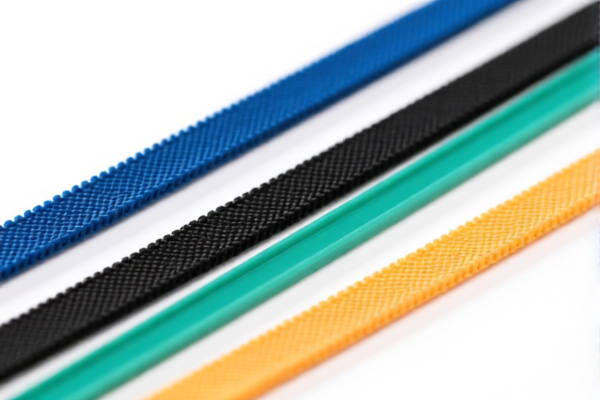
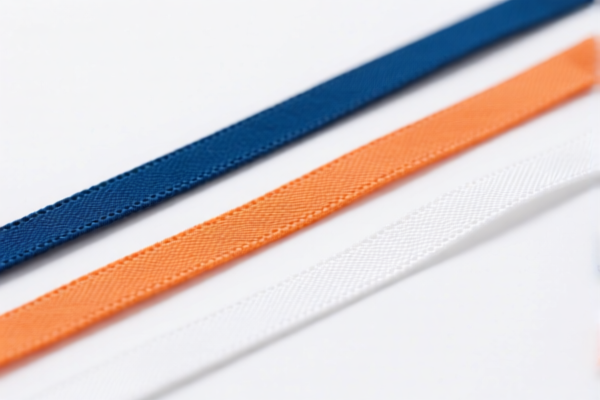
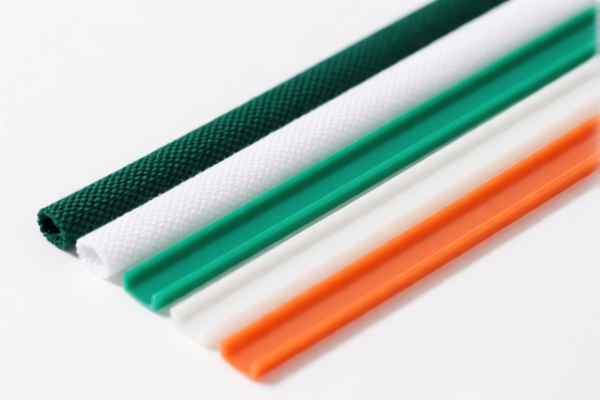
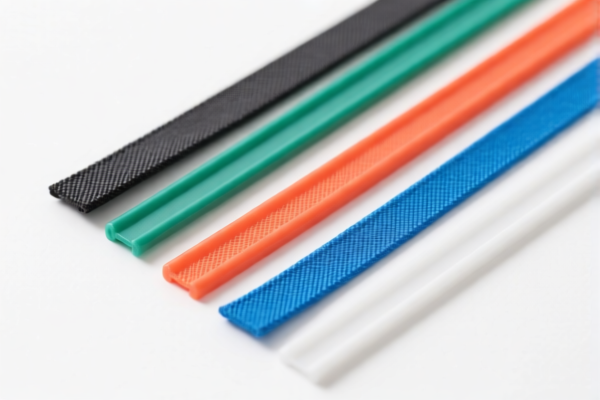
AI分析
🧱 Textile Composite Plastic Strips
🌐 HS Code Reference & Customs Clearance Guide | 2026 Latest Tariff Analysis | Strategic Import Strategy for US-China Trade
📌 Part I: Product Definition & Classification: Do You Really Understand "Composite Strips"?
Textile Composite Plastic Strips are specialized building or industrial materials that combine plastic polymers with textile fibers (woven or non-woven) in a strip or lath form. In international trade, their classification is complex because they fall into the "intersection" of two major chapters: Chapter 39 (Plastics) and Chapter 59 (Textile Impregnated/Coated Products).
The key to correct classification lies in the primary characteristic and specific end-use: * Plastic-Dominant: If the plastic coating/core is the essential character, and it functions as a general plastic article → Chapter 39. * Textile-Dominant: If the textile base is essential, and it is used for technical/industrial purposes (like construction reinforcement) → Chapter 59. * Mineral/Other: If it contains mineral fillers or doesn't fit standard plastic/textile definitions, it may fall under Chapter 68 (Stoneware/Mineral products).
⚠️ Critical Distinction:
- If the product is primarily a plastic strip with minor textile reinforcement → 3926.90.xxxx
- If the product is primarily a textile fabric coated with plastic for construction/technical use → 5911.90.xxxx
- If the product is treated as a non-specified mineral/plastic composite → 6815.99.xxxx
📦 Part II: HS Code Classification Details (2026 Latest Tariff Authority Comparison)
| HS Code | Product Description | Application Scenario | Primary Material Character |
|---|---|---|---|
3926.90.59.00 |
Other plastic articles (Strip form, textile component present) | General plastic strips with textile blend; "Other" plastic articles not specified elsewhere | ✅ Plastic-Dominant |
3926.90.57.00 |
Other plastic articles (Strip form, containing textile fibers) | Plastic strips where textile fibers are explicitly identified as part of the composite structure | ✅ Plastic-Dominant |
6815.99.41.70 |
Other articles of stone or other mineral substances (Plastic/Mineral mix) | Composite strips where mineral/plastic mix doesn't fit specific plastic or textile headings; "Catch-all" for non-specific materials | ⚖️ Mineral/Plastic Mix |
5911.90.00.80 |
Technical textile articles (Other uses, e.g., Construction) | Textile-based strips coated/plasticized for construction purposes; "Other" technical textiles | ✅ Textile-Dominant (Technical) |
5911.90.00.40 |
Technical textile articles (Weaved/Similar, Construction Use) | Weaved textile strips with plastic coating, specifically used in industrial/construction applications | ✅ Textile-Dominant (Construction) |
🔍 Key Reminder:
- Chapter 39 (3926) is used when the plastic determines the identity.
- Chapter 59 (5911) is used when the textile determines the identity, and it has a technical/industrial function (like construction reinforcement).
- Chapter 68 (6815) is a residual category if the product doesn't fit neatly into 39 or 59, often involving mineral fillers or non-specified composites.
💰 Part III: 2026 Latest Tariff Rate Details (Including Surcharge & Policy Add-ons)
✅ Applicable Country: United States (US)
✅ Country of Origin: China (CN)
✅ Effective Time: From November 10, 2025 (for subsequent imports)
🎯 1. 3926.90.59.00 —— Other Plastic Articles (Strip Form)
| Item | Content |
|---|---|
| Base Tariff Rate | 2.4% (ad valorem) |
| Section 301 Surcharge | +25.0% (USITC Footnote 9903.88.01) |
| IEEPA Surcharge | +10.0% (China/HK products, effective Nov 10, 2025) |
| Total Tariff Rate | 37.4% |
| Tax Calculation | CIF Value × 37.4% |
| De Minimis Eligible? | ❌ No (deny_de_minimis) |
| Legal Basis Path | IEEPA:9903.01.25 → IEEPA:9903.01.24 → USITC:3926.90.59.00 → FOOTNOTE:9903.88.01 |
📌 Explanation:
- This code classifies the item as a plastic article.
- The base rate is low (2.4%), but the 35% surcharge (25% Section 301 + 10% IEEPA) makes the total cost high.
- Critical: If classified here, you pay 37.4%.
🎯 2. 3926.90.57.00 —— Other Plastic Articles (Strip Form, Containing Textile Fibers)
| Item | Content |
|---|---|
| Base Tariff Rate | 6.5% (ad valorem) |
| Section 301 Surcharge | +25.0% |
| IEEPA Surcharge | +10.0% |
| Total Tariff Rate | 41.5% |
| Tax Calculation | CIF Value × 41.5% |
| De Minimis Eligible? | ❌ No (deny_de_minimis) |
| Legal Basis Path | IEEPA:9901.25 → IEEPA:9903.01.24 → USITC:3926.90.57.00 → FOOTNOTE:9903.88.01 |
📌 Note:
- This code is slightly more specific than 59.00, explicitly mentioning textile fibers.
- The higher base rate (6.5%) leads to a 41.5% total tariff.
- Risk: Misclassifying a textile-dominant product here results in overpayment or customs inquiry.
🎯 3. 6815.99.41.70 —— Other Articles of Stone/Mineral Substances (Plastic/Mineral Mix)
| Item | Content |
|---|---|
| Base Tariff Rate | 0.0% (ad valorem) |
| Section 301 Surcharge | +25.0% |
| IEEPA Surcharge | +10.0% |
| Total Tariff Rate | 35.0% |
| Tax Calculation | CIF Value × 35.0% |
| De Minimis Eligible? | ❌ No (deny_de_minimis) |
| Legal Basis Path | IEEPA:9903.01.25 → IEEPA:9903.01.24 → USITC:6815.99.41.70 → FOOTNOTE:9903.88.01 |
📌 Explanation:
- This is a catch-all category for products that don't fit standard plastic (39) or textile (59) definitions, often due to mineral fillers or complex composites.
- It has the lowest total tariff (35%) among the options, but classification risk is very high. Customs may challenge this if the product is clearly plastic/textile.
🎯 4. 5911.90.00.80 —— Technical Textile Articles (Other Uses, e.g., Construction)
| Item | Content |
|---|---|
| Base Tariff Rate | 3.8% (ad valorem) |
| Section 301 Surcharge | +25.0% |
| IEEPA Surcharge | +10.0% |
| Total Tariff Rate | 38.8% |
| Tax Calculation | CIF Value × 38.8% |
| De Minimis Eligible? | ❌ No (deny_de_minimis) |
| Legal Basis Path | IEEPA:9903.01.25 → IEEPA:9903.01.24 → USITC:5911.90.00.80 → FOOTNOTE:9903.88.01 |
📌 Note:
- This code applies when the textile is the essential character, and it is used for technical/construction purposes.
- Total tariff is 38.8%.
🎯 5. 5911.90.00.40 —— Technical Textile Articles (Weaved/Similar, Construction Use)
| Item | Content |
|---|---|
| Base Tariff Rate | 3.8% (ad valorem) |
| Section 301 Surcharge | +25.0% |
| > IEEPA Surcharge | +10.0% |
| Total Tariff Rate | 38.8% |
| Tax Calculation | CIF Value × 38.8% |
| De Minimis Eligible? | ❌ No (deny_de_minimis) |
| Legal Basis Path | IEEPA:9901.25 → IEEPA:9903.01.24 → USITC:5911.90.00.40 → FOOTNOTE:9903.88.01 |
📌 Note:
- This code is for woven textile strips with plastic coating, used in industrial/construction applications.
- Total tariff is 38.8%.
- Key: Must prove the woven nature and construction use.
🛠️ Part IV: Customs Clearance Practical Advice (Battle-Tested Pitfall Guide)
✅ 1. Required Documentation Checklist (No Exceptions)
| Document | Must Provide | Description |
|---|---|---|
| ✅ Product Specification Sheet | ✔️ | Details composition: % Plastic, % Textile, Weight, Dimensions |
| ✅ Material Composition Analysis | ✔️ | Third-party lab report proving primary material character |
| ✅ Product Photos (Clear) | ✔️ | Show cross-section, weave pattern, plastic coating |
| ✅ End-Use Declaration | ✔️ | Explicitly state "Construction Reinforcement" or "Industrial Application" |
| ✅ Commercial Invoice | ✔️ | Accurate description: "Plastic-Coated Textile Strip for Construction" |
| ✅ Packing List | ✔️ | Weight, quantity, packaging type |
| ✅ Certificate of Origin (CO) | ✔️ | If applicable for tariff reduction (rare for China) |
✅ 2. Declaration Tips (Key Mantras)
🔥 "Character Determines Code, Use Defines Chapter!"
| Scenario | Correct Declaration | Incorrect Approach |
|---|---|---|
| Plastic Coating is Primary | 3926.90.59.00 or 3926.90.57.00 |
Misdeclare as "Textile" → Higher risk of dispute |
| Textile Base is Primary | 5911.90.00.40 or 5911.90.00.80 |
Misdeclare as "Plastic" → May face anti-dumping checks |
| Mineral/Plastic Mix | 6815.99.41.70 |
Misdeclare as "Plastic" → Customs may reclassify |
| Ambiguous Composite | Request Advance Ruling | Guessing → High risk of penalty & delay |
✅ 3. Special Case Handling
| Scenario | Handling Advice |
|---|---|
| OEM Custom Strips | Provide client specs + design drawings to prove intended use |
| Mixed Shipment | Separate HS Codes per item; do not bundle different materials |
| New Material Innovation | Apply for Advance Ruling (Pre-classification) before shipping |
| Dispute on "Textile" | Provide weave structure diagrams and fiber type certificates |
🌍 Part V: Global Market Comparison (2026 Latest)
| Country/Region | Recommended HS Code | Tariff (China Origin) | Certification Requirements | Notes |
|---|---|---|---|---|
| 🇺🇸 USA | 3926.90.59.00 or 5911.90.00.40 |
35% - 41.5% | None specific, but prove composition | High Surcharge applies |
| 🇨🇳 China | 3926.90.59.00 or 5911.90.00.40 |
3.8% - 6.5% | CCC (if applicable) | No Section 301/IEEPA |
| 🇪🇺 EU | 3926.90.59.00 or 5911.90.00.40 |
6.5% - 9.6% | CE, REACH | No additional surcharges |
| 🇦🇺 Australia | 3926.90.59.00 or 5911.90.00.40 |
5.0% - 6.0% | RCM, ACS | No surcharges |
| 🇯🇵 Japan | 3926.90.59.00 or 5911.90.00.40 |
4.0% - 6.0% | PSE, JIS | No surcharges |
📌 Conclusion:
- USA is the most expensive market due to 25% Section 301 + 10% IEEPA surcharges.
- EU, Japan, Australia have lower base tariffs but no surcharges, making them more competitive for exports.
- China Origin is the key driver of high costs in the US market.
📌 Part VI: Common Mistakes & Pitfalls (Blood & Tears Lessons)
❌ Mistake 1: Classifying a textile-dominant product as Plastic (3926)
👉 Consequence: Customs may reject or reclassify, leading to delays and potential penalties.
👉 Cost Difference: 37.4% vs 38.8% (Minor, but principle matters).
❌ Mistake 2: Classifying a plastic-dominant product as Textile (5911)
👉 Consequence: Higher base tariff (3.8% vs 2.4%) + risk of "technical textile" proof failure.
👉 Cost Difference: 38.8% vs 37.4% (Minor, but documentation burden is higher).
❌ Mistake 3: Using 6815.99.41.70 without mineral content proof
👉 Consequence: Customs will reclassify to 3926 or 5911, leading to back taxes and fines.
👉 Risk: Very High. Only use if product truly contains mineral fillers.
❌ Mistake 4: Ignoring De Minimis ineligibility
👉 Consequence: Assuming small shipments are tax-free → Seizure at border.
👉 Rule: All China-origin goods under these HS codes are subject to surcharges, regardless of value.
✅ Correct Approach:
"Plastic-Coated Textile Strip, 50% Plastic, 50% Polyester, for Construction Reinforcement, Model XYZ, Lab-Tested Composition"
🎯 Part VII: Conclusion: Professional Declaration, Save Time, Reduce Costs!
🎯 Remember the Mantra:
🔹 "Plastic Dominant → 3926 (37.4%-41.5%)
🔹 Textile Dominant → 5911 (38.8%)
🔹 Mineral Mix → 6815 (35.0%)
🔹 Always Pay the 35%+ Surcharge on US Imports from China!"
📌 Tips:
- If your product is originating from Vietnam, Mexico, Thailand, or Malaysia, you may be eligible for IEEPA Exemptions, reducing tariffs to 0%-5%.
- Recommendation: Apply for an Advance Ruling with US Customs (CBP) before shipping to avoid disputes.
📣 Immediate Action:
📞 Contact a licensed Customs Broker + Provide Product Photos + Request HS Code Advance Ruling
🚀 Ensure smooth customs clearance, maximize profit, and minimize risk!
✨ Professional Customs Clearance Starts with Accurate Classification!
💼 Every cent of your cost deserves precise calculation!
用户评价
关于 HS 编码归类
协调制度(HS)是由世界海关组织(WCO)制定的国际贸易商品分类标准。全球 200 多个国家采用 HS 系统作为海关关税、贸易统计和进出口监管的基础。
每个 HS 编码遵循以下层级结构:
- 章(2 位)——商品大类(例如:第 84 章:机器和机械设备)
- 品目(4 位)——章内的更具体分类
- 子目(6 位)——国际通用细分,所有 WCO 成员国统一使用
- 本国细分(8-10 位)——各国自行扩展的细分编码,如美国 HTSUS 10 位编码
正确的 HS 编码归类对于顺利通关、准确缴纳关税和遵守贸易法规至关重要。错误归类可能导致海关延误、多缴关税或罚款。
从CN进口到US时,适用的关税税率可能包括:
- 最惠国(MFN)税率——适用于 WTO 成员国的标准关税税率
- 普通税率——适用于无贸易协定国家
- 贸易救济关税——附加关税,如 301 条款(反倾销)、232 条款(国家安全)或反补贴税
本页内容仅供参考。如需正式归类,请咨询当地海关或持牌报关代理。