Textile Composite Plastic Strips
CN → US| HS Code | Tariff Rate | Origin | Destination | Doc |
|---|---|---|---|---|
| 3926905900 | 37.4% | CN | US | Official Doc |
| 3926905700 | 41.5% | CN | US | Official Doc |
| 6815994170 | 35.0% | CN | US | Official Doc |
| 5911900080 | 38.8% | CN | US | Official Doc |
| 5911900040 | 38.8% | CN | US | Official Doc |
Product Images
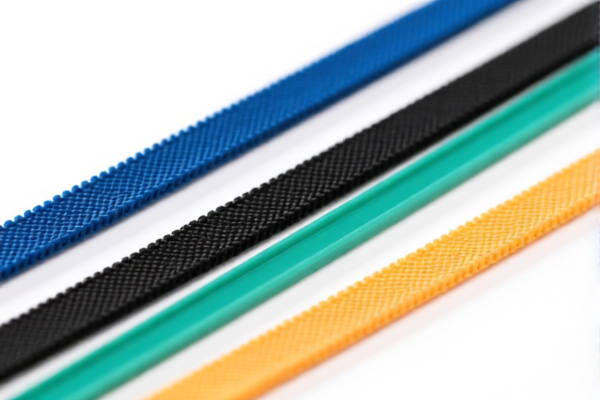
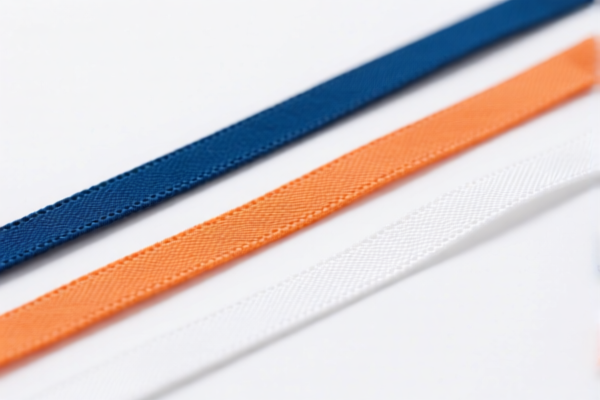
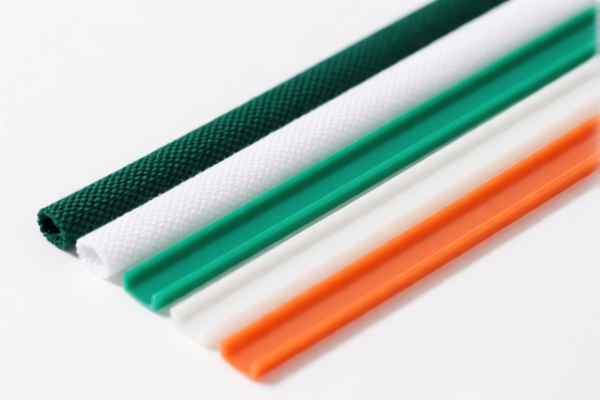
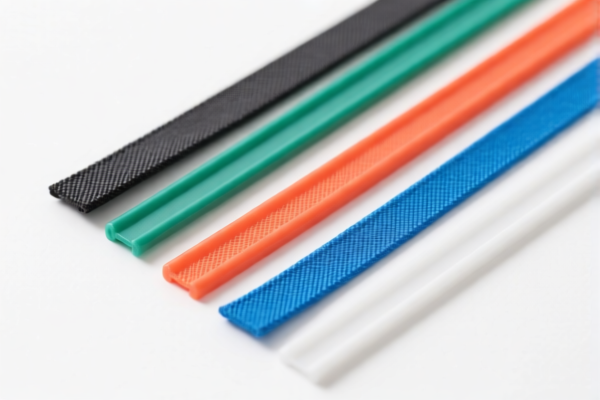
AI Analysis
🧱 Textile Composite Plastic Strips
🌐 HS Code Reference & Customs Clearance Guide | 2026 Latest Tariff Analysis | Strategic Import Strategy for US-China Trade
📌 Part I: Product Definition & Classification: Do You Really Understand "Composite Strips"?
Textile Composite Plastic Strips are specialized building or industrial materials that combine plastic polymers with textile fibers (woven or non-woven) in a strip or lath form. In international trade, their classification is complex because they fall into the "intersection" of two major chapters: Chapter 39 (Plastics) and Chapter 59 (Textile Impregnated/Coated Products).
The key to correct classification lies in the primary characteristic and specific end-use: * Plastic-Dominant: If the plastic coating/core is the essential character, and it functions as a general plastic article → Chapter 39. * Textile-Dominant: If the textile base is essential, and it is used for technical/industrial purposes (like construction reinforcement) → Chapter 59. * Mineral/Other: If it contains mineral fillers or doesn't fit standard plastic/textile definitions, it may fall under Chapter 68 (Stoneware/Mineral products).
⚠️ Critical Distinction:
- If the product is primarily a plastic strip with minor textile reinforcement → 3926.90.xxxx
- If the product is primarily a textile fabric coated with plastic for construction/technical use → 5911.90.xxxx
- If the product is treated as a non-specified mineral/plastic composite → 6815.99.xxxx
📦 Part II: HS Code Classification Details (2026 Latest Tariff Authority Comparison)
| HS Code | Product Description | Application Scenario | Primary Material Character |
|---|---|---|---|
3926.90.59.00 |
Other plastic articles (Strip form, textile component present) | General plastic strips with textile blend; "Other" plastic articles not specified elsewhere | ✅ Plastic-Dominant |
3926.90.57.00 |
Other plastic articles (Strip form, containing textile fibers) | Plastic strips where textile fibers are explicitly identified as part of the composite structure | ✅ Plastic-Dominant |
6815.99.41.70 |
Other articles of stone or other mineral substances (Plastic/Mineral mix) | Composite strips where mineral/plastic mix doesn't fit specific plastic or textile headings; "Catch-all" for non-specific materials | ⚖️ Mineral/Plastic Mix |
5911.90.00.80 |
Technical textile articles (Other uses, e.g., Construction) | Textile-based strips coated/plasticized for construction purposes; "Other" technical textiles | ✅ Textile-Dominant (Technical) |
5911.90.00.40 |
Technical textile articles (Weaved/Similar, Construction Use) | Weaved textile strips with plastic coating, specifically used in industrial/construction applications | ✅ Textile-Dominant (Construction) |
🔍 Key Reminder:
- Chapter 39 (3926) is used when the plastic determines the identity.
- Chapter 59 (5911) is used when the textile determines the identity, and it has a technical/industrial function (like construction reinforcement).
- Chapter 68 (6815) is a residual category if the product doesn't fit neatly into 39 or 59, often involving mineral fillers or non-specified composites.
💰 Part III: 2026 Latest Tariff Rate Details (Including Surcharge & Policy Add-ons)
✅ Applicable Country: United States (US)
✅ Country of Origin: China (CN)
✅ Effective Time: From November 10, 2025 (for subsequent imports)
🎯 1. 3926.90.59.00 —— Other Plastic Articles (Strip Form)
| Item | Content |
|---|---|
| Base Tariff Rate | 2.4% (ad valorem) |
| Section 301 Surcharge | +25.0% (USITC Footnote 9903.88.01) |
| IEEPA Surcharge | +10.0% (China/HK products, effective Nov 10, 2025) |
| Total Tariff Rate | 37.4% |
| Tax Calculation | CIF Value × 37.4% |
| De Minimis Eligible? | ❌ No (deny_de_minimis) |
| Legal Basis Path | IEEPA:9903.01.25 → IEEPA:9903.01.24 → USITC:3926.90.59.00 → FOOTNOTE:9903.88.01 |
📌 Explanation:
- This code classifies the item as a plastic article.
- The base rate is low (2.4%), but the 35% surcharge (25% Section 301 + 10% IEEPA) makes the total cost high.
- Critical: If classified here, you pay 37.4%.
🎯 2. 3926.90.57.00 —— Other Plastic Articles (Strip Form, Containing Textile Fibers)
| Item | Content |
|---|---|
| Base Tariff Rate | 6.5% (ad valorem) |
| Section 301 Surcharge | +25.0% |
| IEEPA Surcharge | +10.0% |
| Total Tariff Rate | 41.5% |
| Tax Calculation | CIF Value × 41.5% |
| De Minimis Eligible? | ❌ No (deny_de_minimis) |
| Legal Basis Path | IEEPA:9901.25 → IEEPA:9903.01.24 → USITC:3926.90.57.00 → FOOTNOTE:9903.88.01 |
📌 Note:
- This code is slightly more specific than 59.00, explicitly mentioning textile fibers.
- The higher base rate (6.5%) leads to a 41.5% total tariff.
- Risk: Misclassifying a textile-dominant product here results in overpayment or customs inquiry.
🎯 3. 6815.99.41.70 —— Other Articles of Stone/Mineral Substances (Plastic/Mineral Mix)
| Item | Content |
|---|---|
| Base Tariff Rate | 0.0% (ad valorem) |
| Section 301 Surcharge | +25.0% |
| IEEPA Surcharge | +10.0% |
| Total Tariff Rate | 35.0% |
| Tax Calculation | CIF Value × 35.0% |
| De Minimis Eligible? | ❌ No (deny_de_minimis) |
| Legal Basis Path | IEEPA:9903.01.25 → IEEPA:9903.01.24 → USITC:6815.99.41.70 → FOOTNOTE:9903.88.01 |
📌 Explanation:
- This is a catch-all category for products that don't fit standard plastic (39) or textile (59) definitions, often due to mineral fillers or complex composites.
- It has the lowest total tariff (35%) among the options, but classification risk is very high. Customs may challenge this if the product is clearly plastic/textile.
🎯 4. 5911.90.00.80 —— Technical Textile Articles (Other Uses, e.g., Construction)
| Item | Content |
|---|---|
| Base Tariff Rate | 3.8% (ad valorem) |
| Section 301 Surcharge | +25.0% |
| IEEPA Surcharge | +10.0% |
| Total Tariff Rate | 38.8% |
| Tax Calculation | CIF Value × 38.8% |
| De Minimis Eligible? | ❌ No (deny_de_minimis) |
| Legal Basis Path | IEEPA:9903.01.25 → IEEPA:9903.01.24 → USITC:5911.90.00.80 → FOOTNOTE:9903.88.01 |
📌 Note:
- This code applies when the textile is the essential character, and it is used for technical/construction purposes.
- Total tariff is 38.8%.
🎯 5. 5911.90.00.40 —— Technical Textile Articles (Weaved/Similar, Construction Use)
| Item | Content |
|---|---|
| Base Tariff Rate | 3.8% (ad valorem) |
| Section 301 Surcharge | +25.0% |
| > IEEPA Surcharge | +10.0% |
| Total Tariff Rate | 38.8% |
| Tax Calculation | CIF Value × 38.8% |
| De Minimis Eligible? | ❌ No (deny_de_minimis) |
| Legal Basis Path | IEEPA:9901.25 → IEEPA:9903.01.24 → USITC:5911.90.00.40 → FOOTNOTE:9903.88.01 |
📌 Note:
- This code is for woven textile strips with plastic coating, used in industrial/construction applications.
- Total tariff is 38.8%.
- Key: Must prove the woven nature and construction use.
🛠️ Part IV: Customs Clearance Practical Advice (Battle-Tested Pitfall Guide)
✅ 1. Required Documentation Checklist (No Exceptions)
| Document | Must Provide | Description |
|---|---|---|
| ✅ Product Specification Sheet | ✔️ | Details composition: % Plastic, % Textile, Weight, Dimensions |
| ✅ Material Composition Analysis | ✔️ | Third-party lab report proving primary material character |
| ✅ Product Photos (Clear) | ✔️ | Show cross-section, weave pattern, plastic coating |
| ✅ End-Use Declaration | ✔️ | Explicitly state "Construction Reinforcement" or "Industrial Application" |
| ✅ Commercial Invoice | ✔️ | Accurate description: "Plastic-Coated Textile Strip for Construction" |
| ✅ Packing List | ✔️ | Weight, quantity, packaging type |
| ✅ Certificate of Origin (CO) | ✔️ | If applicable for tariff reduction (rare for China) |
✅ 2. Declaration Tips (Key Mantras)
🔥 "Character Determines Code, Use Defines Chapter!"
| Scenario | Correct Declaration | Incorrect Approach |
|---|---|---|
| Plastic Coating is Primary | 3926.90.59.00 or 3926.90.57.00 |
Misdeclare as "Textile" → Higher risk of dispute |
| Textile Base is Primary | 5911.90.00.40 or 5911.90.00.80 |
Misdeclare as "Plastic" → May face anti-dumping checks |
| Mineral/Plastic Mix | 6815.99.41.70 |
Misdeclare as "Plastic" → Customs may reclassify |
| Ambiguous Composite | Request Advance Ruling | Guessing → High risk of penalty & delay |
✅ 3. Special Case Handling
| Scenario | Handling Advice |
|---|---|
| OEM Custom Strips | Provide client specs + design drawings to prove intended use |
| Mixed Shipment | Separate HS Codes per item; do not bundle different materials |
| New Material Innovation | Apply for Advance Ruling (Pre-classification) before shipping |
| Dispute on "Textile" | Provide weave structure diagrams and fiber type certificates |
🌍 Part V: Global Market Comparison (2026 Latest)
| Country/Region | Recommended HS Code | Tariff (China Origin) | Certification Requirements | Notes |
|---|---|---|---|---|
| 🇺🇸 USA | 3926.90.59.00 or 5911.90.00.40 |
35% - 41.5% | None specific, but prove composition | High Surcharge applies |
| 🇨🇳 China | 3926.90.59.00 or 5911.90.00.40 |
3.8% - 6.5% | CCC (if applicable) | No Section 301/IEEPA |
| 🇪🇺 EU | 3926.90.59.00 or 5911.90.00.40 |
6.5% - 9.6% | CE, REACH | No additional surcharges |
| 🇦🇺 Australia | 3926.90.59.00 or 5911.90.00.40 |
5.0% - 6.0% | RCM, ACS | No surcharges |
| 🇯🇵 Japan | 3926.90.59.00 or 5911.90.00.40 |
4.0% - 6.0% | PSE, JIS | No surcharges |
📌 Conclusion:
- USA is the most expensive market due to 25% Section 301 + 10% IEEPA surcharges.
- EU, Japan, Australia have lower base tariffs but no surcharges, making them more competitive for exports.
- China Origin is the key driver of high costs in the US market.
📌 Part VI: Common Mistakes & Pitfalls (Blood & Tears Lessons)
❌ Mistake 1: Classifying a textile-dominant product as Plastic (3926)
👉 Consequence: Customs may reject or reclassify, leading to delays and potential penalties.
👉 Cost Difference: 37.4% vs 38.8% (Minor, but principle matters).
❌ Mistake 2: Classifying a plastic-dominant product as Textile (5911)
👉 Consequence: Higher base tariff (3.8% vs 2.4%) + risk of "technical textile" proof failure.
👉 Cost Difference: 38.8% vs 37.4% (Minor, but documentation burden is higher).
❌ Mistake 3: Using 6815.99.41.70 without mineral content proof
👉 Consequence: Customs will reclassify to 3926 or 5911, leading to back taxes and fines.
👉 Risk: Very High. Only use if product truly contains mineral fillers.
❌ Mistake 4: Ignoring De Minimis ineligibility
👉 Consequence: Assuming small shipments are tax-free → Seizure at border.
👉 Rule: All China-origin goods under these HS codes are subject to surcharges, regardless of value.
✅ Correct Approach:
"Plastic-Coated Textile Strip, 50% Plastic, 50% Polyester, for Construction Reinforcement, Model XYZ, Lab-Tested Composition"
🎯 Part VII: Conclusion: Professional Declaration, Save Time, Reduce Costs!
🎯 Remember the Mantra:
🔹 "Plastic Dominant → 3926 (37.4%-41.5%)
🔹 Textile Dominant → 5911 (38.8%)
🔹 Mineral Mix → 6815 (35.0%)
🔹 Always Pay the 35%+ Surcharge on US Imports from China!"
📌 Tips:
- If your product is originating from Vietnam, Mexico, Thailand, or Malaysia, you may be eligible for IEEPA Exemptions, reducing tariffs to 0%-5%.
- Recommendation: Apply for an Advance Ruling with US Customs (CBP) before shipping to avoid disputes.
📣 Immediate Action:
📞 Contact a licensed Customs Broker + Provide Product Photos + Request HS Code Advance Ruling
🚀 Ensure smooth customs clearance, maximize profit, and minimize risk!
✨ Professional Customs Clearance Starts with Accurate Classification!
💼 Every cent of your cost deserves precise calculation!
Customer Reviews
About HS Code Classification
The Harmonized System (HS) is an internationally standardized nomenclature developed by the World Customs Organization (WCO) to classify traded products. Over 200 countries use the HS system as the basis for customs tariffs, trade statistics, and import/export regulations.
Each HS code follows a hierarchical structure:
- Chapter (2 digits) — Broad category of goods (e.g., Chapter 84: Machinery and Mechanical Appliances)
- Heading (4 digits) — More specific grouping within the chapter
- Subheading (6 digits) — Internationally standardized breakdown, used by all WCO member countries
- National subdivisions (8-10 digits) — Country-specific extensions for further classification, such as US HTSUS 10-digit codes
Correct HS code classification is essential for smooth customs clearance, accurate duty payment, and compliance with trade regulations. Misclassification can lead to customs delays, overpayment of duties, or penalties.
When importing from CN to US, the applicable tariff rates may include:
- Most-Favored-Nation (MFN) rate — The standard duty rate applied to WTO members
- General rate — Applied to countries without trade agreements
- Trade remedy duties — Additional tariffs such as Section 301 (anti-dumping), Section 232 (national security), or countervailing duties
The information provided on this page is for reference purposes only. For official classification, please consult with your local customs authority or a licensed customs broker.