Textile Composite Plastic Translucent Board
CN → US| HS编码 | 关税税率 | 原产国 | 目的国 | 文档 |
|---|---|---|---|---|
| 3921121100 | 39.2% | CN | US | 官方文档 |
| 5903102010 | 35.0% | CN | US | 官方文档 |
| 3921121500 | 41.5% | CN | US | 官方文档 |
| 5903102090 | 35.0% | CN | US | 官方文档 |
| 3920435000 | 39.2% | CN | US | 官方文档 |
商品图片
AI分析
🏗️ Textile Composite Plastic Translucent Board (PVC + Fabric Composite)
🌐 HS Code Reference & Customs Clearance Guide | 2026 Latest Tariff Analysis | Professional Clearance Strategy
📌 I. Product Definition & Classification: Do You Really Understand "PVC Composite Boards"?
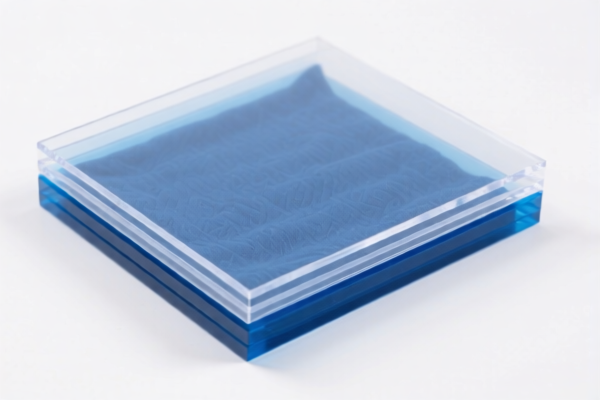
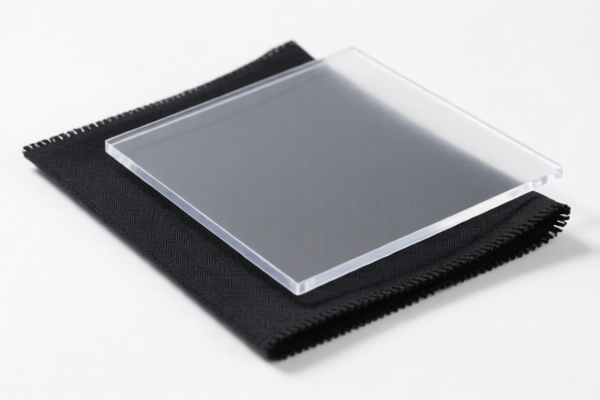
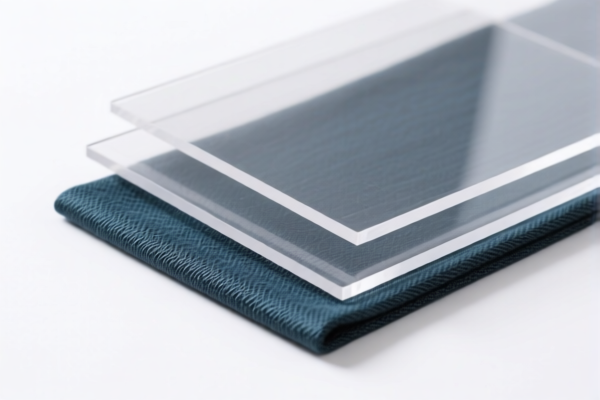
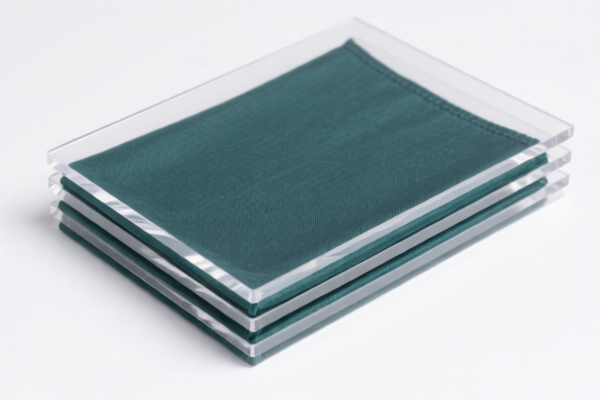
The Textile Composite Plastic Translucent Board is a hybrid material widely used in construction (awnings, greenhouse covers), signage (lightboxes), and industrial applications (tarpaulins, tents). It is composed of a PVC (Polyvinyl Chloride) coating or lamination bonded to a textile fabric base (usually polyester or fiberglass).
In international trade, the classification depends critically on whether customs views this product primarily as a Plastic Sheet/Membrane or as an Impregnated/Laminated Textile Fabric.
⚠️ Key Distinction Point:
- If the fabric is considered the essential character, and the PVC is merely a surface treatment/coating → Classify under Chapter 59 (Impregnated Textiles).
- If the plastic layer provides the structural integrity, or it is sold as a rigid/semi-rigid board/sheet where plastic is dominant → Classify under Chapter 39 (Plastics).
📦 II. HS Code Classification Details (2026 Latest Tariff Authoritative Comparison)
Based on the provided data, there are 5 potential HS Codes depending on the specific composition, thickness, and manufacturing process. The duty rates vary significantly due to US Trade Policy (Section 301 & IEEPA).
| HS Code | Product Description | Key Classification Logic | Total Tax Rate (US/CN) |
|---|---|---|---|
3921.12.11.00 |
PVC Plates/Sheets/Films, Reinforced/Composite | Plastic-centric: PVC board/sheet including composite fabric attributes. Fits "Plastic plates/sheets" category. | 39.2% |
5903.10.20.10 |
Textile Fabrics, Impregnated/Covered with PVC | Textile-centric: "PVC" indicates material, "Composite Fabric" fits "Textile fabrics impregnated/coated/laminated". | 35.0% |
3921.12.15.00 |
PVC Plates/Sheets, Combined with Textile Materials | Hybrid/Specific: PVC board/sheet specifically combined with textile materials as per structural requirements. | 41.5% |
5903.10.20.90 |
Other Textile Fabrics, Impregnated/Covered with PVC | Textile-centric: General PVC-coated laminated textile fabrics (if not specified for lightbox/signage use). | 35.0% |
3920.43.50.00 |
Other Plates/Sheets of Polyvinyl Chloride | Pure Plastic-centric: PVC polymer-made plates/sheets ("Other" category), ignoring the fabric composite aspect. | 39.2% |
🔍 Crucial Reminder:
- The highest tax (41.5%) applies if classified under 3921.12.15.00 (Specific PVC composite board).
- The lowest tax (35.0%) applies if classified under 5903 (Textile fabrics), provided the product is clearly defined as a flexible fabric/roll.
- Misclassification Risk: Declaring a thick, rigid "board" as a "textile fabric" may lead to customs rejection. Declaring a flexible "tarpaulin" as a "rigid plate" is also risky.
💰 III. 2026 Latest Tariff Rate Breakdown (Including Surcharges & Policy Add-ons)
✅ Applicable Country: United States (US)
✅ Origin: China (CN)
✅ Effective Date: Since Nov 10, 2025 (and subsequent imports)
🎯 1. 3921.12.11.00 & 3920.43.50.00 —— PVC Plates/Sheets (Plastic Category)
| Item | Content |
|---|---|
| Base Duty Rate | 4.2% (Ad Valorem) |
| Section 301 Surcharge | +25.0% (USITC Footnote 9903.88.01 or similar Section 301 provisions) |
| IEEPA Surcharge | +10.0% (Against China/HK products, effective from Nov 10, 2025) |
| Total Tax Rate | 39.2% |
| Tax Calculation | CIF Value × 39.2% |
| De Minimis Exemption | ❌ Not Eligible (deny_de_minimis) |
| Legal Basis Path | IEEPA:9903.01.25 → Section 301 → USITC:3921.12.11.00 / 3920.43.50.00 |
📌 Explanation:
- These codes fall under Chapter 39 (Plastics).
- The 25% is the standard Section 301 tariff on many plastic products from China.
- The 10% is the specific IEEPA surcharge added in late 2025.
- Total Burden: Nearly 40% of the product value is lost to tariffs.
🎯 2. 5903.10.20.10 & 5903.10.20.90 —— Impregnated Textile Fabrics (Textile Category)
| Item | Content |
|---|---|
| Base Duty Rate | 0.0% (Ad Valorem) |
| Section 301 Surcharge | +25.0% |
| IEEPA Surcharge | +10.0% |
| Total Tax Rate | 35.0% |
| Tax Calculation | CIF Value × 35.0% |
| De Minimis Exemption | ❌ Not Eligible (deny_de_minimis) |
| Legal Basis Path | IEEPA:9903.01.24 → Section 301 → USITC:5903.10.20.10 / 5903.10.20.90 |
📌 Explanation:
- These codes fall under Chapter 59 (Textile Fabrics).
- Although the base duty is 0%, the 25% Section 301 and 10% IEEPA surcharges still apply.
- Total Burden: 35%, which is 4.2 percentage points lower than the Chapter 39 options.
- Strategy: If the product can be legitimately classified as a "Textile Fabric" (e.g., sold in rolls, flexible, primarily for covering/tarpaulin use), this offers significant savings.
🎯 3. 3921.12.15.00 —— Specific PVC Composite Boards (Plastic Category)
| Item | Content |
|---|---|
| Base Duty Rate | 6.5% (Ad Valorem) |
| Section 301 Surcharge | +25.0% |
| IEEPA Surcharge | +10.0% |
| Total Tax Rate | 41.5% |
| Tax Calculation | CIF Value × 41.5% |
| De Minimis Exemption | ❌ Not Eligible (deny_de_minimis) |
| Legal Basis Path | IEEPA:9903.01.25 → Section 301 → USITC:3921.12.15.00 |
📌 Explanation:
- This is the most expensive classification.
- It implies a specific type of PVC board combined with textiles, often viewed as a specialized construction material.
- Avoid this code unless the product is rigid, thick, and clearly a "board/panel" rather than a flexible fabric.
🛠️ IV. Customs Clearance Practical Advice (Real-World Pitfall Avoidance Guide)
✅ 1. Required Documentation List (No Missing Items)
| Document | Must Provide? | Description |
|---|---|---|
| ✅ Product Specification Sheet | ✔️ | Include dimensions, weight per sqm, PVC thickness, fabric type (polyester/fg), translucency level. |
| ✅ Composition Ratio | ✔️ | Clearly state % of PVC vs. Fabric. This determines Chapter 39 vs. Chapter 59. |
| ✅ Product Photos | ✔️ | Show flexibility (bending test) to support "fabric" classification if claiming 5903. |
| ✅ Commercial Invoice | ✔️ | Accurate description: "PVC Coated Polyester Fabric" vs. "PVC Composite Board". |
| ✅ Packing List | ✔️ | Indicate if sold in rolls (fabric) or cut sheets (board). |
| ✅ Certificate of Origin (CO) | ✔️ | For proof of Chinese origin. |
✅ 2. Declaration Tips (Key Mantra)
🔥 “Rolls = Textile (35%), Boards = Plastic (39-41.5%)! Flexibility Matters!”
| Scenario | Correct Declaration | Wrong Practice |
|---|---|---|
| Flexible rolls, used for tarps/tents | 5903.10.20.10 (Textile) |
Declaring as "Plastic Sheet" → 39.2% |
| Rigid panels, used for signage/lightboxes | 3921.12.11.00 (Plastic) |
Declaring as "Fabric" → Risk of reclassification penalty |
| Thick, stiff composite | 3921.12.15.00 (Specific Plastic) |
Declaring as "Thin Fabric" → Customs rejection |
| Lightbox film (flexible) | 5903.10.20.90 (Textile) |
Declaring as "Board" → 41.5% |
📌 Note:
- If the product is semi-rigid (can be bent but holds shape), it is a gray area.
- Best Practice: Provide a flexibility test report or photos showing it can be rolled without cracking. This supports the Chapter 59 (Textile) argument, saving 4.2%-6.5% in tariffs.
✅ 3. Special Circumstances
| Situation | Handling Suggestion |
|---|---|
| Lightbox Film (Translucent) | If it’s a thin, flexible film on a fabric base, argue for 5903.10.20.90 (35%). If it’s a rigid acrylic/PVC board, use 3921.12.11.00 (39.2%). |
| Greenhouse Covering | Usually flexible, roll-packed. Strongly support 5903.10.20.10 (35%). |
| Construction Panel | If it’s a rigid panel for building walls, use 3921.12.15.00 (41.5%). Do not try to misclassify rigid panels as fabric. |
| Mixed Containers | If shipping both flexible films and rigid boards, declare separately. Do not lump them under one HS code. |
🌍 V. Global Market Comparison (2026 Latest)
| Country/Region | Recommended HS Code | Tariff (China Origin) | Certification | Remarks |
|---|---|---|---|---|
| 🇺🇸 USA | 5903.10.20.10 (Textile) |
35% | N/A | Lowest rate if classified as textile. 3921 is 39.2%. |
| 🇨🇳 China | 5903.10.20.10 |
~2-5% | N/A | Low import duty. |
| 🇪🇺 EU | 5903.10.20 |
0-6% | CE/REACH | VAT applies. |
| 🇦🇺 Australia | 5903.10.20 |
5% | N/A | Standard GST applies. |
📌 Conclusion:
- The USA is the most critical market due to high surcharges.
- Classification is key: Saving 4.2% on a $1M shipment = $42,000 savings.
- Textile classification (35%) is cheaper than Plastic classification (39.2%-41.5%).
- Strategy: If the product allows, lean towards Chapter 59 (Textile) declaration to minimize costs.
📌 VI. Common Mistakes & Pitfall Guide (Blood & Tears Lessons)
❌ Mistake 1: Calling a rigid PVC board a "PVC Coated Fabric" to get 35% tax.
👉 Consequence: Customs inspects, finds it’s rigid, reclassifies to 3921.12.15.00 → 41.5% + fines + delay.
❌ Mistake 2: Declaring flexible film as "Plastic Sheets" (3921) without reason.
👉 Consequence: Overpaying 4.2%-6.5% unnecessarily.
❌ Mistake 3: Ignoring the IEEPA 10% surcharge.
👉 Consequence: Unexpected bill at port. Both Chapter 39 and 59 have the 10% IEEPA add-on.
❌ Mistake 4: Mixing "Board" and "Film" in one invoice line item.
👉 Consequence: Customs request for clarification, potential detention of goods.
✅ Correct Approach:
"PVC Coated Polyester Fabric, Flexible, Translucent, Sold in Rolls, for Tent/Coverage Use" →
5903.10.20.10(35%)
"Rigid PVC Composite Panel, for Signage, Cut to Size" →3921.12.11.00(39.2%)
🎯 VII. Conclusion: Professional Declaration, Save Cost, Ensure Clearance!
🎯 Remember the Mantra:
🔹 "Rolls are Textile (35%), Boards are Plastic (39-41.5%)."
🔹 "Flexibility proves Textile, Rigidity proves Plastic."
🔹 "Don’t pay 41.5% when 35% is possible."
📌 Pro Tip:
If your product is on the edge (semi-rigid), consider pre-ruling (Advance Ruling) with US CBP. Provide samples and photos. This gives you legal certainty before shipping.
Also, check if your supplier can provide a Certificate of Composition proving the textile base is substantial enough to justify Chapter 59.
📣 Immediate Action:
📞 Contact your customs broker.
📄 Provide Product Photos (bending test).
📄 Ask: "Can we classify this as 5903.10.20.10 to save 4.2%?"
🚀 Clearance Efficiency, Cost Reduction, Profit Maximization!
✨ Professional Clearance Starts with Accurate Classification!
💼 Every Percent Saved is Pure Profit!
用户评价
关于 HS 编码归类
协调制度(HS)是由世界海关组织(WCO)制定的国际贸易商品分类标准。全球 200 多个国家采用 HS 系统作为海关关税、贸易统计和进出口监管的基础。
每个 HS 编码遵循以下层级结构:
- 章(2 位)——商品大类(例如:第 84 章:机器和机械设备)
- 品目(4 位)——章内的更具体分类
- 子目(6 位)——国际通用细分,所有 WCO 成员国统一使用
- 本国细分(8-10 位)——各国自行扩展的细分编码,如美国 HTSUS 10 位编码
正确的 HS 编码归类对于顺利通关、准确缴纳关税和遵守贸易法规至关重要。错误归类可能导致海关延误、多缴关税或罚款。
从CN进口到US时,适用的关税税率可能包括:
- 最惠国(MFN)税率——适用于 WTO 成员国的标准关税税率
- 普通税率——适用于无贸易协定国家
- 贸易救济关税——附加关税,如 301 条款(反倾销)、232 条款(国家安全)或反补贴税
本页内容仅供参考。如需正式归类,请咨询当地海关或持牌报关代理。