Textile Fabric Polyurethane Composite Board
CN → US| HS编码 | 关税税率 | 原产国 | 目的国 | 文档 |
|---|---|---|---|---|
| 6810195000 | 38.9% | CN | US | 官方文档 |
| 5903202000 | 35.0% | CN | US | 官方文档 |
| 3921131950 | 40.3% | CN | US | 官方文档 |
| 6810990080 | 35.0% | CN | US | 官方文档 |
商品图片

AI分析
🏗️ Textile Fabric Polyurethane (PU) Composite Board
🌐 HS Code Reference & Customs Clearance Guide | 2024-2025 Tariff Analysis | Strategic Compliance Strategy
📌 I. Product Definition: What is a "Polyurethane Textile Composite Board"?
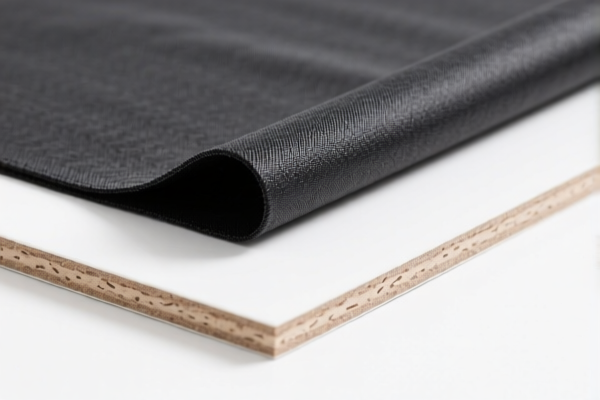
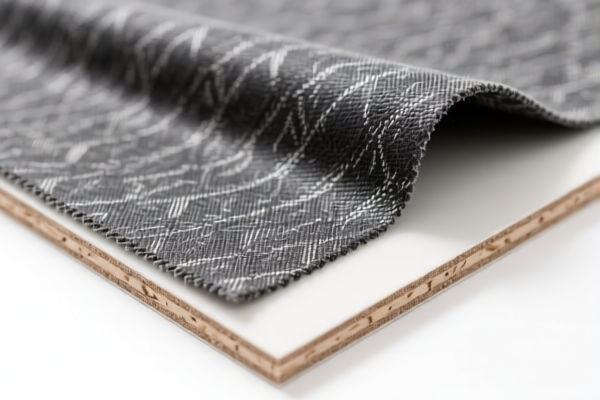
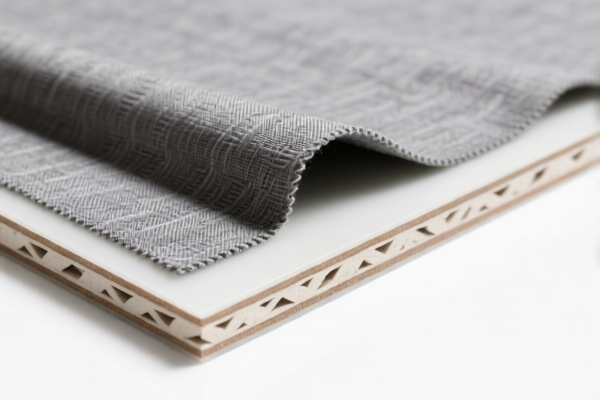
A Textile Fabric Polyurethane Composite Board is a constructed panel made by laminating or impregnating textile fabrics with polyurethane (PU) resins, followed by curing into a rigid or semi-rigid sheet/board format. It is commonly used in construction, insulation, interior decoration, and industrial flooring.
⚠️ Key Classification Challenge:
The classification depends entirely on the primary function and material composition as perceived by customs authorities: - Is it primarily a textile product (fabric-based)? → Chapter 59 - Is it primarily a plastic product (PU-based)? → Chapter 39 - Is it primarily a construction building material (cement/concrete substitute or stone-like)? → Chapter 68🔍 Critical Distinction:
- If the textile provides structural integrity and PU is merely a binder/coating → HS 5903
- If PU is the dominant mass/volume and textile is embedded/filled → HS 3921
- If it mimics stone/concrete for building facades or flooring → HS 6810
📦 II. HS Code Classification Breakdown (Detailed Analysis)
Below are the four potential HS Codes derived from the provided data, along with their logical justification, tax implications, and clearance advice.
🎯 1. 5903.20.20.00 — Textile-Based Classification
Summary: Polyurethane-impregnated, coated, or covered textile fabrics.
| Item | Detail |
|---|---|
| Logic | The textile fabric is the base material, impregnated with PU. This falls under Chapter 59 ("Textile fabrics impregnated, coated, covered or laminated..."). |
| Tax Breakdown | - Base Duty: 0.0% - Section 301 (USITC): 25.0% - Section 122 (IEEPA): 10.0% - Total Effective Rate: 35.0% |
| Best For | Products where the textile structure is visible, functional (e.g., reinforcement), and the PU acts as a coating/impregnation. |
📌 Customs Insight:
This is often the most favorable tariff rate among the options due to the 0% base duty. However, you must prove the textile nature predominates. If customs views the PU mass as higher, they may shift classification.
🎯 2. 6810.99.00.80 — Construction/Stone-Like Classification
Summary: Other articles of cement, concrete, or artificial stone (specifically non-silica/quartz polymer boards).
| Item | Detail |
|---|---|
| Logic | If the board is used as a construction material mimicking stone/concrete and contains mineral fillers or has stone-like properties, it may fall here. |
| Tax Breakdown | - Base Duty: 0.0% - Section 301 (USITC): 25.0% - Section 122 (IEEPA): 10.0% - Total Effective Rate: 35.0% |
| Best For | Heavy-duty building panels, façade cladding, or industrial flooring where the "composite" nature is perceived as a stone-like construction material. |
📌 Customs Insight:
Similar to HS 5903 in total tax (35%), but riskier because proving "stone-like" properties for a PU-textile composite can be challenging. Requires technical data sheets showing density, hardness, and composition similar to artificial stone.
🎯 3. 6810.19.50.00 — Cement/Concrete/Artificial Stone "Other Boards"
Summary: Polyurethane textile composite board classified as other boards of cement, concrete, or artificial stone.
| Item | Detail |
|---|---|
| Logic | A specific subheading for "other" boards within Chapter 68. This is a broader "catch-all" for construction boards not specifically listed elsewhere in Ch 68. |
| Tax Breakdown | - Base Duty: 3.9% - Section 301 (USITC): 25.0% - Section 122 (IEEPA): 10.0% - Total Effective Rate: 38.9% |
| Best For | When the product is clearly a construction board but doesn't fit the specific "quartz polymer" description of HS 6810.99. |
📌 Customs Insight:
Slightly higher tax (38.9%) than HS 5903/6810.99 due to the 3.9% base duty. Use only if the textile/plastic classifications are disputed.
🎯 4. 3921.13.19.50 — Plastic/PU Material Classification
Summary: Other plates, sheets, film, foil, and strip of polymers of ethylene (or other plastics, depending on specific polyurethane subhead). Note: PU is often grouped under other plastics or specific polyurethane codes.
| Item | Detail |
|---|---|
| Logic | If the product is primarily viewed as a plastic sheet/board where textile is merely a filler or reinforcement, it falls under Chapter 39 ("Plastics and articles thereof"). |
| Tax Breakdown | - Base Duty: 5.3% - Section 301 (USITC): 25.0% - Section 122 (IEEPA): 10.0% - Total Effective Rate: 40.3% |
| Best For | High-density PU boards where the plastic content is dominant (>50% by weight or value) and the textile is secondary. |
📌 Customs Insight:
This is the most expensive option at 40.3% due to the 5.3% base duty. Only choose this if the product is definitively a plastic product and cannot be argued as textile-based or construction-material-based.
💰 III. Tariff Structure & Legal Basis (Detailed)
All four HS Codes share the same Trade War Surcharge Structure for imports from China to the USA:
| Component | Rate | Legal Basis | Explanation |
|---|---|---|---|
| Base Duty | 0.0% - 5.3% | HTSUS General Schedule | Varies by HS Code (Textile/Stone = 0%; Plastic = 5.3%; Other Stone = 3.9%) |
| Section 301 Duty | 25.0% | USITC Footnote 9903.88.01 | Standard penalty tariff on Chinese manufactured goods |
| Section 122 Duty | 10.0% | IEEPA 9903.01.24 | Additional tariff on Chinese goods (effective from Nov 2025) |
| Total Tax | 35.0% - 40.3% | Sum of above | No de minimis exemption applies |
🚨 Critical Warning:
- No De Minimis Exemption: These items do not qualify for the $800 de minimis exemption (Section 321). Full inspection and duty payment apply. - Anti-Circumvention Risk: Customs actively scrutinizes composite goods to prevent duty evasion by misclassifying them as lower-tariff items. Ensure your product description matches the chosen HS Code precisely.
🛠️ IV. Customs Clearance Strategy & Recommendations
✅ 1. Pre-Submission Documentation Checklist
| Document | Requirement | Why It Matters |
|---|---|---|
| Product Specification Sheet | Must detail % composition of PU vs. Textile vs. Fillers | Determines primary character for HTSUS classification (GRI 3) |
| Technical Data Sheet (TDS) | Shows density, hardness, intended use | Proves whether it's "stone-like" (Ch 68) or "plastic" (Ch 39) |
| Manufacturing Process Flowchart | Describes lamination/impregnation process | Proves if textile is "impregnated" (Ch 59) or PU is "cast" (Ch 39) |
| Commercial Invoice | Must state: "Polyurethane Textile Composite Board" + HS Code | Clear description prevents delays |
| Country of Origin Certificate | Required for Section 301/122 duties | Proves Chinese origin to apply correct surcharges |
✅ 2. Classification Strategy: Which HS Code to Choose?
| Scenario | Recommended HS Code | Reason |
|---|---|---|
| Textile-heavy (Fabric visible, PU as binder) | 5903.20.20.00 | Lowest base duty (0%); strong textile argument |
| Construction/Architectural (Used for walls/floors, stone-like) | 6810.99.00.80 | Matches "artificial stone" use case; low base duty |
| Plastic-heavy (PU dominant, textile embedded) | 3921.13.19.50 | Only if PU mass >50%; higher base duty but accurate |
| Unclear/Generic Construction Board | 6810.19.50.00 | Fallback if other specific categories don't fit |
💡 Pro Tip:
Pre-Application for Binding Ruling: If the product is new to the market, submit a Binding Ruling Request to CBP. This provides legal certainty on the HS Code and protects against future audits.
✅ 3. Common Pitfalls to Avoid
| Mistake | Consequence | Solution |
|---|---|---|
| Mislabeling as "Textile Roll" | Classification shifted to Ch 60/61; higher duties | Declare as "Composite Board" with dimensions |
| Ignoring Section 122 | Underpayment of 10% tariff | Ensure invoices include IEEPA 10% in cost calculation |
| Vague Product Description | Customs hold for inspection | Use precise terms: "Rigid PU-Textile Composite Panel" |
| Assuming De Minimis Applies | Seizure of goods | Never use de minimis for these items |
🌍 V. Global Market Comparison (2024-2025)
| Market | Preferred HS Code | Est. Total Duty | Key Requirement |
|---|---|---|---|
| 🇺🇸 USA | 5903.20.20.00 or 3921.13.19.50 |
35% - 40.3% | IEEPA 122 + Section 301 apply |
| 🇨🇳 China | 5903.20.20.00 |
0% - 5% | No additional tariffs on imports from many countries |
| 🇪🇺 EU | 5903.20.20.00 |
0% - 6.5% | CE Marking, REACH Compliance |
| 🇬🇧 UK | 5903.20.20.00 |
0% - 6.5% | Post-Brexit UK Tariff Book applies |
📌 Conclusion:
The US market is the most challenging due to the cumulative 25% + 10% surcharges.
Optimal Strategy: Aim for HS 5903.20.20.00 (35% total) if the textile component is significant. If the product is purely plastic-based, HS 3921 is unavoidable (40.3%).
📌 VI. Final Checklist for Exporters
- Confirm Material Composition: Get lab reports on PU vs. Textile % by weight.
- Choose HS Code: Based on primary function (Textile vs. Plastic vs. Stone).
- Calculate Landed Cost: Include 35-40.3% duty + freight + insurance.
- Prepare Documentation: Invoice, Packing List, CO, Spec Sheet.
- File Entry: Use correct HTSUS code and declare all surcharges.
🚀 Final Advice:
"Don't guess the HS Code. Test the product. Classify accurately. Save your margin."
Misclassification leads to penalties, delays, and lost profit. When in doubt, seek a binding ruling.
✨ Expert Clearance, Maximum Profit!
💼 Your Composite Board, Perfectly Classified!
用户评价
关于 HS 编码归类
协调制度(HS)是由世界海关组织(WCO)制定的国际贸易商品分类标准。全球 200 多个国家采用 HS 系统作为海关关税、贸易统计和进出口监管的基础。
每个 HS 编码遵循以下层级结构:
- 章(2 位)——商品大类(例如:第 84 章:机器和机械设备)
- 品目(4 位)——章内的更具体分类
- 子目(6 位)——国际通用细分,所有 WCO 成员国统一使用
- 本国细分(8-10 位)——各国自行扩展的细分编码,如美国 HTSUS 10 位编码
正确的 HS 编码归类对于顺利通关、准确缴纳关税和遵守贸易法规至关重要。错误归类可能导致海关延误、多缴关税或罚款。
从CN进口到US时,适用的关税税率可能包括:
- 最惠国(MFN)税率——适用于 WTO 成员国的标准关税税率
- 普通税率——适用于无贸易协定国家
- 贸易救济关税——附加关税,如 301 条款(反倾销)、232 条款(国家安全)或反补贴税
本页内容仅供参考。如需正式归类,请咨询当地海关或持牌报关代理。