Textile Fabric Polyurethane Composite Board
CN → US| HS Code | Tariff Rate | Origin | Destination | Doc |
|---|---|---|---|---|
| 6810195000 | 38.9% | CN | US | Official Doc |
| 5903202000 | 35.0% | CN | US | Official Doc |
| 3921131950 | 40.3% | CN | US | Official Doc |
| 6810990080 | 35.0% | CN | US | Official Doc |
Product Images
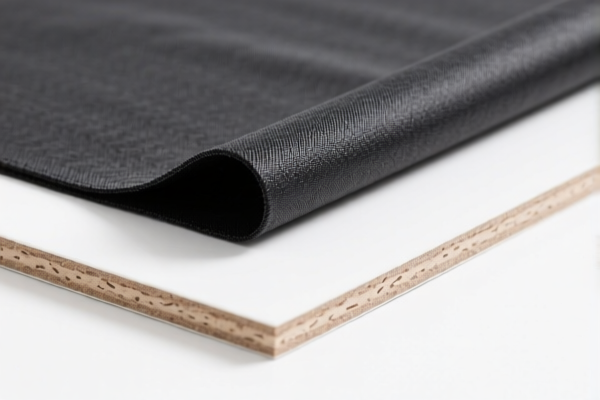
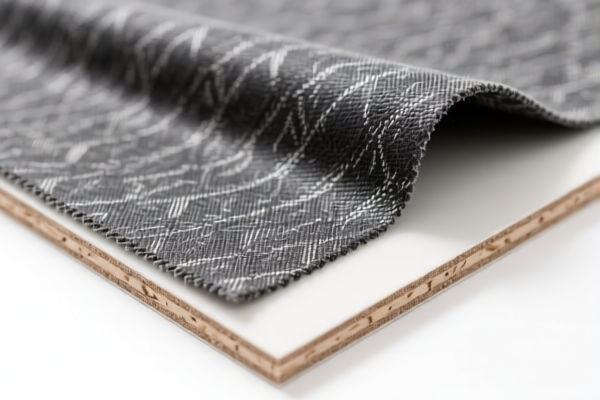
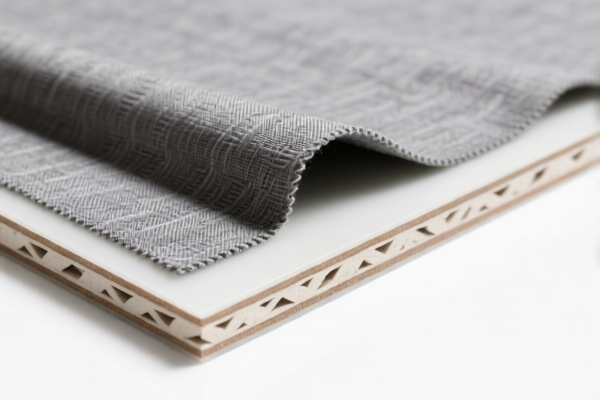

AI Analysis
🏗️ Textile Fabric Polyurethane (PU) Composite Board
🌐 HS Code Reference & Customs Clearance Guide | 2024-2025 Tariff Analysis | Strategic Compliance Strategy
📌 I. Product Definition: What is a "Polyurethane Textile Composite Board"?
A Textile Fabric Polyurethane Composite Board is a constructed panel made by laminating or impregnating textile fabrics with polyurethane (PU) resins, followed by curing into a rigid or semi-rigid sheet/board format. It is commonly used in construction, insulation, interior decoration, and industrial flooring.
⚠️ Key Classification Challenge:
The classification depends entirely on the primary function and material composition as perceived by customs authorities: - Is it primarily a textile product (fabric-based)? → Chapter 59 - Is it primarily a plastic product (PU-based)? → Chapter 39 - Is it primarily a construction building material (cement/concrete substitute or stone-like)? → Chapter 68🔍 Critical Distinction:
- If the textile provides structural integrity and PU is merely a binder/coating → HS 5903
- If PU is the dominant mass/volume and textile is embedded/filled → HS 3921
- If it mimics stone/concrete for building facades or flooring → HS 6810
📦 II. HS Code Classification Breakdown (Detailed Analysis)
Below are the four potential HS Codes derived from the provided data, along with their logical justification, tax implications, and clearance advice.
🎯 1. 5903.20.20.00 — Textile-Based Classification
Summary: Polyurethane-impregnated, coated, or covered textile fabrics.
| Item | Detail |
|---|---|
| Logic | The textile fabric is the base material, impregnated with PU. This falls under Chapter 59 ("Textile fabrics impregnated, coated, covered or laminated..."). |
| Tax Breakdown | - Base Duty: 0.0% - Section 301 (USITC): 25.0% - Section 122 (IEEPA): 10.0% - Total Effective Rate: 35.0% |
| Best For | Products where the textile structure is visible, functional (e.g., reinforcement), and the PU acts as a coating/impregnation. |
📌 Customs Insight:
This is often the most favorable tariff rate among the options due to the 0% base duty. However, you must prove the textile nature predominates. If customs views the PU mass as higher, they may shift classification.
🎯 2. 6810.99.00.80 — Construction/Stone-Like Classification
Summary: Other articles of cement, concrete, or artificial stone (specifically non-silica/quartz polymer boards).
| Item | Detail |
|---|---|
| Logic | If the board is used as a construction material mimicking stone/concrete and contains mineral fillers or has stone-like properties, it may fall here. |
| Tax Breakdown | - Base Duty: 0.0% - Section 301 (USITC): 25.0% - Section 122 (IEEPA): 10.0% - Total Effective Rate: 35.0% |
| Best For | Heavy-duty building panels, façade cladding, or industrial flooring where the "composite" nature is perceived as a stone-like construction material. |
📌 Customs Insight:
Similar to HS 5903 in total tax (35%), but riskier because proving "stone-like" properties for a PU-textile composite can be challenging. Requires technical data sheets showing density, hardness, and composition similar to artificial stone.
🎯 3. 6810.19.50.00 — Cement/Concrete/Artificial Stone "Other Boards"
Summary: Polyurethane textile composite board classified as other boards of cement, concrete, or artificial stone.
| Item | Detail |
|---|---|
| Logic | A specific subheading for "other" boards within Chapter 68. This is a broader "catch-all" for construction boards not specifically listed elsewhere in Ch 68. |
| Tax Breakdown | - Base Duty: 3.9% - Section 301 (USITC): 25.0% - Section 122 (IEEPA): 10.0% - Total Effective Rate: 38.9% |
| Best For | When the product is clearly a construction board but doesn't fit the specific "quartz polymer" description of HS 6810.99. |
📌 Customs Insight:
Slightly higher tax (38.9%) than HS 5903/6810.99 due to the 3.9% base duty. Use only if the textile/plastic classifications are disputed.
🎯 4. 3921.13.19.50 — Plastic/PU Material Classification
Summary: Other plates, sheets, film, foil, and strip of polymers of ethylene (or other plastics, depending on specific polyurethane subhead). Note: PU is often grouped under other plastics or specific polyurethane codes.
| Item | Detail |
|---|---|
| Logic | If the product is primarily viewed as a plastic sheet/board where textile is merely a filler or reinforcement, it falls under Chapter 39 ("Plastics and articles thereof"). |
| Tax Breakdown | - Base Duty: 5.3% - Section 301 (USITC): 25.0% - Section 122 (IEEPA): 10.0% - Total Effective Rate: 40.3% |
| Best For | High-density PU boards where the plastic content is dominant (>50% by weight or value) and the textile is secondary. |
📌 Customs Insight:
This is the most expensive option at 40.3% due to the 5.3% base duty. Only choose this if the product is definitively a plastic product and cannot be argued as textile-based or construction-material-based.
💰 III. Tariff Structure & Legal Basis (Detailed)
All four HS Codes share the same Trade War Surcharge Structure for imports from China to the USA:
| Component | Rate | Legal Basis | Explanation |
|---|---|---|---|
| Base Duty | 0.0% - 5.3% | HTSUS General Schedule | Varies by HS Code (Textile/Stone = 0%; Plastic = 5.3%; Other Stone = 3.9%) |
| Section 301 Duty | 25.0% | USITC Footnote 9903.88.01 | Standard penalty tariff on Chinese manufactured goods |
| Section 122 Duty | 10.0% | IEEPA 9903.01.24 | Additional tariff on Chinese goods (effective from Nov 2025) |
| Total Tax | 35.0% - 40.3% | Sum of above | No de minimis exemption applies |
🚨 Critical Warning:
- No De Minimis Exemption: These items do not qualify for the $800 de minimis exemption (Section 321). Full inspection and duty payment apply. - Anti-Circumvention Risk: Customs actively scrutinizes composite goods to prevent duty evasion by misclassifying them as lower-tariff items. Ensure your product description matches the chosen HS Code precisely.
🛠️ IV. Customs Clearance Strategy & Recommendations
✅ 1. Pre-Submission Documentation Checklist
| Document | Requirement | Why It Matters |
|---|---|---|
| Product Specification Sheet | Must detail % composition of PU vs. Textile vs. Fillers | Determines primary character for HTSUS classification (GRI 3) |
| Technical Data Sheet (TDS) | Shows density, hardness, intended use | Proves whether it's "stone-like" (Ch 68) or "plastic" (Ch 39) |
| Manufacturing Process Flowchart | Describes lamination/impregnation process | Proves if textile is "impregnated" (Ch 59) or PU is "cast" (Ch 39) |
| Commercial Invoice | Must state: "Polyurethane Textile Composite Board" + HS Code | Clear description prevents delays |
| Country of Origin Certificate | Required for Section 301/122 duties | Proves Chinese origin to apply correct surcharges |
✅ 2. Classification Strategy: Which HS Code to Choose?
| Scenario | Recommended HS Code | Reason |
|---|---|---|
| Textile-heavy (Fabric visible, PU as binder) | 5903.20.20.00 | Lowest base duty (0%); strong textile argument |
| Construction/Architectural (Used for walls/floors, stone-like) | 6810.99.00.80 | Matches "artificial stone" use case; low base duty |
| Plastic-heavy (PU dominant, textile embedded) | 3921.13.19.50 | Only if PU mass >50%; higher base duty but accurate |
| Unclear/Generic Construction Board | 6810.19.50.00 | Fallback if other specific categories don't fit |
💡 Pro Tip:
Pre-Application for Binding Ruling: If the product is new to the market, submit a Binding Ruling Request to CBP. This provides legal certainty on the HS Code and protects against future audits.
✅ 3. Common Pitfalls to Avoid
| Mistake | Consequence | Solution |
|---|---|---|
| Mislabeling as "Textile Roll" | Classification shifted to Ch 60/61; higher duties | Declare as "Composite Board" with dimensions |
| Ignoring Section 122 | Underpayment of 10% tariff | Ensure invoices include IEEPA 10% in cost calculation |
| Vague Product Description | Customs hold for inspection | Use precise terms: "Rigid PU-Textile Composite Panel" |
| Assuming De Minimis Applies | Seizure of goods | Never use de minimis for these items |
🌍 V. Global Market Comparison (2024-2025)
| Market | Preferred HS Code | Est. Total Duty | Key Requirement |
|---|---|---|---|
| 🇺🇸 USA | 5903.20.20.00 or 3921.13.19.50 |
35% - 40.3% | IEEPA 122 + Section 301 apply |
| 🇨🇳 China | 5903.20.20.00 |
0% - 5% | No additional tariffs on imports from many countries |
| 🇪🇺 EU | 5903.20.20.00 |
0% - 6.5% | CE Marking, REACH Compliance |
| 🇬🇧 UK | 5903.20.20.00 |
0% - 6.5% | Post-Brexit UK Tariff Book applies |
📌 Conclusion:
The US market is the most challenging due to the cumulative 25% + 10% surcharges.
Optimal Strategy: Aim for HS 5903.20.20.00 (35% total) if the textile component is significant. If the product is purely plastic-based, HS 3921 is unavoidable (40.3%).
📌 VI. Final Checklist for Exporters
- Confirm Material Composition: Get lab reports on PU vs. Textile % by weight.
- Choose HS Code: Based on primary function (Textile vs. Plastic vs. Stone).
- Calculate Landed Cost: Include 35-40.3% duty + freight + insurance.
- Prepare Documentation: Invoice, Packing List, CO, Spec Sheet.
- File Entry: Use correct HTSUS code and declare all surcharges.
🚀 Final Advice:
"Don't guess the HS Code. Test the product. Classify accurately. Save your margin."
Misclassification leads to penalties, delays, and lost profit. When in doubt, seek a binding ruling.
✨ Expert Clearance, Maximum Profit!
💼 Your Composite Board, Perfectly Classified!
Customer Reviews
About HS Code Classification
The Harmonized System (HS) is an internationally standardized nomenclature developed by the World Customs Organization (WCO) to classify traded products. Over 200 countries use the HS system as the basis for customs tariffs, trade statistics, and import/export regulations.
Each HS code follows a hierarchical structure:
- Chapter (2 digits) — Broad category of goods (e.g., Chapter 84: Machinery and Mechanical Appliances)
- Heading (4 digits) — More specific grouping within the chapter
- Subheading (6 digits) — Internationally standardized breakdown, used by all WCO member countries
- National subdivisions (8-10 digits) — Country-specific extensions for further classification, such as US HTSUS 10-digit codes
Correct HS code classification is essential for smooth customs clearance, accurate duty payment, and compliance with trade regulations. Misclassification can lead to customs delays, overpayment of duties, or penalties.
When importing from CN to US, the applicable tariff rates may include:
- Most-Favored-Nation (MFN) rate — The standard duty rate applied to WTO members
- General rate — Applied to countries without trade agreements
- Trade remedy duties — Additional tariffs such as Section 301 (anti-dumping), Section 232 (national security), or countervailing duties
The information provided on this page is for reference purposes only. For official classification, please consult with your local customs authority or a licensed customs broker.