Textile Fiber Rubber Wrapped V Belt
CN → US| HS编码 | 关税税率 | 原产国 | 目的国 | 文档 |
|---|---|---|---|---|
| 5604100000 | 41.3% | CN | US | 官方文档 |
| 5604909000 | 40.0% | CN | US | 官方文档 |
| 4010323000 | 38.4% | CN | US | 官方文档 |
| 5910001010 | 39.0% | CN | US | 官方文档 |
| 4010391000 | 38.4% | CN | US | 官方文档 |
商品图片
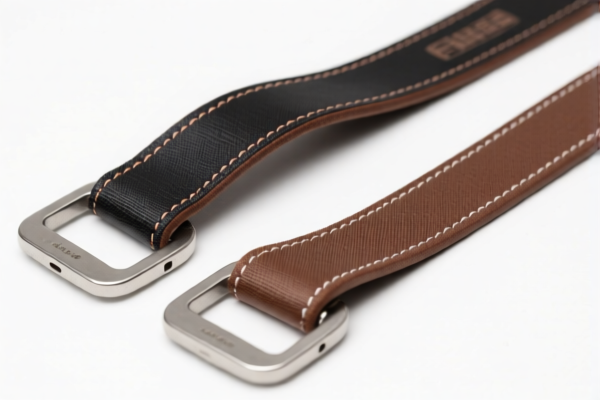
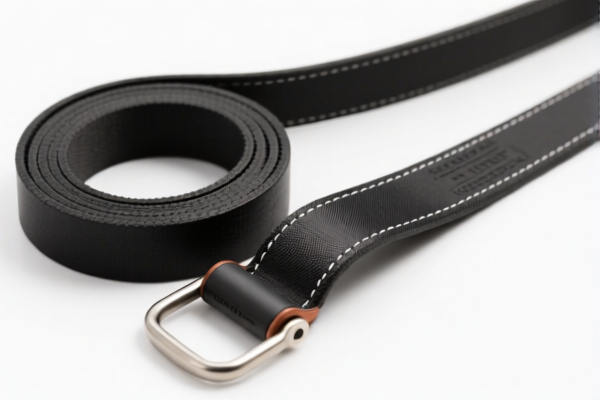
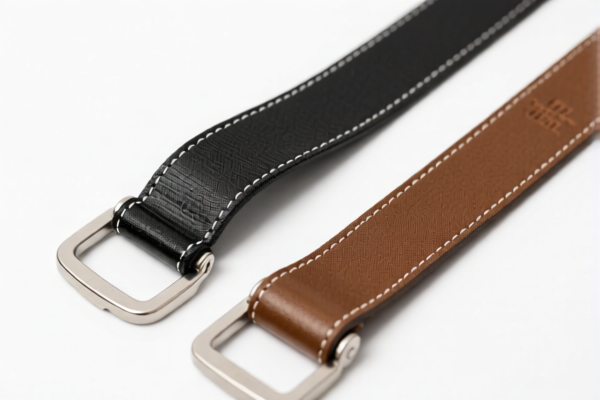
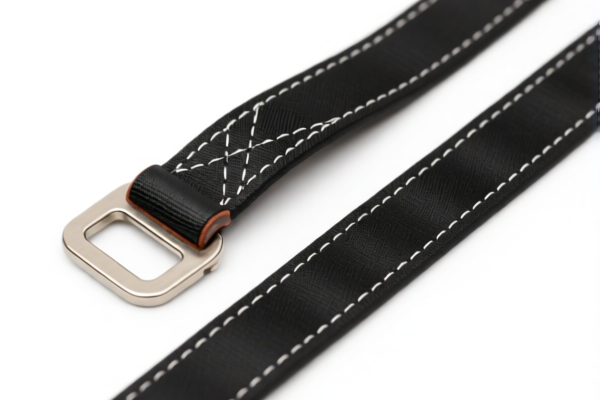
AI分析
🏭 V-Belt, Textile Fiber & Rubber Wrapped (Trapezoidal Cross-Section Driven Belts)
🌐 HS Code Reference & Customs Clearance Guide | 2026 Latest Tariff Analysis | Professional Strategy for US Imports
📌 I. Product Definition & Classification: Is Your "V-Belt" a Rubber Product or a Textile One?
"Textile Fiber Rubber Wrapped V-Belt" refers to a power transmission belt with a trapezoidal cross-section. Its structure typically involves a core made of textile fibers (like polyester or nylon) and an outer covering or reinforcement of rubber. In international trade, the classification hinges on whether it is viewed as a rubber article combined with textile materials or a textile yarn/strip covered in rubber.
⚠️ Key Distinction Point:
- If the product is primarily a trapezoidal cross-section drive belt with combined materials → It falls under Chapter 40 (Rubber) or Chapter 59 (Impregnated Textiles) depending on specific construction.
- If it is viewed as a yarn/strip covered in rubber → It falls under Chapter 56 (Yarn/Strip).
- Crucial Note: US Customs (CBP) often scrutinizes these products due to varying duty rates between "Drive Belts" (Ch 40/59) and "Textile Yarn/Strip" (Ch 56). The summaries provided below reflect the most common competitive classifications for this specific description.
📦 II. HS Code Classification Details (2026 Latest Tariff Authority Comparison)
| HS Code | Product Description | Summary of Match | Total Duty Rate |
|---|---|---|---|
5604.10.00.00 |
Rubber-coated or covered textile yarn and thread, other than those of heading 56.07 | Match Success. The product contains "rubber-covered" material and "textile" form, matching the material and structural characteristics of "textile-covered rubber yarn and cord." | 41.3% |
5604.90.90.00 |
Other textile yarn, strip, and the like of heading 54.04 or 54.05, combined with rubber, plastics, or other materials | Match Basis: The product includes "textile" material and "rubber-covered" features, matching the description of "textile yarn, strips, etc., impregnated, coated, covered, or sheathed with rubber or plastics." | 40.0% |
4010.32.30.00 |
Trapezoidal-section (V-type) endless drive belts, with a peripheral speed of 10 m/s or higher | Match Success. Product material (textile fiber and rubber combination) and form (V-belt) both match the classification requirement of "combined with textile materials" and "trapezoidal cross-section endless drive belt (V-belt)." | 38.4% |
5910.00.10.10 |
Driven belts made of textile materials, V-type | Match Success. The name "V-type" in the product name meets specific form requirements; "textile fiber" and "rubber coverage" meet the material inference made of artificial fiber制成, and the use belongs to power transmission belts. | 39.0% |
4010.39.10.00 |
Other trapezoidal-section (V-type) endless drive belts | Match Success. The name "V-type" corresponds to "trapezoidal cross-section (V-belt)"; "rubber coverage" and "textile fibers" meet the material and form requirements of "vulcanized rubber" and "combined with textile materials." | 38.4% |
🔍 Analysis Summary:
- Lowest Duty Rates: 4010.32.30.00 and 4010.39.10.00 (38.4%). These classify the product as a "Rubber Drive Belt."
- Higher Duty Rates: 5604.10.00.00 (41.3%), 5604.90.90.00 (40.0%), and 5910.00.10.10 (39.0%). These classify the product as "Textile Yarn/Strip" or "Textile Drive Belt."
- Strategic Implication: Classifying under Chapter 40 (Rubber) generally yields a lower total duty (38.4%) compared to Chapter 56/59 (Textile) which range from 39.0% to 41.3%.
💰 III. 2026 Latest Tariff Rate Details (Including Additional Duties & Policy Surcharges)
✅ Applicable Country: United States (US)
✅ Country of Origin: China (CN)
✅ Effective Date: From November 10, 2025 onwards (for subsequent imports)
🎯 1. 4010.32.30.00 & 4010.39.10.00 — Rubber Driven Belts (Lowest Rate)
| Item | Content |
|---|---|
| Base Rate | 3.4% (ad valorem) |
| Section 301 Surcharge | +25.0% |
| Section 122 (IEEPA) Surcharge | +10.0% |
| Total Rate | 38.4% |
| Tax Calculation | CIF Value × 38.4% |
| De Minimis Exemption Eligibility | ❌ No (denied_de_minimis) |
| Legal Basis Path | USITC:4010.32.30.00 → FOOTNOTE:301 → IEEPA:122 |
📌 Explanation:
- Base Tariff 3.4%: Standard MFN rate for rubber V-belts.
- Section 301 Tariff 25%: Applied to specific Chinese goods under US Trade Law Section 301.
- Section 122 Tariff 10%: Additional surcharge targeting China/Chinese goods under the International Emergency Economic Powers Act (IEEPA).
- Total 38.4%: This is the most cost-effective classification among the options provided.
🎯 2. 5910.00.10.10 — Textile Driven Belts (V-Type)
| Item | Content |
|---|---|
| Base Rate | 4.0% (ad valorem) |
| Section 301 Surcharge | +25.0% |
| Section 122 (IEEPA) Surcharge | +10.0% |
| Total Rate | 39.0% |
| Tax Calculation | CIF Value × 39.0% |
| De Minimis Exemption Eligibility | ❌ No (denied_de_minimis) |
| Legal Basis Path | USITC:5910.00.10.10 → FOOTNOTE:301 → IEEPA:122 |
📌 Explanation:
- Base Tariff 4.0%: Standard rate for textile drive belts.
- Total 39.0%: Slightly higher than rubber belt classifications. Requires proof that the belt is primarily defined by its textile composition in the context of drive belts.
🎯 3. 5604.10.00.00 — Rubber-Covered Textile Yarn/Cord
| Item | Content |
|---|---|
| Base Rate | 6.3% (ad valorem) |
| Section 301 Surcharge | +25.0% |
| Section 122 (IEEPA) Surcharge | +10.0% |
| Total Rate | 41.3% |
| Tax Calculation | CIF Value × 41.3% |
| De Minimis Exemption Eligibility | ❌ No (denied_de_minimis) |
| Legal Basis Path | USITC:5604.10.00.00 → FOOTNOTE:301 → IEEPA:122 |
📌 Explanation:
- Base Tariff 6.3%: Higher base rate for textile yarn covered in rubber.
- Total 41.3%: Highest duty rate among the matched codes. Generally applies if the product is perceived as a "yarn/strip" rather than a finished "belt."
🎯 4. 5604.90.90.00 — Other Rubber-Combined Textile Yarn/Strip
| Item | Content |
|---|---|
| Base Rate | 5.0% (ad valorem) |
| Section 301 Surcharge | +25.0% |
| Section 122 (IEEPA) Surcharge | +10.0% |
| Total Rate | 40.0% |
| Tax Calculation | CIF Value × 40.0% |
| De Minimis Exemption Eligibility | ❌ No (denied_de_minimis) |
| Legal Basis Path | USITC:5604.90.90.00 → FOOTNOTE:301 → IEEPA:122 |
📌 Explanation:
- Base Tariff 5.0%: Middle-range base rate.
- Total 40.0%: A viable alternative if the product's construction doesn't fit the specific "V-belt" definition of Ch 40 but fits general "combined textile" definitions.
🛠️ IV. Customs Clearance Practical Advice (Real-World Pitfall Avoidance Guide)
✅ 1. Documentation Checklist (None Can Be Omitted)
| Document | Must Provide | Description |
|---|---|---|
| ✅ Product Specification Sheet | ✔️ | Includes dimensions, cross-section type (e.g., A, B, C), material composition (% rubber vs. % textile), and tensile strength. |
| ✅ Structure Diagram/Exploded View | ✔️ | Essential to prove it is a finished belt (Ch 40/59) and not just raw yarn/strip (Ch 56). Highlight the "V" shape and vulcanization. |
| ✅ Product Photos (with Label) | ✔️ | Clear image showing the "V" shape, outer rubber, and inner textile core. |
| ✅ Commercial Invoice | ✔️ | Must clearly state "Drive Belt, V-Type, Vulcanized Rubber with Textile Reinforcement." Avoid vague terms like "Textile Cord." |
| ✅ Packing List | ✔️ | Detail the relationship between belts and accessories. |
✅ 2. Declaration Strategy (Key Mnemonics)
🔥 "V-Belt Shape, Rubber Cover, Ch 40 is King!"
| Scenario | Correct Declaration | Wrong Approach |
|---|---|---|
| Finished V-Belt (Vulcanized, Trapezoidal) | 4010.32.30.00 or 4010.39.10.00 |
Declaring as "Textile Yarn" → 41.3% |
| Belt Strip Not Yet Shaped/Cut | 5604.90.90.00 |
Declaring as "Finished Belt" → Potential penalty for misclassification |
| Drive Belt Made Primarily of Textile with Rubber Coating | 5910.00.10.10 |
Declaring as "Rubber Belt" → Potential penalty |
| Accessories (Tensioners, Pulleys) | Separate HS Codes | Combining with Belt → Complex duty calculation |
✅ 3. Special Situation Handling
| Situation | Handling Advice |
|---|---|
| OEM Custom V-Belts | Provide customer order + technical drawings. Ensure drawings explicitly show the "V" cross-section to support Ch 40 classification. |
| High-Speed vs. Low-Speed Belts | 4010.32.30.00 requires a peripheral speed ≥ 10 m/s. If your belt is for slow machinery, it may fall under 4010.39.10.00. Both have the same total duty (38.4%), but accuracy is key. |
| Mixed Material Proportions | If the textile core is dominant, CBP might argue for Ch 56/59. Provide lab test results proving the rubber provides the essential character (elasticity/vibration damping). |
| Origin Marking | Ensure every belt is marked "Made in China" to trigger the 25%+10% surcharges correctly. |
🌍 V. Global Main Market Clearance Comparison (2026 Latest)
| Country/Region | Recommended HS Code | Duty Rate | Certification Requirements | Remarks |
|---|---|---|---|---|
| 🇺🇸 USA | 4010.32.30.00 |
38.4% | None (Standard) | Best Rate. Avoid Ch 56/59 if possible. |
| 🇨🇳 China | 4010.32.30.00 |
6.5% | None | No additional surcharges. |
| 🇪🇺 EU | 4010.32.30.00 |
3.5% | REACH Compliance | No Section 301/122 equivalents. |
| 🇦🇺 Australia | 4010.32.30.00 |
5.0% | None | GSP benefits may apply depending on origin. |
| 🇯🇵 Japan | 4010.32.30.00 |
3.0% | JIS Standard | Low duty, no surcharges. |
📌 Conclusion:
- The USA is the most challenging market for V-belts due to the叠加 (stacking) of Section 301 (25%) and Section 122 (10%) tariffs.
- Classifying under Chapter 40 (Rubber) saves ~3% in total duty compared to Chapter 56 (Textile).
- No de minimis exemption applies to Chinese-origin V-belts in the US. All shipments are subject to the full 38.4%+ rate.
📌 VI. Common Errors & Pitfall Guide (Lessons Learned)
❌ Mistake 1: Declaring "Textile Cord" instead of "V-Belt" to avoid Ch 40 scrutiny.
👉 Consequence: CBP may reclassify as 5604.10.00.00 (41.3%) + penalties for undervaluation/misclassification.
❌ Mistake 2: Failing to specify "V-Type" or "Trapezoidal" in the description.
👉 Consequence: CBP may assign a general "Rubber Belt" code with different duties or request additional documentation, causing delays.
❌ Mistake 3: Ignoring the "Speed" specification for 4010.32.30.00.
👉 Consequence: If the belt operates < 10 m/s, it must be declared under 4010.39.10.00. While the rate is the same, the code must be accurate for statistical and regulatory purposes.
❌ Mistake 4: Not providing structural diagrams.
👉 Consequence: CBP cannot distinguish between a "covered yarn" (Ch 56) and a "drive belt" (Ch 40). Result: 30-day hold for further examination.
✅ Correct Approach:
"V-Belt, Drive Belt, Trapezoidal Cross-Section, Vulcanized Rubber with Textile Reinforcement, Model XYZ, Rated for Industrial Machinery"
🎯 VII. Conclusion: Precise Classification Saves Money!
🎯 Remember the Mnemonic:
🔹 "V-Belt is Rubber, Ch 40 is the Hub; Ch 56 is Yarn, Duty Rises High!"
🔹 "38.4% vs 41.3%: A 2.9% Savings on Every $10,000 Shipment!"💡 Pro Tip:
If your V-belts are manufactured in Vietnam, Mexico, Thailand, or Malaysia, you may be eligible to avoid the Section 301 and Section 122 surcharges.
- Recommended Action: Apply for a Section 301 Exclusion (if still available) or ensure Substantial Transformation in a third country to qualify for lower MFN rates (e.g., 3.4% base + minimal surcharges).
- Pre-Import Ruling: Strongly recommended to obtain a CBP Advance Ruling to lock in the4010classification and avoid future disputes.
📣 Immediate Action Required:
📞 Consult a Licensed Customs Broker
📄 Submit Product Drawings + Material Composition Report
🚀 Secure Your 38.4% Rate, Not the 41.3% Trap!
✨ Professional Customs Clearance Starts with Accurate Classification!
💼 Every Percent Matters in Global Trade!
用户评价
关于 HS 编码归类
协调制度(HS)是由世界海关组织(WCO)制定的国际贸易商品分类标准。全球 200 多个国家采用 HS 系统作为海关关税、贸易统计和进出口监管的基础。
每个 HS 编码遵循以下层级结构:
- 章(2 位)——商品大类(例如:第 84 章:机器和机械设备)
- 品目(4 位)——章内的更具体分类
- 子目(6 位)——国际通用细分,所有 WCO 成员国统一使用
- 本国细分(8-10 位)——各国自行扩展的细分编码,如美国 HTSUS 10 位编码
正确的 HS 编码归类对于顺利通关、准确缴纳关税和遵守贸易法规至关重要。错误归类可能导致海关延误、多缴关税或罚款。
从CN进口到US时,适用的关税税率可能包括:
- 最惠国(MFN)税率——适用于 WTO 成员国的标准关税税率
- 普通税率——适用于无贸易协定国家
- 贸易救济关税——附加关税,如 301 条款(反倾销)、232 条款(国家安全)或反补贴税
本页内容仅供参考。如需正式归类,请咨询当地海关或持牌报关代理。