Textile Fiber Rubber Wrapped V Belt
CN → US| HS Code | Tariff Rate | Origin | Destination | Doc |
|---|---|---|---|---|
| 5604100000 | 41.3% | CN | US | Official Doc |
| 5604909000 | 40.0% | CN | US | Official Doc |
| 4010323000 | 38.4% | CN | US | Official Doc |
| 5910001010 | 39.0% | CN | US | Official Doc |
| 4010391000 | 38.4% | CN | US | Official Doc |
Product Images
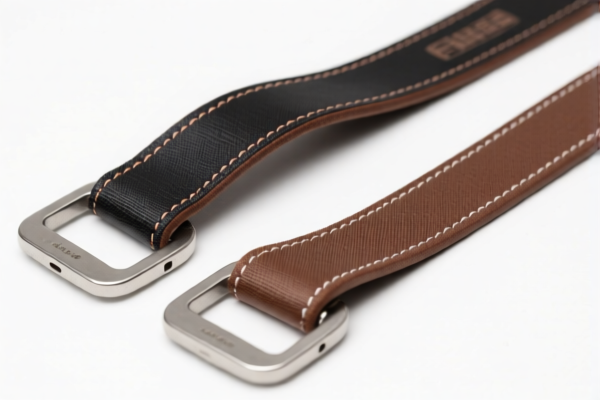
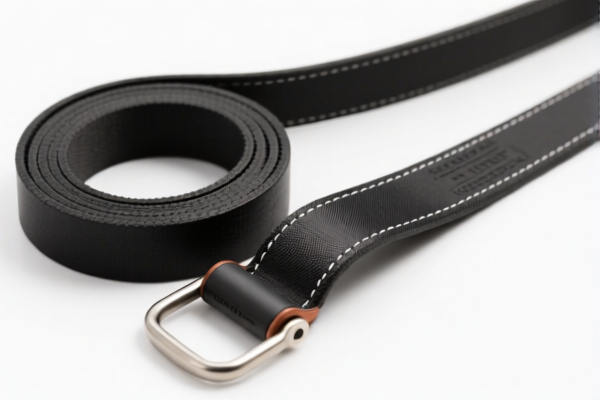
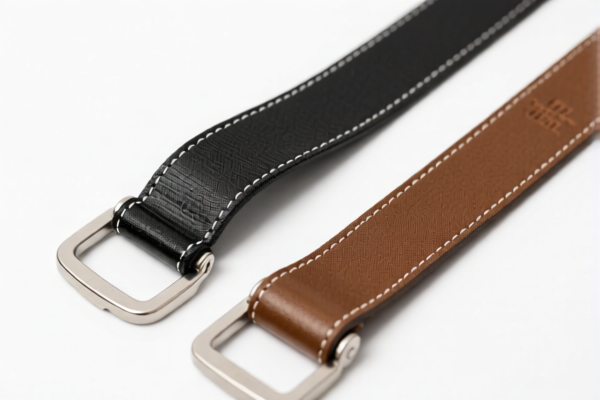
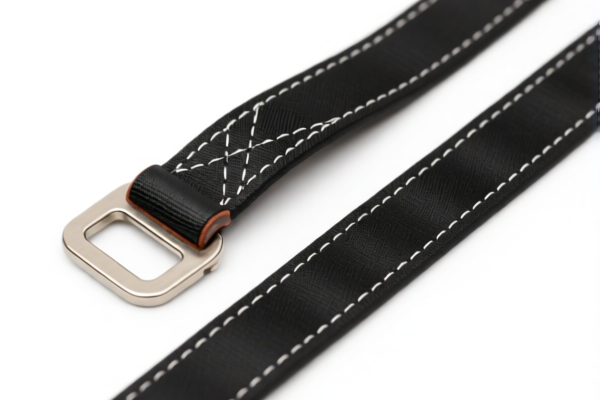
AI Analysis
🏭 V-Belt, Textile Fiber & Rubber Wrapped (Trapezoidal Cross-Section Driven Belts)
🌐 HS Code Reference & Customs Clearance Guide | 2026 Latest Tariff Analysis | Professional Strategy for US Imports
📌 I. Product Definition & Classification: Is Your "V-Belt" a Rubber Product or a Textile One?
"Textile Fiber Rubber Wrapped V-Belt" refers to a power transmission belt with a trapezoidal cross-section. Its structure typically involves a core made of textile fibers (like polyester or nylon) and an outer covering or reinforcement of rubber. In international trade, the classification hinges on whether it is viewed as a rubber article combined with textile materials or a textile yarn/strip covered in rubber.
⚠️ Key Distinction Point:
- If the product is primarily a trapezoidal cross-section drive belt with combined materials → It falls under Chapter 40 (Rubber) or Chapter 59 (Impregnated Textiles) depending on specific construction.
- If it is viewed as a yarn/strip covered in rubber → It falls under Chapter 56 (Yarn/Strip).
- Crucial Note: US Customs (CBP) often scrutinizes these products due to varying duty rates between "Drive Belts" (Ch 40/59) and "Textile Yarn/Strip" (Ch 56). The summaries provided below reflect the most common competitive classifications for this specific description.
📦 II. HS Code Classification Details (2026 Latest Tariff Authority Comparison)
| HS Code | Product Description | Summary of Match | Total Duty Rate |
|---|---|---|---|
5604.10.00.00 |
Rubber-coated or covered textile yarn and thread, other than those of heading 56.07 | Match Success. The product contains "rubber-covered" material and "textile" form, matching the material and structural characteristics of "textile-covered rubber yarn and cord." | 41.3% |
5604.90.90.00 |
Other textile yarn, strip, and the like of heading 54.04 or 54.05, combined with rubber, plastics, or other materials | Match Basis: The product includes "textile" material and "rubber-covered" features, matching the description of "textile yarn, strips, etc., impregnated, coated, covered, or sheathed with rubber or plastics." | 40.0% |
4010.32.30.00 |
Trapezoidal-section (V-type) endless drive belts, with a peripheral speed of 10 m/s or higher | Match Success. Product material (textile fiber and rubber combination) and form (V-belt) both match the classification requirement of "combined with textile materials" and "trapezoidal cross-section endless drive belt (V-belt)." | 38.4% |
5910.00.10.10 |
Driven belts made of textile materials, V-type | Match Success. The name "V-type" in the product name meets specific form requirements; "textile fiber" and "rubber coverage" meet the material inference made of artificial fiber制成, and the use belongs to power transmission belts. | 39.0% |
4010.39.10.00 |
Other trapezoidal-section (V-type) endless drive belts | Match Success. The name "V-type" corresponds to "trapezoidal cross-section (V-belt)"; "rubber coverage" and "textile fibers" meet the material and form requirements of "vulcanized rubber" and "combined with textile materials." | 38.4% |
🔍 Analysis Summary:
- Lowest Duty Rates: 4010.32.30.00 and 4010.39.10.00 (38.4%). These classify the product as a "Rubber Drive Belt."
- Higher Duty Rates: 5604.10.00.00 (41.3%), 5604.90.90.00 (40.0%), and 5910.00.10.10 (39.0%). These classify the product as "Textile Yarn/Strip" or "Textile Drive Belt."
- Strategic Implication: Classifying under Chapter 40 (Rubber) generally yields a lower total duty (38.4%) compared to Chapter 56/59 (Textile) which range from 39.0% to 41.3%.
💰 III. 2026 Latest Tariff Rate Details (Including Additional Duties & Policy Surcharges)
✅ Applicable Country: United States (US)
✅ Country of Origin: China (CN)
✅ Effective Date: From November 10, 2025 onwards (for subsequent imports)
🎯 1. 4010.32.30.00 & 4010.39.10.00 — Rubber Driven Belts (Lowest Rate)
| Item | Content |
|---|---|
| Base Rate | 3.4% (ad valorem) |
| Section 301 Surcharge | +25.0% |
| Section 122 (IEEPA) Surcharge | +10.0% |
| Total Rate | 38.4% |
| Tax Calculation | CIF Value × 38.4% |
| De Minimis Exemption Eligibility | ❌ No (denied_de_minimis) |
| Legal Basis Path | USITC:4010.32.30.00 → FOOTNOTE:301 → IEEPA:122 |
📌 Explanation:
- Base Tariff 3.4%: Standard MFN rate for rubber V-belts.
- Section 301 Tariff 25%: Applied to specific Chinese goods under US Trade Law Section 301.
- Section 122 Tariff 10%: Additional surcharge targeting China/Chinese goods under the International Emergency Economic Powers Act (IEEPA).
- Total 38.4%: This is the most cost-effective classification among the options provided.
🎯 2. 5910.00.10.10 — Textile Driven Belts (V-Type)
| Item | Content |
|---|---|
| Base Rate | 4.0% (ad valorem) |
| Section 301 Surcharge | +25.0% |
| Section 122 (IEEPA) Surcharge | +10.0% |
| Total Rate | 39.0% |
| Tax Calculation | CIF Value × 39.0% |
| De Minimis Exemption Eligibility | ❌ No (denied_de_minimis) |
| Legal Basis Path | USITC:5910.00.10.10 → FOOTNOTE:301 → IEEPA:122 |
📌 Explanation:
- Base Tariff 4.0%: Standard rate for textile drive belts.
- Total 39.0%: Slightly higher than rubber belt classifications. Requires proof that the belt is primarily defined by its textile composition in the context of drive belts.
🎯 3. 5604.10.00.00 — Rubber-Covered Textile Yarn/Cord
| Item | Content |
|---|---|
| Base Rate | 6.3% (ad valorem) |
| Section 301 Surcharge | +25.0% |
| Section 122 (IEEPA) Surcharge | +10.0% |
| Total Rate | 41.3% |
| Tax Calculation | CIF Value × 41.3% |
| De Minimis Exemption Eligibility | ❌ No (denied_de_minimis) |
| Legal Basis Path | USITC:5604.10.00.00 → FOOTNOTE:301 → IEEPA:122 |
📌 Explanation:
- Base Tariff 6.3%: Higher base rate for textile yarn covered in rubber.
- Total 41.3%: Highest duty rate among the matched codes. Generally applies if the product is perceived as a "yarn/strip" rather than a finished "belt."
🎯 4. 5604.90.90.00 — Other Rubber-Combined Textile Yarn/Strip
| Item | Content |
|---|---|
| Base Rate | 5.0% (ad valorem) |
| Section 301 Surcharge | +25.0% |
| Section 122 (IEEPA) Surcharge | +10.0% |
| Total Rate | 40.0% |
| Tax Calculation | CIF Value × 40.0% |
| De Minimis Exemption Eligibility | ❌ No (denied_de_minimis) |
| Legal Basis Path | USITC:5604.90.90.00 → FOOTNOTE:301 → IEEPA:122 |
📌 Explanation:
- Base Tariff 5.0%: Middle-range base rate.
- Total 40.0%: A viable alternative if the product's construction doesn't fit the specific "V-belt" definition of Ch 40 but fits general "combined textile" definitions.
🛠️ IV. Customs Clearance Practical Advice (Real-World Pitfall Avoidance Guide)
✅ 1. Documentation Checklist (None Can Be Omitted)
| Document | Must Provide | Description |
|---|---|---|
| ✅ Product Specification Sheet | ✔️ | Includes dimensions, cross-section type (e.g., A, B, C), material composition (% rubber vs. % textile), and tensile strength. |
| ✅ Structure Diagram/Exploded View | ✔️ | Essential to prove it is a finished belt (Ch 40/59) and not just raw yarn/strip (Ch 56). Highlight the "V" shape and vulcanization. |
| ✅ Product Photos (with Label) | ✔️ | Clear image showing the "V" shape, outer rubber, and inner textile core. |
| ✅ Commercial Invoice | ✔️ | Must clearly state "Drive Belt, V-Type, Vulcanized Rubber with Textile Reinforcement." Avoid vague terms like "Textile Cord." |
| ✅ Packing List | ✔️ | Detail the relationship between belts and accessories. |
✅ 2. Declaration Strategy (Key Mnemonics)
🔥 "V-Belt Shape, Rubber Cover, Ch 40 is King!"
| Scenario | Correct Declaration | Wrong Approach |
|---|---|---|
| Finished V-Belt (Vulcanized, Trapezoidal) | 4010.32.30.00 or 4010.39.10.00 |
Declaring as "Textile Yarn" → 41.3% |
| Belt Strip Not Yet Shaped/Cut | 5604.90.90.00 |
Declaring as "Finished Belt" → Potential penalty for misclassification |
| Drive Belt Made Primarily of Textile with Rubber Coating | 5910.00.10.10 |
Declaring as "Rubber Belt" → Potential penalty |
| Accessories (Tensioners, Pulleys) | Separate HS Codes | Combining with Belt → Complex duty calculation |
✅ 3. Special Situation Handling
| Situation | Handling Advice |
|---|---|
| OEM Custom V-Belts | Provide customer order + technical drawings. Ensure drawings explicitly show the "V" cross-section to support Ch 40 classification. |
| High-Speed vs. Low-Speed Belts | 4010.32.30.00 requires a peripheral speed ≥ 10 m/s. If your belt is for slow machinery, it may fall under 4010.39.10.00. Both have the same total duty (38.4%), but accuracy is key. |
| Mixed Material Proportions | If the textile core is dominant, CBP might argue for Ch 56/59. Provide lab test results proving the rubber provides the essential character (elasticity/vibration damping). |
| Origin Marking | Ensure every belt is marked "Made in China" to trigger the 25%+10% surcharges correctly. |
🌍 V. Global Main Market Clearance Comparison (2026 Latest)
| Country/Region | Recommended HS Code | Duty Rate | Certification Requirements | Remarks |
|---|---|---|---|---|
| 🇺🇸 USA | 4010.32.30.00 |
38.4% | None (Standard) | Best Rate. Avoid Ch 56/59 if possible. |
| 🇨🇳 China | 4010.32.30.00 |
6.5% | None | No additional surcharges. |
| 🇪🇺 EU | 4010.32.30.00 |
3.5% | REACH Compliance | No Section 301/122 equivalents. |
| 🇦🇺 Australia | 4010.32.30.00 |
5.0% | None | GSP benefits may apply depending on origin. |
| 🇯🇵 Japan | 4010.32.30.00 |
3.0% | JIS Standard | Low duty, no surcharges. |
📌 Conclusion:
- The USA is the most challenging market for V-belts due to the叠加 (stacking) of Section 301 (25%) and Section 122 (10%) tariffs.
- Classifying under Chapter 40 (Rubber) saves ~3% in total duty compared to Chapter 56 (Textile).
- No de minimis exemption applies to Chinese-origin V-belts in the US. All shipments are subject to the full 38.4%+ rate.
📌 VI. Common Errors & Pitfall Guide (Lessons Learned)
❌ Mistake 1: Declaring "Textile Cord" instead of "V-Belt" to avoid Ch 40 scrutiny.
👉 Consequence: CBP may reclassify as 5604.10.00.00 (41.3%) + penalties for undervaluation/misclassification.
❌ Mistake 2: Failing to specify "V-Type" or "Trapezoidal" in the description.
👉 Consequence: CBP may assign a general "Rubber Belt" code with different duties or request additional documentation, causing delays.
❌ Mistake 3: Ignoring the "Speed" specification for 4010.32.30.00.
👉 Consequence: If the belt operates < 10 m/s, it must be declared under 4010.39.10.00. While the rate is the same, the code must be accurate for statistical and regulatory purposes.
❌ Mistake 4: Not providing structural diagrams.
👉 Consequence: CBP cannot distinguish between a "covered yarn" (Ch 56) and a "drive belt" (Ch 40). Result: 30-day hold for further examination.
✅ Correct Approach:
"V-Belt, Drive Belt, Trapezoidal Cross-Section, Vulcanized Rubber with Textile Reinforcement, Model XYZ, Rated for Industrial Machinery"
🎯 VII. Conclusion: Precise Classification Saves Money!
🎯 Remember the Mnemonic:
🔹 "V-Belt is Rubber, Ch 40 is the Hub; Ch 56 is Yarn, Duty Rises High!"
🔹 "38.4% vs 41.3%: A 2.9% Savings on Every $10,000 Shipment!"💡 Pro Tip:
If your V-belts are manufactured in Vietnam, Mexico, Thailand, or Malaysia, you may be eligible to avoid the Section 301 and Section 122 surcharges.
- Recommended Action: Apply for a Section 301 Exclusion (if still available) or ensure Substantial Transformation in a third country to qualify for lower MFN rates (e.g., 3.4% base + minimal surcharges).
- Pre-Import Ruling: Strongly recommended to obtain a CBP Advance Ruling to lock in the4010classification and avoid future disputes.
📣 Immediate Action Required:
📞 Consult a Licensed Customs Broker
📄 Submit Product Drawings + Material Composition Report
🚀 Secure Your 38.4% Rate, Not the 41.3% Trap!
✨ Professional Customs Clearance Starts with Accurate Classification!
💼 Every Percent Matters in Global Trade!
Customer Reviews
About HS Code Classification
The Harmonized System (HS) is an internationally standardized nomenclature developed by the World Customs Organization (WCO) to classify traded products. Over 200 countries use the HS system as the basis for customs tariffs, trade statistics, and import/export regulations.
Each HS code follows a hierarchical structure:
- Chapter (2 digits) — Broad category of goods (e.g., Chapter 84: Machinery and Mechanical Appliances)
- Heading (4 digits) — More specific grouping within the chapter
- Subheading (6 digits) — Internationally standardized breakdown, used by all WCO member countries
- National subdivisions (8-10 digits) — Country-specific extensions for further classification, such as US HTSUS 10-digit codes
Correct HS code classification is essential for smooth customs clearance, accurate duty payment, and compliance with trade regulations. Misclassification can lead to customs delays, overpayment of duties, or penalties.
When importing from CN to US, the applicable tariff rates may include:
- Most-Favored-Nation (MFN) rate — The standard duty rate applied to WTO members
- General rate — Applied to countries without trade agreements
- Trade remedy duties — Additional tariffs such as Section 301 (anti-dumping), Section 232 (national security), or countervailing duties
The information provided on this page is for reference purposes only. For official classification, please consult with your local customs authority or a licensed customs broker.