Textile Instrument Performance Box
CN → US| HS编码 | 关税税率 | 原产国 | 目的国 | 文档 |
|---|---|---|---|---|
| 3926901000 | 20.9% | CN | US | 官方文档 |
| 4202925000 | 39.2% | CN | US | 官方文档 |
| 3926909989 | 22.8% | CN | US | 官方文档 |
| 4202929336 | 52.6% | CN | US | 官方文档 |
| 4202925000 | 39.2% | CN | US | 官方文档 |
商品图片
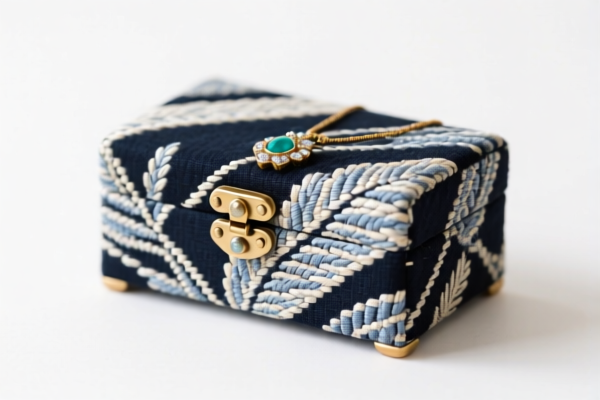

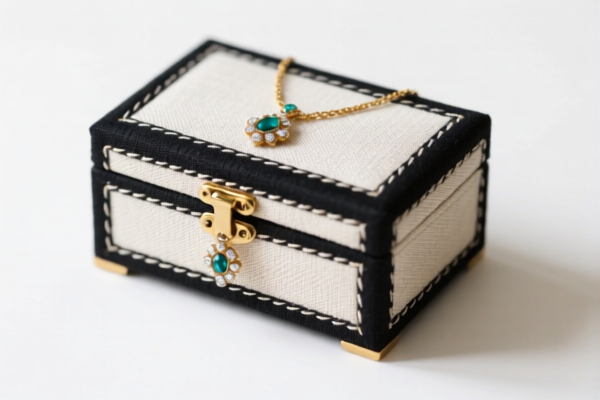

AI分析
🧳 Textile Instrument Performance Box (Protective Cases)
🌐 HS Code Reference & Customs Clearance Guide | 2026 Latest Tariff Analysis | Professional Customs Strategy
📌 I. Product Definition & Classification: What Exactly Is a "Textile Instrument Performance Box"?
A Textile Instrument Performance Box is a specialized protective container designed to shield sensitive instrumentation, testing equipment, or electronic devices during transport. Its classification hinges on two critical factors: 1. Outer Material: The exterior surface is primarily made of textile materials (e.g., nylon, polyester, canvas) or plastic/synthetic materials. 2. Function & Structure: It serves as a container for instruments, often featuring custom foam inserts, rigid or semi-rigid structures, and carrying handles.
⚠️ Key Distinction Point:
- If the exterior surface is predominantly plastic (even if it holds instruments) → Classify under Chapter 39 (Plastics).
- If the exterior surface is predominantly textile (even if it holds instruments) → Classify under Chapter 42 (Articles of Leather/Travelling Goods).
- If the material is mixed (e.g., plastic frame with textile cover) → Look at the essential character or specific chapter notes for "Other Articles" vs. "Containers."
📦 II. HS Code Classification Details (2026 Latest Tariff Authority Reference)
Based on the provided data, there are four potential HS Codes depending on the specific material composition and manufacturing details.
| HS Code | Product Description | Applicable Scenario | Key Classification Logic |
|---|---|---|---|
3926.90.10.00 |
Other Articles of Plastic (Plastic-based) | Exterior is Plastic Case is primarily a plastic container protecting instruments. |
Based on the inference that the protective box is a plastic product. |
4202.92.50.00 |
Travelling Goods & Similar Containers (Textile-based) | Exterior is Textile Case is made of textile material, used for instrument protection. |
Based on the textile outer surface and the function as an instrument protection container. |
3926.90.99.89 |
Other Plastic Articles (Mixed Plastic/Synthetic) | Mixed Plastic/Synthetic Contains plastic/synthetic components and is classified as an "other" plastic article. |
Based on containing plastic/synthetic material components and other article attributes. |
4202.92.93.36 |
Travelling Goods & Similar Containers (Textile-based, Specific) | Exterior is Textile (Instrument Case) Specific sub-category for textile cases housing instruments. |
Based on the textile outer surface and the shape/form as an instrument protection case. |
🔍 Critical Reminder:
- Plastic Exterior? → Go with 3926 series.
- Textile Exterior? → Go with 4202 series.
- Don't assume it's "instrument equipment" (Chapter 90). Protective cases are generally classified by their material of construction, not the contents, unless they are integral parts of the instrument itself.
💰 III. 2026 Latest Tariff Rate Breakdown (Detailed Tax Policy)
✅ Applicable Country: United States (US)
✅ Country of Origin: China (CN)
✅ Effective Date: Includes imports from 2025 onwards
✅ Tax Structure: Basic Tariff + Section 301 Tariff + 122 Tariff
🎯 1. 3926.90.10.00 — Other Plastic Articles (Plastic-Based)
| Item | Details |
|---|---|
| Basic Tariff | 3.4% |
| Section 301 Tariff (Add-on) | 7.5% |
| Section 122 Tariff (122 Clause) | 10% |
| Total Tariff Rate | 20.9% |
| Tax Calculation | CIF Value × 20.9% |
| De Minimis Exemption | ❌ Not Eligible (Subject to high duties) |
| Legal Basis Path | Basic Tariff → Section 301 → 122 Clause |
📌 Interpretation:
- This is the most cost-effective option if the case can be classified as plastic.
- The 10% "122 Clause" tariff is a specific US trade remedy measure.
- Total burden is relatively low compared to textile options.
🎯 2. 4202.92.50.00 — Travelling Goods (Textile-Based, General)
| Item | Details |
|---|---|
| Basic Tariff | 4.2% |
| Section 301 Tariff (Add-on) | 25.0% |
| Section 122 Tariff (122 Clause) | 10% |
| Total Tariff Rate | 39.2% |
| Tax Calculation | CIF Value × 39.2% |
| De Minimis Exemption | ❌ Not Eligible |
| Legal Basis Path | Basic Tariff → Section 301 → 122 Clause |
📌 Interpretation:
- Higher duty due to the 25% Section 301 tariff on textile containers.
- Suitable if the case is purely textile with no rigid plastic shell.
🎯 3. 3926.90.99.89 — Other Plastic Articles (Mixed Components)
| Item | Details |
|---|---|
| Basic Tariff | 5.3% |
| Section 301 Tariff (Add-on) | 7.5% |
| Section 122 Tariff (122 Clause) | 10% |
| Total Tariff Rate | 22.8% |
| Tax Calculation | CIF Value × 22.8% |
| De Minimis Exemption | ❌ Not Eligible |
| Legal Basis Path | Basic Tariff → Section 301 → 122 Clause |
📌 Interpretation:
- Slightly higher than pure plastic (3926.90.10.00) due to a higher Basic Tariff (5.3%).
- Used when the case has plastic/synthetic components but doesn't fit the specific "plastic product" definition of.10.00.
- Still significantly cheaper than textile options.
🎯 4. 4202.92.93.36 — Travelling Goods (Textile-Based, Specific Instrument Case)
| Item | Details |
|---|---|
| Basic Tariff | 17.6% |
| Section 301 Tariff (Add-on) | 25.0% |
| Section 122 Tariff (122 Clause) | 10% |
| Total Tariff Rate | 52.6% |
| Tax Calculation | CIF Value × 52.6% |
| De Minimis Exemption | ❌ Not Eligible |
| Legal Basis Path | Basic Tariff → Section 301 → 122 Clause |
📌 Interpretation:
- Highest Tariff!
- The Basic Tariff is very high (17.6%) because this sub-category is specific to textile containers for instruments, often viewed as a luxury or specialized good.
- Avoid this code if possible; it adds massive cost to your supply chain.
🛠️ IV. Customs Clearance Practical Advice (Real-World Pitfall Guide)
✅ 1. Material Declaration is Crucial (Do Not Vague)
| Material Scenario | Recommended HS Code | Risk if Misclassified |
|---|---|---|
| Hard Plastic Shell (e.g., ABS, Polycarbonate) | 3926.90.10.00 |
Misclassifying as textile → 39.2%~52.6% duty instead of 20.9%. Huge penalty! |
| Soft Textile/Canvas (with foam insert) | 4202.92.50.00 |
Misclassifying as plastic → May be accepted, but auditors may demand proof of textile exterior. |
| Mixed Plastic Frame + Textile Cover | 3926.90.99.89 or 4202.92.93.36 |
Must prove which material gives the "essential character." If plastic structure dominates, argue for Chapter 39. |
🔥 Pro Tip:
If your case has a hard plastic shell (even if covered with a textile bag), argue for Chapter 39. The "essential character" is the rigid protection provided by plastic.
✅ 2. Documentation Checklist (Must-Haves)
| Document | Required? | Purpose |
|---|---|---|
| Product Photos | ✔️ Yes | Show the exterior material clearly. Is it plastic or fabric? |
| Material Breakdown | ✔️ Yes | List % of plastic, textile, metal, foam. Prove the main material. |
| Bill of Materials (BOM) | ✔️ Yes | Helps customs understand the construction. |
| Commercial Invoice | ✔️ Yes | Clearly state: "Protective Case for Instrument, Exterior Material: [Plastic/Textile]" |
| Packing List | ✔️ Yes | Ensure no missing accessories that could change classification. |
✅ 3. Clearance Strategy: How to Save Money?
| Strategy | Action | Expected Result |
|---|---|---|
| Optimize Material | Use plastic or synthetic exterior instead of pure textile. | Reduce tax from 52.6% to 20.9%. Save 31.7%! |
| Design Modification | If it must be textile, ensure it’s a "soft case" not a "hard case." | Aim for 4202.92.50.00 (39.2%) instead of 4202.92.93.36 (52.6%). |
| Pre-Ruling | Apply for US CBP Advance Ruling before shipping. | Avoids delays, fines, and surprise duties at the port. |
| Supply Chain Shift | Consider manufacturing in a country not subject to 122/301 tariffs (e.g., Vietnam, Malaysia). | May qualify for 0%~10% duty depending on FTA rules. |
🌍 V. Global Market Comparison (2026)
| Country | Recommended HS Code | Est. Duty (China Origin) | Notes |
|---|---|---|---|
| 🇺🇸 USA | 3926.90.10.00 |
20.9% | Best option if plastic. Textile is 39.2%-52.6%. |
| 🇨🇳 China | 3926.90.10.00 |
5.3%~8.5% | Lower basic tariffs, no 301/122 clauses. |
| 🇪🇺 EU | 3926.90.90 |
4.0%~6.5% | No Section 301/122. EU duties are generally lower. |
| 🇬🇧 UK | 3926.90.90 |
4.0%~6.5% | Post-Brexit tariffs similar to EU for this category. |
📌 Conclusion:
The US market is the most expensive for these cases due to Section 301 (7.5% or 25%) and 122 Clause (10%).
Plastic cases (Chapter 39) are significantly cheaper than textile cases (Chapter 42) in the US.
📌 VI. Common Mistakes & Pitfalls (Learn from Others' Tears)
❌ Mistake 1: Declaring a plastic-hardcase as a "textile bag" to avoid duties.
👉 Consequence: CBP will inspect, find the hard shell, reclassify to 3926.90.10.00 (20.9%) or worse, and issue penalties for misdeclaration.
❌ Mistake 2: Assuming all "instrument cases" are equipment.
👉 Consequence: If classified as part of the instrument (e.g., under the instrument's HS code), you might face different duties or FDA/FCC requirements. Keep it as a container.
❌ Mistake 3: Using 4202.92.93.36 without justification.
👉 Consequence: This code has a 52.6% total tax rate. If your case is only slightly textile-heavy, you are overpaying by $10+ per unit.
✅ Correct Approach:
"Protective Case, Model XYZ, Exterior: ABS Plastic, Interior: Foam, For Instrument ABC. HS Code: 3926.90.10.00"
🎯 VII. Final Recommendation: Cost-Saving Summary
| Priority | HS Code | Total Tax | Recommendation |
|---|---|---|---|
| 🥇 Best Cost | 3926.90.10.00 |
20.9% | Use Plastic Exterior. Best for profit margin. |
| 🥈 Good Cost | 3926.90.99.89 |
22.8% | Acceptable if mixed materials. |
| 🥉 High Cost | 4202.92.50.00 |
39.2% | Only if product design requires textile exterior. |
| ❌ Worst Cost | 4202.92.93.36 |
52.6% | Avoid. Extremely high duty. |
🚀 Action Plan:
1. Redesign: Switch from textile to plastic exterior if possible.
2. Declare: Clearly state "Plastic Protective Case."
3. Pre-Rule: Get a CBP Advance Ruling to lock in the 20.9% rate.
4. Audit: Check if your current supplier is using4202.92.93.36by mistake. If so, switch to3926.90.10.00immediately.
✨ Professional Clearance Starts with Precise Classification!
💼 Your Cost Efficiency Depends on This Decision!
用户评价
关于 HS 编码归类
协调制度(HS)是由世界海关组织(WCO)制定的国际贸易商品分类标准。全球 200 多个国家采用 HS 系统作为海关关税、贸易统计和进出口监管的基础。
每个 HS 编码遵循以下层级结构:
- 章(2 位)——商品大类(例如:第 84 章:机器和机械设备)
- 品目(4 位)——章内的更具体分类
- 子目(6 位)——国际通用细分,所有 WCO 成员国统一使用
- 本国细分(8-10 位)——各国自行扩展的细分编码,如美国 HTSUS 10 位编码
正确的 HS 编码归类对于顺利通关、准确缴纳关税和遵守贸易法规至关重要。错误归类可能导致海关延误、多缴关税或罚款。
从CN进口到US时,适用的关税税率可能包括:
- 最惠国(MFN)税率——适用于 WTO 成员国的标准关税税率
- 普通税率——适用于无贸易协定国家
- 贸易救济关税——附加关税,如 301 条款(反倾销)、232 条款(国家安全)或反补贴税
本页内容仅供参考。如需正式归类,请咨询当地海关或持牌报关代理。