Textile Instrument Performance Box
CN → US| HS Code | Tariff Rate | Origin | Destination | Doc |
|---|---|---|---|---|
| 3926901000 | 20.9% | CN | US | Official Doc |
| 4202925000 | 39.2% | CN | US | Official Doc |
| 3926909989 | 22.8% | CN | US | Official Doc |
| 4202929336 | 52.6% | CN | US | Official Doc |
| 4202925000 | 39.2% | CN | US | Official Doc |
Product Images
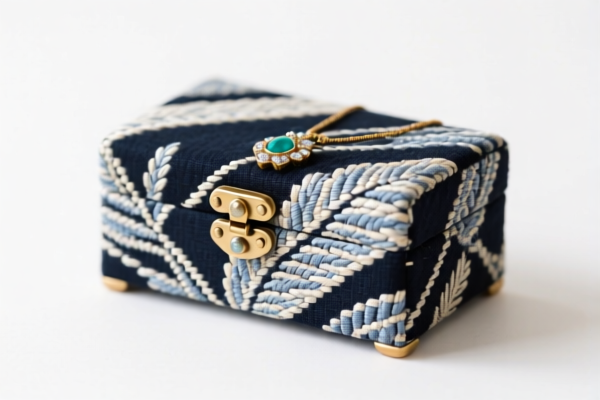

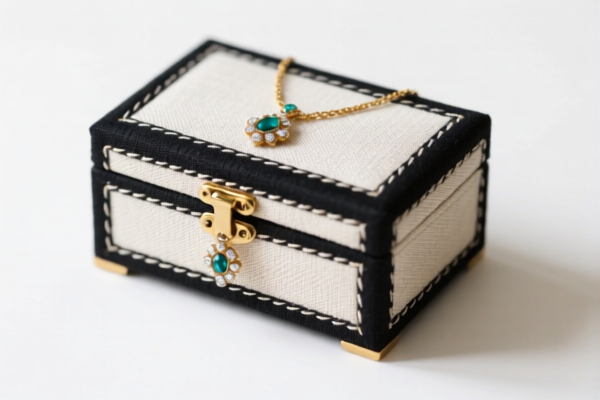

AI Analysis
🧳 Textile Instrument Performance Box (Protective Cases)
🌐 HS Code Reference & Customs Clearance Guide | 2026 Latest Tariff Analysis | Professional Customs Strategy
📌 I. Product Definition & Classification: What Exactly Is a "Textile Instrument Performance Box"?
A Textile Instrument Performance Box is a specialized protective container designed to shield sensitive instrumentation, testing equipment, or electronic devices during transport. Its classification hinges on two critical factors: 1. Outer Material: The exterior surface is primarily made of textile materials (e.g., nylon, polyester, canvas) or plastic/synthetic materials. 2. Function & Structure: It serves as a container for instruments, often featuring custom foam inserts, rigid or semi-rigid structures, and carrying handles.
⚠️ Key Distinction Point:
- If the exterior surface is predominantly plastic (even if it holds instruments) → Classify under Chapter 39 (Plastics).
- If the exterior surface is predominantly textile (even if it holds instruments) → Classify under Chapter 42 (Articles of Leather/Travelling Goods).
- If the material is mixed (e.g., plastic frame with textile cover) → Look at the essential character or specific chapter notes for "Other Articles" vs. "Containers."
📦 II. HS Code Classification Details (2026 Latest Tariff Authority Reference)
Based on the provided data, there are four potential HS Codes depending on the specific material composition and manufacturing details.
| HS Code | Product Description | Applicable Scenario | Key Classification Logic |
|---|---|---|---|
3926.90.10.00 |
Other Articles of Plastic (Plastic-based) | Exterior is Plastic Case is primarily a plastic container protecting instruments. |
Based on the inference that the protective box is a plastic product. |
4202.92.50.00 |
Travelling Goods & Similar Containers (Textile-based) | Exterior is Textile Case is made of textile material, used for instrument protection. |
Based on the textile outer surface and the function as an instrument protection container. |
3926.90.99.89 |
Other Plastic Articles (Mixed Plastic/Synthetic) | Mixed Plastic/Synthetic Contains plastic/synthetic components and is classified as an "other" plastic article. |
Based on containing plastic/synthetic material components and other article attributes. |
4202.92.93.36 |
Travelling Goods & Similar Containers (Textile-based, Specific) | Exterior is Textile (Instrument Case) Specific sub-category for textile cases housing instruments. |
Based on the textile outer surface and the shape/form as an instrument protection case. |
🔍 Critical Reminder:
- Plastic Exterior? → Go with 3926 series.
- Textile Exterior? → Go with 4202 series.
- Don't assume it's "instrument equipment" (Chapter 90). Protective cases are generally classified by their material of construction, not the contents, unless they are integral parts of the instrument itself.
💰 III. 2026 Latest Tariff Rate Breakdown (Detailed Tax Policy)
✅ Applicable Country: United States (US)
✅ Country of Origin: China (CN)
✅ Effective Date: Includes imports from 2025 onwards
✅ Tax Structure: Basic Tariff + Section 301 Tariff + 122 Tariff
🎯 1. 3926.90.10.00 — Other Plastic Articles (Plastic-Based)
| Item | Details |
|---|---|
| Basic Tariff | 3.4% |
| Section 301 Tariff (Add-on) | 7.5% |
| Section 122 Tariff (122 Clause) | 10% |
| Total Tariff Rate | 20.9% |
| Tax Calculation | CIF Value × 20.9% |
| De Minimis Exemption | ❌ Not Eligible (Subject to high duties) |
| Legal Basis Path | Basic Tariff → Section 301 → 122 Clause |
📌 Interpretation:
- This is the most cost-effective option if the case can be classified as plastic.
- The 10% "122 Clause" tariff is a specific US trade remedy measure.
- Total burden is relatively low compared to textile options.
🎯 2. 4202.92.50.00 — Travelling Goods (Textile-Based, General)
| Item | Details |
|---|---|
| Basic Tariff | 4.2% |
| Section 301 Tariff (Add-on) | 25.0% |
| Section 122 Tariff (122 Clause) | 10% |
| Total Tariff Rate | 39.2% |
| Tax Calculation | CIF Value × 39.2% |
| De Minimis Exemption | ❌ Not Eligible |
| Legal Basis Path | Basic Tariff → Section 301 → 122 Clause |
📌 Interpretation:
- Higher duty due to the 25% Section 301 tariff on textile containers.
- Suitable if the case is purely textile with no rigid plastic shell.
🎯 3. 3926.90.99.89 — Other Plastic Articles (Mixed Components)
| Item | Details |
|---|---|
| Basic Tariff | 5.3% |
| Section 301 Tariff (Add-on) | 7.5% |
| Section 122 Tariff (122 Clause) | 10% |
| Total Tariff Rate | 22.8% |
| Tax Calculation | CIF Value × 22.8% |
| De Minimis Exemption | ❌ Not Eligible |
| Legal Basis Path | Basic Tariff → Section 301 → 122 Clause |
📌 Interpretation:
- Slightly higher than pure plastic (3926.90.10.00) due to a higher Basic Tariff (5.3%).
- Used when the case has plastic/synthetic components but doesn't fit the specific "plastic product" definition of.10.00.
- Still significantly cheaper than textile options.
🎯 4. 4202.92.93.36 — Travelling Goods (Textile-Based, Specific Instrument Case)
| Item | Details |
|---|---|
| Basic Tariff | 17.6% |
| Section 301 Tariff (Add-on) | 25.0% |
| Section 122 Tariff (122 Clause) | 10% |
| Total Tariff Rate | 52.6% |
| Tax Calculation | CIF Value × 52.6% |
| De Minimis Exemption | ❌ Not Eligible |
| Legal Basis Path | Basic Tariff → Section 301 → 122 Clause |
📌 Interpretation:
- Highest Tariff!
- The Basic Tariff is very high (17.6%) because this sub-category is specific to textile containers for instruments, often viewed as a luxury or specialized good.
- Avoid this code if possible; it adds massive cost to your supply chain.
🛠️ IV. Customs Clearance Practical Advice (Real-World Pitfall Guide)
✅ 1. Material Declaration is Crucial (Do Not Vague)
| Material Scenario | Recommended HS Code | Risk if Misclassified |
|---|---|---|
| Hard Plastic Shell (e.g., ABS, Polycarbonate) | 3926.90.10.00 |
Misclassifying as textile → 39.2%~52.6% duty instead of 20.9%. Huge penalty! |
| Soft Textile/Canvas (with foam insert) | 4202.92.50.00 |
Misclassifying as plastic → May be accepted, but auditors may demand proof of textile exterior. |
| Mixed Plastic Frame + Textile Cover | 3926.90.99.89 or 4202.92.93.36 |
Must prove which material gives the "essential character." If plastic structure dominates, argue for Chapter 39. |
🔥 Pro Tip:
If your case has a hard plastic shell (even if covered with a textile bag), argue for Chapter 39. The "essential character" is the rigid protection provided by plastic.
✅ 2. Documentation Checklist (Must-Haves)
| Document | Required? | Purpose |
|---|---|---|
| Product Photos | ✔️ Yes | Show the exterior material clearly. Is it plastic or fabric? |
| Material Breakdown | ✔️ Yes | List % of plastic, textile, metal, foam. Prove the main material. |
| Bill of Materials (BOM) | ✔️ Yes | Helps customs understand the construction. |
| Commercial Invoice | ✔️ Yes | Clearly state: "Protective Case for Instrument, Exterior Material: [Plastic/Textile]" |
| Packing List | ✔️ Yes | Ensure no missing accessories that could change classification. |
✅ 3. Clearance Strategy: How to Save Money?
| Strategy | Action | Expected Result |
|---|---|---|
| Optimize Material | Use plastic or synthetic exterior instead of pure textile. | Reduce tax from 52.6% to 20.9%. Save 31.7%! |
| Design Modification | If it must be textile, ensure it’s a "soft case" not a "hard case." | Aim for 4202.92.50.00 (39.2%) instead of 4202.92.93.36 (52.6%). |
| Pre-Ruling | Apply for US CBP Advance Ruling before shipping. | Avoids delays, fines, and surprise duties at the port. |
| Supply Chain Shift | Consider manufacturing in a country not subject to 122/301 tariffs (e.g., Vietnam, Malaysia). | May qualify for 0%~10% duty depending on FTA rules. |
🌍 V. Global Market Comparison (2026)
| Country | Recommended HS Code | Est. Duty (China Origin) | Notes |
|---|---|---|---|
| 🇺🇸 USA | 3926.90.10.00 |
20.9% | Best option if plastic. Textile is 39.2%-52.6%. |
| 🇨🇳 China | 3926.90.10.00 |
5.3%~8.5% | Lower basic tariffs, no 301/122 clauses. |
| 🇪🇺 EU | 3926.90.90 |
4.0%~6.5% | No Section 301/122. EU duties are generally lower. |
| 🇬🇧 UK | 3926.90.90 |
4.0%~6.5% | Post-Brexit tariffs similar to EU for this category. |
📌 Conclusion:
The US market is the most expensive for these cases due to Section 301 (7.5% or 25%) and 122 Clause (10%).
Plastic cases (Chapter 39) are significantly cheaper than textile cases (Chapter 42) in the US.
📌 VI. Common Mistakes & Pitfalls (Learn from Others' Tears)
❌ Mistake 1: Declaring a plastic-hardcase as a "textile bag" to avoid duties.
👉 Consequence: CBP will inspect, find the hard shell, reclassify to 3926.90.10.00 (20.9%) or worse, and issue penalties for misdeclaration.
❌ Mistake 2: Assuming all "instrument cases" are equipment.
👉 Consequence: If classified as part of the instrument (e.g., under the instrument's HS code), you might face different duties or FDA/FCC requirements. Keep it as a container.
❌ Mistake 3: Using 4202.92.93.36 without justification.
👉 Consequence: This code has a 52.6% total tax rate. If your case is only slightly textile-heavy, you are overpaying by $10+ per unit.
✅ Correct Approach:
"Protective Case, Model XYZ, Exterior: ABS Plastic, Interior: Foam, For Instrument ABC. HS Code: 3926.90.10.00"
🎯 VII. Final Recommendation: Cost-Saving Summary
| Priority | HS Code | Total Tax | Recommendation |
|---|---|---|---|
| 🥇 Best Cost | 3926.90.10.00 |
20.9% | Use Plastic Exterior. Best for profit margin. |
| 🥈 Good Cost | 3926.90.99.89 |
22.8% | Acceptable if mixed materials. |
| 🥉 High Cost | 4202.92.50.00 |
39.2% | Only if product design requires textile exterior. |
| ❌ Worst Cost | 4202.92.93.36 |
52.6% | Avoid. Extremely high duty. |
🚀 Action Plan:
1. Redesign: Switch from textile to plastic exterior if possible.
2. Declare: Clearly state "Plastic Protective Case."
3. Pre-Rule: Get a CBP Advance Ruling to lock in the 20.9% rate.
4. Audit: Check if your current supplier is using4202.92.93.36by mistake. If so, switch to3926.90.10.00immediately.
✨ Professional Clearance Starts with Precise Classification!
💼 Your Cost Efficiency Depends on This Decision!
Customer Reviews
About HS Code Classification
The Harmonized System (HS) is an internationally standardized nomenclature developed by the World Customs Organization (WCO) to classify traded products. Over 200 countries use the HS system as the basis for customs tariffs, trade statistics, and import/export regulations.
Each HS code follows a hierarchical structure:
- Chapter (2 digits) — Broad category of goods (e.g., Chapter 84: Machinery and Mechanical Appliances)
- Heading (4 digits) — More specific grouping within the chapter
- Subheading (6 digits) — Internationally standardized breakdown, used by all WCO member countries
- National subdivisions (8-10 digits) — Country-specific extensions for further classification, such as US HTSUS 10-digit codes
Correct HS code classification is essential for smooth customs clearance, accurate duty payment, and compliance with trade regulations. Misclassification can lead to customs delays, overpayment of duties, or penalties.
When importing from CN to US, the applicable tariff rates may include:
- Most-Favored-Nation (MFN) rate — The standard duty rate applied to WTO members
- General rate — Applied to countries without trade agreements
- Trade remedy duties — Additional tariffs such as Section 301 (anti-dumping), Section 232 (national security), or countervailing duties
The information provided on this page is for reference purposes only. For official classification, please consult with your local customs authority or a licensed customs broker.