Textile Reinforced Belting
CN → US| HS编码 | 关税税率 | 原产国 | 目的国 | 文档 |
|---|---|---|---|---|
| 5910009000 | 37.6% | CN | US | 官方文档 |
| 5910001070 | 39.0% | CN | US | 官方文档 |
| 3926905500 | 40.1% | CN | US | 官方文档 |
| 3926905900 | 37.4% | CN | US | 官方文档 |
| 4010129000 | 36.9% | CN | US | 官方文档 |
商品图片
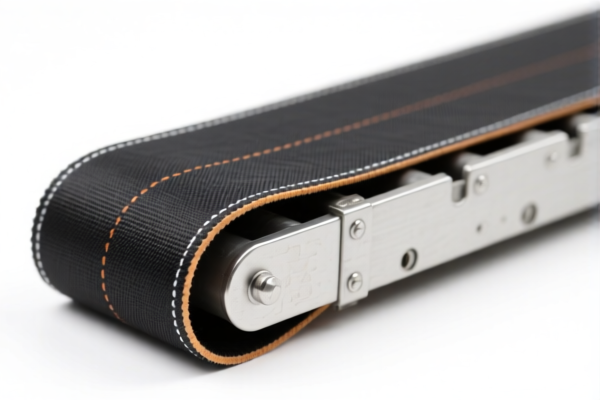
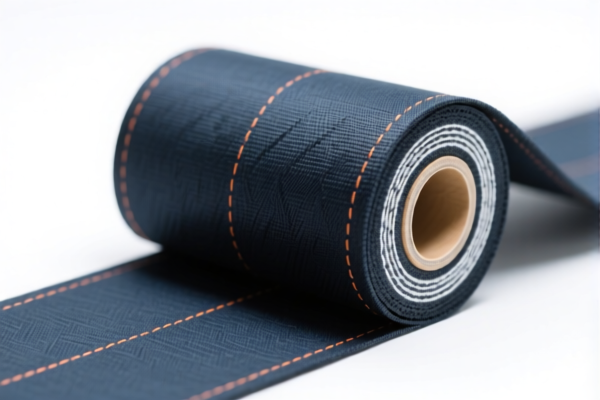
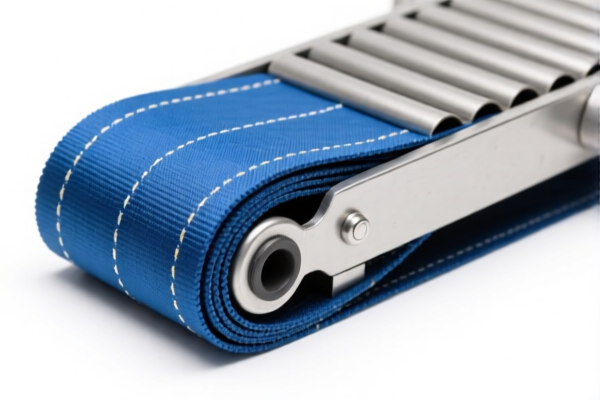
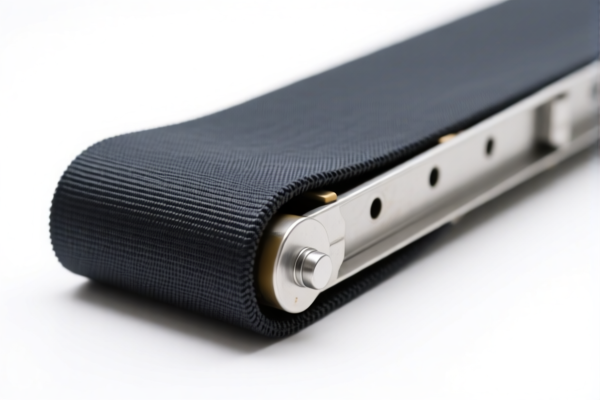
AI分析
🏗️ Textile Reinforced Belting (Conveyor Belts)
🌐 HS Code Reference & Customs Clearance Guide | 2026 Latest Tariff Analysis | Professional Clearance Strategy
📌 1. Product Definition & Classification: Do You Really Understand "Textile Reinforced Belting"?
Textile Reinforced Belting, commonly referred to as Conveyor Belts, is a critical component in material handling systems across industries such as mining, agriculture, logistics, and manufacturing. In international trade, classification depends heavily on material composition and structure.
Key distinctions: * Material Basis: The reinforcement material (e.g., polyester, nylon, cotton) determines whether it falls under textiles (Chapter 59) or plastics/rubber (Chapters 39/40). * Structure: Whether it is a simple flat belt or a complex multi-ply belt affects the specific subheading. * Conflict Resolution: Since the term "Textile Reinforced" is explicit, we prioritize textile-based classifications (HS 5910) over plastic (HS 3926) or rubber (HS 4010) unless there is conflicting evidence.
⚠️ Key Classification Point:
- If the belt is primarily made of textile fabrics (polyester, nylon, etc.) reinforced with textile cords → HS 5910 is the most accurate fit.
- If the belt is made of rubber with textile reinforcement → HS 4010 may apply, but "Textile Reinforced" usually points to Chapter 59.
- If the belt is made of plastic with textile reinforcement → HS 3926 is less common but possible if no better textile classification exists.
📦 2. HS Code Classification Details (2026 Latest Tariff Authority Match)
| HS Code | Product Description | Applicability | Basis for Classification |
|---|---|---|---|
5910.00.90.00 |
Textile Belting, Other (Conveyor Belts) | General textile conveyor belts without specific material specification | Matches use (conveyor belt) & form; assumes textile material due to "Textile Reinforced" description. No material conflict. |
5910.00.10.70 |
Power Transmission Belts of Man-Made Fibers | Specific to man-made fiber belts for power transmission | Matches form (belt); assumes synthetic textile (man-made fibers) for power transmission belts. No material conflict. |
3926.90.55.00 |
Other Plastic Articles: Machinery/Plant Belts | Plastic conveyor belts | Infers plastic material for conveyor belts; fits "other plastic articles" catch-all. No material conflict. |
3926.90.59.00 |
Other Plastic Articles: n.e.s. (Conveyor Belts) | Other plastic conveyor belts | Matches use (conveyor belt); assumes plastic/textile composite. Fits "n.e.s." catch-all. No material conflict. |
4010.12.90.00 |
Conveyor Belts of Vulcanized Rubber (Other) | Rubber conveyor belts | Matches use (conveyor belt); assumes rubber material due to common industry standard. No material conflict. |
🔍 Key Reminder:
- The term "Textile Reinforced" strongly suggests HS 5910 as the primary classification because Chapter 59 covers textile fabrics impregnated, coated, or covered with rubber, plastic, or other substances.
- If the belt is predominantly rubber with textile reinforcement, HS 4010 is a strong alternative.
- Plastic-based belts (HS 3926) are less common for heavy-duty "textile reinforced" applications but may apply for light-duty plastic belts.
💰 3. 2026 Latest Tariff Rate Breakdown (Including Additional Taxes, Policy Surcharges)
✅ Applicable Country: United States (US)
✅ Origin: China (CN)
✅ Effective Date: From November 10, 2025 (and subsequent imports)
🎯 1. 5910.00.90.00 — Textile Belting, Other
| Item | Content |
|---|---|
| Base Tariff | 2.6% (ad valorem) |
| Section 301 Additional Tariff | +25.0% |
| 122 Clause Tariff | +10.0% |
| Total Tariff | 37.6% |
| Tax Calculation | CIF Value × 37.6% |
| De Minimis Exemption | ❌ Not Eligible (deny_de_minimis) |
| Legal Basis Path | USITC:5910.00.90.00 → Section 301 Footnote → 122 Clause |
📌 Explanation:
- "Base Tariff 2.6%": Standard Most Favored Nation (MFN) rate for textile belting.
- "Section 301 Additional Tariff 25%": Applies to Chinese goods under the US Trade Act of 1974.
- "122 Clause Tariff 10%": Additional surcharge under Section 122 for national security or trade remedy reasons.
- Total 37.6%: This is a high tariff rate. Pre-clearance planning is essential.
🎯 2. 5910.00.10.70 — Power Transmission Belts of Man-Made Fibers
| Item | Content |
|---|---|
| Base Tariff | 4.0% (ad valorem) |
| Section 301 Additional Tariff | +25.0% |
| 122 Clause Tariff | +10.0% |
| Total Tariff | 39.0% |
| Tax Calculation | CIF Value × 39.0% |
| De Minimis Exemption | ❌ Not Eligible (deny_de_minimis) |
| Legal Basis Path | USITC:5910.00.10.70 → Section 301 Footnote → 122 Clause |
📌 Note:
- This code applies if the belt is specifically for power transmission (e.g., driving machinery) and made of man-made fibers (polyester, nylon).
- The base rate is higher (4.0%) than general textile belting, leading to a higher total tariff (39.0%).
🎯 3. 3926.90.55.00 — Other Plastic Articles: Machinery/Plant Belts
| Item | Content |
|---|---|
| Base Tariff | 5.1% (ad valorem) |
| Section 301 Additional Tariff | +25.0% |
| 122 Clause Tariff | +10.0% |
| Total Tariff | 40.1% |
| Tax Calculation | CIF Value × 40.1% |
| De Minimis Exemption | ❌ Not Eligible (deny_de_minimis) |
| Legal Basis Path | USITC:3926.90.55.00 → Section 301 Footnote → 122 Clause |
📌 Explanation:
- This code applies if the belt is made of plastic (e.g., PVC, PU) and used for machinery.
- Highest base rate (5.1%) leads to the highest total tariff (40.1%) among all options.
- Only consider this if the belt is primarily plastic and not textile-based.
🎯 4. 3926.90.59.00 — Other Plastic Articles: n.e.s.
| Item | Content |
|---|---|
| Base Tariff | 2.4% (ad valorem) |
| Section 301 Additional Tariff | +25.0% |
| 122 Clause Tariff | +10.0% |
| Total Tariff | 37.4% |
| Tax Calculation | CIF Value × 37.4% |
| De Minimis Exemption | ❌ Not Eligible (deny_de_minimis) |
| Legal Basis Path | USITC:3926.90.59.00 → Section 301 Footnote → 122 Clause |
📌 Note:
- This is a catch-all for plastic articles not specifically listed elsewhere.
- Lowest total tariff (37.4%) among plastic-based options.
- Use only if the belt is plastic-based and doesn’t fit other specific plastic categories.
🎯 5. 4010.12.90.00 — Conveyor Belts of Vulcanized Rubber (Other)
| Item | Content |
|---|---|
| Base Tariff | 1.9% (ad valorem) |
| Section 301 Additional Tariff | +25.0% |
| 122 Clause Tariff | +10.0% |
| Total Tariff | 36.9% |
| Tax Calculation | CIF Value × 36.9% |
| De Minimis Exemption | ❌ Not Eligible (deny_de_minimis) |
| Legal Basis Path | USITC:4010.12.90.00 → Section 301 Footnote → 122 Clause |
📌 Key Insight:
- Lowest total tariff (36.9%) among all options.
- Applies if the belt is made of rubber (even with textile reinforcement).
- Recommended if the product is rubber-based, as it offers the most cost-effective classification.
🛠️ 4. Customs Clearance Practical Tips (Field Pitfall Avoidance Guide)
✅ 1. Required Documentation Checklist (All Are Mandatory)
| Document | Required | Notes |
|---|---|---|
| ✅ Product Specification Sheet | ✔️ | Must include material composition (e.g., "Polyester/Cotton blend," "Rubber with Nylon cords"), width, length, ply layers. |
| ✅ Material Test Report | ✔️ | Third-party lab report confirming material percentages (textile vs. rubber/plastic). |
| ✅ Product Photos (Including Label) | ✔️ | Clear image of the belt’s cross-section, surface, and any branding/specs. |
| ✅ Commercial Invoice | ✔️ | Must explicitly state "Textile Reinforced Conveyor Belt" and material details. |
| ✅ Packing List | ✔️ | Detailed description of packing units to avoid "undefined goods" flags. |
| ✅ Certificate of Origin (CO) | ✔️ | If originating from non-China countries, may qualify for reduced tariffs. |
✅ 2. Declaration Tips (Key Mantras)
🔥 "Material First, Use Second, Name Specific, Tariff Optimized!"
| Scenario | Correct Declaration | Incorrect Practice |
|---|---|---|
| Rubber belt with textile cords | 4010.12.90.00 (Rubber) |
Misdeclare as textile → 37.6% |
| Polyester belt for power transmission | 5910.00.10.70 (Man-made fibers) |
Misdeclare as generic textile → 37.6% |
| Plastic belt for light-duty | 3926.90.59.00 (Plastic n.e.s.) |
Misdeclare as rubber → Penalty |
| Mixed material belt | Provide material breakdown | Vague description → Delay/Rejection |
✅ 3. Special Case Handling
| Scenario | Handling Advice |
|---|---|
| OEM Custom Belts | Provide customer order + design specs to avoid "non-standard" classification issues. |
| Belt with Metal Fasteners | Declare as a single unit under the primary material (textile/rubber/plastic). Do not split. |
| Belt for Food Industry | Provide FDA compliance documentation if applicable, though HS code remains the same. |
| Used/Second-hand Belts | Generally prohibited or subject to additional scrutiny. New belts only. |
🌍 5. Global Market Customs Comparison (2026 Latest)
| Country/Region | Recommended HS Code | Tariff Rate | Certification Requirements | Notes |
|---|---|---|---|---|
| 🇺🇸 United States | 4010.12.90.00 (Rubber) |
36.9% (China-origin) | None specific | Highest cost due to 301 & 122 clauses |
| 🇪🇺 European Union | 4010.11.00 |
0% (if CE marked) | CE + REACH | No additional tariffs |
| 🇨🇳 China | 4010.11.00 |
5% | CCC (if applicable) | No additional tariffs |
| 🇯🇵 Japan | 4010.11.00 |
0% | PSE (if applicable) | No additional tariffs |
| 🇦🇺 Australia | 4010.11.00 |
5% | RCM | No additional tariffs |
📌 Conclusion:
- The US imposes the highest tariffs on conveyor belts due to Section 301 and 122 clauses.
- Rubber-based belts (4010) offer the lowest total tariff (36.9%) in the US market.
- Textile-based belts (5910) and plastic-based belts (3926) have higher tariffs (37.4%–40.1%).
- Non-US markets (EU, China, Japan, Australia) have significantly lower or zero tariffs, making them more cost-effective for exporters.
📌 6. Common Errors & Pitfall Guide (Lessons Learned)
❌ Mistake 1: Misdeclaring a rubber belt as a textile belt
👉 Consequence: Incorrect HS code → Potential penalty + delay.
❌ Mistake 2: Not providing material test reports for mixed-material belts
👉 Consequence: Customs cannot determine correct classification → Goods held for inspection.
❌ Mistake 3: Using vague terms like "Belt" without specifying material or use
👉 Consequence: Customs assigns a default high-rate code → Overpayment of tariffs.
❌ Mistake 4: Assuming de minimis exemption applies
👉 Consequence: Goods with tariff > 8% (36.9%–40.1%) are not exempt → Full tax collection.
✅ Correct Approach:
"Conveyor Belt, 50mm Width, 100m Length, Rubber Base with Polyester Textile Reinforcement, Model ABC, for Industrial Use, Made in China"
🎯 7. Conclusion: Precision in Classification Saves Money!
🎯 Key Takeaway:
🔹 "Rubber Belts = Lowest Tariff (36.9%) in US Market"
🔹 "Textile Belts = Higher Tariff (37.6%–39.0%)"
🔹 "Plastic Belts = Highest Tariff (37.4%–40.1%)"
🔹 "Always Provide Material Proof to Avoid Misclassification!"🔹 "HS Code Determines Cost, Classification Determines Speed!"
📌 Pro Tip:
- If your belt is not made in China (e.g., Vietnam, Thailand, Mexico), you may avoid Section 301 and 122 tariffs, reducing the total rate to Base Tariff Only.
- Apply for Advance Ruling with US Customs (CBP) to secure a definitive HS code and avoid post-clearance audits.
📣 Immediate Action:
📞 Consult a licensed customs broker + Provide Material Test Reports + Request Advance Ruling
🚀 Ensure Compliant, Cost-Effective, and Efficient Customs Clearance for Your Conveyor Belts!
✨ Professional Clearance Starts with Accurate Classification!
💼 Every Percentage Point Saved is Pure Profit!
用户评价
关于 HS 编码归类
协调制度(HS)是由世界海关组织(WCO)制定的国际贸易商品分类标准。全球 200 多个国家采用 HS 系统作为海关关税、贸易统计和进出口监管的基础。
每个 HS 编码遵循以下层级结构:
- 章(2 位)——商品大类(例如:第 84 章:机器和机械设备)
- 品目(4 位)——章内的更具体分类
- 子目(6 位)——国际通用细分,所有 WCO 成员国统一使用
- 本国细分(8-10 位)——各国自行扩展的细分编码,如美国 HTSUS 10 位编码
正确的 HS 编码归类对于顺利通关、准确缴纳关税和遵守贸易法规至关重要。错误归类可能导致海关延误、多缴关税或罚款。
从CN进口到US时,适用的关税税率可能包括:
- 最惠国(MFN)税率——适用于 WTO 成员国的标准关税税率
- 普通税率——适用于无贸易协定国家
- 贸易救济关税——附加关税,如 301 条款(反倾销)、232 条款(国家安全)或反补贴税
本页内容仅供参考。如需正式归类,请咨询当地海关或持牌报关代理。