Textile Reinforced Belting
CN → US| HS Code | Tariff Rate | Origin | Destination | Doc |
|---|---|---|---|---|
| 5910009000 | 37.6% | CN | US | Official Doc |
| 5910001070 | 39.0% | CN | US | Official Doc |
| 3926905500 | 40.1% | CN | US | Official Doc |
| 3926905900 | 37.4% | CN | US | Official Doc |
| 4010129000 | 36.9% | CN | US | Official Doc |
Product Images
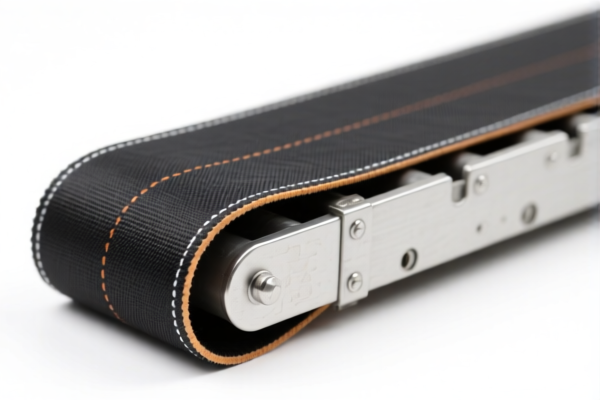
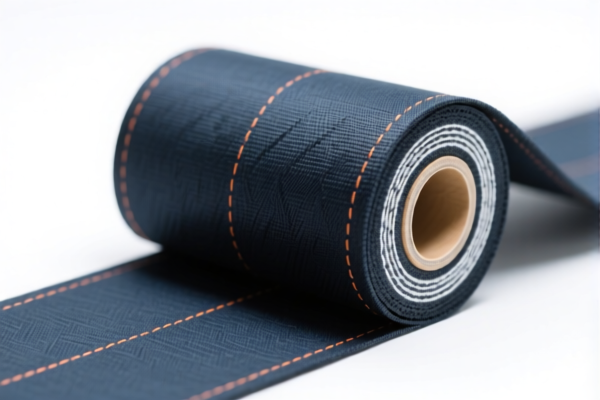
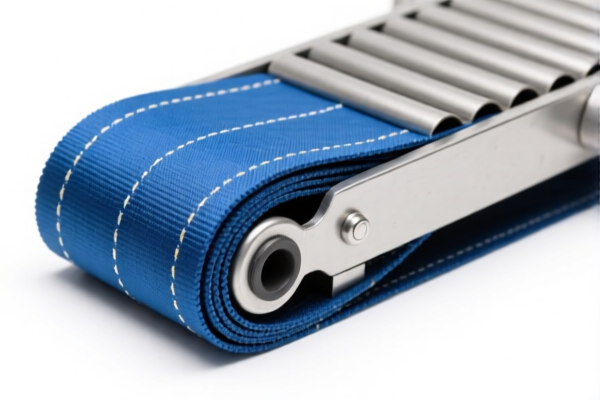
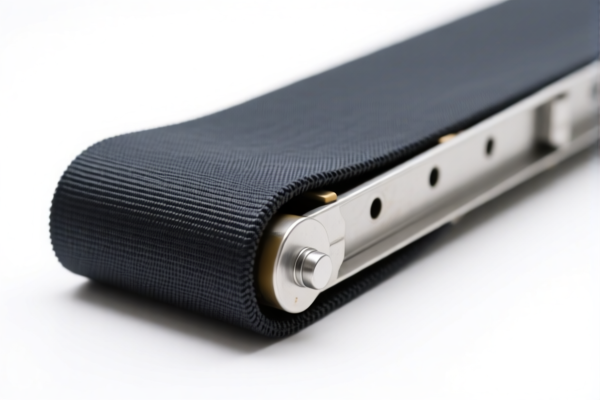
AI Analysis
🏗️ Textile Reinforced Belting (Conveyor Belts)
🌐 HS Code Reference & Customs Clearance Guide | 2026 Latest Tariff Analysis | Professional Clearance Strategy
📌 1. Product Definition & Classification: Do You Really Understand "Textile Reinforced Belting"?
Textile Reinforced Belting, commonly referred to as Conveyor Belts, is a critical component in material handling systems across industries such as mining, agriculture, logistics, and manufacturing. In international trade, classification depends heavily on material composition and structure.
Key distinctions: * Material Basis: The reinforcement material (e.g., polyester, nylon, cotton) determines whether it falls under textiles (Chapter 59) or plastics/rubber (Chapters 39/40). * Structure: Whether it is a simple flat belt or a complex multi-ply belt affects the specific subheading. * Conflict Resolution: Since the term "Textile Reinforced" is explicit, we prioritize textile-based classifications (HS 5910) over plastic (HS 3926) or rubber (HS 4010) unless there is conflicting evidence.
⚠️ Key Classification Point:
- If the belt is primarily made of textile fabrics (polyester, nylon, etc.) reinforced with textile cords → HS 5910 is the most accurate fit.
- If the belt is made of rubber with textile reinforcement → HS 4010 may apply, but "Textile Reinforced" usually points to Chapter 59.
- If the belt is made of plastic with textile reinforcement → HS 3926 is less common but possible if no better textile classification exists.
📦 2. HS Code Classification Details (2026 Latest Tariff Authority Match)
| HS Code | Product Description | Applicability | Basis for Classification |
|---|---|---|---|
5910.00.90.00 |
Textile Belting, Other (Conveyor Belts) | General textile conveyor belts without specific material specification | Matches use (conveyor belt) & form; assumes textile material due to "Textile Reinforced" description. No material conflict. |
5910.00.10.70 |
Power Transmission Belts of Man-Made Fibers | Specific to man-made fiber belts for power transmission | Matches form (belt); assumes synthetic textile (man-made fibers) for power transmission belts. No material conflict. |
3926.90.55.00 |
Other Plastic Articles: Machinery/Plant Belts | Plastic conveyor belts | Infers plastic material for conveyor belts; fits "other plastic articles" catch-all. No material conflict. |
3926.90.59.00 |
Other Plastic Articles: n.e.s. (Conveyor Belts) | Other plastic conveyor belts | Matches use (conveyor belt); assumes plastic/textile composite. Fits "n.e.s." catch-all. No material conflict. |
4010.12.90.00 |
Conveyor Belts of Vulcanized Rubber (Other) | Rubber conveyor belts | Matches use (conveyor belt); assumes rubber material due to common industry standard. No material conflict. |
🔍 Key Reminder:
- The term "Textile Reinforced" strongly suggests HS 5910 as the primary classification because Chapter 59 covers textile fabrics impregnated, coated, or covered with rubber, plastic, or other substances.
- If the belt is predominantly rubber with textile reinforcement, HS 4010 is a strong alternative.
- Plastic-based belts (HS 3926) are less common for heavy-duty "textile reinforced" applications but may apply for light-duty plastic belts.
💰 3. 2026 Latest Tariff Rate Breakdown (Including Additional Taxes, Policy Surcharges)
✅ Applicable Country: United States (US)
✅ Origin: China (CN)
✅ Effective Date: From November 10, 2025 (and subsequent imports)
🎯 1. 5910.00.90.00 — Textile Belting, Other
| Item | Content |
|---|---|
| Base Tariff | 2.6% (ad valorem) |
| Section 301 Additional Tariff | +25.0% |
| 122 Clause Tariff | +10.0% |
| Total Tariff | 37.6% |
| Tax Calculation | CIF Value × 37.6% |
| De Minimis Exemption | ❌ Not Eligible (deny_de_minimis) |
| Legal Basis Path | USITC:5910.00.90.00 → Section 301 Footnote → 122 Clause |
📌 Explanation:
- "Base Tariff 2.6%": Standard Most Favored Nation (MFN) rate for textile belting.
- "Section 301 Additional Tariff 25%": Applies to Chinese goods under the US Trade Act of 1974.
- "122 Clause Tariff 10%": Additional surcharge under Section 122 for national security or trade remedy reasons.
- Total 37.6%: This is a high tariff rate. Pre-clearance planning is essential.
🎯 2. 5910.00.10.70 — Power Transmission Belts of Man-Made Fibers
| Item | Content |
|---|---|
| Base Tariff | 4.0% (ad valorem) |
| Section 301 Additional Tariff | +25.0% |
| 122 Clause Tariff | +10.0% |
| Total Tariff | 39.0% |
| Tax Calculation | CIF Value × 39.0% |
| De Minimis Exemption | ❌ Not Eligible (deny_de_minimis) |
| Legal Basis Path | USITC:5910.00.10.70 → Section 301 Footnote → 122 Clause |
📌 Note:
- This code applies if the belt is specifically for power transmission (e.g., driving machinery) and made of man-made fibers (polyester, nylon).
- The base rate is higher (4.0%) than general textile belting, leading to a higher total tariff (39.0%).
🎯 3. 3926.90.55.00 — Other Plastic Articles: Machinery/Plant Belts
| Item | Content |
|---|---|
| Base Tariff | 5.1% (ad valorem) |
| Section 301 Additional Tariff | +25.0% |
| 122 Clause Tariff | +10.0% |
| Total Tariff | 40.1% |
| Tax Calculation | CIF Value × 40.1% |
| De Minimis Exemption | ❌ Not Eligible (deny_de_minimis) |
| Legal Basis Path | USITC:3926.90.55.00 → Section 301 Footnote → 122 Clause |
📌 Explanation:
- This code applies if the belt is made of plastic (e.g., PVC, PU) and used for machinery.
- Highest base rate (5.1%) leads to the highest total tariff (40.1%) among all options.
- Only consider this if the belt is primarily plastic and not textile-based.
🎯 4. 3926.90.59.00 — Other Plastic Articles: n.e.s.
| Item | Content |
|---|---|
| Base Tariff | 2.4% (ad valorem) |
| Section 301 Additional Tariff | +25.0% |
| 122 Clause Tariff | +10.0% |
| Total Tariff | 37.4% |
| Tax Calculation | CIF Value × 37.4% |
| De Minimis Exemption | ❌ Not Eligible (deny_de_minimis) |
| Legal Basis Path | USITC:3926.90.59.00 → Section 301 Footnote → 122 Clause |
📌 Note:
- This is a catch-all for plastic articles not specifically listed elsewhere.
- Lowest total tariff (37.4%) among plastic-based options.
- Use only if the belt is plastic-based and doesn’t fit other specific plastic categories.
🎯 5. 4010.12.90.00 — Conveyor Belts of Vulcanized Rubber (Other)
| Item | Content |
|---|---|
| Base Tariff | 1.9% (ad valorem) |
| Section 301 Additional Tariff | +25.0% |
| 122 Clause Tariff | +10.0% |
| Total Tariff | 36.9% |
| Tax Calculation | CIF Value × 36.9% |
| De Minimis Exemption | ❌ Not Eligible (deny_de_minimis) |
| Legal Basis Path | USITC:4010.12.90.00 → Section 301 Footnote → 122 Clause |
📌 Key Insight:
- Lowest total tariff (36.9%) among all options.
- Applies if the belt is made of rubber (even with textile reinforcement).
- Recommended if the product is rubber-based, as it offers the most cost-effective classification.
🛠️ 4. Customs Clearance Practical Tips (Field Pitfall Avoidance Guide)
✅ 1. Required Documentation Checklist (All Are Mandatory)
| Document | Required | Notes |
|---|---|---|
| ✅ Product Specification Sheet | ✔️ | Must include material composition (e.g., "Polyester/Cotton blend," "Rubber with Nylon cords"), width, length, ply layers. |
| ✅ Material Test Report | ✔️ | Third-party lab report confirming material percentages (textile vs. rubber/plastic). |
| ✅ Product Photos (Including Label) | ✔️ | Clear image of the belt’s cross-section, surface, and any branding/specs. |
| ✅ Commercial Invoice | ✔️ | Must explicitly state "Textile Reinforced Conveyor Belt" and material details. |
| ✅ Packing List | ✔️ | Detailed description of packing units to avoid "undefined goods" flags. |
| ✅ Certificate of Origin (CO) | ✔️ | If originating from non-China countries, may qualify for reduced tariffs. |
✅ 2. Declaration Tips (Key Mantras)
🔥 "Material First, Use Second, Name Specific, Tariff Optimized!"
| Scenario | Correct Declaration | Incorrect Practice |
|---|---|---|
| Rubber belt with textile cords | 4010.12.90.00 (Rubber) |
Misdeclare as textile → 37.6% |
| Polyester belt for power transmission | 5910.00.10.70 (Man-made fibers) |
Misdeclare as generic textile → 37.6% |
| Plastic belt for light-duty | 3926.90.59.00 (Plastic n.e.s.) |
Misdeclare as rubber → Penalty |
| Mixed material belt | Provide material breakdown | Vague description → Delay/Rejection |
✅ 3. Special Case Handling
| Scenario | Handling Advice |
|---|---|
| OEM Custom Belts | Provide customer order + design specs to avoid "non-standard" classification issues. |
| Belt with Metal Fasteners | Declare as a single unit under the primary material (textile/rubber/plastic). Do not split. |
| Belt for Food Industry | Provide FDA compliance documentation if applicable, though HS code remains the same. |
| Used/Second-hand Belts | Generally prohibited or subject to additional scrutiny. New belts only. |
🌍 5. Global Market Customs Comparison (2026 Latest)
| Country/Region | Recommended HS Code | Tariff Rate | Certification Requirements | Notes |
|---|---|---|---|---|
| 🇺🇸 United States | 4010.12.90.00 (Rubber) |
36.9% (China-origin) | None specific | Highest cost due to 301 & 122 clauses |
| 🇪🇺 European Union | 4010.11.00 |
0% (if CE marked) | CE + REACH | No additional tariffs |
| 🇨🇳 China | 4010.11.00 |
5% | CCC (if applicable) | No additional tariffs |
| 🇯🇵 Japan | 4010.11.00 |
0% | PSE (if applicable) | No additional tariffs |
| 🇦🇺 Australia | 4010.11.00 |
5% | RCM | No additional tariffs |
📌 Conclusion:
- The US imposes the highest tariffs on conveyor belts due to Section 301 and 122 clauses.
- Rubber-based belts (4010) offer the lowest total tariff (36.9%) in the US market.
- Textile-based belts (5910) and plastic-based belts (3926) have higher tariffs (37.4%–40.1%).
- Non-US markets (EU, China, Japan, Australia) have significantly lower or zero tariffs, making them more cost-effective for exporters.
📌 6. Common Errors & Pitfall Guide (Lessons Learned)
❌ Mistake 1: Misdeclaring a rubber belt as a textile belt
👉 Consequence: Incorrect HS code → Potential penalty + delay.
❌ Mistake 2: Not providing material test reports for mixed-material belts
👉 Consequence: Customs cannot determine correct classification → Goods held for inspection.
❌ Mistake 3: Using vague terms like "Belt" without specifying material or use
👉 Consequence: Customs assigns a default high-rate code → Overpayment of tariffs.
❌ Mistake 4: Assuming de minimis exemption applies
👉 Consequence: Goods with tariff > 8% (36.9%–40.1%) are not exempt → Full tax collection.
✅ Correct Approach:
"Conveyor Belt, 50mm Width, 100m Length, Rubber Base with Polyester Textile Reinforcement, Model ABC, for Industrial Use, Made in China"
🎯 7. Conclusion: Precision in Classification Saves Money!
🎯 Key Takeaway:
🔹 "Rubber Belts = Lowest Tariff (36.9%) in US Market"
🔹 "Textile Belts = Higher Tariff (37.6%–39.0%)"
🔹 "Plastic Belts = Highest Tariff (37.4%–40.1%)"
🔹 "Always Provide Material Proof to Avoid Misclassification!"🔹 "HS Code Determines Cost, Classification Determines Speed!"
📌 Pro Tip:
- If your belt is not made in China (e.g., Vietnam, Thailand, Mexico), you may avoid Section 301 and 122 tariffs, reducing the total rate to Base Tariff Only.
- Apply for Advance Ruling with US Customs (CBP) to secure a definitive HS code and avoid post-clearance audits.
📣 Immediate Action:
📞 Consult a licensed customs broker + Provide Material Test Reports + Request Advance Ruling
🚀 Ensure Compliant, Cost-Effective, and Efficient Customs Clearance for Your Conveyor Belts!
✨ Professional Clearance Starts with Accurate Classification!
💼 Every Percentage Point Saved is Pure Profit!
Customer Reviews
About HS Code Classification
The Harmonized System (HS) is an internationally standardized nomenclature developed by the World Customs Organization (WCO) to classify traded products. Over 200 countries use the HS system as the basis for customs tariffs, trade statistics, and import/export regulations.
Each HS code follows a hierarchical structure:
- Chapter (2 digits) — Broad category of goods (e.g., Chapter 84: Machinery and Mechanical Appliances)
- Heading (4 digits) — More specific grouping within the chapter
- Subheading (6 digits) — Internationally standardized breakdown, used by all WCO member countries
- National subdivisions (8-10 digits) — Country-specific extensions for further classification, such as US HTSUS 10-digit codes
Correct HS code classification is essential for smooth customs clearance, accurate duty payment, and compliance with trade regulations. Misclassification can lead to customs delays, overpayment of duties, or penalties.
When importing from CN to US, the applicable tariff rates may include:
- Most-Favored-Nation (MFN) rate — The standard duty rate applied to WTO members
- General rate — Applied to countries without trade agreements
- Trade remedy duties — Additional tariffs such as Section 301 (anti-dumping), Section 232 (national security), or countervailing duties
The information provided on this page is for reference purposes only. For official classification, please consult with your local customs authority or a licensed customs broker.